
Your poinsettia might droop because of dry soil, too much water, poor drainage, temperature stress, low light, or pests. Let’s figure out what’s going on before you reach for the watering can.
Quick Tip: Feel the top inch of soil before you water. If the pot feels light and the soil is dry, it probably needs a drink. But if it’s wet and heavy, you might have a bigger issue. Let’s go over what to check so you can help your holiday plant bounce back.
Diagnose the Problem Before You Water
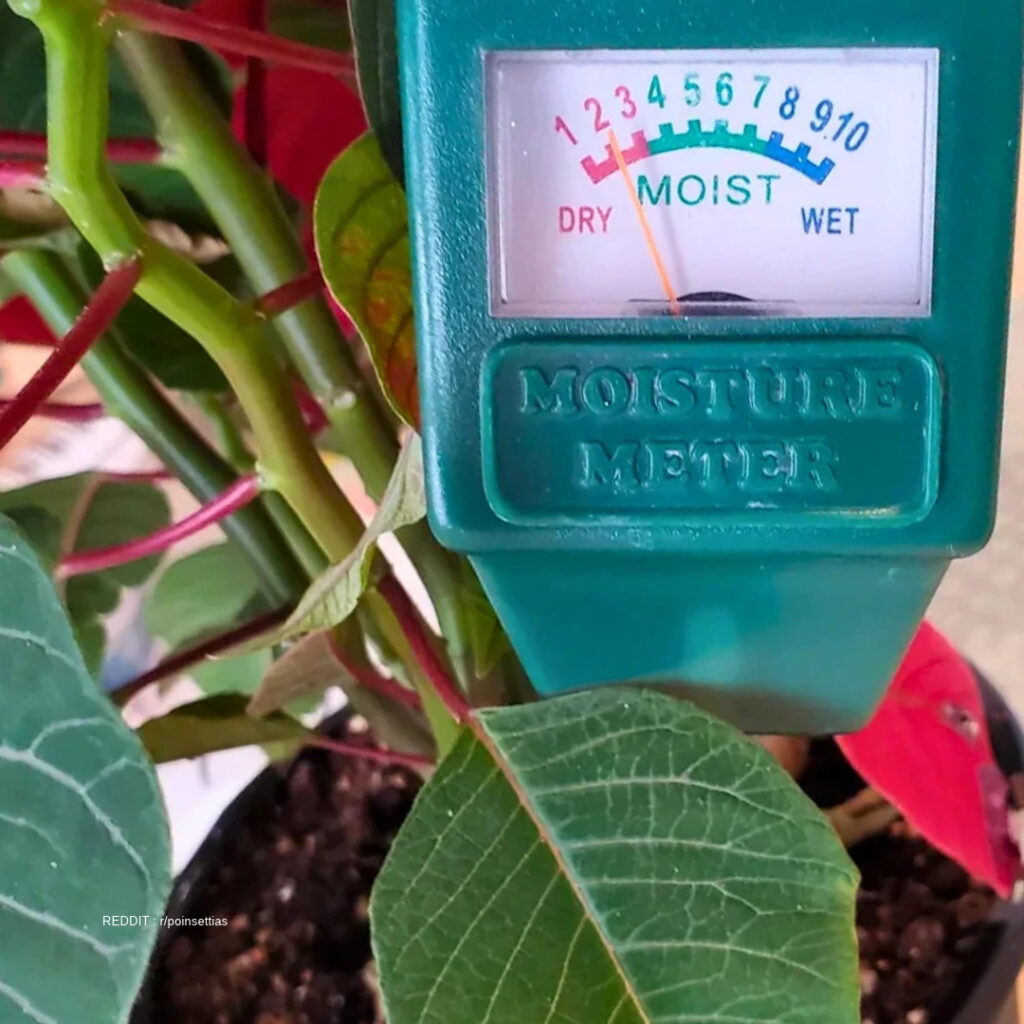
I always check the soil, the leaves, and the roots before watering. Poinsettia drooping can come from dry soil, soggy soil, cold stress, or root damage. Extra water sometimes makes things worse.
Check Soil Moisture and Pot Weight
I press my finger about an inch into the soil. If it’s dry and the pot feels light, my poinsettia probably needs water.
I water slowly until water runs from the drainage holes. After 10 to 15 minutes, I empty the saucer or foil cover. Roots sitting in standing water? That’s just asking for trouble.
If the soil feels wet, cool, or muddy, I don’t water again. Soggy soil chokes the roots, leading to drooping, yellowing leaves, and leaf drop.
Quick Tip: I compare the pot’s weight after watering to a few days later. My hands usually pick up on dry soil before my eyes do.
In a cool room or near a north window, soil dries out more slowly. I don’t check as often during cloudy or cold spells.
Read the Leaves, Stems, and Roots
I look at the leaves before deciding what to do. If they’re droopy, thin, dry, or papery, it often means dry soil or warm, dry air.
Yellowing leaves and leaf drop usually mean too much water, especially if the soil stays wet for days. Soft stems near the soil line? That’s a red flag.
If I suspect root problems, I gently slide the plant out of its pot. Healthy roots look pale and firm. Mushy roots? They’re usually brown or black and smell sour.
Quick Tip: I trust my nose. A stale, swampy smell from the pot usually means the roots have been too wet.
I snip off only the mushy roots with clean scissors. Then I repot in fresh, lightly moist potting mix and make sure the new pot drains well.
Know When Drooping Signals a Serious Problem
I act fast if drooping comes with black stems, lots of yellow leaves, or soil that never dries. That can mean root rot, which only gets worse if I keep watering.
Cold damage can also make poinsettias droop, even if the soil’s just right. Drafty doors, cold windows, or heating vents can all be culprits.
If most roots are mushy, the plant might not recover. I remove what I can, use fresh soil, and keep it in bright, indirect light to give it a fighting chance.
Quick Tip: I never fertilize a stressed poinsettia. Fertilizer irritates weak roots and won’t fix rot.
Correct Underwatering and Drought Stress
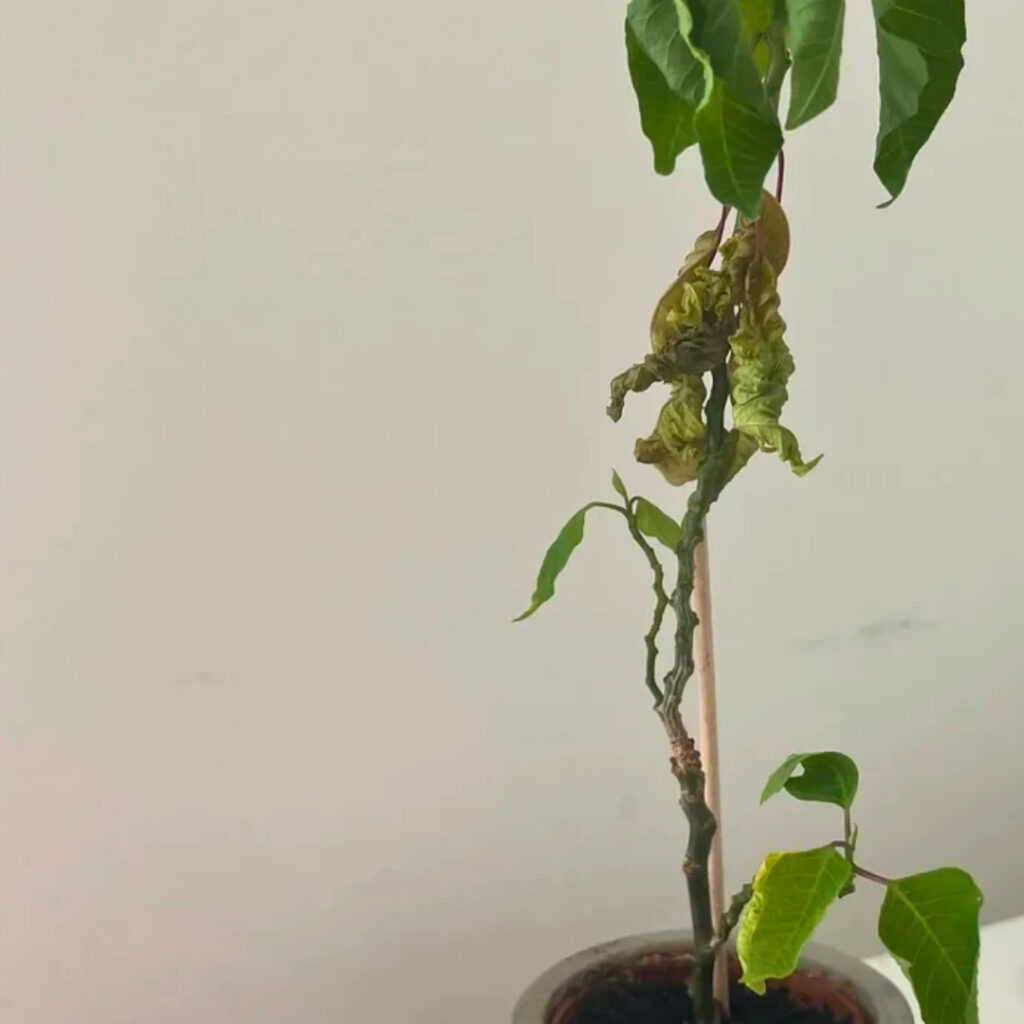
I always check the soil before adding water. Rehydrating dry roots slowly works best. A steady routine helps prevent the wilt-and-soak cycle that makes poinsettias droop.
Signs Your Plant Is Too Dry
Dry soil is the first thing I look for. If the top inch feels dusty and the pot is much lighter than usual, it’s probably thirsty. Sometimes the soil even pulls away from the pot’s edge, leaving a gap.
Drought can make leaves and bracts droop, curl, or feel thin and papery. Lower leaves might turn yellow and fall. The plant can look rough fast, but it’s not always a goner.
Quick Tip: Finger test: if it’s dry an inch down, I water.
I also check the saucer and pot. Poinsettias need open drainage holes. If water can’t escape, I’ll just end up with new root problems after fixing the dry soil.
How to Rehydrate the Root Ball Safely
I take the poinsettia to the sink and water the soil slowly with room-temperature water. I pour a bit around the base, wait, then add more. This gives dry roots time to soak it up.
I stop when water drains from the bottom. After 10 to 15 minutes, I empty the saucer so roots don’t sit wet.
Quick Tip: I avoid dunking a dry poinsettia in a bucket for hours. That just leaves the soil soggy and stresses the roots.
Once watered, I keep the plant in bright, indirect light. I avoid hot sun, heaters, and cold windows while it recovers. Sometimes the leaves perk up within a day, but badly dried ones might not fully recover.
Set a Consistent Watering Routine
I check the soil every two or three days instead of following a strict schedule. I water when the top inch feels dry—not just when the surface looks dry. In a warm room or sunny spot, it dries out faster.
Same test every time: finger in the soil, lift the pot. If it’s light and dry, it’s time. If it’s heavy, I wait.
Quick Tip: I remove decorative foil or punch holes in it so extra water can escape.
When it’s cool or cloudy, I water less. During dry indoor heat or in warmer zones, I check more often—especially outdoors on hot or windy days.
Address Overwatering, Poor Drainage, and Root Rot
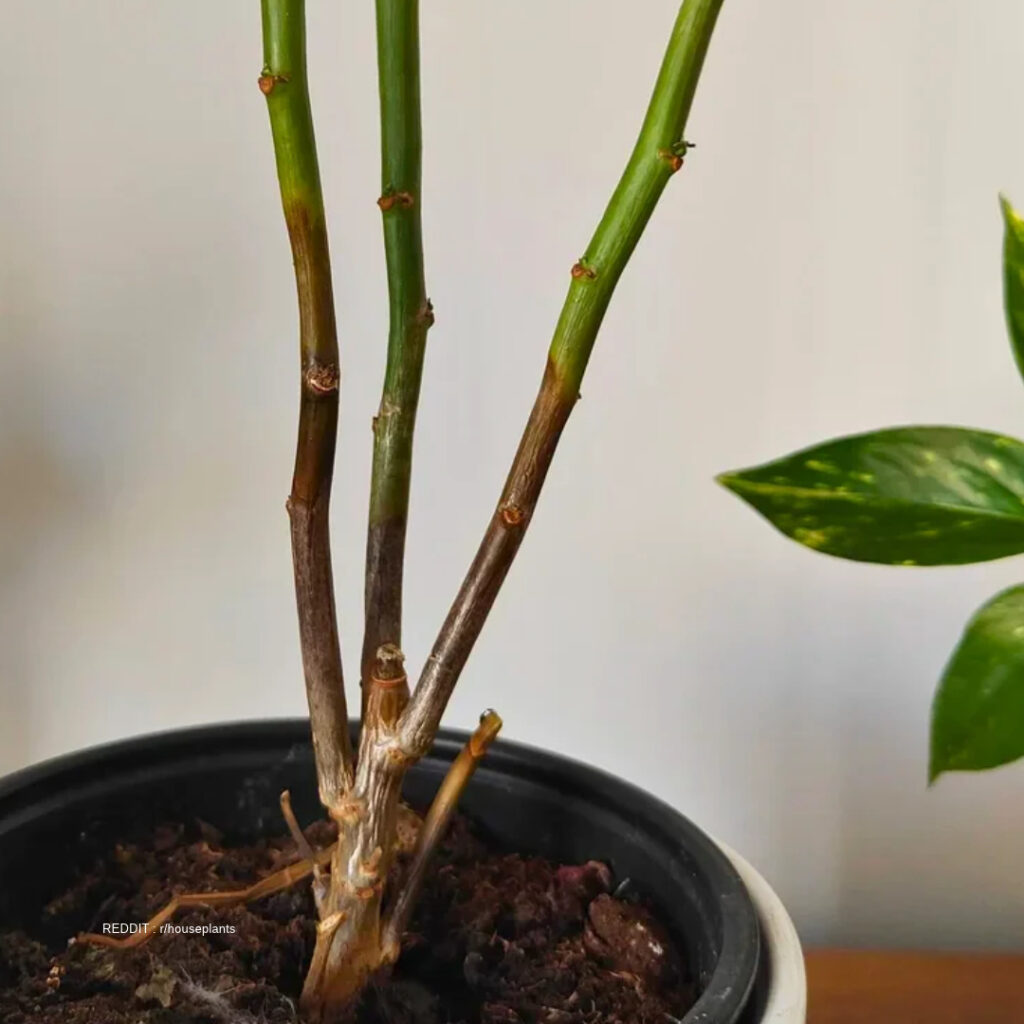
If my poinsettia droops even though I water regularly, I check the soil, roots, and pot. Soggy soil can suffocate roots, and a pot without drainage turns small mistakes into root rot fast.
Why Wet Soil Can Still Cause Wilting
Overwatering doesn’t make a poinsettia look lush. When the soil stays soggy, roots can’t breathe. The plant wilts because it can’t take up water, even if the pot feels heavy and wet.
I press a finger an inch into the soil before watering. If it’s cool and moist, I wait. I water only when the top layer dries out, then empty the saucer after 10 to 15 minutes.
Quick Tip: Lifting the pot helps. If it’s heavy and the leaves are drooping, it’s probably too much water, not too little.
Poor drainage is worse in cool rooms or north windows, where soil dries slowly. Even outdoors, rain can leave roots sitting in water for too long.
Inspect and Treat Damaged Roots
If the soil smells sour, stays wet for days, or stems droop after watering, I gently slide the plant out. Healthy roots look pale and feel firm. Mushy roots are brown or black, slimy, and smell rotten.
Root rot comes from fungi like Pythium and Rhizoctonia. Wet soil helps them spread, so I remove damaged roots right away.
I use sterile scissors to snip off every mushy root. I wipe the blades with rubbing alcohol before and after. I keep as many healthy roots as possible and repot in fresh, lightly moist mix.
Quick Tip: I never put the plant back into old wet soil. That just brings the rot right back.
Improve the Pot and Potting Mix
I use a pot with at least one open drainage hole. Decorative cover pots can trap water, so I remove the nursery pot before watering or empty the cover pot afterward.
A pot just 1 to 2 inches wider than the root ball works best. Bigger pots hold extra soil, and that soil stays wet too long for small roots.
I pick a light indoor potting mix that drains well. Mixing in perlite helps water move through instead of pooling near the roots.
Quick Tip: I avoid putting gravel at the bottom. It doesn’t help drainage—what really matters is a good drainage hole and loose, airy mix.
Restore the Right Light, Temperature, and Humidity
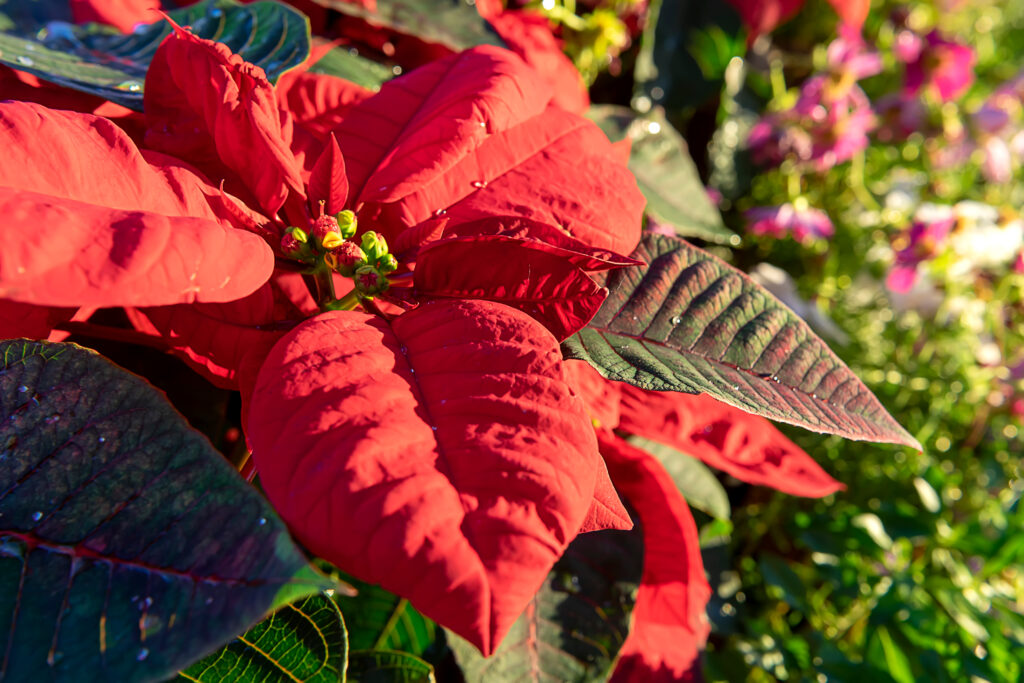
I keep my poinsettia in a warm, steady spot with bright, filtered light. Dry indoor air can lead to drooping and leaf drop, so I try to avoid that too.
Prevent Cold Stress and Sudden Temperature Changes
I keep my poinsettia where daytime temps stay between 65°F and 75°F. At night, I avoid going below 60°F. Cold air can make leaves droop fast, sometimes in just a day or two.
I move it away from drafts near doors, open windows, and vents. I also keep it from touching cold windows, especially after dark. That glass gets surprisingly chilly.
Quick Tip: At night, I place my hand near the plant. If it feels cold or drafty, I move the poinsettia a few feet away.
I don’t move it from a warm room to a porch, garage, or car for long periods. Temperature swings stress poinsettias, and stressed plants drop leaves. Even outdoors in mild zones, they need some protection on cold nights.
Provide Bright, Indirect Light Without Harsh Sun
I put my poinsettia near an east-, west-, or south-facing window with bright indirect light. A sheer curtain helps soften harsh afternoon sun. The leaves should get plenty of light but not get hot.
A north window works if it’s bright and not blocked, but I keep an eye on the plant. Weak light means slow growth and drooping stems. Direct midday sun can fade or burn the leaves.
Quick Tip: I check the light with my hand—if it casts a soft shadow, the filtered light is usually good.
Every week, I turn the pot a quarter turn. This helps the plant grow evenly, not just leaning toward the window. I avoid dark corners, even if the room feels warm enough.
Raise Humidity Without Overwatering the Soil
I bump up humidity when indoor heat dries out the air. Low humidity can leave leaves limp or crispy at the edges. Winter heating makes this a common problem.
I run a small humidifier nearby, but don’t aim mist right at the plant. Setting the pot on a tray with pebbles and water helps too—just keep the pot above the water, not sitting in it.
Quick Tip: I let the top inch of soil get a little dry before watering again. Humid air helps, but soggy roots only make drooping worse.
Good airflow matters too. I keep the plant away from heaters or vents that blast hot, dry air.
Check for Pests and Other Plant Health Issues
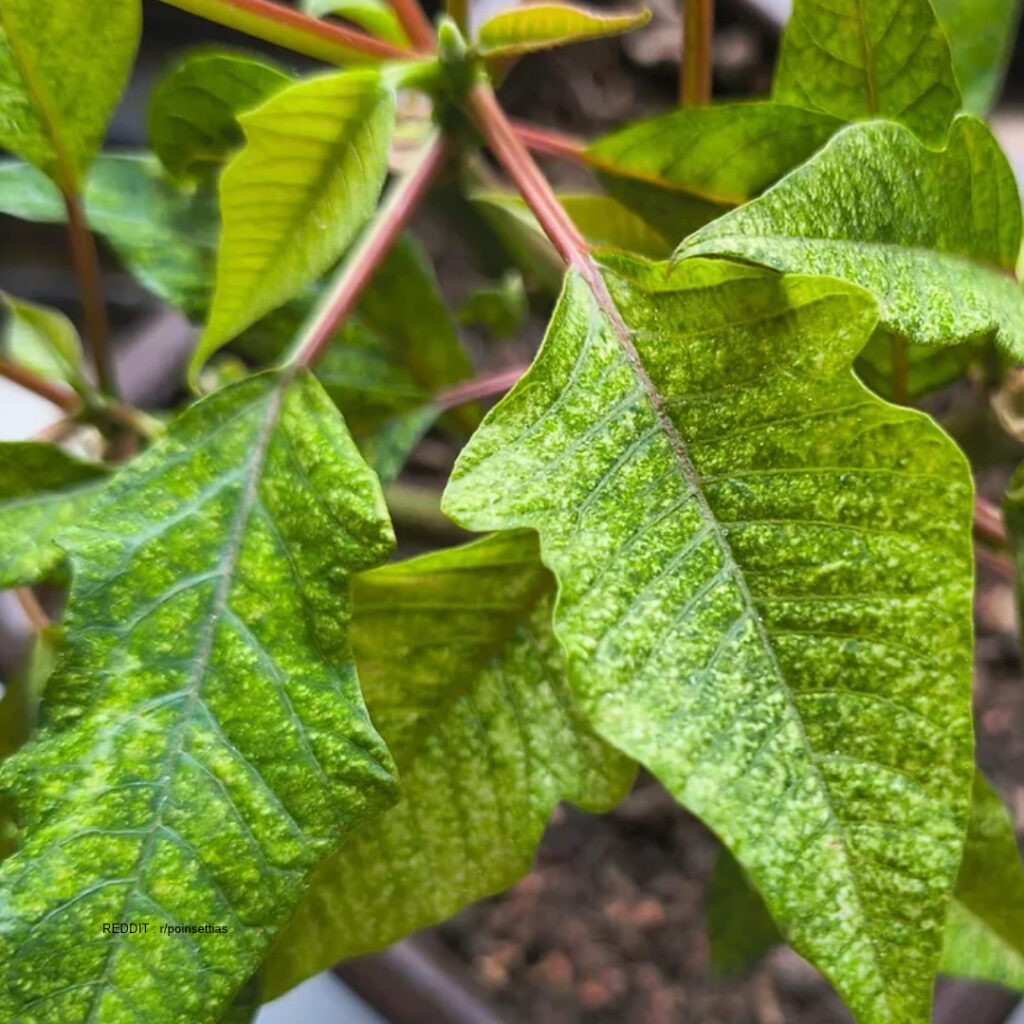
Tiny pests can make a poinsettia droop by stealing sap from the leaves and stems. I check the plant closely, treat pests early, and try to remove the conditions that let them come back.
Identify Common Sap-Sucking Pests
I always peek under leaves, check along stems, and look where leaves meet the plant. Spider mites leave tiny pale dots, some fine webbing, and leaves that look dry. They seem to love warm, dry indoor air.
Mealybugs look like little white cotton balls. Aphids are soft, pear-shaped bugs that crowd onto new growth. Whiteflies flutter up in a small cloud if I disturb the plant.
These pests leave sticky sap on leaves or the table. Leaves might curl, turn yellow, or droop even when the soil feels right.
Quick Tip: I hold a white sheet of paper under a leaf and tap gently. If I spot tiny moving specks, that usually means spider mites.
Use Safe Pest-Control Methods Before Damage Spreads
If I see pests, I move the poinsettia away from my other plants right away. Then I rinse the leaves, especially underneath, using a gentle stream of lukewarm water to knock off any bugs.
For a light infestation, I dab mealybugs and aphids with a cotton swab dipped in rubbing alcohol. I always test a small spot first—poinsettia leaves can be touchy with strong stuff.
I grab insecticidal soap for aphids, whiteflies, and young spider mites. I spray every leaf, following the label, and repeat as needed. Neem oil can help too, but I skip it if the plant’s in direct sun or stressed by heat.
Quick Tip: I spray in the evening or when the sun’s not blazing. Wet leaves in hot light can get ugly spots.
Prevent Future Infestations With Simple Plant Care
I check new plants before bringing them inside. I keep them away from my regular plants for about two weeks, since pests can hide under leaves where I don’t always notice.
I toss out any dead leaves from the pot and wipe dust off healthy leaves with a damp cloth. Clean leaves help me spot problems early, before things get out of hand.
I don’t crowd my plants together, since poor airflow helps whiteflies and other pests take over. In dry winter homes, I check for spider mites, especially near heaters. If my poinsettia’s outside in a warm, frost-free spot, I watch closely after hot, dry weather.
Quick Tip: I set yellow sticky traps near the plant to catch adult whiteflies and keep an eye on pest activity.
Maintain a Healthy Poinsettia After Recovery
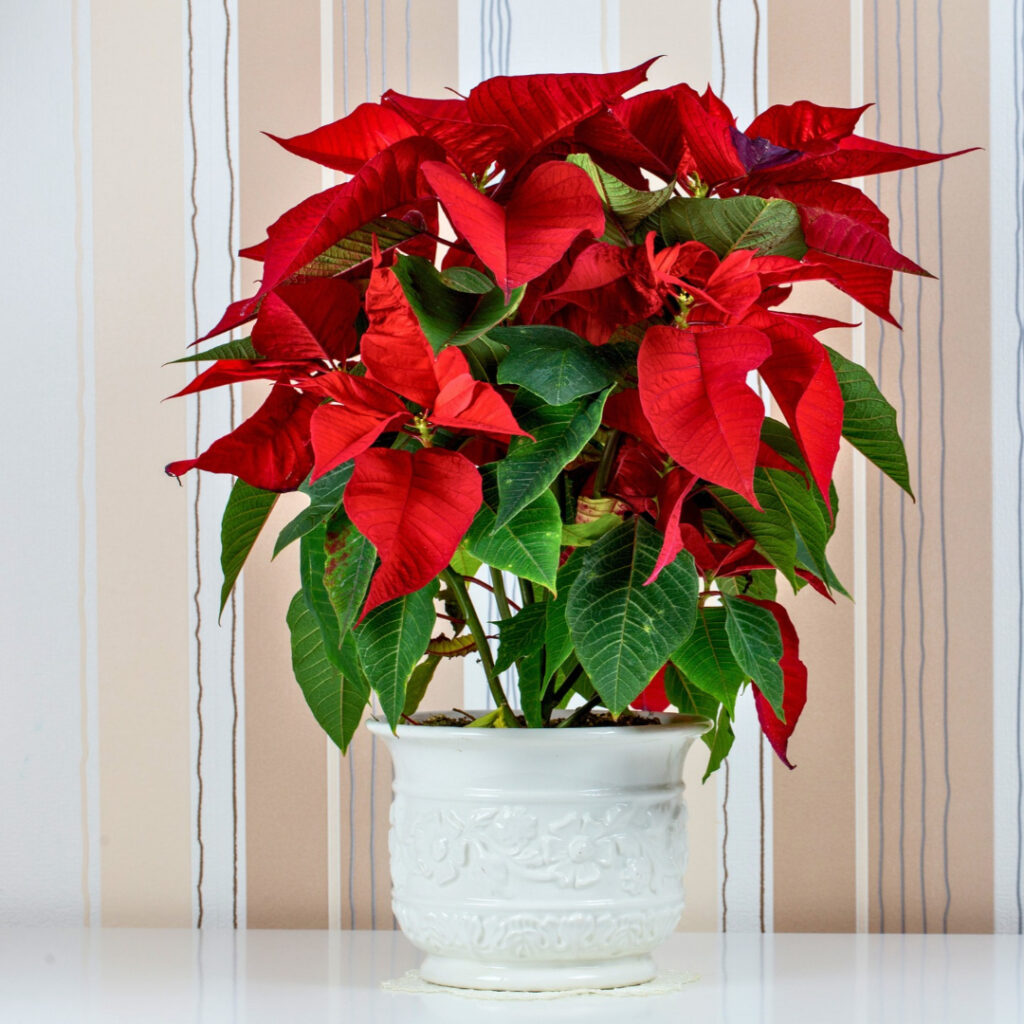
I keep my poinsettia in steady conditions, water carefully, and make sure extra water drains away. Small changes in light, temperature, and drainage help prevent another drooping episode.
Daily Placement and Care Habits
I put my poinsettia near bright indirect light, maybe a few feet from an east- or west-facing window. North-facing windows are usually too dim, and direct sun can fade or scorch the leaves.
I keep the plant away from heater vents, fireplaces, cold glass, and drafty doors. Sudden temperature swings can make leaves droop or fall. I try to keep daytime temps around 65–75°F and avoid nights below 60°F.
Quick Tip: I touch the top inch of soil every day or two. If it feels dry, I water slowly until water runs out the drainage holes.
I dump the saucer after about 10 minutes. Roots sitting in cold, soggy water? Not a poinsettia’s idea of a good time.
Avoid Decorative Sleeve Drainage Problems
I always remove or loosen the shiny sleeve before watering. Those sleeves trap water, even if the pot has holes.
I set the pot in the sink, water slowly, and let it drain for a few minutes. Only when it’s done dripping do I put it back in the sleeve or on a dry saucer.
Quick Tip: I peek inside the sleeve after watering. If there’s pooled water, I pour it out right away.
I make sure the pot sits above any leftover water in the saucer. A few pebbles help, but I never let the pot bottom touch standing water. If the soil stays wet for days, I switch to a pot with better drainage and fresh mix.
Plan for Seasonal Growth and Reblooming
Once the red bracts fade, I treat my poinsettia like any houseplant. I keep giving it bright indirect light, water when the top inch dries, and feed lightly in spring and summer with balanced fertilizer.
If I live where there’s no frost, I move it outdoors after nights stay above 60°F. I start it in shade, then slowly introduce more morning sun. In cold areas, I keep it inside until it’s warm again.
Quick Tip: I start the reblooming routine in late September or early October. I give my plant uninterrupted darkness for 14–16 hours every night for about 8–10 weeks.
I cover it or pop it in a dark closet, then bring it back to bright light during the day. Even a stray lamp at night can mess up the process, so I stick to the schedule.
Frequently Asked Questions
I check soil moisture, light, temperature, and roots first—any of these can make a poinsettia droop or lose leaves.
Why is my poinsettia wilting and dropping leaves?
Usually, I find dry soil, cold drafts, or soggy roots behind wilting and leaf drop. Sometimes, a poinsettia drops lower leaves after a move, especially from a warm shop to a chilly car or doorway.
I feel the top inch of soil. If it’s dry, I water until it drains, then empty the saucer.
Quick Tip: I keep my poinsettia away from doors, heating vents, and cold windows at night.
How can I revive a drooping poinsettia indoors?
I put the plant in bright, indirect light and check the soil before watering. If it’s dry, I water slowly until water runs out the bottom.
If the soil’s wet and heavy, I hold off and let it dry a bit. A droopy plant doesn’t always need more water—too much can look just as sad as too little.
Quick Tip: I use room-temperature water so I don’t shock the roots.
What does an overwatered poinsettia look like?
I look for yellow lower leaves, soft stems, and soil that stays wet for days. The plant can droop even if the pot feels heavy—a sneaky clue.
If there’s a sour smell or dark, mushy roots, that’s usually root rot starting.
Quick Tip: I never let the pot sit in standing water after watering.
Why did my poinsettia wilt overnight?
If a poinsettia wilts overnight, I suspect a cold draft, dry soil, or sudden heat. Temps below about 50°F can damage it quickly, even during a short trip outside.
I check if the pot sits near a window, door, or radiator. In cold zones, winter night temperatures can drop fast, so I bring the plant in before evening.
Quick Tip: I keep my poinsettia in a room between 65°F and 75°F during the day.
Why is my poinsettia drooping after repotting?
I expect a little drooping after repotting since the roots get disturbed. The plant may need a few days to settle in, especially if I changed pot size or soil.
I make sure the new pot has drainage holes and isn’t much bigger than the old one. A giant pot holds too much water around the roots, and poinsettias hate wet feet.
Quick Tip: I don’t fertilize for about a month after repotting.
Why are my poinsettia leaves curling and turning black?
I always check for cold damage first when the leaves start to curl and look black. Cold air sometimes leaves those dark, water-soaked spots that dry out and get crispy around the edges.
Pests are another headache. I look out for whiteflies or spider mites, and honestly, dry indoor air doesn’t help either.
If I spot badly damaged leaves, I just remove them. I also try to keep the plant away from cold glass and drafts—easier said than done in winter.
Quick Tip: I wipe the leaves gently with a damp cloth, and I always check the undersides for tiny insects. It’s surprising how sneaky those pests can be.