
The most common rose pests are aphids, Japanese beetles, spider mites, thrips, and rose sawflies. I’ve found most of them on my own roses at some point, usually just when the blooms look their best. You can get rid of most rose bush pests by spraying them off with water, picking them off by hand, or using insecticidal soap or neem oil.
The trick is to catch them early. Look for sticky leaves, tiny webs, holes in the petals, or leaves that look see-through and lacy. Hot, dry weather makes spider mites worse, while cool, wet springs tend to bring out more aphids.
In this post, I’ll show you how to spot these rose pests and what they do to your plants. You’ll also learn the simple fixes I use to send them packing without harming the good bugs in your garden.
Find the Pest by Its Damage
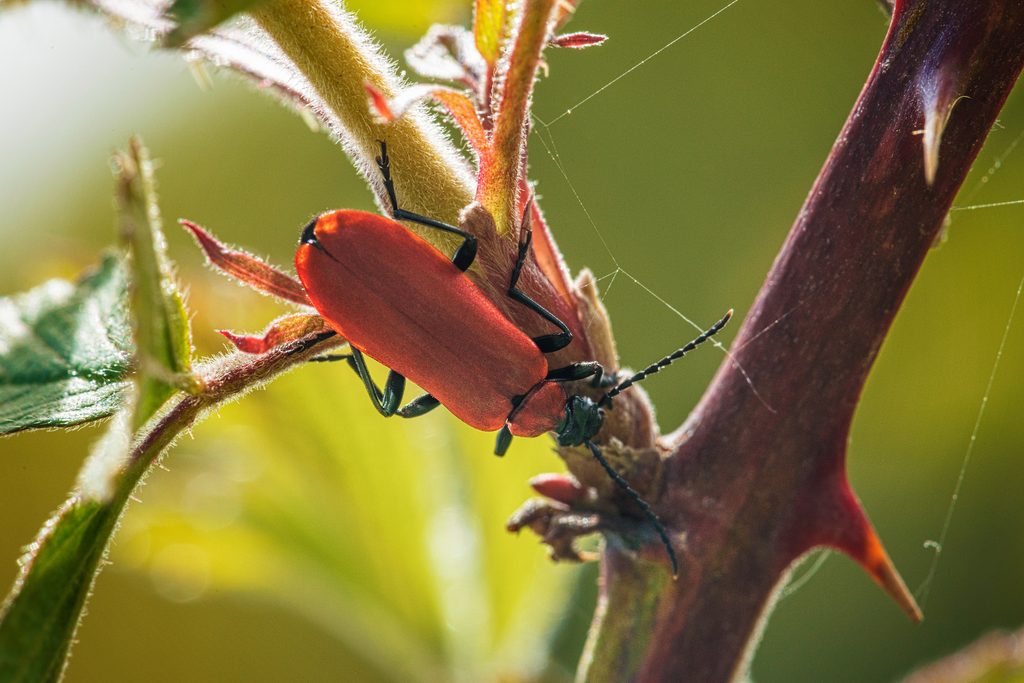
Sticky buds and speckled leaves usually point to aphids or spider mites. See-through leaves mean rose slugs, while brown-edged petals or crusty canes point to thrips or scale insects.
Sticky Buds, Distorted Growth, and Stippled Leaves: The Tiny Sap Drinkers
If your rose buds feel sticky, look closer. Aphids crowd onto new tips and buds, where they suck the sap and leave a shiny, sugary film called honeydew. New growth often comes out curled or twisted.
Stippled leaves are a different story. Tiny pale dots all over the leaf, sometimes with fine webbing underneath, usually mean spider mites. The leaves can turn dull, dusty, and bronze.
Spider mites love hot, dry weather. I see them most in mid-summer or on roses planted against a sunny wall.
Quick Tip: Hold a white sheet of paper under a leaf and tap it. If tiny specks start crawling, you have spider mites.
Skeletonized Leaves and Ragged Holes: Who’s Been Eating Lunch?
Leaves that look like lace or thin windowpanes are a classic sign of rose slugs. They aren’t true slugs, but small, green, slimy-looking sawfly larvae.
They scrape away the soft green part of the leaf and leave the veins behind. The damage often shows up in spring and early summer.
Ragged holes chewed right through a leaf point to a bigger eater. Beetles and caterpillars are the usual suspects.
| Damage | Likely Pest |
|---|---|
| See-through, lacy patches | Rose slugs |
| Large, uneven holes | Beetles or caterpillars |
Quick Tip: Flip the leaves over in the morning. Rose slugs hide underneath, and you can often wipe them off by hand.
Scarred Flowers and Dying Canes: Hidden Damage You Might Miss
Petals with brown edges or streaks often mean thrips. These tiny, thin insects hide deep inside blooms, and buds may turn brown and never open.
I notice thrips damage most on white and pale pink roses because the brown marks stand out.
Dying canes need a closer look. Scale insects look like small white, gray, or brown bumps stuck to the stems. They drain sap, and heavily covered canes can weaken and die back.
Quick Tip: Pull open a damaged bloom and shake it over white paper. Moving slivers mean thrips. For scale, run your fingernail along a cane. If bumps flake off, that’s your culprit.
Sap-Feeding Pests on New Growth and Leaves
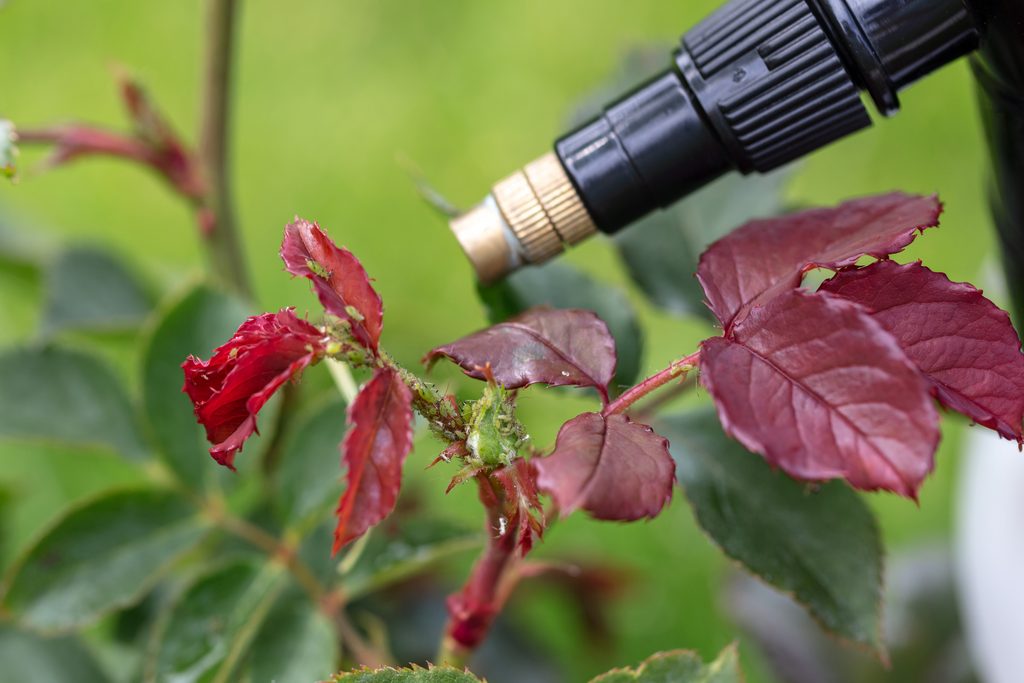
Aphids crowd onto soft buds, spider mites hide under leaves in hot, dry weather, and leafhoppers leave pale speckles behind. Each pest needs a slightly different fix, but water sprays, insecticidal soap, and neem oil handle most cases.
Rose Aphids: Wash Off Clusters and Protect Their Predators (Ladybugs Will Thank You)
The rose aphid is a tiny green or pinkish bug that packs onto new shoots and flower buds. Look for curled leaves, sticky “honeydew,” and ants marching up the stems. The ants come for the sugar.
My first move is always the hose. A firm spray knocks aphids off, and most can’t climb back. Repeat every two to three days for a week.
Quick Tip: Spray in the morning so leaves dry fast. Wet leaves at night can invite black spot.
If the aphids keep coming, try insecticidal soap. It only works when it touches the bugs, so coat the clusters. Skip broad bug killers, which also wipe out ladybugs, lacewings, and hoverfly larvae. Those helpful insects eat aphids for free.
Spider Mites: Check Leaf Undersides and Reduce Dry, Dusty Conditions (The Webbing Gives Them Away)
Spider mites are so small they look like moving dust. Leaves turn dull, speckled, or bronze. In bad cases, fine webbing appears between leaves and stems.
Flip a leaf over and tap it above white paper. If tiny specks start crawling, you’ve found them. They love hot, dry spells, especially in warm zones or on roses near walls and pavement.
Quick Tip: Hose the undersides of the leaves every few days during dry heat. Mites hate damp, clean leaves.
For heavier infestations, use insecticidal soap or neem oil every 5 to 7 days. Be sure to hit the leaf undersides.
| Product | Best Use | Caution |
|---|---|---|
| Insecticidal soap | Active mites and aphids | Must touch the pest |
| Neem oil | Mites, aphids, leafhoppers | Don’t spray above 85–90°F or in full sun |
Rose Leafhoppers: Recognize Pale Stippling Without Webbing (They Jump When You Get Close)
Rose leafhoppers are slim, pale yellow-green insects about 1/8 inch long. Brush a leaf, and they hop or fly off sideways. Their feeding leaves tiny white dots on top of the leaves.
Here’s how I tell them from mites. Leafhoppers leave no webbing. You may also find their shed skins, like tiny ghost bugs, stuck under leaves.
Quick Tip: Check the leaf undersides early in the morning, when leafhoppers move more slowly.
Light speckling rarely harms a healthy rose, so I often just watch it. If the leaves start yellowing and dropping, spray insecticidal soap or neem oil on the undersides. Repeat weekly until you stop seeing new hoppers.
Pests That Chew Rose Leaves
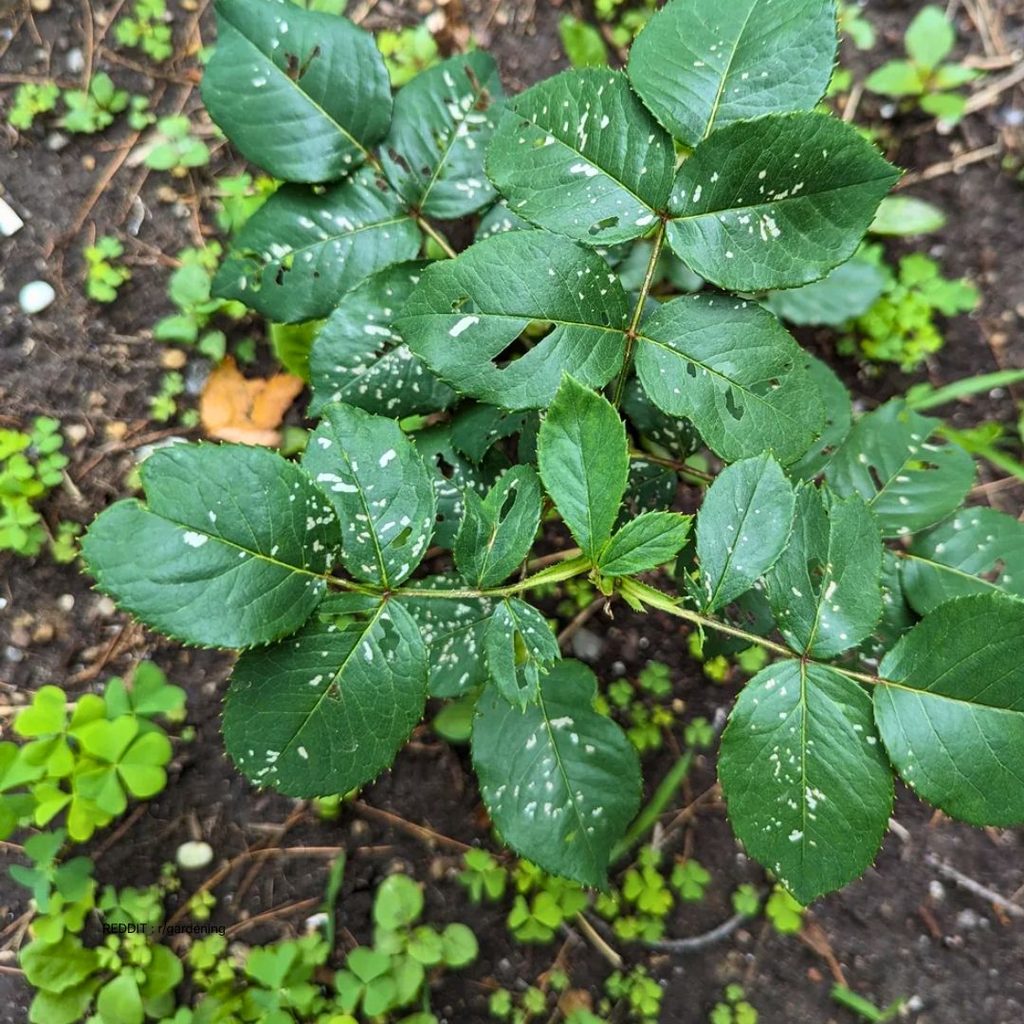
Rose slugs scrape leaves until they look like lace, Japanese beetles and Fuller rose beetles chew holes and ragged edges, and leafcutting bees snip clean circles. Only the first two need action. Handpicking or a targeted spray like spinosad usually handles them.
Rose Slugs: Remove Sawfly Larvae Before They Skeletonize Leaves (Hint: They Aren’t Slugs at All)
Rose slugs are sawfly larvae. They’re small, pale green, and a little slimy looking. They hide on the undersides of leaves and scrape away the green tissue, leaving thin, see-through “windows.”
If you leave them alone, those windows turn into brown, lacy skeletons. I check my roses in spring, when new leaves come out and the larvae show up.
Here’s what I do:
- Rub them off by hand or blast them with a strong spray from the hose.
- Use spinosad if there are a lot. Spray in the evening, after bees are done for the day.
- Skip Bt. Sawfly larvae aren’t caterpillars, so Bt won’t work on them.
Quick Tip: Flip a few leaves over every week in spring. Catching rose slugs early can save you a summer of crispy leaves.
Japanese Beetles and Fuller Rose Beetles: Handpick and Monitor (One Flies In by Day, One Sneaks Up at Night)
Japanese beetles are shiny metallic green with copper wings. They eat blooms and chew leaves down to the veins. They’re most common east of the Rocky Mountains and peak in early to midsummer.
Fuller rose beetles are gray-brown weevils that can’t fly. They feed at night and leave notched, ragged leaf edges. You’ll rarely see them in daylight.
| Beetle | When It Feeds | Best Fix |
|---|---|---|
| Japanese beetle | Daytime | Knock into soapy water |
| Fuller rose beetle | Nighttime | Sticky band on canes, trim touching branches |
I don’t use Japanese beetle traps. They can attract more beetles than they catch.
Quick Tip: Handpick Japanese beetles in the cool early morning. They’re slow then and drop straight into your bucket.
Leafcutting Bees: When Neat Leaf Cuts Need No Treatment (These “Pests” Are Actually Helping You)
See perfect half-circles cut from leaf edges? That’s leafcutting bees. They take the pieces to line their nests.
They don’t eat the leaves, so the damage is cosmetic and a healthy rose shrugs it off. These bees are also good pollinators, so I let them be.
Don’t spray. Pesticides won’t help the leaves and can harm bees.
Quick Tip: Clean, round cuts mean bees. Ragged, uneven holes mean beetles.
Pests That Damage Buds and Blooms
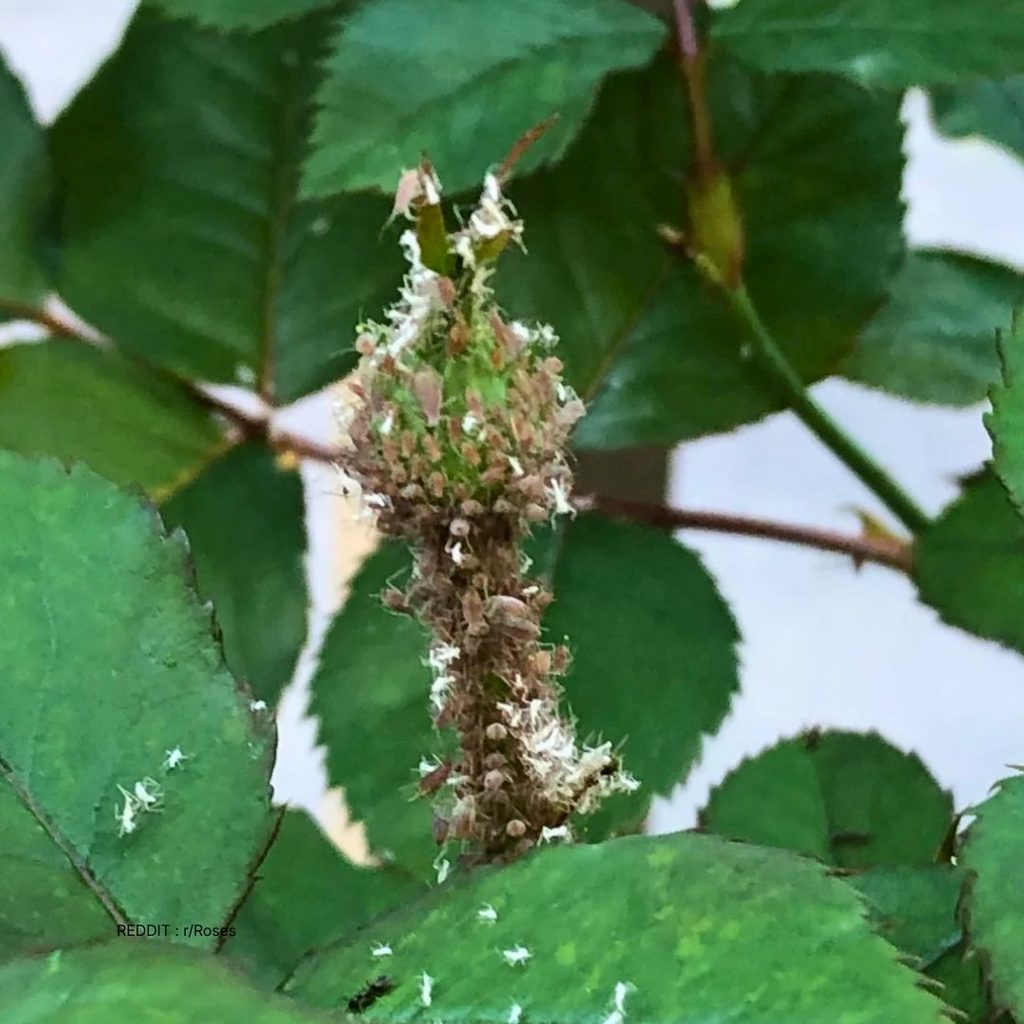
Brown-streaked petals, blackened bud tips, and beetles chewing open flowers usually point to thrips, rose midges, rose curculio, or rose chafers. Each pest leaves its own clues, and each needs a slightly different fix.
| Pest | What You See | Best First Step |
|---|---|---|
| Thrips | Brown streaks, buds that won’t open | Tap blooms over white paper |
| Rose midge | Black, crispy bud tips | Cut off and trash damaged tips |
| Rose curculio | Holes in buds, drooping buds | Handpick into soapy water |
| Rose chafers | Tan beetles eating petals | Handpick daily |
Thrips: Inspect Inside Scarred or Distorted Flowers (The Pest You Might Miss Unless You Shake It Out)
Thrips are tiny, thin insects about the size of a comma. Western flower thrips are the most common kind on roses, and they prefer white, yellow, and pale pink blooms.
Look for brown streaks or specks on petals. Buds may turn brown around the edges and stay closed.
Pull back a petal and you might spot small, fast-moving insects near the base. I check by tapping a flower over white paper. If tiny slivers crawl around, you’ve got thrips.
Quick Tip: Cut off and bag infested blooms. Skip broad-spectrum sprays so minute pirate bugs can stick around and eat the thrips.
Thrips numbers often jump in hot, dry weather, so check more often during summer heat.
Rose Midges and Rose Curculio: Remove Damaged Buds (Why Your Buds Turn Black or Won’t Open)
Rose midges are tiny flies whose larvae feed inside new growth and bud tips. A day or two later, the tips turn black and crispy, and no flower forms.
Healthy-looking shrubs with no blooms are a classic sign. Rose curculio is a small red weevil with a long black snout. It drills holes in buds to feed and lay eggs, leaving buds that may droop, dry up, or open with holes in the petals.
I handle both pests the same way: remove the damage quickly. Midge larvae drop into the soil to finish growing, while curculio larvae develop inside fallen buds.
Quick Tip: Snip damaged tips and buds, pick up any that have fallen, and put them in the trash, not the compost.
For curculio, hold a cup of soapy water under the bud and tap it. The beetles drop right in.
Rose Chafers: Check Blooms for Feeding Beetles (The Leggy Beetles That Show Up All at Once)
Rose chafers are tan beetles about half an inch long, with long, spiny legs. They often arrive in groups in late spring or early summer, feed for three to four weeks, then fade away.
They chew petals until blooms look ragged and torn, and they eat leaves down to the veins. Areas with sandy soil tend to have more rose chafers because their grubs grow there.
I walk the garden each morning with a bucket of soapy water. The beetles move slowly early in the day, so they’re easy to knock off.
Quick Tip: Handpick daily during peak season, and keep chickens away because rose chafers are toxic to birds.
Light-colored blooms seem to draw them in first, so check those roses closely.
Scale and Borers on Rose Canes: The Pests That Hide in Plain Sight
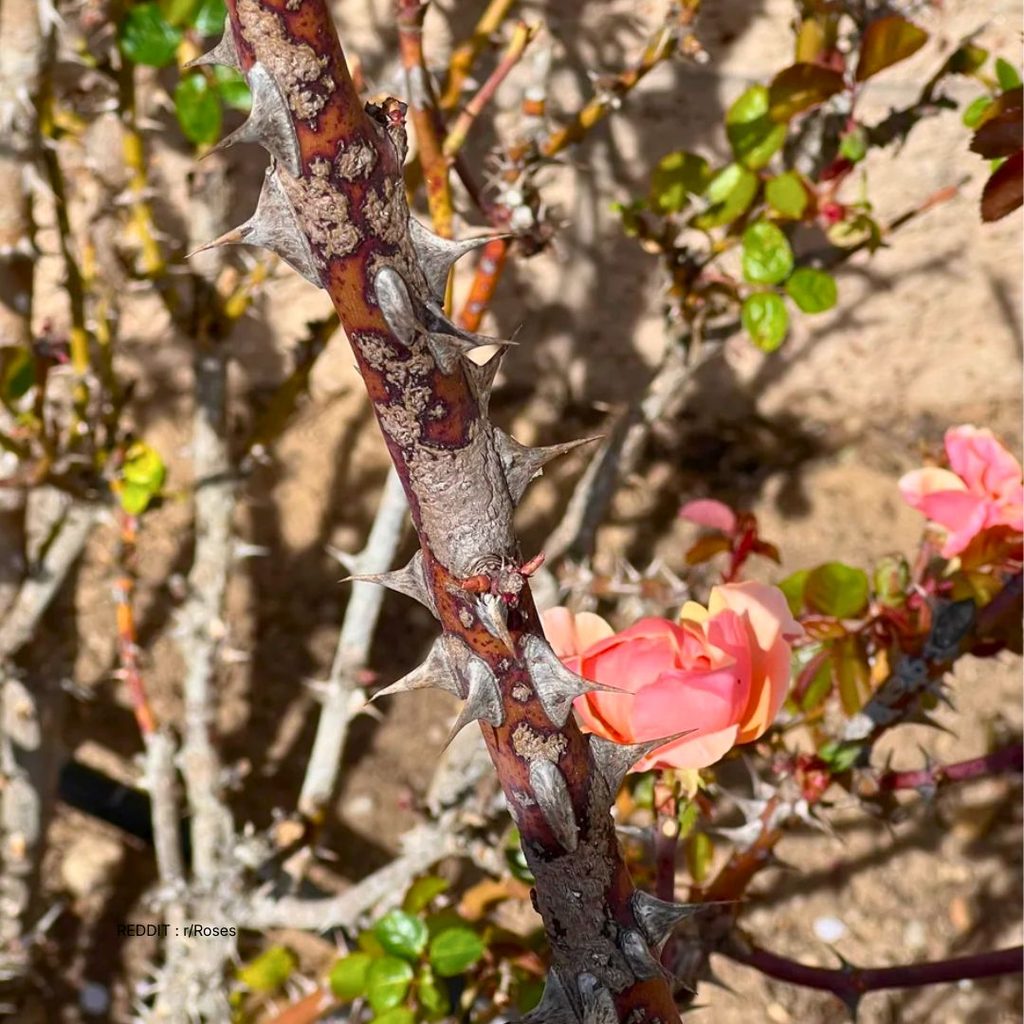
Rose scale forms white, crusty patches on older canes. Horticultural oil works best against it, either before buds open or during its short crawler stage.
Flatheaded borers and raspberry horntail tunnel inside canes. To deal with them, cut the cane back until you reach clean, healthy wood.
Rose Scale: Spot Encrusted Stems and Treat Active Crawlers Before They Settle In
Rose scale looks like someone flicked white paint onto your canes. Up close, the bumps feel rough and a little scaly, like dried glue.
These insects suck sap, and large groups can weaken or kill whole canes. They usually start on older wood near the base.
Here’s how I handle them:
| Timing | What to do |
|---|---|
| Late winter, before buds open | Spray dormant-rate horticultural oil to smother overwintering scale |
| Late spring to early summer | Watch for tiny moving crawlers and spray summer-rate oil |
| Any time | Scrub light spots off with a soft brush, and prune heavily crusted canes |
Adult scale hides under a waxy shell, so most sprays slide right off. Crawlers haven’t developed a shell yet. That’s your window.
Quick Tip: Hold white paper under a cane and tap it. Moving specks mean crawlers are out.
Skip oil sprays when it’s above about 85°F or near freezing. In hot southern zones, spray early in the morning.
Flatheaded Borers and Raspberry Horntail: Prune Infested Canes Before the Damage Spreads Down
These two pests do their damage from the inside. You won’t see the larvae, just the trouble they cause.
- Flatheaded borers tunnel under the bark of stressed canes. Look for swollen spots, cracked bark, or canes that die back for no clear reason.
- Raspberry horntail larvae chew a ring inside the cane tip in spring. The tip wilts and droops like a shepherd’s hook, then the larva bores downward.
Sprays can’t reach them, so I use my pruners instead. Cut the cane an inch or two below the damage, then check the center of the cut.
If it’s brown or hollow, keep cutting until the pith looks clean and white. Quick Tip: Bag or trash the cuttings. Don’t leave them on the ground or toss them in the compost, or the larvae may finish growing.
Borers target stressed plants first. Water deeply during dry spells, and you’ll give them fewer easy targets.
Keep Rose Pests Under Control Without Spraying by Default
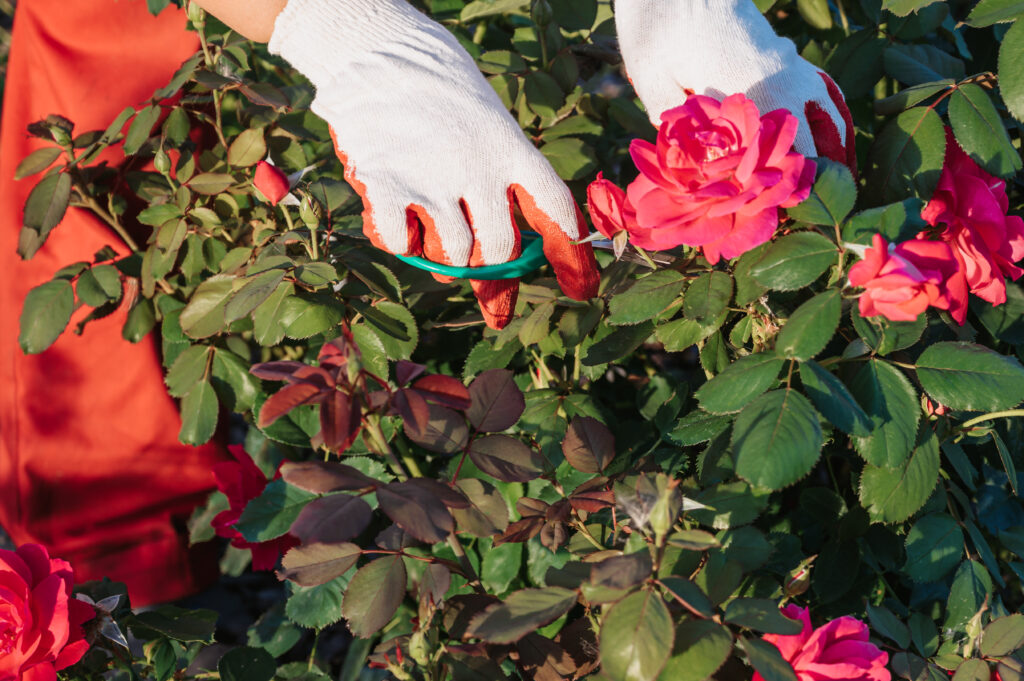
A garden hose, your fingers, and a pair of pruners can handle most rose pests before they become a real problem. Helpful bugs do a lot of the work for free. When you need a product, choose a targeted one and follow the label to keep those helpers safe.
Inspect Regularly and Start With Water, Handpicking, or Pruning: The 5-Minute Habit That Stops Most Outbreaks
I walk my roses two or three times a week. I flip leaves over, look at new buds, and check the stems.
Aphids feel sticky, while spider mites leave fine webbing and speckled, dusty-looking leaves. Catching pests early means you can use simple fixes:
- Aphids and spider mites: Blast them off with a firm spray of water in the morning so leaves dry by night.
- Japanese beetles and sawfly larvae: Pick them off and drop them into a cup of soapy water.
- Badly infested tips or canes: Snip them off and bag them. Don’t compost them.
In hot, dry weather, mites build up fast, so check more often in midsummer.
Quick Tip: Look under the leaves. That’s where most pests hide, and where most people forget to check.
Welcome Beneficial Insects and Tolerate Minor Damage: Why a Few Aphids Can Be a Good Sign
Your roses have a free security team. Natural predators eat pests every day, but they need something to eat to stick around.
| Beneficial Insect | What It Eats |
|---|---|
| Lady beetles (adults and larvae) | Aphids, mites |
| Parasitic wasps | Lay eggs inside aphids and caterpillars |
| Minute pirate bugs | Thrips, mites, small insect eggs |
Small, harmless flowers like sweet alyssum, dill, and yarrow give these helpers nectar and a place to stay. Swollen, tan aphids are a clue that parasitic wasps are already at work.
A few chewed leaves won’t hurt a healthy rose. If you wipe out every pest, the predators leave, and pests return with nothing to stop them.
Quick Tip: Wait a week before treating a small aphid group. Lady beetles often show up and handle it for you.
Choose Targeted Treatments and Follow the Label: The Gentler Products I Reach For First
Sometimes pests win the first round. When that happens, I pick the mildest product that works on that specific pest.
- Insecticidal soap: Kills soft-bodied pests like aphids, mites, and thrips on contact.
- Neem oil: Helps with aphids, mites, and some leaf diseases.
- Horticultural oil: Smothers mites, scale, and insect eggs.
- Spinosad: Works on caterpillars, sawfly larvae, and thrips.
Soaps and oils only work when they touch the pest, so coat both sides of the leaves. They leave little residue behind, which is easier on beneficial insects.
Don’t spray oils above about 90°F or on drought-stressed plants, since the leaves can burn. Spray early in the morning or evening, when bees aren’t active.
Spinosad is toxic to bees while it’s wet, so keep it off open blooms. Quick Tip: Read the label every time. It tells you the right mix rate, which pests the product covers, and how many days to wait between sprays.
Frequently Asked Questions
Most rose pests leave clear signs, like sticky leaves, fine webbing, or holes. You can handle many of them with a strong spray of water, insecticidal soap, or neem oil, as long as you time it right and protect the bees.
How can I tell which pests are attacking my roses? (The Clues Are Usually on the Leaves)
I start by flipping leaves over. Many pests hide on the undersides, where a quick glance won’t catch them.
Here are the signs I look for:
- Sticky, shiny leaves: Aphids leave behind a sugary goo called honeydew.
- Fine webbing and speckled, dusty-looking leaves: Spider mites are likely.
- See-through “windows” in leaves: Rose slugs (sawfly larvae) scrape off the green layer.
- Lacy leaves with only the veins left: Japanese beetles are a common cause.
- Brown streaks on petals or buds that won’t open: Thrips may be feeding inside.
Quick Tip: Hold a white sheet of paper under a branch and tap it. Tiny moving dots that leave streaks when you smear them often mean mites.
What’s the best way to get rid of aphids on roses? (You Might Not Need to Buy Anything)
Aphids are soft, slow, and easy to knock off. Every few days, I blast them with a firm spray of water from the hose. Many fall off and can’t climb back up.
If they keep coming back, I use insecticidal soap. It only works when it touches the bugs, so I coat the new growth and buds well.
Ladybugs and lacewings eat aphids, too. That’s one reason I skip harsh sprays that would kill them.
Quick Tip: Check new buds and soft stem tips first. Aphids love the tender growth.
How can I get rid of spider mites on roses naturally? (They Hate Getting Wet)
Spider mites thrive in hot, dry weather. They can build up fast in warm zones or during a dry summer.
In the morning, I spray water on the undersides of the leaves. It knocks mites off and raises the moisture they dislike. Doing this every few days for a week or two often keeps them in check.
For bad cases, insecticidal soap or horticultural oil can help. Some gardeners also release predatory mites to eat spider mites.
Quick Tip: Water your roses deeply during dry spells. Stressed, thirsty plants get hit harder by mites.
What’s eating holes in my rose leaves, and how can I stop it? (The Shape of the Hole Tells the Story)
The shape of the hole gives you a hint:
| Damage | Likely Cause | What I Do |
|---|---|---|
| Clear patches or skeleton leaves | Rose slugs (sawfly larvae) | Pick off or spray with water or insecticidal soap |
| Lacy leaves, beetles on flowers | Japanese beetles | Hand-pick into soapy water |
| Ragged holes, droppings nearby | Caterpillars | Hand-pick or use Bt (a caterpillar-only spray) |
| Neat half-circles on edges | Leafcutter bees | Leave them alone; they’re helpful pollinators |
Rose slugs look like tiny green caterpillars, but they feel slimy. They mostly show up in spring.
Quick Tip: Pick Japanese beetles in the early morning. They move slowly when it’s cool and drop right into a cup of soapy water.
What are the tiny black bugs on my roses? (They’re Probably Not as Scary as They Look)
Most of the time, tiny black bugs are black aphids. They cluster on buds and stems and act just like green aphids, so the same water spray and soap work.
Some thrips are dark, too. They’re thin, fast, and often hide inside flower buds.
If the bugs have a shiny, rounded shell and move around, take a closer look. Young ladybugs (larvae) are dark and spiky, and they eat aphids, so I let them stay.
Quick Tip: Use a phone camera zoom or a magnifying glass. A closer look can stop you from spraying the good guys.
What can I safely spray on my roses to keep pests away? (Timing Matters as Much as the Spray)
These are my go-to choices for home gardens:
- Water: Free and effective against aphids and mites.
- Insecticidal soap: Kills soft-bodied pests on contact.
- Neem oil: Helps control many insects and some fungal problems.
- Horticultural oil: Smothers mites, scale, and eggs.
I spray early in the morning or in the evening. That’s safer for bees and helps prevent leaf burn. Skip oil and soap sprays when it’s above about 90°F, or when the plant is dry and stressed.
Always follow the label and test a few leaves first. Wait a day and check whether they turn spotty or brown.
Quick Tip: Spray only where you see pests. Covering the whole bush “just in case” can harm the insects that help you.