
You planted your rose bushes and gave them water and care. Now there are plenty of green leaves but no flowers. I know that feeling. It can be frustrating.
Most of the time, roses don’t bloom because they get too little sun, the wrong fertilizer, or a poorly timed prune. Roses need at least six hours of direct sun a day. Too much nitrogen also means fewer flowers because it encourages leaves instead of buds. Heat, drought, pests, or a young plant still settling in can hold flowers back, too.
If you keep asking, “Why are my roses not blooming?” I’ll help you find the cause. We’ll look at common reasons, what to check on your plant, and simple fixes to try this season. Some answers depend on your weather and growing zone, so I’ll point those out along the way.
Start With the Clues Your Rose Is Giving You
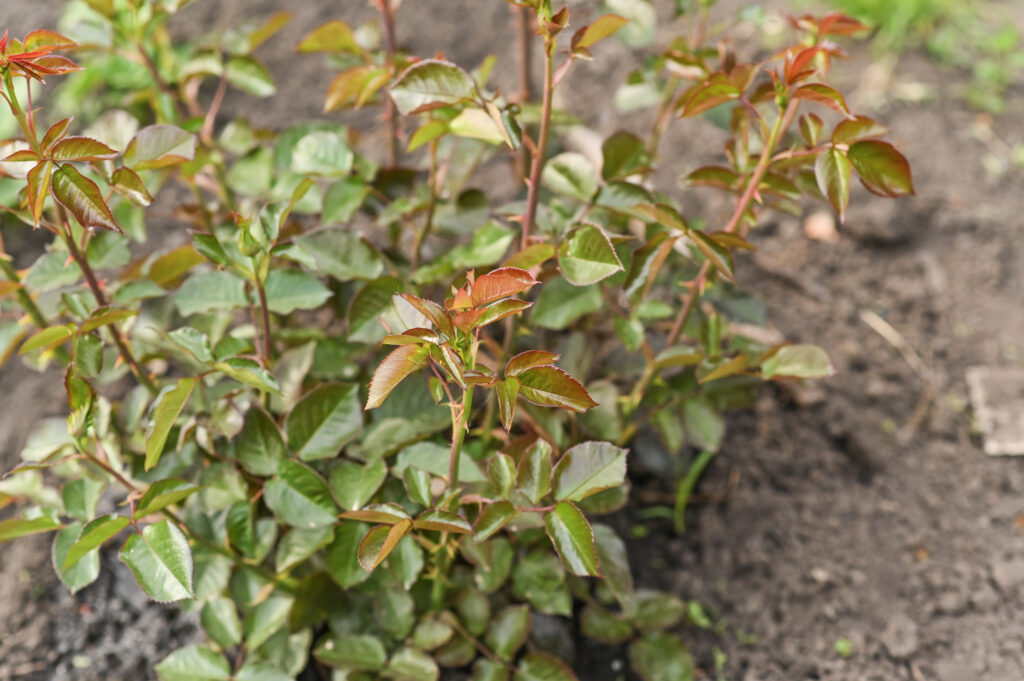
A rose with plenty of leaves but no buds usually needs more sun or less nitrogen. Buds that stall can point to wet weather or pests, while a long gap between flowers may simply be part of your rose’s growing habit.
Lots of Leaves but No Buds: Your Rose Might Be Too Comfortable
A big, leafy green bush with no flowers is one of the most common reasons roses fail to bloom. I usually look at two things: too much nitrogen and too little sun.
High-nitrogen fertilizers and fresh lawn feed tell a rose to grow leaves, not flowers. Most roses also need at least 6 hours of direct sun a day to bloom well.
Young roses may put their energy into roots and leaves during their first year. That’s normal, so give them a season.
Quick Tip: Switch to a balanced or bloom-focused fertilizer, and check where the shade falls around noon. A tree that leafed out since spring may be stealing the sun.
Buds Form but Never Open: The Weather and Bugs Might Be to Blame
This one hurts. You see fat buds, then they turn brown, get mushy, or stay tightly shut.
Here’s what I check first:
| What You See | Likely Cause |
|---|---|
| Buds feel soft and stick together | Balling from cool, rainy weather |
| Brown streaks on petal edges | Thrips (tiny insects inside the bud) |
| Gray fuzz on the bud | Botrytis, a fungus that loves damp air |
| Buds dry up and drop | Heat stress or dry soil |
Roses with lots of thin petals are more likely to ball up in wet climates. In hot zones, dry soil is a more common source of stress.
Quick Tip: Pull open one bad bud and look inside. If the top 2 inches of soil feel dry, water deeply at the base, not over the flowers.
A Pause Between Blooms or a Once-a-Year Display: Your Rose May Be Working on Schedule
Sometimes nothing is wrong. Roses follow different blooming patterns, depending on the type you have.
Repeat-blooming roses flower in waves. After each flush, they often rest for about 6 to 8 weeks before the next round. Removing spent flowers can help the next wave come sooner. In hot summers, many repeat bloomers slow down until cooler weather returns.
Old garden roses like many gallicas, damasks, and albas bloom only once a year, usually in late spring or early summer. They flower on last year’s stems.
Quick Tip: If you have a once-bloomer, prune it right after it flowers, not in late winter. Winter pruning cuts off next year’s buds.
Check Sunlight and Water First
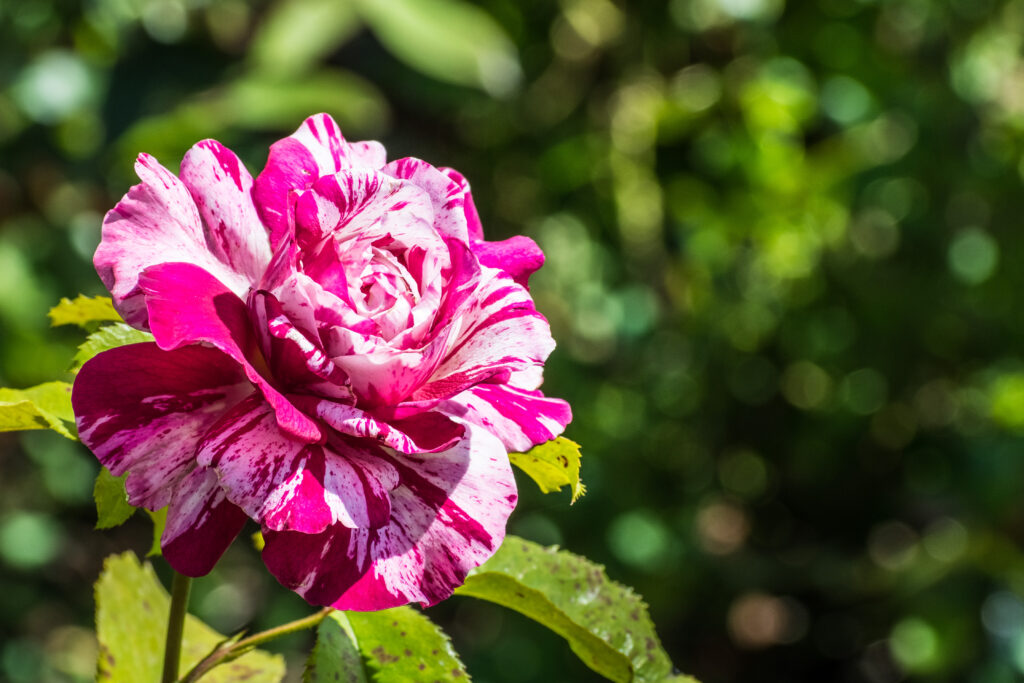
Most rose bushes need at least six hours of direct sun and evenly moist soil to make flowers. Too little light, bone-dry soil, or soggy roots can all stop buds from forming.
Count the Hours of Direct Sun: Why Six Hours Is the Bare Minimum
Roses love sun. Most types need full sun, or six or more hours of direct light each day. Eight hours is even better.
Here’s what I do: I check the rose bed every two hours on a sunny day and note when it’s in shade. Trees, fences, and the side of the house can block more light than you’d expect. The shade also shifts as the seasons change.
If your rose gets only 3–4 hours of sun, it may grow leaves but skip the blooms. In very hot areas, like zones 9 and up, a little afternoon shade can help. Morning sun matters most.
Quick Tip: Take a phone photo of the bed at 9 a.m., noon, and 3 p.m. to see where the shade falls.
Check for Dry or Waterlogged Soil: What Your Finger Can Tell You
Roots need both water and air. Too little water stresses the plant, while too much pushes out air and can cause root rot.
Push your finger about two inches into the soil near the base. If it feels dry and dusty, the rose is thirsty. If it still feels cold, wet, and muddy a day after watering, the soil isn’t draining well.
A soil moisture meter takes the guesswork out of it. I like using one in deep beds and big pots, where my finger can’t reach far enough.
| Soil Feels | What It Means | What to Do |
|---|---|---|
| Dry at 2 inches | Too dry | Water deeply |
| Slightly damp | Just right | Wait a day or two |
| Soggy or smells sour | Too wet | Water less, improve drainage |
Quick Tip: Yellow leaves on the lower stems can point to either problem, so check the soil before you add water.
Water Deeply and Keep Moisture Consistent: The Slow Soak Roses Love
Short, light sprinkles only wet the top layer, leaving roots shallow and quick to dry out. A deep soak sends water down 12–18 inches, where roots can grow strong.
Water at the base, not over the leaves. Wet leaves can lead to black spot. Most rose bushes do well with about 1–2 inches of water per week, given in one or two deep sessions.
Consistent soil moisture matters as much as the amount. Big swings between dry and wet stress the plant and can make buds drop. A 2–3 inch layer of mulch helps hold water in. You may need to water more often during hot, dry spells or if you have sandy soil.
Quick Tip: Water early in the morning so leaves dry quickly and less water gets lost to heat.
Make Sure Fertilizer Matches What Your Soil Needs
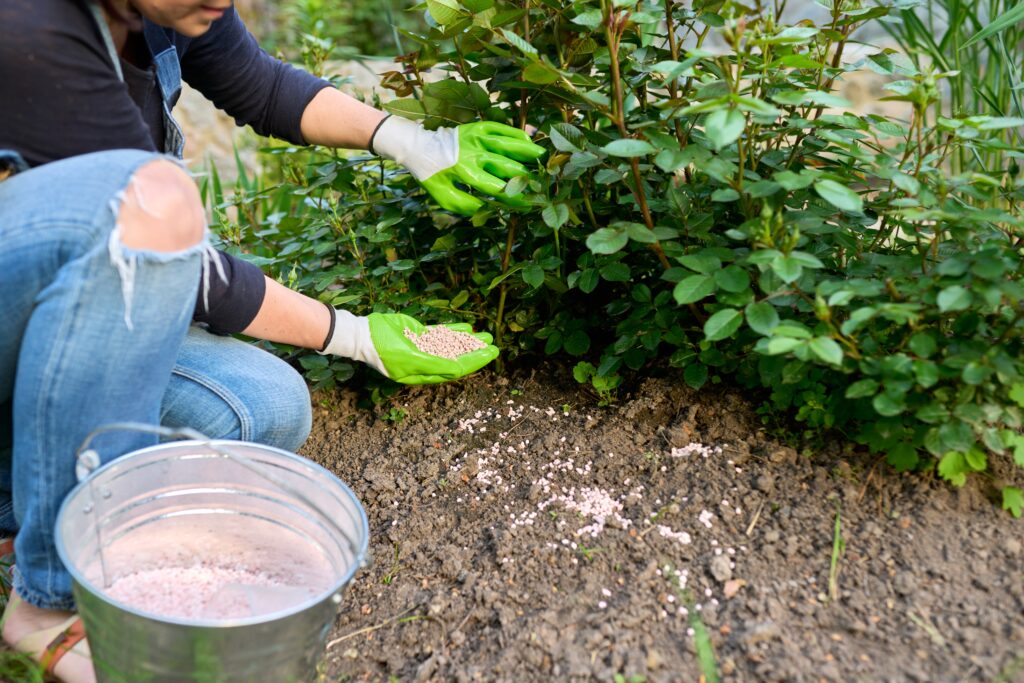
Too much nitrogen gives you a big green bush with few or no flowers. A soil test shows what your roses actually need, so you can feed them the right amount at the right time.
Recognize Excess Nitrogen and Leafy Growth (Lush Leaves Can Be a Warning Sign)
Here’s the tricky part. A rose with dark green, glossy leaves and long, soft stems can look healthy. But if it has almost no buds, excess nitrogen may be to blame.
Nitrogen feeds leaves and stems. Too much tells the plant to keep growing green instead of making flowers.
Watch for these signs:
- Deep green leaves that feel soft and floppy
- Fast, tall growth with few buds
- New shoots that attract aphids
Lawn fertilizer is a common cause. It’s high in nitrogen, and it can reach nearby rose beds.
Quick Tip: If your roses sit next to the lawn, keep lawn feed at least a few feet away from the bed.
Test Soil Before Adding More Nutrients (Your Roses Might Already Have Plenty)
I always suggest a soil test before you buy another bag of fertilizer. Guessing can lead you to add nutrients the soil already has.
Soil testing shows your pH and your levels of nitrogen, phosphorus, and potassium. Roses do best at a pH of about 6.0 to 6.5. Outside that range, they can’t take up nutrients well, even when the soil contains them.
You have two main options:
| Option | Cost | Detail Level |
|---|---|---|
| Home test kit | Low | Basic |
| Local extension office lab | Low to moderate | Detailed, with advice |
Take samples from 4 to 6 inches deep at a few spots around the bed. Mix them in a clean bucket.
Quick Tip: Test in early spring or fall, when the soil is moist but not soggy.
Choose and Apply Fertilizer Carefully (Less Is Often More for Blooms)
Once you have your results, fertilizing roses gets much simpler. You can feed only what’s missing.
If nitrogen is high, pick a fertilizer with a lower first number and a higher middle number, like 5-10-5. Phosphorus supports root and flower growth. If your test shows plenty of everything, skip feeding for a while.
A few rules I follow:
- Water the soil before and after feeding.
- Follow the label amount. Don’t add “a little extra.”
- Stop feeding about 6 weeks before your first frost date.
That last step matters in colder zones. Late feeding pushes soft new growth that frost can damage. In warm zones with mild winters, you may be able to feed a bit longer.
Quick Tip: Scratch granular fertilizer lightly into the top inch of soil, keeping it a few inches away from the stems.
Prune for Your Rose’s Blooming Habit
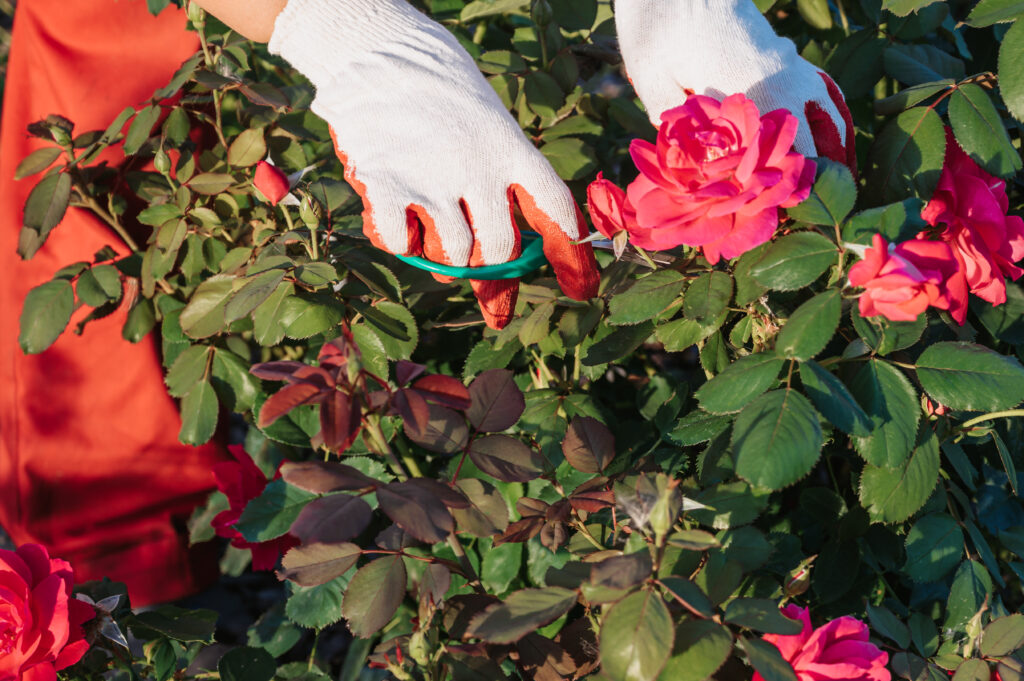
Once-blooming roses flower on canes that grew the year before, so prune them right after they bloom. Repeat-blooming roses flower on new growth, so give them a harder cut in late winter and deadhead regularly through summer.
Protect Last Year’s Canes on Once-Blooming Roses (Or Your Spring Pruning May Cut Off Every Bud)
Many old garden roses, including damask, gallica, and alba types, bloom only once a year. So do many rambling climbing roses. They form flower buds on canes that grew last season.
If you prune these roses hard in early spring, you’ll cut off this year’s flowers. I’ve seen plenty of healthy, green, leafy shrubs with no blooms for exactly this reason.
Wait until the flowers fade in early summer. Then:
- Cut out dead, broken, or crossing canes.
- Remove one or two of the oldest, woodiest canes at the base.
- Shorten long shoots by about one-third if the plant is too big.
Quick Tip: Finish pruning by midsummer so the new canes have time to grow and ripen before fall.
Prune Repeat Bloomers to Encourage New Growth (The Harder Cut That Brings More Flowers)
Repeat-blooming roses, such as hybrid teas, floribundas, and most shrub roses, flower on new stems. Pruning encourages the plant to grow those stems.
Prune in late winter or early spring, when the buds start to swell. In many areas, that’s around the time forsythia blooms. In colder zones, wait until the risk of hard frost has passed. In mild climates, late winter often works fine.
| Rose Type | How Much to Cut | Canes to Keep |
|---|---|---|
| Hybrid tea | Down to 12–18 inches | 3–5 strong canes |
| Floribunda | Down to 18–24 inches | 5–8 canes |
| Shrub rose | Remove about one-third | Healthy, open shape |
| Repeat climber | Side shoots to 2–3 buds | Main long canes |
Make each cut about ¼ inch above an outward-facing bud, at a slight angle. The cut wood should look creamy white inside. If the center is brown, cut lower.
Quick Tip: Train climber main canes sideways. Horizontal canes tend to produce more flowering shoots.
Deadhead Spent Flowers When Another Flush Is Possible (And Know When to Stop)
Once a flower fades, the plant starts making seeds in a rose hip. Removing old blooms encourages repeat bloomers to put their energy into new buds instead.
Look for droopy, brown, or papery petals. Snip the stem just above the first leaf with five leaflets. That spot usually has a bud ready to grow into a new flowering stem.
Deadheading does little for once-blooming roses. They won’t produce another flush, and many make pretty hips you may want to keep.
Quick Tip: Stop deadheading about 6–8 weeks before your first fall frost. Letting hips form helps the plant slow down and toughen up for winter.
Inspect Buds and Foliage for Pests and Disease
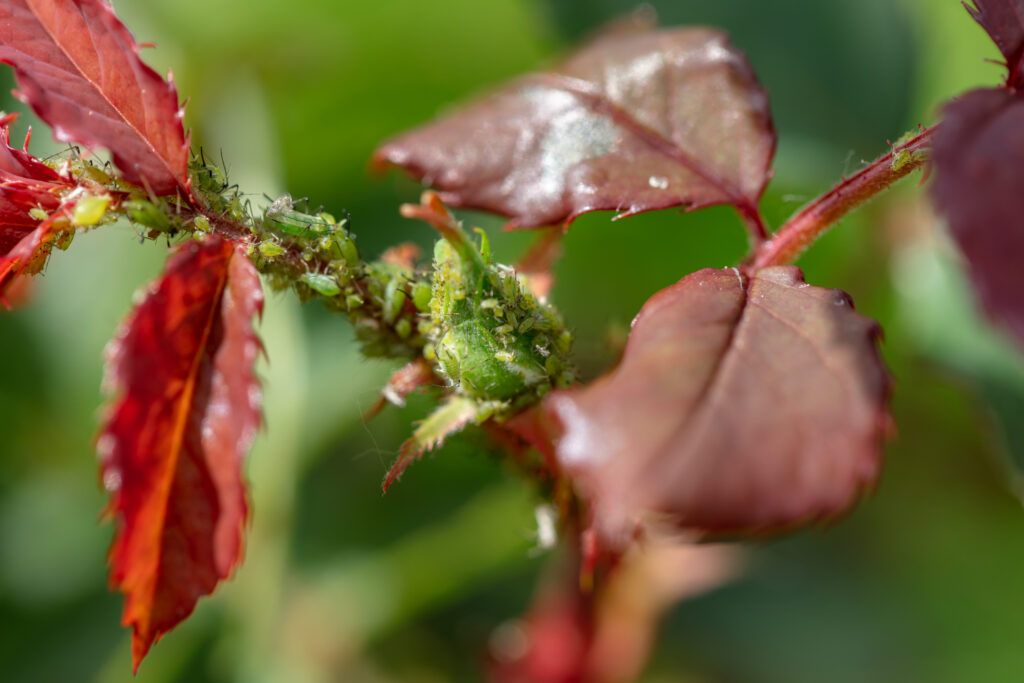
Tiny insects like aphids and thrips can ruin buds before they open. Fungal diseases like black spot and botrytis blight can also drain a rose’s energy. A close look at the buds and leaves, followed by the right treatment, can help your roses start blooming again.
Look for Insects Feeding on Buds and Flowers (Some Hide Right Inside the Petals)
I check my roses up close every few days in late spring. Pests often start small, so a quick look can catch them early.
Here’s what to watch for:
- Aphids: Soft green, pink, or black bugs packed on new stems and buds. Leaves may feel sticky.
- Thrips: Very thin, fast insects that hide between petals. Buds turn brown at the edges or never open.
- Japanese beetles: Shiny green and copper beetles that chew flowers and leave lacy leaves. They show up in early summer in the eastern and central U.S.
To check for thrips, gently pull open a bud that looks stuck. You may see tiny moving specks inside.
Quick Tip: Tap a bud over a sheet of white paper. Small dark specks that crawl are likely thrips.
Spot Diseases That Weaken Plants or Prevent Buds Opening (Wet Leaves Are Often the Clue)
Fungal diseases don’t always kill roses. But they do weaken them, and a weak rose puts less energy into flowers.
| Disease | What You’ll See | When It Shows Up |
|---|---|---|
| Black spot | Round black spots with yellow edges; leaves drop | Warm, rainy weather |
| Powdery mildew | White, dusty coating on leaves and buds | Warm days, cool nights, dry leaves |
| Botrytis blight | Gray, fuzzy mold; buds rot or stay shut | Cool, damp, humid weather |
In humid areas like the Southeast, black spot can be a problem every summer. In drier climates, powdery mildew is more common.
Quick Tip: Water at the base of the plant in the morning so the leaves dry fast.
Choose Targeted Controls and Follow Product Labels (Stronger Isn’t Always Better)
I always start with the gentlest fix that works. For aphids, a hard spray of water from the hose often knocks them off.
For heavier pest problems, try these:
- Horticultural oil or insecticidal soap for aphids and thrips. The product must touch the insects to work.
- Hand-picking Japanese beetles into a bucket of soapy water in the early morning, when they move slowly.
- Fungicides labeled for roses to help with black spot and powdery mildew.
For botrytis blight, cut off moldy buds and throw them in the trash, not the compost.
Read the label every time. It tells you how much to use, how often, and which pests or diseases the product treats.
Quick Tip: Don’t spray oil when it’s above 85°F. It can burn the leaves.
Consider Timing, Weather, and Less Obvious Causes
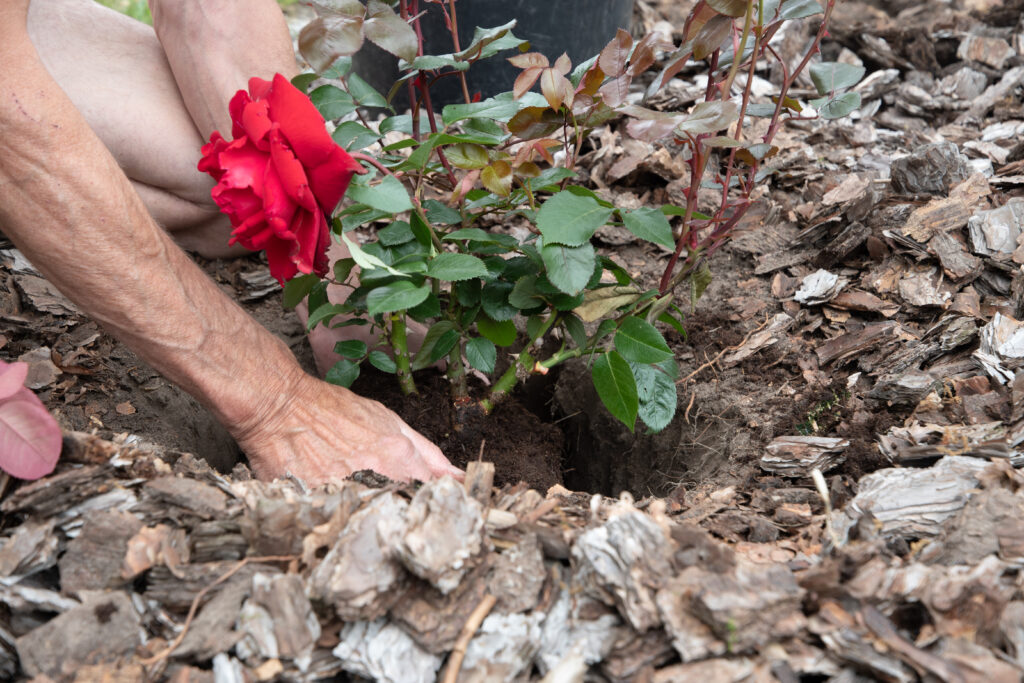
Young rose bushes often need a full season before they bloom well, and some stems never make buds. Heat, heavy rain, and the time of year can also slow flowering. Small care changes and a little patience usually help.
Give Newly Planted Roses Time to Establish (Year One Is Mostly About Roots)
If you planted your rose this year, a slow start is normal. The plant spends its first months growing roots, not flowers. I tell friends to expect a few blooms in year one and a much better show by year two or three.
Bare-root roses are often the slowest to get going. Potted roses from a nursery may bloom sooner, but they can still pause after planting.
Watch for fresh red or green leaves and new canes. Those are good signs. Wilting, yellow leaves, or dry soil a few inches down mean the roots need more water.
Quick Tip: Water deeply once or twice a week during the first summer. Deep watering helps roots grow down, which leads to better rose blooming later.
Identify Blind Shoots That Grow Without Buds (Some Stems Just Forget to Flower)
A blind shoot is a stem that grows leaves but never forms a flower bud at the tip. It looks healthy. It just ends in leaves instead of a bloom.
Blind shoots can appear after a cold snap, a stretch of low light, or for no clear reason. A few on one plant are normal. If most stems are blind, check the sunlight first. Roses need at least 6 hours of direct sun a day.
Here’s what I do with them:
- Find the blind stem.
- Follow it down to the first leaf with five leaflets.
- Cut just above that leaf.
That cut often encourages the plant to send out a new stem that can bloom.
Quick Tip: Don’t just pinch the tip. A deeper cut to a five-leaflet leaf gives the new shoot a better chance of making a bud.
Allow for Heat, Heavy Rain, and Seasonal Slowdowns (Your Rose Might Just Be Waiting)
Weather plays a big part in why roses don’t bloom. The plant isn’t always the problem.
| Condition | What You May See | What to Do |
|---|---|---|
| Heat over about 90°F | Fewer, smaller blooms | Water deeply and add mulch |
| Heavy rain | Buds that rot or stay closed (“balling”) | Remove soggy buds |
| Cool spring | Late first flush | Wait a few weeks |
| Late summer | Slower repeat blooms | Normal pause |
Check what type of rose you have, too. Many old garden roses and some climbers bloom only once a year, usually in late spring or early summer. No amount of care will make them bloom again that year.
In hot zones like the Deep South, roses often rest in midsummer, then bloom again in fall.
Quick Tip: Look up your rose’s name. The tag or seller’s website should say whether it’s a once-bloomer or a repeat bloomer.
Make One Care Change at a Time and Watch for New Growth (Patience Tells You What Worked)
When blooms don’t show up, it’s tempting to change everything at once. I’ve done it, and then I had no idea which fix helped.
Pick one change, like watering more, switching fertilizers, or giving the rose more sun. Then wait. On repeat-flowering rose bushes, new stems usually take about 6 to 8 weeks to grow and bloom.
Keep simple notes:
- The date of the change
- What you changed
- When new buds appear
Watch the new growth closely. Healthy new canes with firm, green leaves are the ones most likely to flower.
Quick Tip: Take a phone photo of your rose every two weeks. Side-by-side pictures make small changes easier to spot.
Frequently Asked Questions
Too much nitrogen, fewer than six hours of sun, incorrect pruning, and stress from heat or dry soil are common reasons roses stop blooming. Climbers, potted roses, and blind shoots each have their own causes and fixes.
Why is my rose bush growing leaves but no flowers? (Your fertilizer might be the culprit)
Lots of green leaves but no buds usually point to too much nitrogen. Lawn fertilizer and fresh manure are common sources. Nitrogen feeds leaves, so the plant puts its energy there instead of making flowers.
I switch to rose food or a bloom fertilizer with more phosphorus than nitrogen. Check the three numbers on the label. The middle number should be equal to or higher than the first.
Watch where your lawn fertilizer lands, too. If your rose sits at the edge of the grass, it may get some every time you feed the lawn.
Quick Tip: Stop feeding for a few weeks, then use a balanced rose fertilizer and give the plant time to adjust.
Why isn’t my climbing rose flowering? (It may be the way the canes are growing)
Climbing roses bloom best on side shoots that grow from canes trained sideways. When canes grow straight up, the plant often flowers only at the very top, or not at all.
I bend the long canes out to the sides and tie them loosely to a fence or trellis. This encourages short side shoots, which carry the flowers.
Age matters, too. Many climbers take two or three years to settle in before they bloom well. Some older types flower only on last year’s wood, so cutting them hard in spring removes the buds.
Quick Tip: Train canes as close to flat as you can, and prune once-blooming climbers only after they finish flowering.
Why isn’t my potted rose blooming? (Small pots can cause big problems)
Roses in pots dry out fast and use up nutrients quickly. A pot that’s too small can leave roots cramped and stressed, and stressed roses often skip blooming.
I use a pot at least 15 to 18 inches wide for most roses. Push a finger into the soil. If the top inch or two feels dry, water deeply until water drains from the bottom.
Pots also need more regular feeding because water washes nutrients out. In hot areas, a dark pot in full afternoon sun can overheat the roots. In cold zones, potted roses may need winter shelter.
Quick Tip: Feed potted roses lightly every two to four weeks during the growing season. Move them to a bigger pot if roots circle the bottom.
How can I tell if my rose has blind shoots? (Look closely at the tips)
A blind shoot is a stem that grows normally but ends in leaves instead of a bud. Its tip may look flat or empty. Blind shoots can appear after a cold snap, a cloudy spell, or when the plant doesn’t get enough light.
The good news is, you can fix them. I cut the blind shoot back to just above a strong, outward-facing leaf with five leaflets. A new shoot often grows there and usually makes a bud.
Quick Tip: Don’t wait for blind shoots to change. Trim them back so the plant can try again.
Can too little sunlight keep roses from blooming? (Yes, and shade creeps in slowly)
Yes. Most roses need at least six hours of direct sun each day to bloom well. With less light, you’ll often see long, thin stems, fewer buds, and more leaf disease.
Shade can increase over time as nearby trees and shrubs grow. A spot that was sunny five years ago may not be sunny now. I like to check the bed a few times during the day to see how much sun it really gets.
In very hot climates, some afternoon shade can help roses handle the heat. Morning sun is most useful because it also dries the leaves early.
Quick Tip: If a rose gets under six hours of sun, trim back nearby branches or move the rose in early spring or fall.
What can I do to encourage my roses to bloom naturally? (A few simple habits make a difference)
Start with the basics: full sun, deep watering, and healthy soil. I water at the base once or twice a week to keep the soil evenly moist, not soggy. A 2 to 3 inch layer of mulch helps hold moisture and keeps the roots cool.
Deadheading helps repeat-blooming roses. Snip off faded flowers so the plant puts its energy into new buds instead of seeds. Cut just above a five-leaflet leaf.
Prune at the right time for your area. In most zones, that means late winter or early spring, when buds begin to swell. In mild climates, you may need to prune a little earlier.
Quick Tip: Stick to a simple routine: sun, steady water, a spring feed, and regular deadheading. Give your rose a full season to respond.