
Poinsettia leaves usually fall off because stress from watering, temperature changes, low light, dry air, or pests disrupts the plant.
It’s honestly a little unnerving to see those bright leaves dropping, but poinsettias tend to give you hints before things get out of hand. I’ll help you figure out if soggy soil, dry roots, a cold draft, or a hot vent is to blame.
Quick Tip: If the top inch of soil feels dry, water lightly and let extra water drain out. Check its light, warmth, and leaves for damage so you can fix what’s wrong before more leaves hit the floor.
Identify The Stress Signal Before Acting
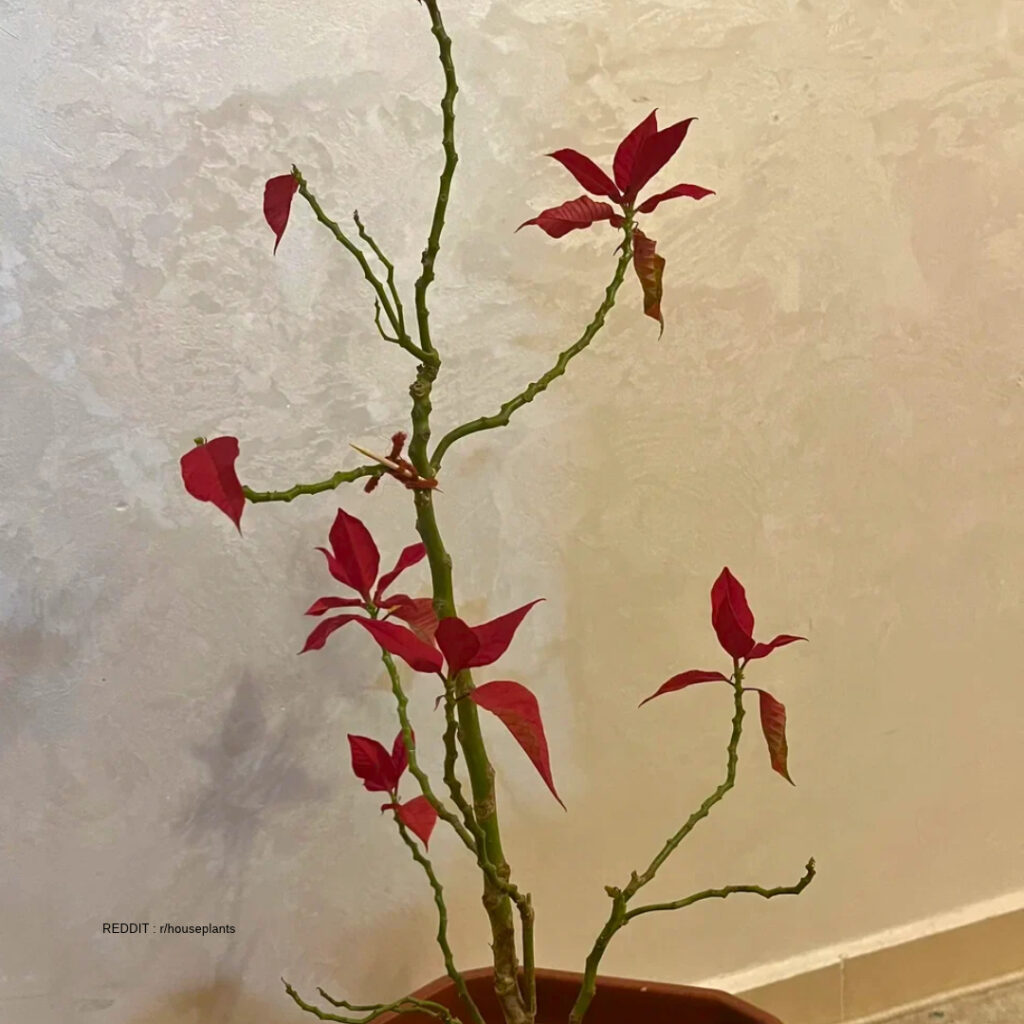
I always check where leaves are dropping from and how the soil feels before changing up my care. Yellow leaves, limp stems, dry mix, and soggy soil each point to something different.
Normal Aging Versus Rapid Leaf Loss: Where the Leaves Fall Matters
It’s normal for a few lower, older leaves to yellow and drop as a poinsettia gets older. This usually happens after the holidays. The colorful bracts fade too; they aren’t really flowers anyway.
But if a bunch of green leaves fall off in just a few days, I start thinking about temperature stress or sudden changes in light. A cold window, an open door, or a blast from a heating vent can throw the plant off quickly.
Poinsettias hate cold drafts and temps below 50°F. Outdoor plants deal with even more weather stress in cooler areas—sometimes even on those “not so bad” fall days.
Quick Tip: I move the plant away from drafty doors, cold glass, and heat vents before messing with the watering can.
Read The Leaf And Soil Symptoms Before You Water Again
I stick my finger in the soil about an inch down. If it’s dry and the leaves look soft, droopy, or curled, it’s probably water stress from being too dry. I water slowly and let it drain, then dump out the saucer.
If the soil is wet, smells funky, or feels heavy and cold, I don’t add more water. Soggy soil suffocates roots, and you’ll see yellow leaves drop even if the plant looks thirsty. Poinsettias can be a little dramatic, but wet roots are a real headache.
| What I see | What I check first |
|---|---|
| Dry soil and limp leaves | Water stress from dry soil |
| Yellow leaves and wet soil | Overwatering or poor drainage |
| Leaf drop near a window or vent | Temperature stress |
| Only a few lower yellow leaves | Normal aging |
Quick Tip: I always let extra water drain completely. The pot never sits in water for more than a few minutes.
Correct Watering Problems First
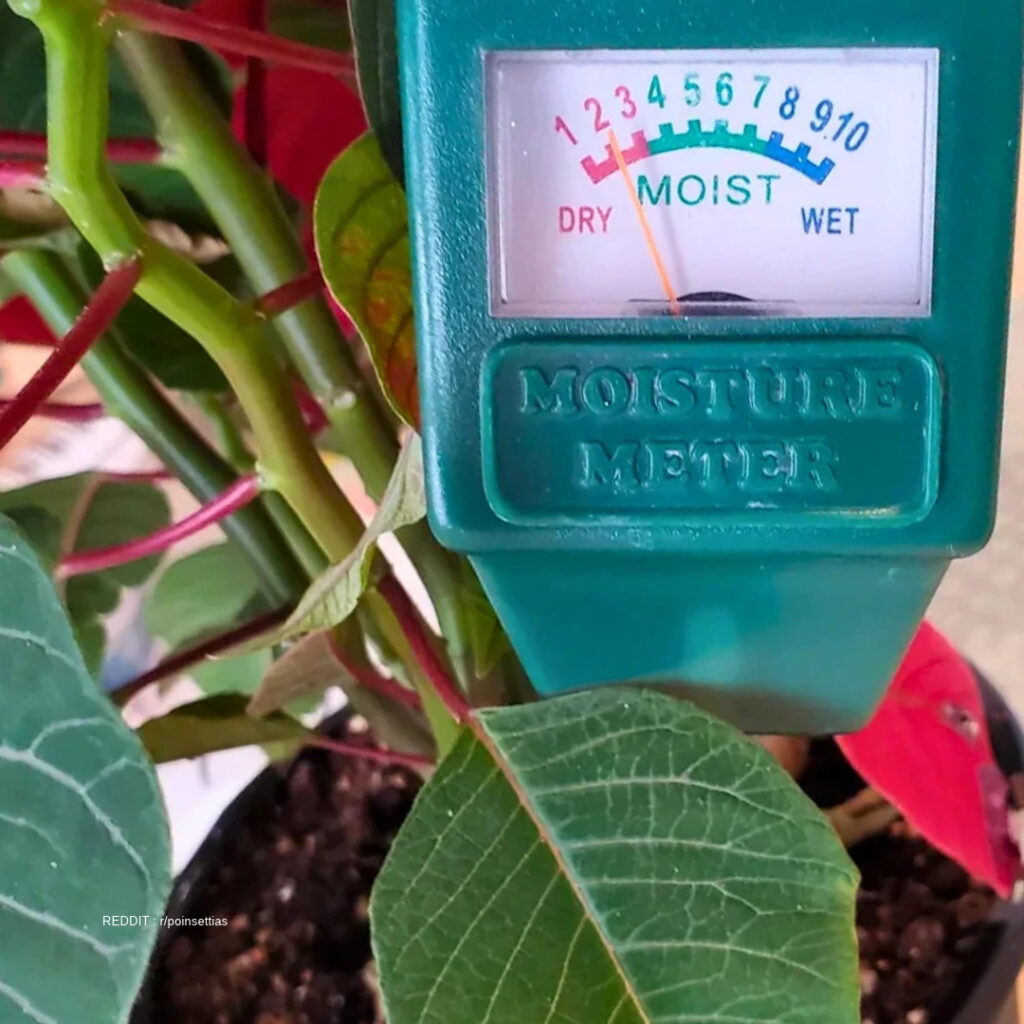
I poke the soil before watering because both too much and too little water can make poinsettia leaves fall. The sweet spot is lightly moist soil, a pot that drains, and no water pooling around the roots.
Signs Of Overwatering And Root Rot
Soggy soil that stays wet for days is a red flag. Yellow bottom leaves, soft stems, and dropping leaves while the soil feels damp usually mean overwatering.
If I catch a sour, musty smell, root rot might be starting. I gently slide the plant from its pot and check the roots. Healthy ones are pale and firm; rotten ones look brown or black, feel mushy, and usually smell pretty bad.
Quick Tip: I stop watering until the top inch of soil dries out.
I snip off mushy roots with clean scissors and repot in fresh, well-draining potting mix. Drainage holes are a must. Decorative cover pots trap water, so I always empty them after watering.
How To Rehydrate An Underwatered Plant
If the pot feels super light, the soil pulls away from the edge, and leaves are thin, dry, or crispy, it’s probably underwatered. Poinsettias droop first, then start dropping leaves if they stay dry too long.
I water slowly with room-temperature water until it runs out the bottom. Then, I let it drain for 10 to 15 minutes. Dry soil can repel water, so I water in a few rounds instead of dumping it all in at once.
Quick Tip: I check the soil again the next day. If the top inch is still bone dry, I give it a bit more water.
While it recovers, I keep it away from hot vents and cold window glass. Indoor heat dries soil quicker, especially during winter or in a sunny south window.
Watering Technique And Drainage Checklist
I water when the top inch of soil feels dry. I don’t bother with a strict schedule since light, heat, and pot size all affect how fast poinsettias drink.
- I use a pot with drainage holes.
- I pick loose, well-draining potting mix.
- I water the soil, not the leaves or the plant’s center.
- I pour off water left in the saucer after 10–15 minutes.
- I never let the pot sit in standing water.
Quick Tip: I lift the pot before watering; if it feels way lighter, it probably needs water.
Most watering problems come from pots that don’t drain, not from one heavy watering. I always check moisture first, then water deeply and let any extra escape.
Prevent Cold And Heat Stress
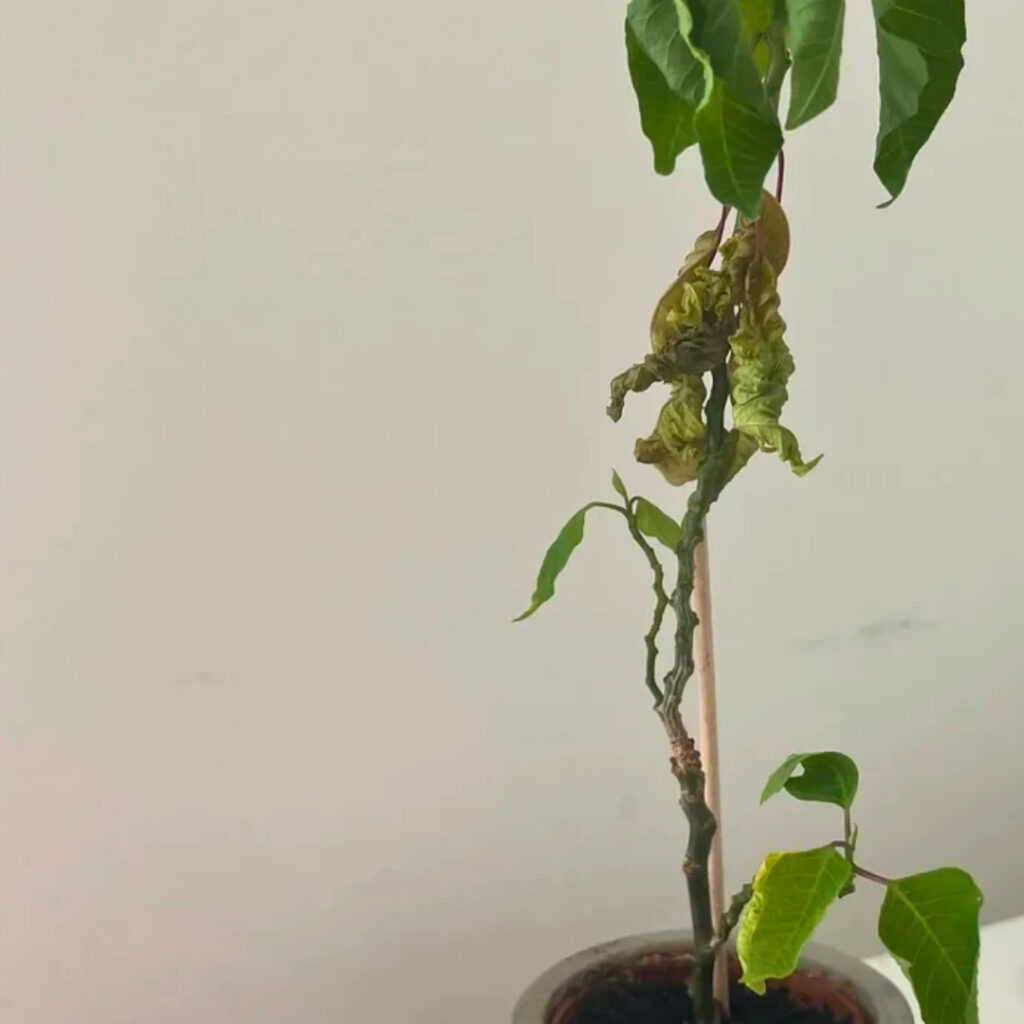
I keep my poinsettia far from cold drafts, hot air, and wild temperature swings. A steady spot between 60°F and 70°F keeps leaves happy.
Cold Drafts And Chilly Transport Can Trigger Leaf Drop Fast
I protect my poinsettia from cold stress on the way home. Even a few minutes in freezing wind can do damage, especially if the store skimps on wrapping. I ask for a paper sleeve, warm up my car, and bring the plant straight inside.
At home, I avoid drafty doors, open windows, and gaps in old frames. North-facing windows are often too cold in winter, even if they look bright.
Quick Tip: I hold my hand near the plant at different times of day. If I feel a chill, I move the pot a few feet away.
Cold stress makes lower leaves turn yellow and drop. I don’t put the pot right against cold glass, and I don’t leave it outside while unloading groceries. In milder climates, it’s less risky, but cold nights can still cause problems.
Heat Sources And Sudden Temperature Changes Dry Leaves Out
I keep my poinsettia away from fireplaces, radiators, and heating vents. These spots blast out dry, warm air that makes leaves curl, crisp, or drop.
A fireplace might look festive next to a poinsettia, but the heat is just too much. I set the plant several feet away, where it still gets bright, indirect light but doesn’t feel hot.
Quick Tip: I check the leaves after the heat kicks on. If they feel warm, dry, or brittle, I move the plant farther from the heat.
I also avoid sudden temperature changes. I don’t move my poinsettia from a cold porch to a hot room, or from a warm room into the chilly night. Keeping things steady matters more than finding the warmest spot in the house.
Give It The Right Light And Humidity
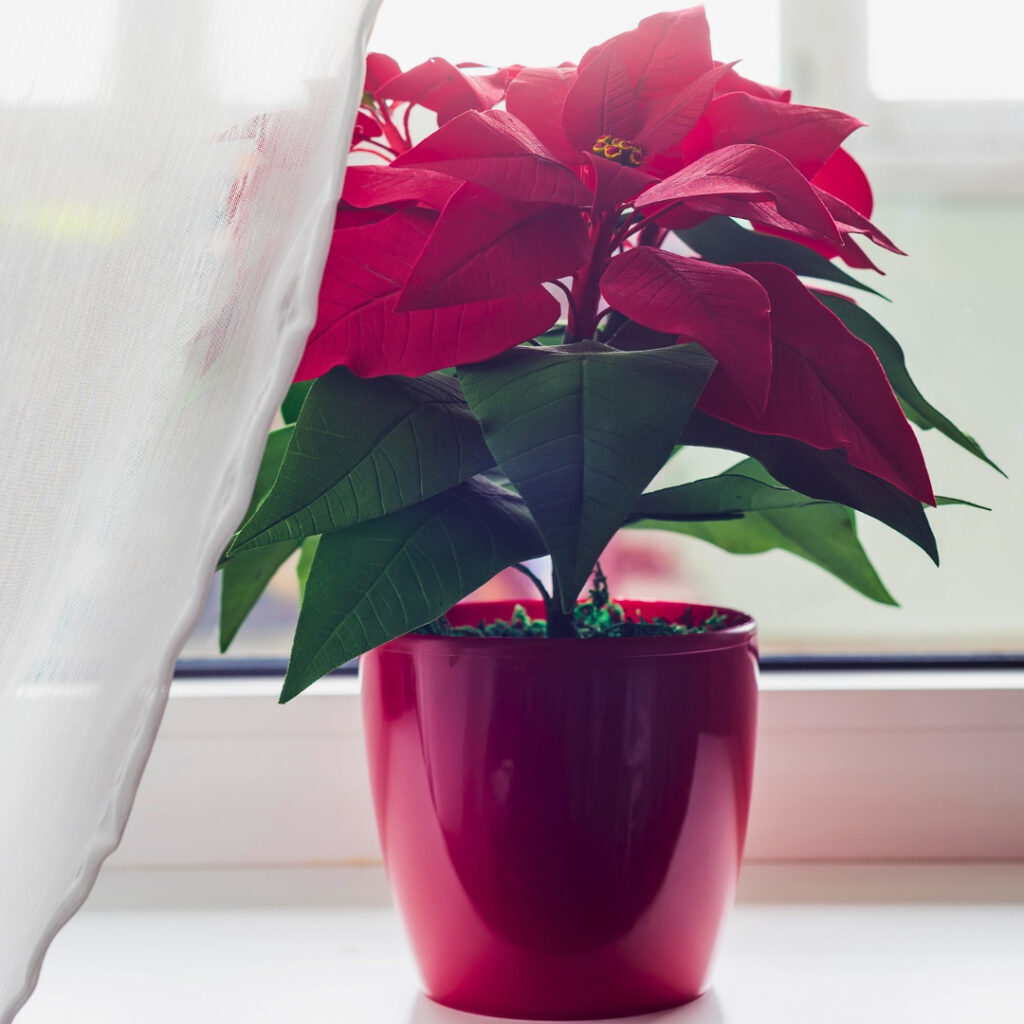
I keep poinsettias in bright, indirect light and away from dry heat. Not enough light, harsh sun, and low humidity can all make leaves drop.
Bright Indirect Light Without Scorching
I put my poinsettia near an east window or a few feet back from a bright south or west window. It likes bright indirect light for about six hours a day. A sheer curtain helps soften harsh sun.
Direct sunlight through glass heats up leaves fast. If they feel warm, look faded, or get pale brown spots, I move the plant farther from the window. Afternoon sun is usually the worst.
Dim corners or a north window with little daylight isn’t great either. The plant can’t make enough energy, so leaves may yellow and drop.
Quick Tip: I rotate the pot a quarter turn each week so all sides get some light.
How Dry Indoor Air Causes Leaf Drop
Poinsettias come from the tropics, so dry indoor air stresses them. Winter heat often drops humidity, especially near vents, radiators, fireplaces, or drafty windows.
I watch for crisp leaf edges, curled leaves, and dry-feeling soil. These can mean low humidity, but I still check the soil before watering. Dry air and dry soil often show up together, which feels a bit unfair, honestly.
Keep the pot away from blowing heat. Even a warm room can have dry air near a vent. In milder climates, indoor air stays more humid, so I don’t add extra moisture unless the plant seems dry.
Quick Tip: I move my poinsettia at least a few feet from heat sources and cold window drafts.
Simple Ways To Raise Humidity
I use a small humidifier near my poinsettia when my home feels desert-dry. I aim for moderate humidity—not damp air or wet leaves. The humidifier works best when it’s close by instead of across the room.
A pebble tray helps a bit. I fill a shallow tray with pebbles and water, then set the pot on top. The bottom of the pot has to stay above the waterline, or the roots could rot.
Grouping houseplants together helps, too. They release moisture and create a slightly more humid pocket of air. I rarely mist; water spots the leaves, and mist disappears fast anyway.
Quick Tip: I keep the pebble tray or humidifier topped off, especially during cold, heated months.
Check For Pests And Other Damage
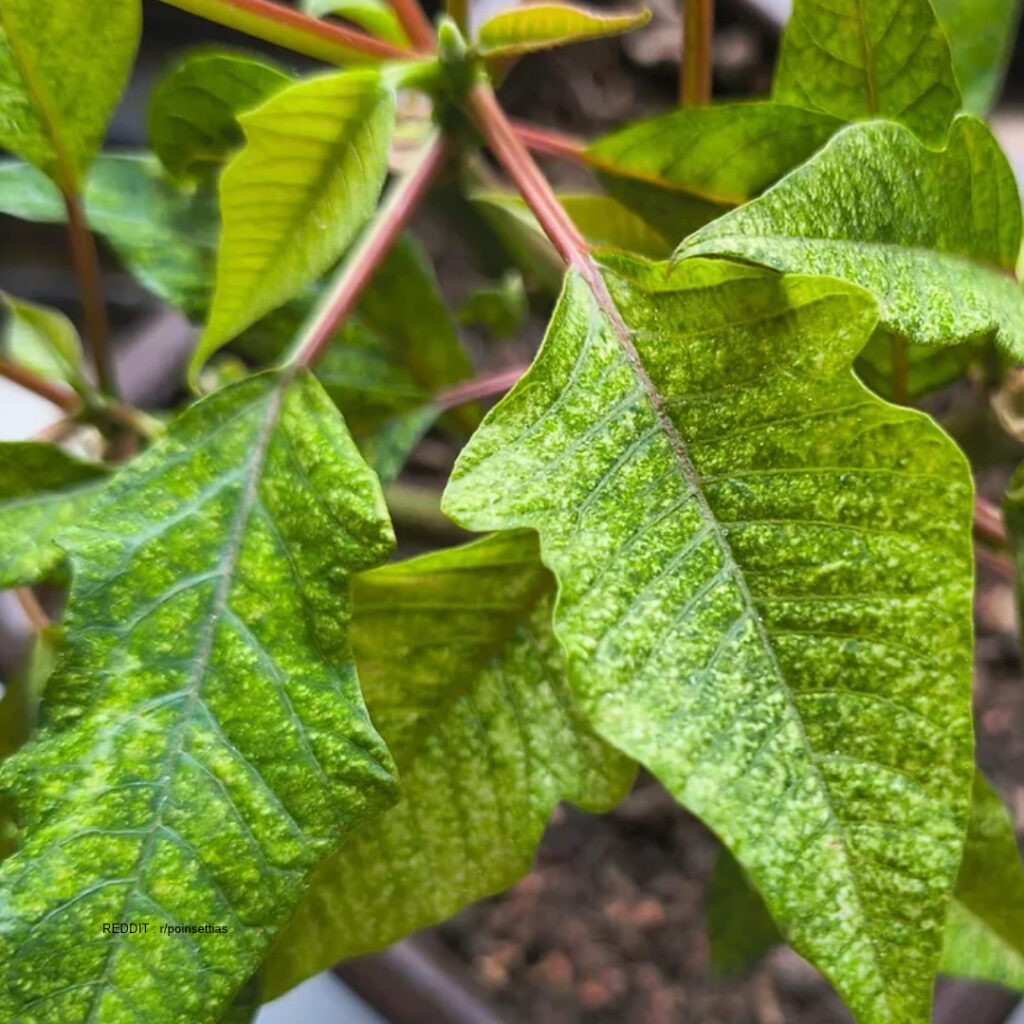
I inspect the leaves, stems, and soil line closely since tiny pests can cause fast leaf drop. Sticky residue, pale speckles, or cottony clumps mean it’s time to act.
How I Spot Common Sap-Sucking Pests Before They Spread
I always look under the leaves first. Whiteflies fly up in a little white cloud when I gently shake the plant. They leave sticky sap (honeydew), so leaves might feel tacky.
Spider mites are trickier. I look for pale yellow dots, dry leaves, and fine webbing at leaf joints. They usually show up when indoor air is warm and dry.
Mealybugs look like tiny bits of white cotton on stems, leaf joints, and new growth. I also check for bruised stems, torn leaves, or brown patches from cold glass, rough handling, or heaters.
Quick Tip: I use my phone flashlight to check leaf undersides. Pests love hiding there.
Safe Treatment And Recovery Steps I Use
I move the poinsettia away from other plants right away. Then I rinse the leaves with lukewarm water, aiming under each leaf to knock off whiteflies and spider mites.
For mealybugs, I dab each visible bug with a cotton swab dipped in rubbing alcohol. I never soak the plant or pour alcohol into the soil.
I spray insecticidal soap on both sides of the leaves, following the label. If I still see pests, I repeat every 5 to 7 days since eggs can hatch after the first go.
Quick Tip: I test insecticidal soap on one leaf first and wait a day. Stressed poinsettias can react badly if left in hot sun right after spraying.
I snip off badly damaged leaves with clean scissors. I keep the plant in bright, indirect light and away from cold drafts—plants near chilly windows can still drop leaves even after pests are gone.
Create A Simple Prevention Routine
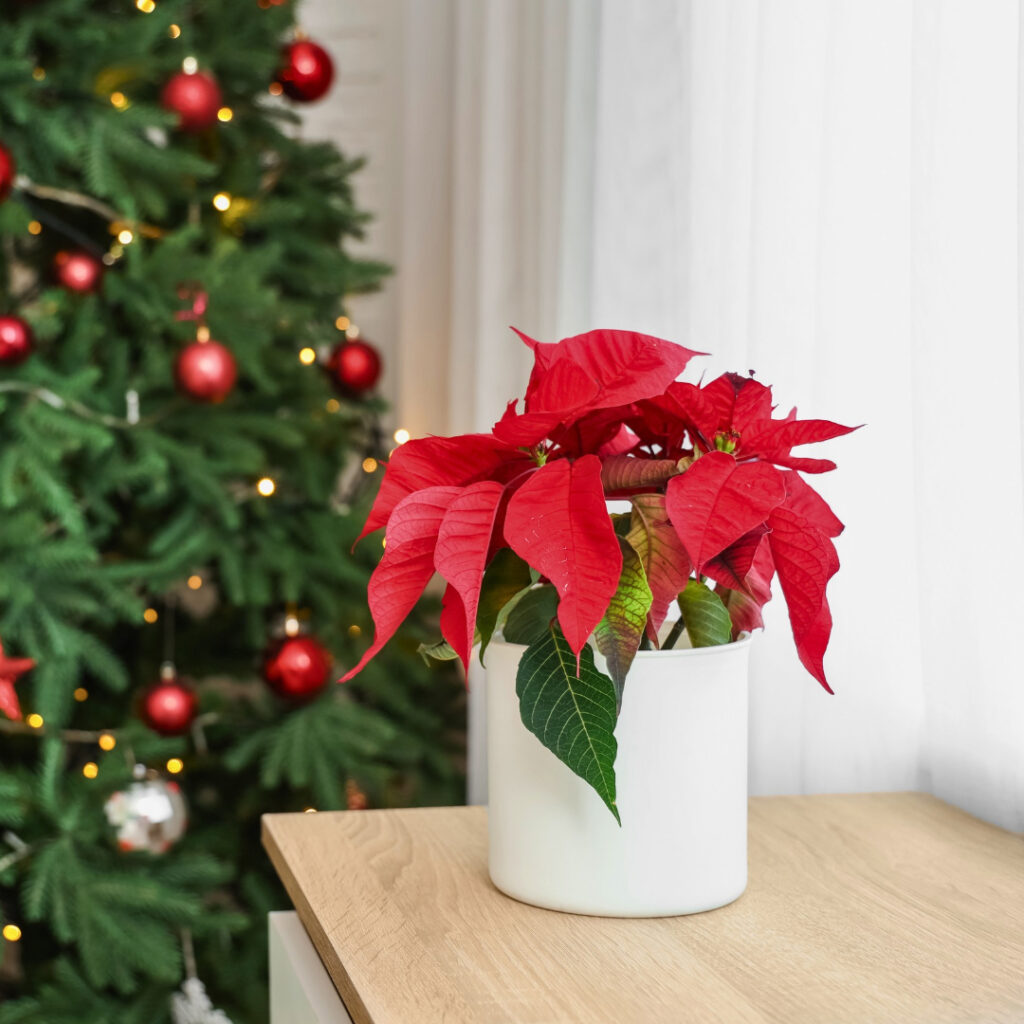
I start with a healthy poinsettia. I try to keep its light, water, temperature, and humidity steady.
Even small changes can make leaves drop fast. So I do my best to avoid surprises.
Choose And Bring Home A Healthy Plant
When I shop, I look for firm green leaves and bright bracts. No yellowing, spots, or limp stems—those are instant red flags.
I gently check the soil. It should feel slightly moist, not soggy or totally dry.
I skip plants wrapped tightly in paper or plastic for too long. I always check for drainage holes in the pot or nursery container.
Water needs to escape—roots sitting in water will rot. That’s just how it goes.
Quick Tip: I ask the cashier to sleeve my poinsettia before I take it outside in cold weather.
I keep the plant out of cold drafts on the way home. Even a quick blast of freezing air can trigger leaf loss.
In warmer winter zones, I still shield it from strong wind and sudden temperature swings. No one likes a shock, right?
Weekly Care Habits For Lasting Color
I put my poinsettia in bright indirect light, like near an east- or west-facing window. North-facing windows are usually too dim, but hot direct sun can dry the leaves and fade the color fast.
Once a week, I feel the top inch of soil. If it’s dry, I water slowly until water runs from the drainage holes, then I empty the saucer.
I don’t stick to a strict schedule. The soil gets the final say every time.
Quick Tip: I keep the plant away from heaters, fireplace heat, and cold windows at night.
I aim for steady room temperatures and moderate humidity. If my air feels dry, I group plants together or set the pot on a pebble tray with water below.
The pot should sit above the water, not in it. Wet feet are no good for poinsettias.
Frequently Asked Questions
Leaf drop usually points to water stress, cold drafts, low light, or sudden temperature changes. I check the soil, light, and room conditions before making any big moves.
How can I stop my poinsettia leaves from falling off?
I keep my poinsettia in bright, indirect light and away from cold windows, heaters, and vents. A steady room temperature between 65°F and 75°F helps prevent shock.
I water when the top inch of soil feels dry. Then I let extra water drain out of the pot.
Quick Tip: Remove any foil cover before watering, or poke drainage holes in it. Sitting in a puddle can rot roots fast.
What does an overwatered poinsettia look like?
I watch for yellow leaves, soft stems, and soil that stays wet for days. Lower leaves usually turn yellow first, then drop.
The pot might smell sour or musty if roots start to rot. Healthy roots feel firm and pale, not dark, mushy, or slimy.
Quick Tip: If the soil feels wet two inches down, skip watering. Your poinsettia doesn’t need a daily drink.
How often should I water a poinsettia?
I water based on the soil, not the calendar. Most indoor poinsettias need water about once a week, but warm rooms and sunny windows dry pots faster.
Check the top inch of soil with your finger every few days. Water slowly until it runs from the drainage holes, then empty the saucer.
Quick Tip: A lightweight pot usually means dry soil. If it feels heavy, it can probably wait.
Why are my poinsettia leaves turning yellow before they fall off?
I usually suspect too much water when leaves turn yellow before dropping. Low light, cold air, and poor drainage can do it too.
A cold windowpane can chill leaves overnight, even if the room feels fine. I keep the plant a few inches back from glass and away from doors that open a lot.
Quick Tip: Yellow leaves with wet soil point to overwatering. Yellow leaves with dry, crumbly soil mean underwatering.
Can a poinsettia grow back after losing all its leaves?
I can often save a poinsettia if its stems are still green and firm inside. I scratch a small spot on a stem with my fingernail—green tissue means it’s still alive.
I give it bright indirect light, careful watering, and time. Sometimes new growth shows up in spring after the plant recovers.
Quick Tip: Don’t fertilize a weak, leafless plant right away. Wait for new growth, then use a light dose of houseplant fertilizer.
Why do poinsettia leaves fall off during winter?
Poinsettias don’t just drop all their leaves because it’s winter. Usually, you’ll see leaves fall indoors if there’s a cold draft, not enough light, or dry heat.
Sometimes just moving the plant to a new spot can set it off. Poinsettias really hate temperatures below 50°F, even for a short time—like the cold trip home from the store.
If you live in a warm place, say USDA Zones 9 to 11, outdoor plants can still lose leaves after a cold snap. It’s weird how sensitive they are, isn’t it?
Quick Tip: Wrap your poinsettia before you carry it outside in winter. Just a few minutes in a cold wind can make those leaves drop.