
I love how poinsettias can look classic, soft, or even a bit wild. You can pick from 20 poinsettia varieties—red, white, pink, purple, green, marbled, and speckled types are all out there.
These Euphorbia pulcherrima cultivars go way beyond the usual red Christmas flower. Let’s spot the colors and patterns that fit your space, from deep burgundy Christmas stars to creamy white plants.
Quick Tip: Check those bracts—the colorful leaves—before you buy. Healthy poinsettias show full color and have firm, green leaves.
How To Choose The Right Poinsettia
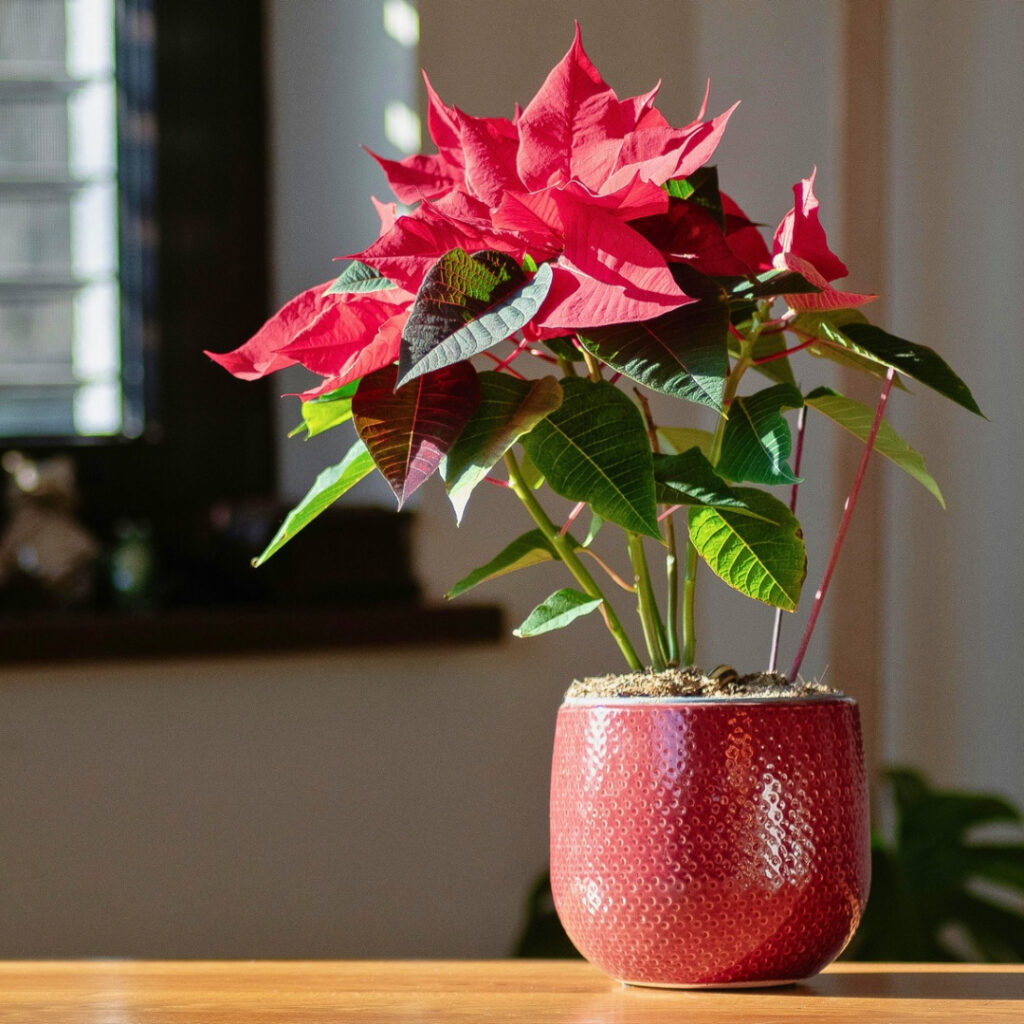
I look at bract color, plant size, and freshness when I pick poinsettias. The right type should fit my room, my holiday vibe, and how long I want it to last.
Understand Bract Colors, Patterns, And Shapes
The bracts are the colorful, leaf-like parts around the tiny yellow flowers. Classic red works with traditional Christmas decor, but white, cream, pink, and burgundy poinsettias soften the mood.
Marbled and speckled bracts add detail without much extra fuss. Some varieties have green, red, or pink edges, which helps them tie together Christmas and fall decorations—think pumpkins, pinecones, or autumn leaves.
Bract shape changes things, too. Broad, flat bracts look full and formal. Narrow or curled bracts feel more unusual, maybe even a little quirky.
Quick Tip: I pick a color that pops against my wall and container. White poinsettias can vanish against pale walls, but red bracts always stand out.
Match Plant Size And Timing To Your Space
I always measure the spot before buying. Small plants—about 8 to 12 inches tall—fit tables, desks, and kitchen counters. Bigger ones can hit 2 to 3 feet and need floor space or a sturdy stand.
The plant’s width matters, too. A full poinsettia can spread wider than its pot and quickly crowd a narrow table.
For Christmas, I buy plants with bracts already colored up. If I want one for fall, I go for early-season shades like cream, peach, burgundy, or deep red.
Quick Tip: Keep poinsettias away from cold windows, drafty doors, and heating vents. They like bright, indirect light and steady indoor temps.
Inspect Plants Before You Buy
I always check the center of the bracts first. The true flowers are those small yellow clusters. I pick plants with tight yellow-green buds, not open or faded flowers—those last longer.
Next, I look at the leaves. Healthy poinsettias have firm, green lower leaves and colorful bracts without brown edges, tears, or mushy spots. I skip any plant with yellowing leaves or a bunch of dropped leaves in the pot.
I lift the pot, too. It should feel moist, not soaked, and definitely shouldn’t sit in water inside a foil sleeve.
Quick Tip: I avoid plants sitting near automatic doors or outside in the cold. Even a quick blast of cold air can make leaves drop later.
Classic Red And Burgundy Selections
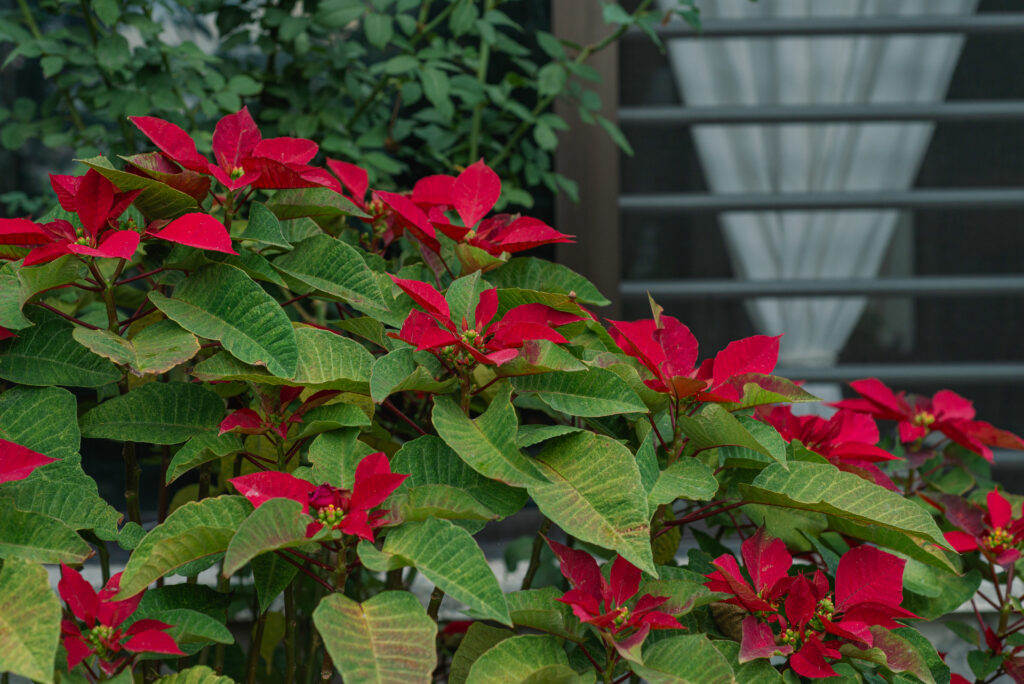
Red poinsettias bring that bright, classic holiday look. Burgundy types are moodier, while rose-shaped forms add texture.
Prestige Red And Classic Red
Prestige Red is a classic, reliable red with broad, pointed bracts and a full, balanced shape. I like it for tabletops, entryways, and gifts—it’s a real show-off from across the room.
Keep it in bright, indirect light, away from cold glass or heating vents. If the top inch of soil is dry, water thoroughly and let the excess drain away.
Quick Tip: I always remove foil covers before watering, or at least punch drainage holes. Wet roots can ruin a poinsettia fast.
“Classic red” covers several similar types, including Christmas Beauty Princess. It’s neat, rich red, and a good choice when I want a traditional look in a smaller plant.
Grande Italia And Kayla Red
Grande Italia grows large, showy red bracts with a broad, open display. I use it as a floor plant or centerpiece—it needs more space than the compact types.
The bracts have a strong, clean red tone with small yellow flower centers. I turn the pot every few days if light comes from just one side, especially near a north window.
Quick Tip: I keep Grande Italia above 60°F at night. Cold drafts can make leaves drop—a rude surprise after a chilly car ride home.
Kayla Red has a deeper red in a tidy plant. It fits smaller tables or shelves, and I like to group it with white and pink poinsettias. It’s great when I want red color but not a plant that sprawls everywhere.
Prestige Maroon And Cortez Burgundy
Prestige Maroon sports dark red bracts with a wine-colored cast. In bright light, I see the red; in lower light, it leans burgundy. This works well with gold, cream, dark green, or wood décor.
Give it the same care as red types—bright indirect light, warm temps, and lightly moist soil. Never let it sit in water.
Quick Tip: I check dark-bracted plants in daylight before buying. Store lights can make maroon and burgundy look almost black.
Cortez Burgundy is another deep-toned pick, with velvety burgundy bracts. I pair it with Prestige Red for contrast, without bringing in a whole new color family.
Winter Rose And Winter Rose Early Red
Winter Rose stands out with bracts that curl and fold like little rose petals. The red looks softer and more textured than the flat bracts of Prestige Red or Grande Italia.
I put Winter Rose where people can see it up close, like on a dining table or sideboard. Its unusual shape kind of disappears if you put it across the room.
Quick Tip: I avoid misting the curled bracts. Water sits in the folds and can leave spots or cause rot.
Winter Rose Early Red has the same rose-like bracts but colors up earlier. It’s handy for early holiday displays or if you want red poinsettias before December.
Both Winter Rose types need gentle handling. Their folded bracts bruise easier than the standard ones, so I carry the pot from the base and not the top. Outdoors, poinsettias only work in frost-free zones—USDA Zones 9–11, usually.
White And Cream Poinsettias
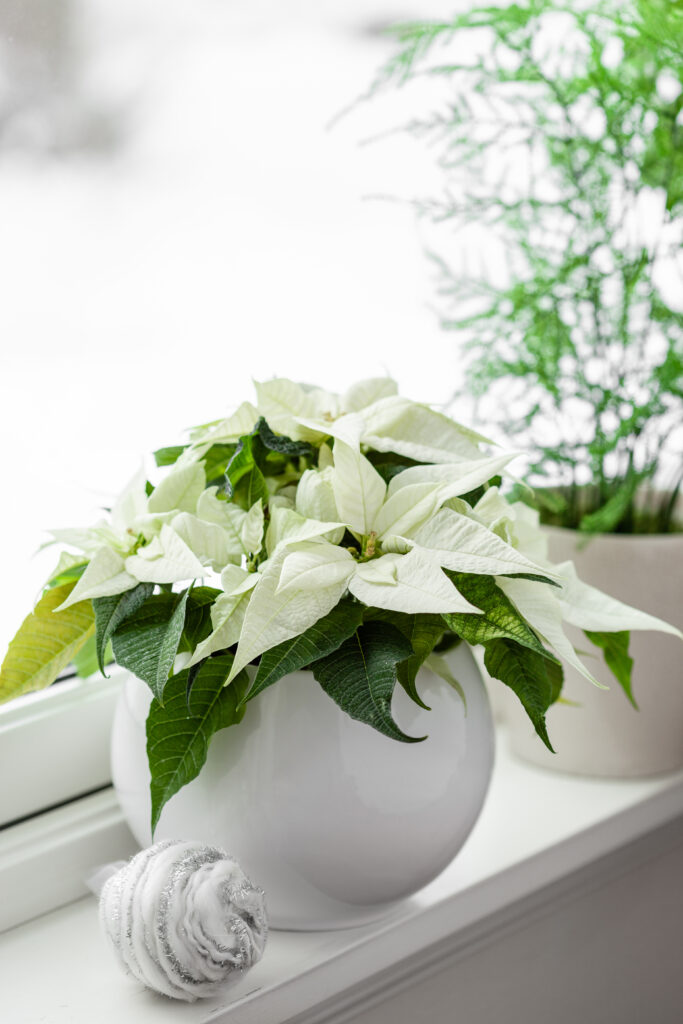
White poinsettias create a calm, clean look. I keep them away from cold glass and drafts since their pale bracts show damage and yellowing fast.
Classic White And Polar Bear
Classic White has creamy bracts with a soft yellow-green center. I like it for natural-looking arrangements; the color isn’t too stark. It pairs nicely with pine, silver pots, and deep red poinsettias.
Polar Bear usually has crisper white bracts and a more upright shape. Its color pops in a simple pot or grouped with other whites. The dark green leaves frame the pale bracts well.
I give both plants bright, indirect light. An east window works; north windows are often too dim in winter.
Quick Tip: Water when the top inch of soil feels dry, and let extra water drain out. Wet roots can turn leaves yellow fast.
Alaska And White Wonder
Alaska is a favorite white poinsettia with broad bracts, sometimes with a cream or green tint near the center. I use it when I want a full, traditional shape without red. It looks good in white, gray, or wood containers.
White Wonder leans creamier. Its bracts feel warmer than Alaska’s, so it blends into rooms with beige walls, gold ornaments, or warm lighting.
Both need steady indoor temps—about 60 to 70°F. Cold air from an open door can leave pale spots or make bracts drop. In frost-free zones, you can grow them outside in bright shade, but most folks keep them indoors for the holidays.
Quick Tip: Always remove decorative foil or poke drainage holes. A pretty wrapper shouldn’t turn the pot into a swamp.
Sonora White And Biancaneve White
Sonora White has clean white bracts and a compact shape. I like it for smaller tables, shelves, and grouped displays—it doesn’t need much space. The white bracts make the yellow flower centers pop.
There’s also Sonora White Glitter, which has white bracts with pink or red speckles. I use it when plain white feels too quiet but I still want a mostly pale display.
Biancaneve White means “Snow White” in Italian, and it usually comes with bright white bracts and a fresh green center. It works well as a single statement plant in a dark pot. Dust and water marks show up easily on white bracts, so I’m careful not to splash the leaves.
Quick Tip: Turn the pot a quarter turn each week to help it grow evenly instead of leaning toward the window.
Princettia Pure White And Winter Rose White
Princettia Pure White is a smaller-bracted poinsettia with a compact, rounded habit. Lots of small white bracts give it a lighter, more delicate look. I like it in baskets, mixed planters, or on a dining table where a big plant would feel crowded.
Winter Rose White has curled, layered bracts that look like little rosettes. The bracts are usually creamy white, not pure snow white, especially under warm lights indoors. Its shape adds texture without extra decorations.
Both do best in bright light, but I keep them out of direct hot sun. The bracts last longer if the room stays evenly warm and the soil isn’t bone-dry or soaked.
Quick Tip: Keep white poinsettias away from ripening fruit. Ethylene gas from apples or bananas can shorten bract life.
Pink, Orange, Purple, And Green Choices
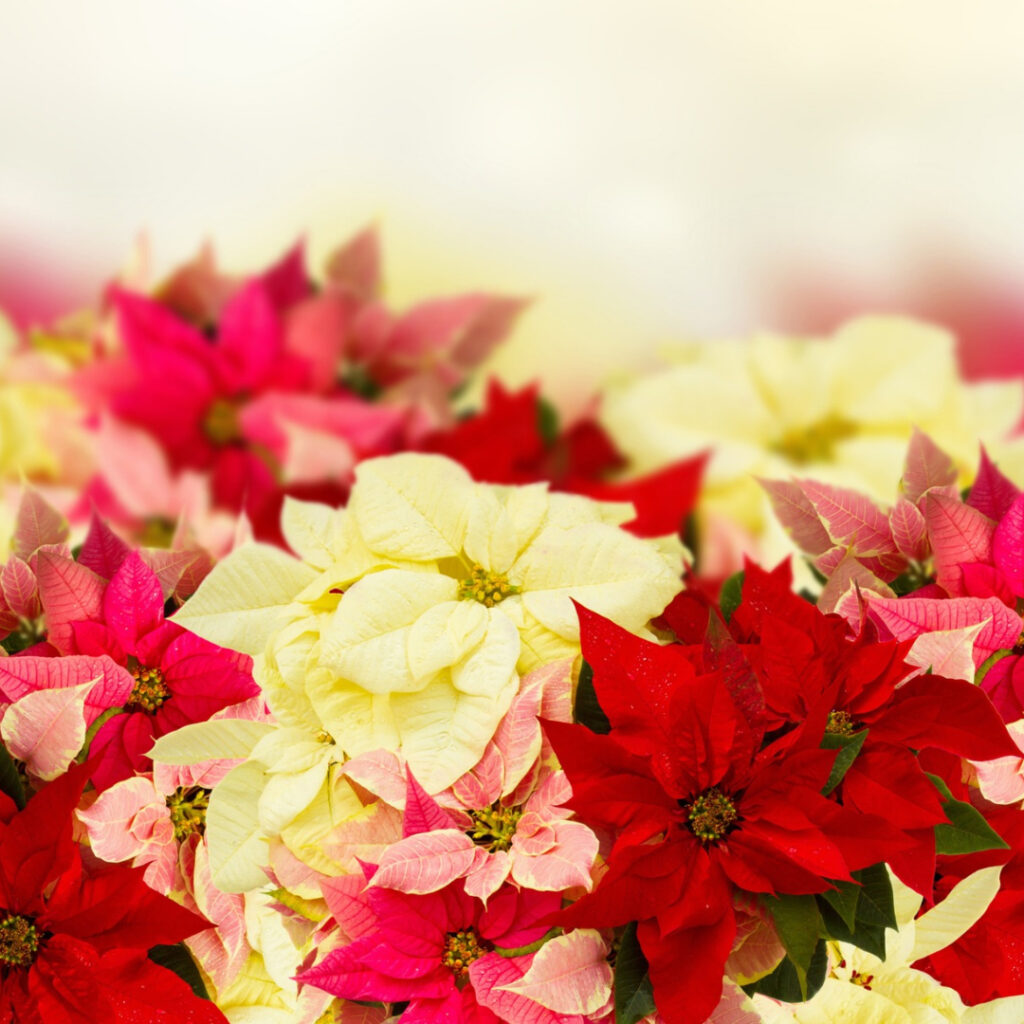
Pink poinsettias have a soft vibe, while orange and green types bring more contrast. I think these colors look great with white, red, or silver holiday decor.
Pink Champagne And Luv U Pink
Pink Champagne has pale pink bracts with creamy white edges and light green touches. The mixed color gives it a soft, frosted look—perfect for neutral rooms or pastel displays.
I put it where it gets bright, indirect light. Direct sun can fade the delicate color, especially in a south window.
Luv U Pink is richer and clearer pink, usually with a neat, compact shape. I use it on tables, shelves, or small plant stands.
Quick Tip: Water when the top inch of soil is dry. Don’t let the pot sit in water, or roots may rot.
Princettia Pink And Robyn Pink
Princettia Pink produces lots of small pink bracts instead of just a few big ones. The plant looks light and airy, and the color shifts from soft blush to brighter pink depending on the variety and lighting.
I like grouping Princettia types together for a mound of color. You can use them outdoors in frost-free spots, but nights below 50°F can really hurt them.
Robyn Pink has fuller bracts with a warm, rosy pink tone. It stands out more than pale pinks but doesn’t hit you as hard as a red one.
Quick Tip: Turn the pot a quarter turn each week. That way, the plant grows evenly instead of reaching toward the window.
Orange Glow And Orange Spice
An orange poinsettia brings a warmer, less typical vibe to holiday displays. Orange Glow usually develops glowing orange bracts with coral or salmon hints, especially as it matures.
Orange Spice tends to have deeper orange-red coloring. I like pairing it with gold, bronze, or dark green décor—those colors make the bracts pop even more.
Orange poinsettias need the same care as reds: bright indirect light, warm indoor temps, and careful watering. Keep them away from heater vents, since those dry the soil fast and can curl the bracts.
Quick Tip: Check the soil every few days, especially in a warm room. Plants near vents might need water faster than those in cooler spots.
Envy And Green Envy
Envy and Green Envy have lime-green or yellow-green bracts instead of the usual reds or pinks. Their fresh color looks sharp next to white poinsettias, silver ornaments, and dark foliage.
I reach for green varieties when I want a calmer display. They also look great with purple types like Plum Pudding or paler ones like Lemon Glow and Candy Wintergreen.
Green bracts can look washed out in dim rooms, so I put these near bright, filtered light. You want the color to look clean and even, not dull or stressed.
Quick Tip: Keep green poinsettias above 60°F. Chilly windows and cold drafts can cause leaf drop, even if the soil feels fine.
Marbled, Speckled, And Novelty Cultivars
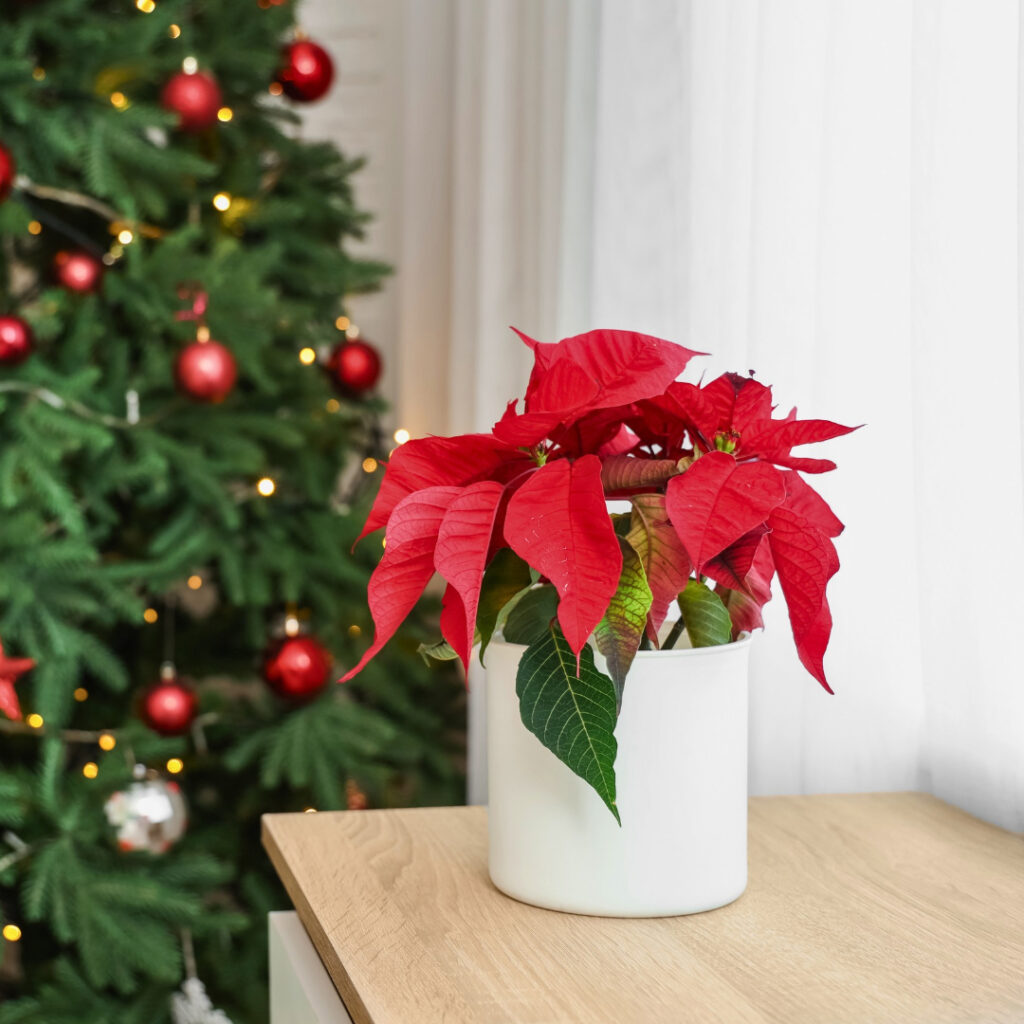
I grow these poinsettias for their uneven color patterns—each plant looks a little different. Bright light keeps the bracts clear and colorful, but cold drafts can make leaves drop.
Ice Punch And Freedom Peppermint
Ice Punch has creamy white bracts with pink and red brushed near the center. The color usually looks soft and frosted, not sharply striped, which fits pale holiday décor.
Freedom Peppermint tends to show stronger red-and-white marbling. Its broad bracts can have splashes, streaks, and pink tones, so no two plants match. I put both where they get bright, indirect light.
Keep the soil lightly moist, not soggy. If the top inch feels dry, I water thoroughly and empty the saucer after a few minutes.
Quick Tip: I keep marbled poinsettias away from radiators and cold windows. Sudden temperature swings can dull the bracts or cause leaves to fall.
Jingle Bell Rock And Jingle Bells
Jingle Bell Rock makes red bracts with white speckles and blotches. The contrast is bold, almost like someone flicked paint across it. It works as a single centerpiece since it already draws the eye.
Jingle Bells is similar, though the amount of white varies a lot. Some have fine flecks, others big white patches. I always look for plants with even foliage and firm stems, since damaged leaves never really recover.
Other novelty types include Superba New Glitter with red bracts and light markings, and Premium Picasso for a mottled, painted look.
Quick Tip: I turn the pot a quarter turn each week so the plant grows evenly instead of leaning toward one window.
Sky Star And White Glitter
Sky Star mixes pale cream or white bracts with pink-red speckles. The pattern looks delicate from far away, then more detailed up close. I like it in simple white or silver pots—busy containers just compete with its markings.
White Glitter usually has white bracts scattered with red or pink flecks. It feels lighter than red-based speckled types, so I use it in small rooms or darker corners with good window light.
Other patterned choices include Monet, Tapestry, and Country Quilt. These can show blended pink, cream, red, or green tones instead of clear stripes. The colors may shift as the bracts age.
Quick Tip: I skip misting the bracts. Water spots show up on pale areas, and damp foliage just invites trouble indoors.
Christmas Beauty Marble And Enduring Marble
Christmas Beauty Marble has marbled bracts in cream, pink, and red. The colors blend softly, giving it a warmer look than sharp red-and-white types. It pairs well with Christmas Beauty Nostalgia, which has more muted, old-fashioned coloring.
Enduring Marble offers a similar mix, often with stronger pink as the bracts mature. I look for plants with colored bracts already open, since poinsettias don’t gain much more color after you buy them.
For something even more unusual, Visions of Grandeur brings big, showy bracts, while Holly Berry and Christmas Mouse have distinct foliage or bract shapes. These are tropical plants at heart, so I keep them indoors anywhere winter gets cold.
Quick Tip: I protect these plants on the way home. Even a few minutes below 50°F can damage the bracts and leaves.
Care Tips For Long-Lasting Color
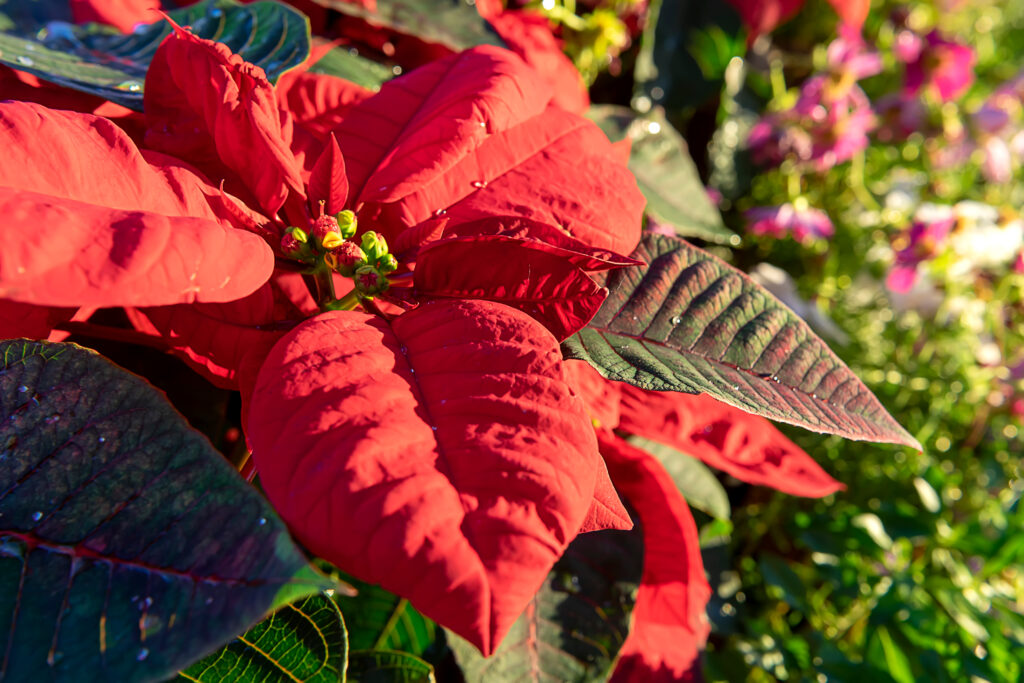
I keep poinsettias bright, warm, and evenly moist so their colorful bracts last. Simple care keeps Euphorbia pulcherrima healthy after the Christmas decorations are packed away.
Provide Bright Indirect Light And Steady Warmth
I set my poinsettia near a bright window with filtered light for at least six hours a day. An east window works well, but a north window is usually too dim in winter.
I keep it away from cold glass, drafty doors, heater vents, and fireplaces. Sudden changes can make leaves fall, even if the soil seems fine.
Poinsettias like daytime temps around 65–75°F with slightly cooler nights. I avoid anything below 50°F, especially when bringing a new plant home.
Quick Tip: I use a sheer curtain if the afternoon sun feels too strong or the leaves look faded.
Water Thoroughly Without Causing Root Rot
I check the soil every few days and water when the top inch feels dry. I add water slowly until it drains out the bottom, then let the pot drain fully.
I never leave the plant sitting in water—whether it’s in foil, a saucer, or a basket. Trapped water leads to root rot, which shows up as yellow leaves, drooping stems, or a sour smell.
If my poinsettia comes in a foil sleeve, I take it off before watering or poke drainage holes near the bottom. Pots need drainage—wet roots spell trouble fast.
Quick Tip: I lift the pot before watering. If it feels really light, the soil is probably dry enough.
Keep Your Plant After The Holidays
I keep growing poinsettias after the holidays by treating them like houseplants. When the bracts fade in late winter, I keep giving them bright light and water only when the top inch of soil dries.
In spring, I cut stems back to about 4–6 inches and repot if the roots fill the container. I move the plant outdoors after frost is gone, but start it in shade for several days to avoid leaf scorch.
Poinsettias can grow outdoors year-round only in warm, frost-free zones—usually USDA Zones 9–11. Otherwise, I bring mine inside before nights get chilly.
Quick Tip: I pinch new stem tips in summer to encourage a fuller, bushier plant.
Know The Facts About Poinsettia Toxicity
Poinsettias have a scarier reputation than they deserve. They aren’t highly poisonous to people, but chewing leaves or stems can cause mild stomach upset—maybe nausea or vomiting.
The milky sap can irritate skin and eyes, especially if you have latex allergies. I wash my hands after pruning and keep the plant out of reach of pets and kids.
Cats and dogs might drool, vomit, or act uncomfortable after eating the leaves. If a pet eats a lot or keeps having symptoms, I call my vet or a poison help line.
Quick Tip: I put poinsettias on a stable table or shelf, not the floor where pets like to snoop.
Frequently Asked Questions
Poinsettias come in all kinds of colors, leaf patterns, and shapes. Good light, careful watering, and warm rooms make the biggest difference in how they look.
What are the most popular poinsettia varieties to grow at home?
I see Prestige Red, Christmas Beauty, and Freedom Red sold as classic reds everywhere. They have strong red bracts and fit most holiday setups.
If you want something different, try Winter Rose, Jingle Bells, Marble, or Ice Punch. Their curled, speckled, or cream-edged bracts add detail without extra work.
Quick Tip: I pick plants with deep green leaves and small yellow flowers in the center. Skip any with wilted leaves or dry soil.
What colors do poinsettias come in besides red?
Poinsettias can be white, cream, pink, salmon, peach, burgundy, or even purple-toned. Some varieties blend several shades on one plant.
There are types with red-and-white speckles, pink-and-cream marbling, or green-edged bracts. The colorful parts are bracts—modified leaves, not petals.
Quick Tip: I keep pale pink or white poinsettias out of harsh sun. Bright direct light can fade their softer colors.
Which poinsettia varieties have unusual or variegated leaves?
Jingle Bells has red bracts dotted with white or pale pink. Ice Punch shows cream centers with pink or red edges, and Marble mixes creamy white and soft pink.
I like Tapestry too—it has green leaves with pale yellow or cream markings, so it stands out even before the bracts turn color.
Quick Tip: I keep variegated plants in bright, indirect light. Low light makes their colors look dull.
How do I care for a Winter Rose poinsettia?
I put a Winter Rose poinsettia in bright, indirect light near a sunny window. Its bracts curl into tight, rose-like shapes, so it looks fuller than a regular poinsettia.
I water when the top inch of soil feels dry, then let any extra water drain away. Soggy soil can cause yellow leaves and root problems quickly.
Quick Tip: I keep Winter Rose between 65°F and 70°F during the day. Cold glass, drafts, and heater vents can all make leaves drop.
Can poinsettias grow into tall shrubs or small trees?
Yes, they can. In frost-free places—usually USDA Zones 9 through 11—poinsettias will grow outdoors into big shrubs or even small trees.
Some of these plants shoot up to 10 feet or more when you plant them in warm soil. It’s kind of wild to see.
I keep mine as houseplants up north, since frost can wipe them out fast. Outdoor poinsettias need lots of sun, plenty of space, and shelter from those cold nights.
Quick Tip: I always bring my potted poinsettias inside before the temperature drops below 50°F. Honestly, they hate chilly weather way more than most folks realize.
How long can a poinsettia plant live with proper care?
A poinsettia can stick around for years as a houseplant. I’ve seen folks keep them healthy for five years or even longer with some attention—just water, prune, and repot when it looks cramped.
Getting those red bracts back isn’t automatic. I usually give mine long, uninterrupted nights in the fall—about 14 hours of darkness each day for a few weeks.
Quick Tip: I never toss a poinsettia after the holidays if the leaves are still green. With some care, it’ll probably perk up again next season.