
You can keep a poinsettia healthy by giving it bright, indirect light, warm indoor temperatures, and water only when the top inch of soil feels dry.
I’ll show you how to choose a strong plant and avoid soggy roots. Let’s keep those colorful bracts looking fresh, too.
You’ll also learn what to do if leaves drop or the plant starts looking a little sad. Sometimes, they just have a rough patch.
Quick Tip: Keep your poinsettia away from cold windows, heating vents, and chilly drafts. I’ll cover pruning, feeding, pet safety, and how you can help it bloom again next season.
Understanding Poinsettias
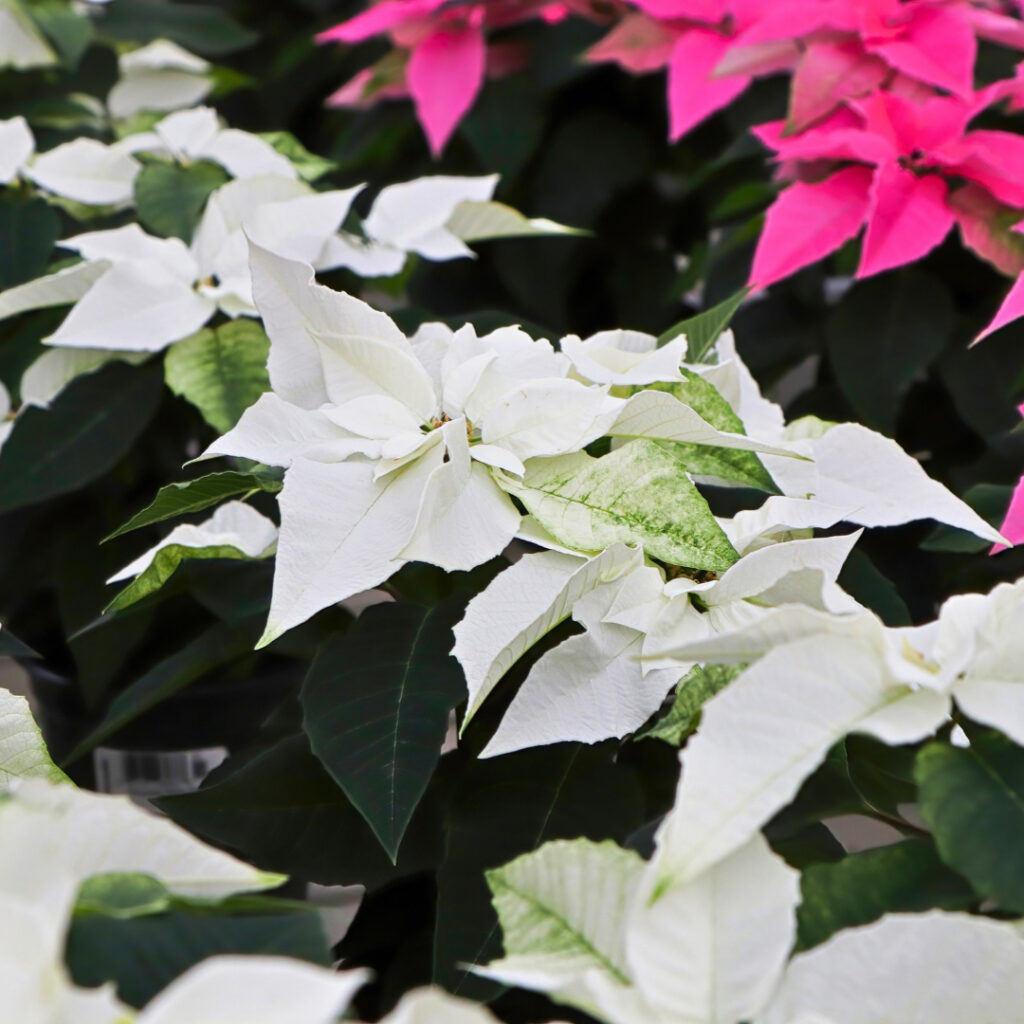
I see poinsettias as tropical shrubs, not just disposable holiday flowers. Their colorful bracts, variety choices, and natural yearly rhythm mean they need different care than most houseplants.
Botanical Background
Poinsettia (Euphorbia pulcherrima) grows wild in Mexico and Central America. In frost-free places, I can grow it outside as a shrub reaching 6 to 10 feet tall.
Indoors, it stays smaller in a pot. The bright red, pink, white, or cream parts you notice are bracts—they’re modified leaves, not flowers.
The real flowers? Those are the tiny yellow clusters in the center. They’re not much to look at, but I always check them when choosing a plant.
Its milky sap can irritate skin and upset pets if eaten. I wear gloves when pruning, especially if my skin’s sensitive.
I keep the plant away from curious cats and dogs. Better safe than sorry.
Quick Tip: I pick plants with tight yellow center flowers and firm bracts. Droopy leaves or bare stems usually mean cold stress or poor care.
Popular Varieties And Colors
There’s more than classic red out there. ‘Prestige Red’ and ‘Freedom Red’ are great, but ‘Marble’ offers soft pink and cream bracts.
‘Jingle Bells’ has red bracts with white flecks—festive without extra effort.
| Color group | Common look |
|---|---|
| Red | Deep red, bright red, or red with white speckles |
| White and cream | Ivory, pale cream, or green-tinted white |
| Pink | Blush pink, hot pink, or pink-and-cream mixes |
| Novelty types | Curled, mottled, marbled, or speckled bracts |
I pick a color based on light and room style. Pale bracts show damage more easily—brown edges or crushed spots can happen, but it’s not the end of the world.
Quick Tip: I carry poinsettias home in a paper sleeve if it’s below 50°F outside. Cold air makes leaves drop fast.
Seasonal Growth Cycle
Poinsettias grow most in spring and summer. I give them bright light, water when the top inch of soil dries, and feed lightly after new growth starts.
Warm weather helps, but I shield them from harsh afternoon sun outdoors. In fall, short days trigger bract color.
To turn red again, most types need about 14 hours of complete darkness each night for 8 to 10 weeks. Even a lamp can mess that up—poinsettias are picky about bedtime.
During winter, the colored bracts last longest in bright indirect light with temperatures around 65°F to 70°F. I keep the plant away from heating vents, cold windows, and drafts.
Quick Tip: I don’t toss a poinsettia after the holidays. I trim it back in spring and keep it growing if I want color again next year.
Choosing A Healthy Plant
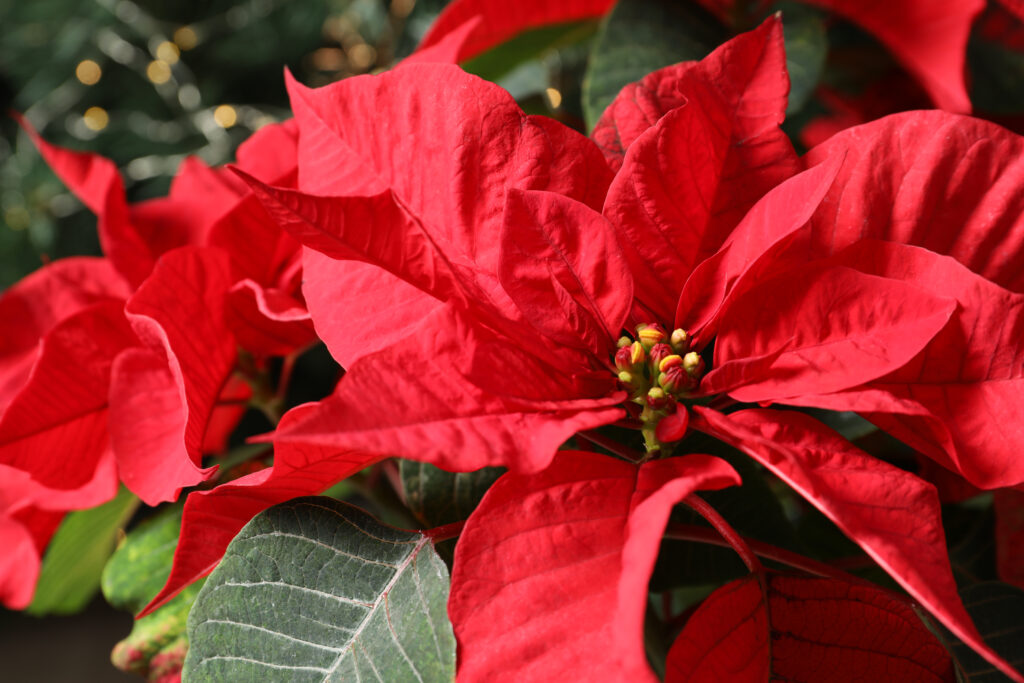
I look for fresh leaves, firm stems, and tight flower buds before buying a poinsettia. A healthy start means it’ll stay attractive longer at home.
Signs Of Freshness I Check Before Buying
I pick a plant with deep green leaves and even-colored bracts—red, pink, or white. Bracts should feel firm and smooth, not limp or spotted.
I check the small yellow flowers in the center. Fresh plants have tight, yellow buds with little or no pollen.
If the center looks open, dusty, or empty, the plant’s probably past its best. I peek under the leaves for pale spots, sticky residue, webbing, or tiny insects.
The pot should feel stable and the stems need to stand upright. I avoid anything that looks floppy or weak.
Quick Tip: I pick a plant with moist—not soggy—soil. Dry, dusty soil means it’s missed water.
What I Avoid at Purchase to Prevent Early Problems
I skip plants with yellowing leaves, drooping stems, or bracts that feel thin and papery. A little damage happens in stores, but lots of it means stress.
I avoid poinsettias displayed near automatic doors or cold entrances. Chilly drafts can damage leaves fast, even if the plant looks fine at first.
Plants wrapped tightly in plastic for too long? I pass. The wrap helps on the way home, but too much moisture and poor airflow cause problems.
Quick Tip: I ask for a paper sleeve in cold weather and take it off as soon as I’m home.
Ideal Light And Temperature
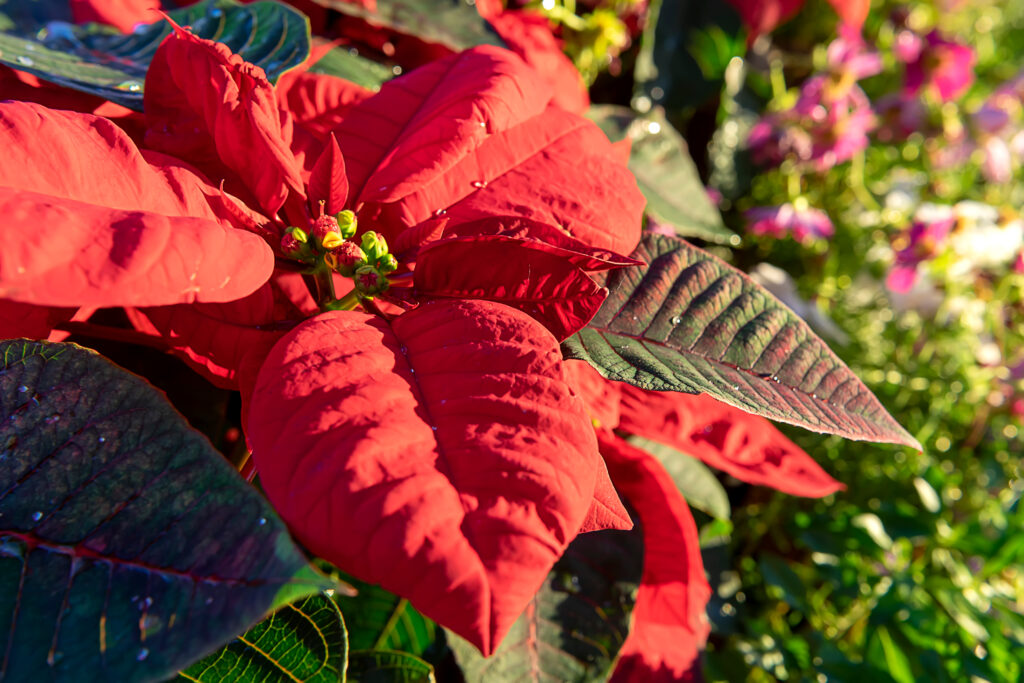
I keep poinsettias in bright, indirect light and away from sudden temperature changes. Steady warmth and a draft-free spot keep the bracts fresh.
Best Indoor Light Conditions
I place my poinsettia near an east-, west-, or south-facing window for six hours of bright, filtered light daily. A sheer curtain works well in sunny windows, especially in the afternoon.
Dark corners don’t cut it. If I need a lamp during the day, the plant probably needs more light, too.
Quick Tip: I keep leaves from touching cold window glass, even in good light.
I rotate the pot a quarter turn each week. This helps the plant grow evenly instead of leaning toward the window.
Temperature And Draft Protection
I keep my poinsettia in a room between 65°F and 75°F during the day. At night, I aim for 60°F to 65°F—cooler’s fine, but not cold.
I keep it away from front doors, open windows, vents, fireplaces, and space heaters. Sudden blasts of cold or hot air make leaves drop. Poinsettias can be a bit dramatic about this, but a stable spot fixes it.
Quick Tip: I move the plant away from windows before a cold night, especially if it’s below 50°F outside.
In warm weather, I don’t leave a poinsettia outdoors unless nights stay above 55°F. In colder zones, I bring it in before fall nights get chilly.
Watering And Humidity Needs
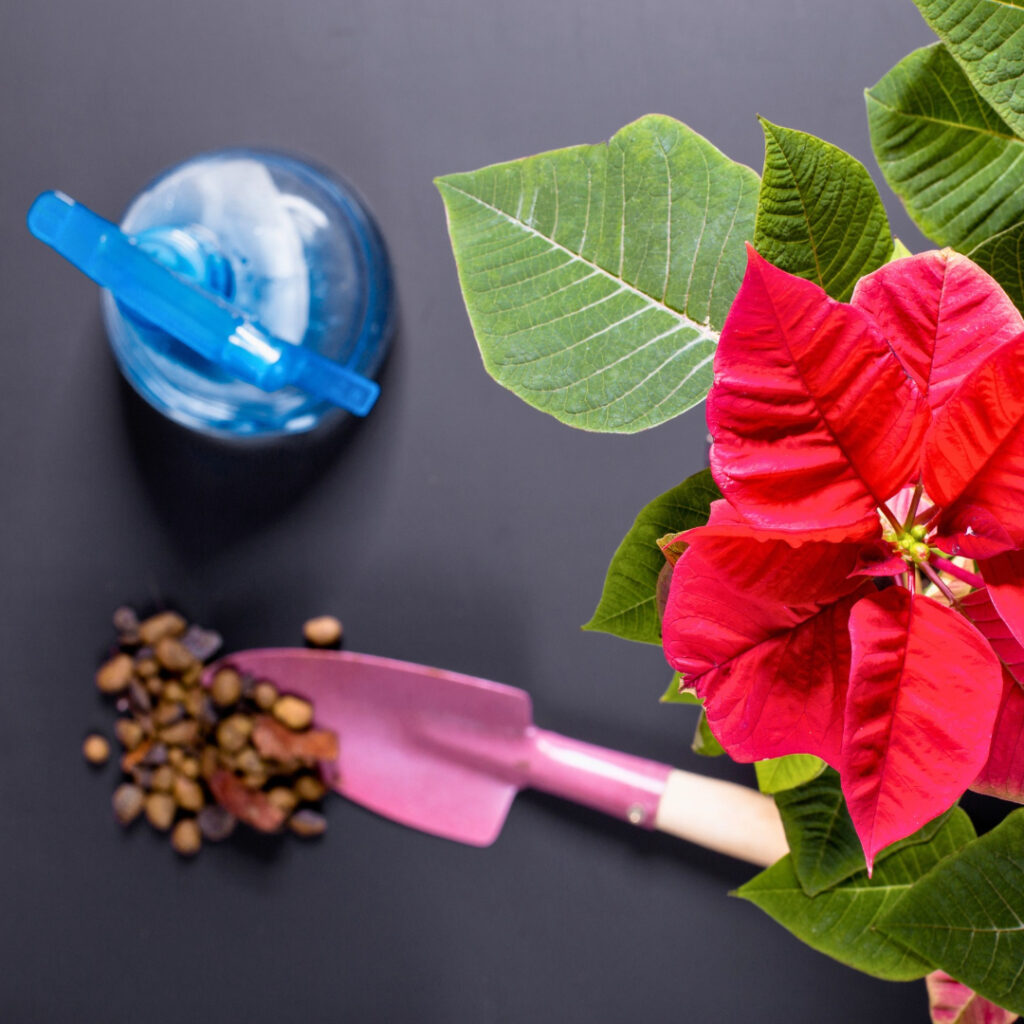
I keep poinsettias evenly moist, but never let them sit in water. Dry air, hot vents, and low winter light all change how fast soil dries.
When To Water
I check the soil every few days by pressing a finger about an inch deep. If the top inch feels dry, I water. If it’s still damp, I wait a day or two.
Poinsettias need water more often in a warm, sunny room. In a cool room or north window, the soil stays wet longer, so I adjust instead of watering on a set schedule.
Quick Tip: I lift the pot before watering. A dry pot feels much lighter than a freshly watered one.
I watch the leaves, too. Slight droop means it’s thirsty, but yellowing leaves and soft stems usually mean it’s been too wet. I don’t soak the pot if the soil already feels damp.
How To Water Properly
I take the plant to a sink and water the soil slowly with room-temp water. I stop when water runs from the drainage holes.
Then I let the pot drain for 10 to 15 minutes before putting it back in its saucer or cover. Standing water damages roots fast—poinsettias hate wet feet.
Quick Tip: I remove any foil wrapper or poke holes in it before watering. That shiny wrap traps water like a tiny bathtub.
If my poinsettia sits in a cover pot, I lift out the nursery pot to water and drain it. I avoid pouring water onto the bracts or into the plant’s center—damp leaves get spots or mold.
Managing Indoor Humidity
I keep my poinsettia away from heating vents, fireplaces, and cold drafts near doors. Warm, dry air turns leaf edges brown and crisp.
Most homes have enough humidity, but very dry winter rooms sometimes need help. I use a pebble tray filled with water, keeping the pot above the water line.
As water evaporates, it adds a bit of moisture around the plant. Quick Tip: I group my poinsettia with other houseplants to create a slightly more humid pocket of air.
I don’t mist the plant heavily. Water on leaves and bracts can leave marks or encourage disease.
In really dry homes, I use a small humidifier nearby instead of spraying the plant.
Soil, Pots, And Drainage
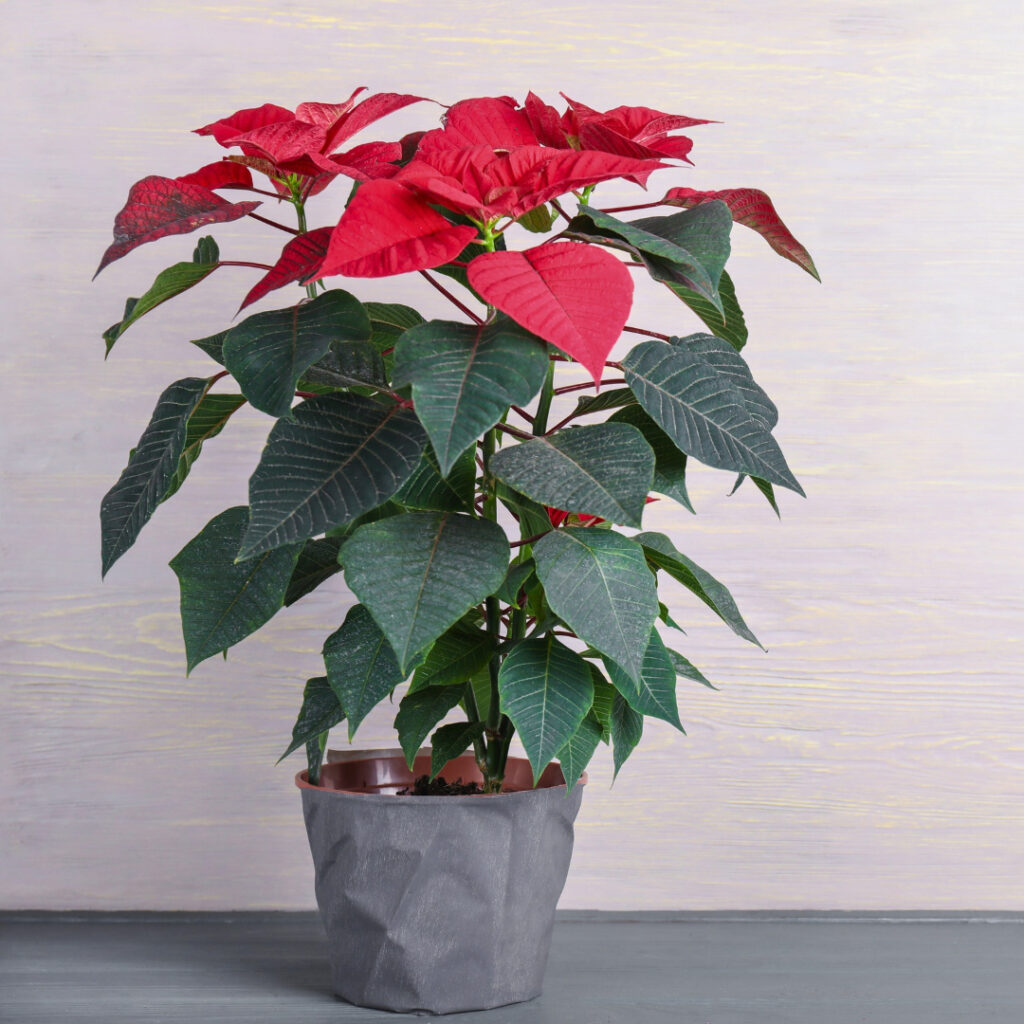
I use a light potting mix, a pot with drainage holes, and careful timing when repotting. These details prevent soggy roots—poinsettias can’t stand that.
Suitable Potting Mix
I plant poinsettias in a loose, fast-draining indoor potting mix. A standard houseplant mix works when I add perlite or coarse sand for airflow.
I want a mix that feels light and crumbly when dry, not heavy like garden soil. Garden soil packs down, holds too much water, and can bring pests inside—no thanks.
For a simple blend, I use:
- 2 parts quality indoor potting mix
- 1 part perlite
- 1 part fine pine bark, if the mix seems dense
Quick Tip: I squeeze a damp handful of soil. If water runs out or it forms a hard ball, I add more perlite.
Poinsettias grow best in slightly acidic soil, around pH 6.0 to 6.5. Most bagged mixes are close enough, so I don’t stress about testing unless there’s an ongoing issue.
Container Drainage Essentials
I always use a pot with at least one drainage hole in the bottom. Decorative pots without holes trap water, and root rot sneaks up fast.
A plastic nursery pot inside a decorative cover works well. After watering, I let the plant drain for 10 to 15 minutes, then pour out any water left in the cover pot or saucer.
Quick Tip: I never add rocks, gravel, or broken pottery to the bottom. They just reduce soil space and don’t help drainage.
I choose a container only 1 to 2 inches wider than the root ball. Too large a pot holds extra wet soil, especially in cool rooms or low-light windows.
If I move a poinsettia outdoors in frost-free USDA Zones 9 to 11, I still use a draining container. Heavy rain can soak a pot quickly, even in warm weather.
When To Repot
I like to repot a poinsettia in spring, once those colorful bracts fade and I spot new green growth. Repotting while it’s blooming? Not a good idea—it can stress the plant and leaves may drop fast.
I look for roots circling the pot, poking out of drainage holes, or soil that dries out way too quickly. Those clues tell me the plant’s cramped and needs more space.
Quick Tip: I only go up one pot size—just a little bigger does the trick.
I loosen the outer roots gently before settling the plant into fresh mix, keeping it at the same depth. After that, I water thoroughly, let the excess drain, and keep the soil just lightly moist for a few weeks.
Feeding For Continued Growth
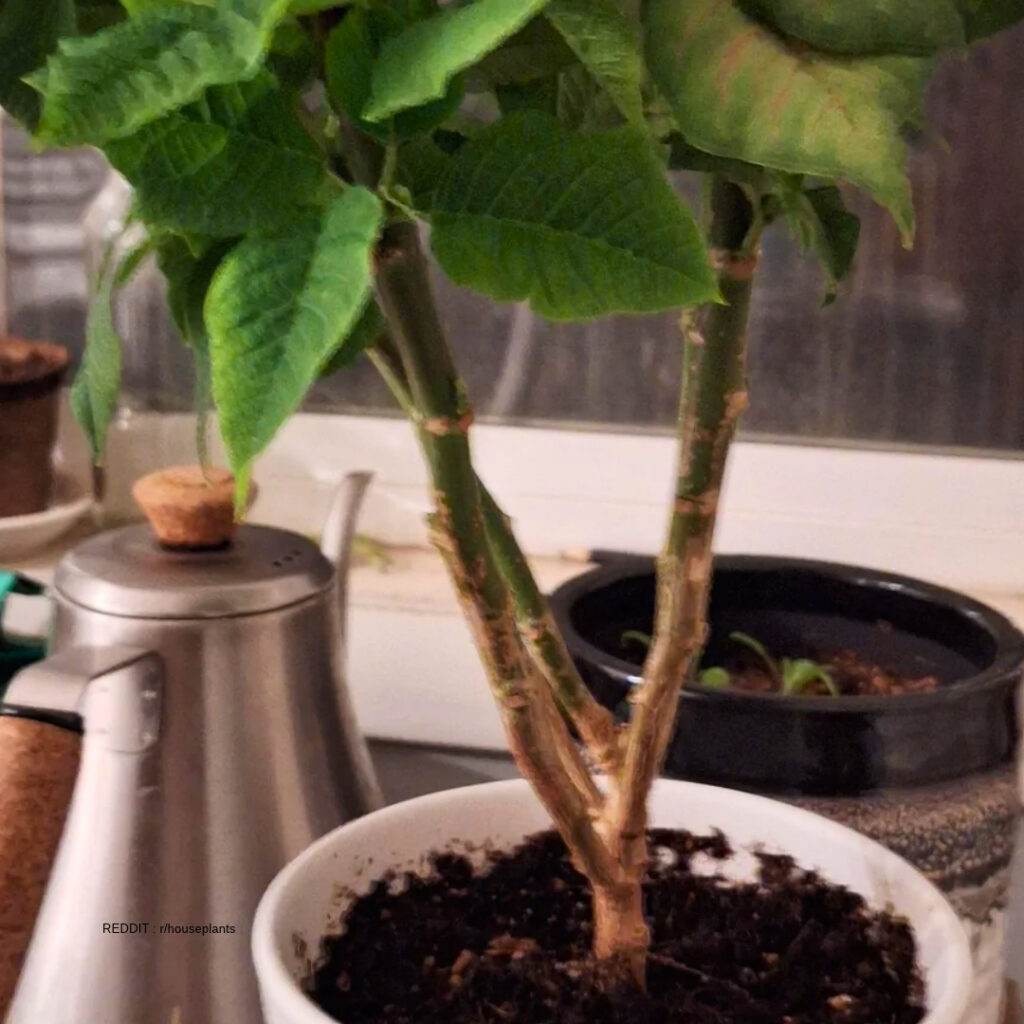
I don’t feed a poinsettia until I see new green growth. A balanced fertilizer helps with leaves but I don’t want to push it too hard.
When To Start Fertilizing After New Growth Appears
I skip fertilizer while it’s blooming or just resting after the holidays. The bracts aren’t real flowers anyway, and the plant isn’t hungry during this time.
Once I notice fresh leaves or shoots—usually late winter or spring—I start feeding. If my house is warm and bright, this can happen sooner. If I grow them outside in a frost-free area, I wait for spring growth.
Quick Tip: I make sure the soil’s a bit moist before fertilizing. Pouring fertilizer on dry roots? That’ll just burn them or brown the leaves.
I feed every two to four weeks during active growth. If the plant stays pale or sluggish even with good light, it probably wants more food. By fall, I cut back or stop fertilizer when I start the dark-light schedule for bract color.
Choosing A Balanced Fertilizer Without Overfeeding
I use a balanced, water-soluble fertilizer—think 10-10-10 or 20-20-20. Those numbers just mean nitrogen, phosphorus, and potassium.
For indoor poinsettias, I mix fertilizer at half the label strength. No need to overdo it. Too much fertilizer leaves a white crust on the soil and browns the leaf tips, or makes the plant floppy and weak.
Quick Tip: I pour the mixed fertilizer onto the soil, not the leaves or stems.
Every few waterings, I use plain water to flush out extra salts. I let water run through the drainage holes and dump the saucer. If my poinsettia’s in a dim, north window, I feed less often—slow growth just doesn’t need much.
Pruning And Shaping

I prune right after the bracts fade, then pinch new shoots in spring and summer. Clean cuts and good timing keep the plant bushy instead of tall and bare.
Post-Holiday Pruning
I wait until the bracts fade and most leaves start dropping, usually late winter or early spring. Then I cut each stem back to 4 to 6 inches above the soil.
I make cuts about ¼ inch above a leaf node—a little bump on the stem. New shoots will sprout from there. I take off any dry, brown, or weak stems too.
Quick Tip: I always wear gloves when pruning. The milky sap is sticky and can irritate skin.
After pruning, I keep the plant in bright indirect light and only water when the top inch of soil feels dry. In USDA Zones 9–11, I can grow poinsettias outside, but I protect them from frost. Cold can zap those fresh cuts fast.
Pinching For Fuller Growth
Once new stems reach about 6 inches long, I pinch the tips. I snip off the top inch of each shoot with clean fingers or scissors, just above a leaf set.
This trick makes each stem branch into two or more shoots. I repeat every few weeks as the plant grows in spring and early summer. More branches mean a bushier plant and, hopefully, more bracts later.
Quick Tip: I stop pinching by late August or early September. If I pinch too late, I’ll cut off the growth that makes holiday flowers.
I never pinch wilted or stressed plants. If leaves are limp or soil’s bone-dry, I water and wait for recovery before trimming anything.
Encouraging Reblooming
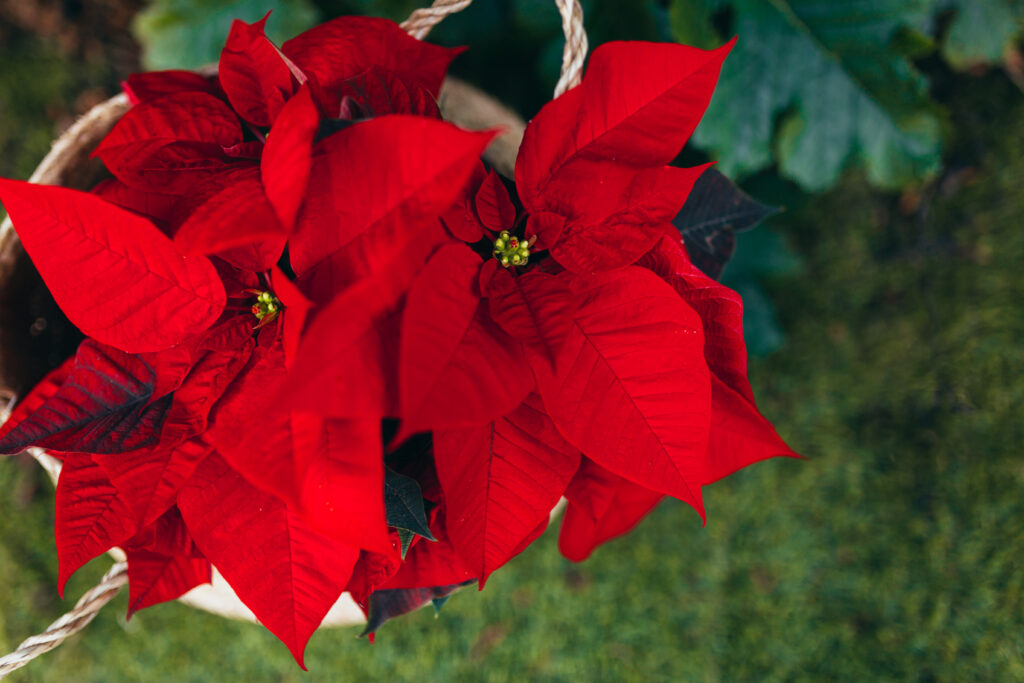
I stick to a strict light routine to get colored bracts again. It takes patience, honestly, and those changes start with long, totally dark nights.
The Darkness Schedule
I start the darkness routine in late September or early October if I want color by the holidays. For 8 to 10 weeks, I give the plant 14 to 16 hours of complete darkness every night.
I put it in a closet, unused room, or cover it with a box from about 5 p.m. to 8 a.m. Even a lamp or TV glow can mess up the cycle. Poinsettias are fussy about this—no cheating with light.
Quick Tip: I set a phone alarm so I don’t forget to move or cover the plant.
During the day, I return it to bright, indirect light for 6 to 8 hours. I keep daytime temps around 65 to 70°F and nights at 60 to 65°F. I only water when the top inch of soil is dry—soggy soil’s a recipe for root trouble.
Returning To Normal Care
I stop the darkness schedule when I see little center flowers and the bracts start showing color. This usually takes a few weeks, but it depends on light, temperature, and honestly, the plant’s mood.
I move the poinsettia back to a bright window with indirect sun. In cold areas, I keep leaves away from drafty glass. In warm USDA Zones 9 to 11, I grow it outdoors in a sheltered, frost-free spot.
Quick Tip: I check the soil every few days and always empty the saucer after watering so roots don’t sit in water.
Through winter, I stick with bright light, moderate watering, and steady temperatures. The colored bracts hang on for weeks if I keep the plant away from heaters, cold doors, and sudden chills.
Common Problems And Solutions
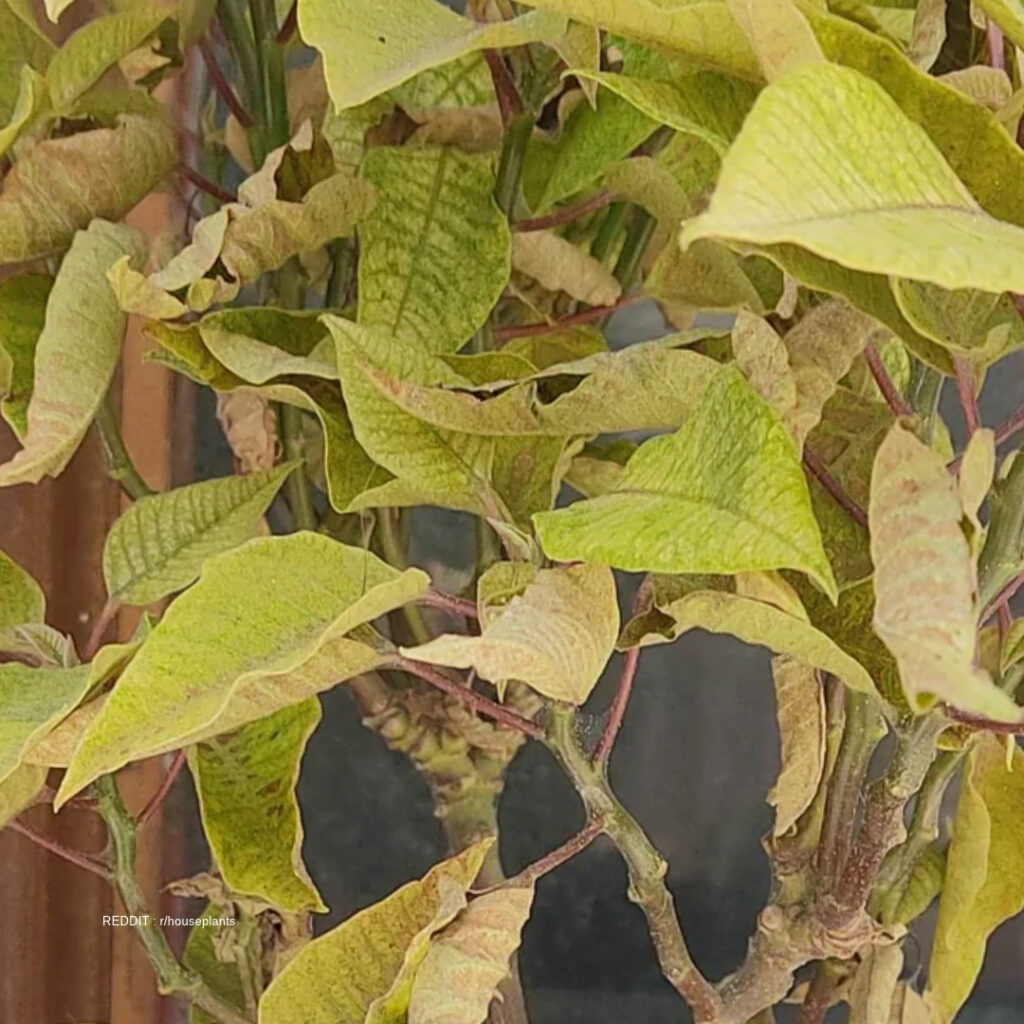
Most poinsettia issues come from watering mistakes, temperature swings, or pests hiding under the leaves. I check the soil, light, and leaf undersides before making any big changes.
Yellowing Or Drooping Leaves
Yellow leaves usually mean soggy roots. I let the top inch of soil dry before watering, then pour out any water left in the saucer after 15 minutes.
If leaves droop, the plant might be thirsty. I check the soil: dry means water, wet means wait. The plant’s not being dramatic—it’s just telling you something.
Quick Tip: Keep poinsettias in bright, indirect light at 65–75°F during the day.
Cold drafts, heater vents, or temps below 50°F can make leaves limp or yellow. I keep the plant away from exterior doors, cold windows, and hot air blasts. Even outdoors in warm zones, cold nights can still hurt.
Leaf Drop
Poinsettias drop leaves when light, temperature, or moisture changes suddenly. It happens a lot after a cold car ride home or when you put it near a drafty door.
I move the plant to a steady spot with bright indirect light. I avoid moving it around too much and never let the pot sit in water.
Quick Tip: Water only when the top inch of soil feels dry—don’t follow a strict calendar.
Leaf drop can also happen with dry air or missed watering. If the soil’s pulled away from the pot, I soak the root ball slowly until water runs out, then let it drain well before putting it back in its cover pot.
Pests And Diseases
I check under leaves and along stems for white cottony clumps, sticky stuff, tiny webs, or small bugs. Mealybugs, whiteflies, and spider mites spread fast indoors.
If I spot pests, I isolate the plant right away. I wipe mealybugs off with a cotton swab dipped in rubbing alcohol, or rinse pests off with a gentle water stream. If they’re stubborn, I use insecticidal soap as the label says.
Quick Tip: I always inspect new plants before putting them near my poinsettia.
Root rot shows up as yellow leaves, wilting, and dark, mushy roots. It usually starts from poor drainage or soil that stays wet too long. I trim damaged roots, repot in fresh, draining mix, and always use a pot with holes.
Safety Around Pets And Children
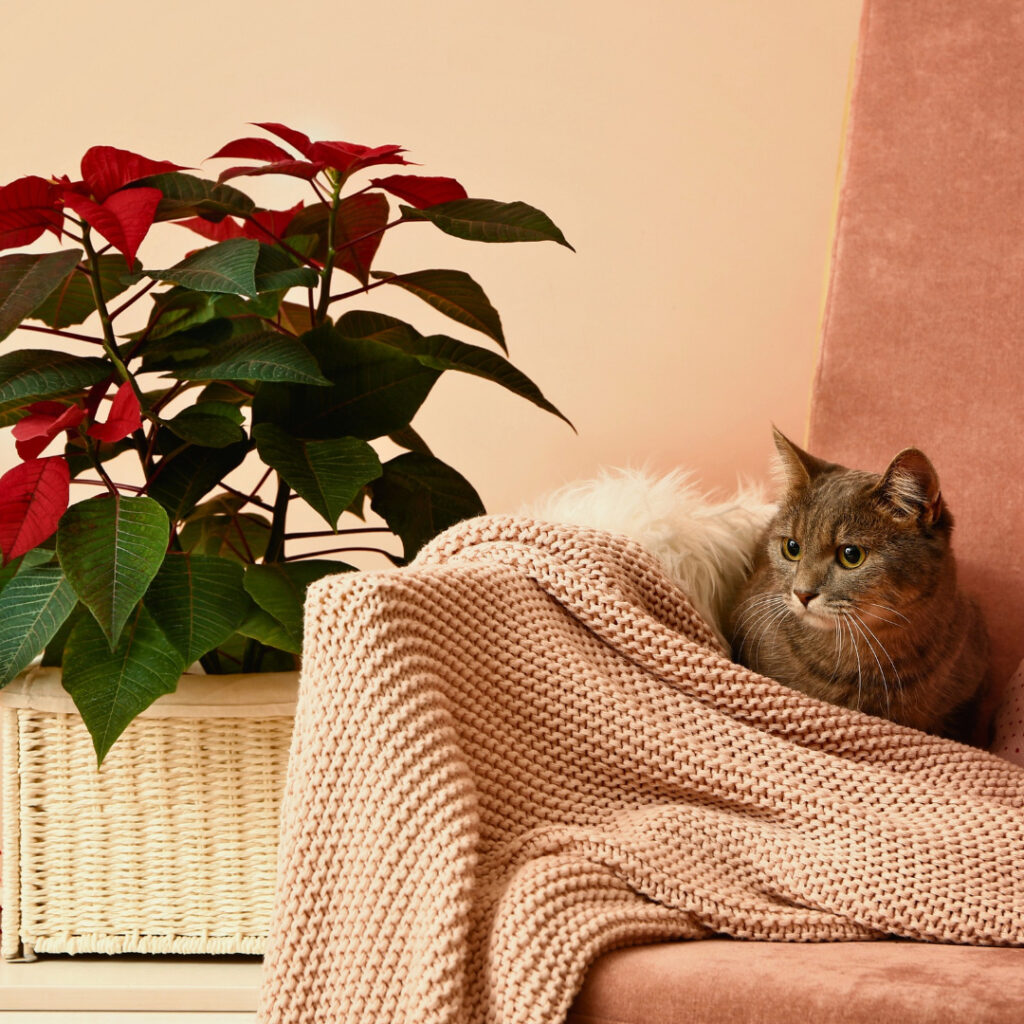
I keep poinsettias up high because chewing leaves or touching broken stems can cause mild issues. The plant isn’t super poisonous, but the sap can irritate skin, mouths, and tummies.
Understanding Toxicity: What Happens If a Pet or Child Takes a Bite
Poinsettias get a bad rap for being deadly, but that’s not true. A small nibble usually causes drooling, nausea, vomiting, or loose stool. Kids might get a sore mouth too.
I still don’t treat the plant like a snack. Cats and dogs might vomit after a bite, and more could upset their stomachs even more.
Quick Tip: If a child or pet eats poinsettia leaves, I remove any plant bits from their mouth and offer a small drink of water.
Call a doctor, vet, or poison control if symptoms are severe, keep happening, or seem odd. Watch for ongoing vomiting, trouble breathing, sleepiness, or a swollen mouth. I keep pots up high or behind closed doors—pets don’t read warning labels, after all.
Handling Plant Sap: Preventing Skin and Eye Irritation
If I cut or break a poinsettia stem, white sap leaks out. It can make skin itchy and red, especially if you’re sensitive to latex. That sticky stuff stings if it hits your eyes.
I wear gloves when pruning, repotting, or moving a damaged plant. I wash my hands after, especially before touching my face or food.
Quick Tip: If sap gets on skin, rinse right away. If it splashes in eyes, flush with lukewarm water for at least 15 minutes.
I pick up fallen leaves, since toddlers and pets grab anything. If sap causes a spreading rash, eye pain, or redness that won’t quit, I call a doctor.
Seasonal Care Calendar
I change up water, light, and feeding as the plant shifts from holiday color to leafy growth. A steady routine helps avoid yellow leaves, weak stems, and missed blooms.
Winter Care: Keep Holiday Color Fresh Without Soggy Roots
I place my poinsettia in bright, indirect light near an east- or south-facing window. I keep it away from cold glass, heater vents, and drafty doors. Leaves drop fast if temps swing too much.
I water when the top inch of soil feels dry. I let extra water drain, then empty the saucer after 10 minutes. Wet soil feels heavy and cool—if it’s like that, I wait.
Quick Tip: I remove any foil cover or poke drainage holes so water can’t pool around the roots.
I keep days at 65–70°F and nights above 60°F. I skip fertilizer while the plant’s in full color—it’s taking a break, not growing.
Spring And Summer Care: Build Strong Green Growth for Next Year
After the colored bracts fade—usually by late winter or spring—I cut each stem back to about 4–6 inches tall. I leave two or three leaf nodes on each stem.
The plant looks a little bare at first, but new shoots pop up soon enough.
I repot only if roots fill the pot or start circling the bottom. Fresh, well-draining potting mix and a pot with drainage holes work best.
Quick Tip: Once new leaves show, I feed with a balanced houseplant fertilizer at half strength every two to four weeks.
After frost danger passes, I move the plant outside when the weather warms up. I start it in shade for a few days, then let it get morning sun or bright filtered light.
If you’re in USDA Zones 9–11, you can grow it outdoors all year, but frost will damage it in no time.
I pinch back soft stem tips through mid- to late August. This keeps the plant full instead of tall and floppy.
Fall Preparation: Use Darkness to Trigger Colored Bracts
Starting in late September or early October, I give my poinsettia 14–16 hours of complete darkness each night for about 8–10 weeks. Even a lamp, TV glow, or porch light can mess with this—plants are weirdly picky about it.
During the day, I give it bright light, then stash it in a dark closet or cover it at the same time each evening. I uncover it every morning. Consistency matters more than fussing over every little detail.
Quick Tip: I set a phone reminder for the daily dark period, since missing nights can delay the color.
I keep the soil lightly moist, not soggy, and stop pinching stems by late August. I avoid moving the plant between hot and cold spots.
Once bracts start to color, I put it back in a bright indoor spot and keep temperatures near 60–70°F.
Frequently Asked Questions
I keep poinsettias healthy with steady moisture, bright indirect light, and warm indoor conditions. If I want those colored bracts again, I stick to a strict darkness schedule.
How often should I water a poinsettia?
I check the soil every few days and water when the top inch feels dry. I add water until it runs through the pot, then empty the saucer so roots don’t sit in soggy soil.
Dry, drooping leaves usually mean the plant needs water, but yellow leaves often mean I’ve watered too much. The pot should feel lighter before I water again.
Quick Tip: I remove any decorative foil or poke drainage holes in it so extra water can escape.
Should I keep my poinsettia indoors or outdoors?
I keep a poinsettia indoors during fall and winter, near a bright window with indirect light. I make sure it’s away from cold glass, heating vents, and drafty doors.
Outdoors only works when nights stay above 55°F (13°C). In warm USDA Zones 9–11, I can grow it outside year-round if it’s in a protected, frost-free spot.
Quick Tip: I pick morning sun and afternoon shade outdoors, since hot direct sun can scorch the leaves.
How do I keep a poinsettia alive all year round?
After the holidays, I keep the plant in bright light and water when the top inch of soil dries. When the colored bracts fade, I just keep up normal care instead of tossing it out.
In spring, I cut the stems back to about 4 to 6 inches tall and move the plant into fresh potting mix if it’s root-bound. I feed it with a balanced houseplant fertilizer every few weeks during active growth.
Quick Tip: I pinch new stem tips in late spring and summer to help the plant grow fuller instead of tall and sparse.
When should I put my poinsettia in darkness to encourage reblooming?
I start the darkness routine in late September or early October. For about 8 to 10 weeks, I give the plant 14 to 16 hours of complete darkness every night.
Even a lamp or porch light can interrupt the process, which is honestly a little fussy but true. During the day, I move it back to bright indirect light and keep the soil lightly moist.
Quick Tip: I put the plant in a dark closet each evening and take it out at the same time each morning.
Can I move my poinsettia outside during the summer?
Once all frost danger has passed and nighttime temps stay above 55°F (13°C), I move my poinsettia outside. I start it in shade for several days, then slowly increase its light exposure.
I make sure to bring it back inside before cool fall nights arrive. Frost can damage a poinsettia fast, so I don’t wait for a cold snap.
Quick Tip: I check the pot daily outdoors since warm wind and summer sun can dry the soil much faster.
How can I revive a dying poinsettia plant?
I always start by checking the soil and roots. If the soil feels bone dry, I water it thoroughly and let the pot drain out—no one likes soggy feet, right?
If the soil’s wet and kind of smells off, I hold back on watering and let it dry out. Sometimes, I’ll trim away any mushy, dark roots I find lurking down there.
I move my poinsettia to a spot with bright, indirect sunlight. It seems happiest somewhere warm, usually between 65°F and 75°F (18°C to 24°C).
I pick off any dead leaves. I skip the fertilizer until I actually see new growth poking through.
Quick Tip: I always check for tiny whiteflies or sticky leaves—pests love to attack a stressed poinsettia, and that’s the last thing it needs.