
I stake dahlias early and tie growing stems loosely to sturdy supports. This helps prevent breakage and supports larger blooms for cut flowers.
I install stakes while growing dahlias are still small, before roots and stems fill the bed. Wind, heavy rain, and large flower heads can bend unprotected dahlia stems quickly.
Quick Tip: I use soft ties and check them often so stems have room to grow.
I’ll cover simple stake choices, support methods for different garden spaces, and what to do after a storm.
Why Support Creates Stronger Stems and Better Blooms
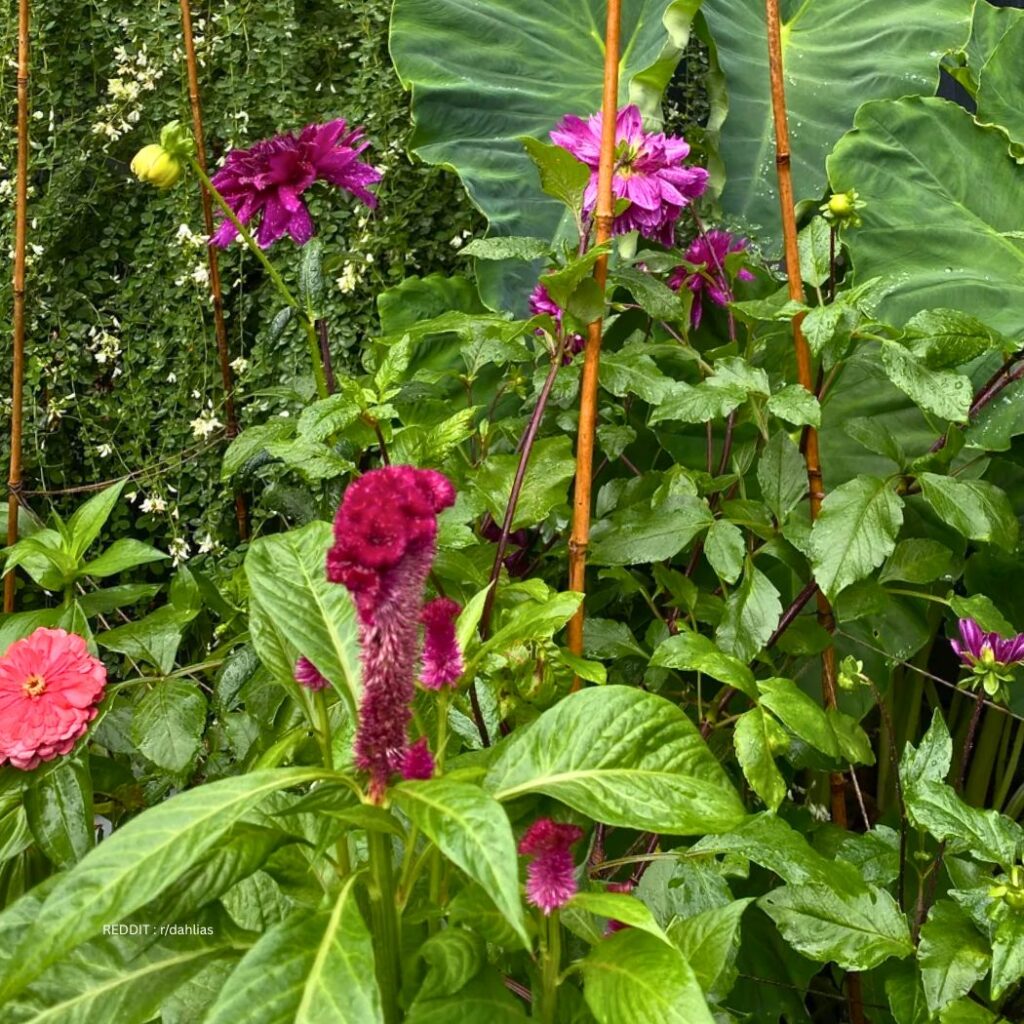
I stake dahlias early so stems grow straight, flowers stay clean, and bad weather causes less damage. Support also keeps plants open for better airflow and easier cutting.
Which Dahlias Need Staking Most
I stake tall dahlias first, especially plants that grow 3 feet or more. Long stems carry more weight, so they can lean or snap as the plant fills out.
Dinnerplate dahlias also need steady support. Their huge blooms can pull a stem sideways after heavy rain, even when the plant looked sturdy the day before.
I also support medium-height dahlia varieties in exposed spots. A plant near a fence gap or open lawn gets more wind than one in a sheltered bed.
Quick Tip: I place stakes when plants are 8 to 12 inches tall. Early stakes hide under the leaves, and I avoid poking through roots later.
Pompon dahlias often have lighter flowers, but I still stake them if they grow tall or produce many blooms. A busy plant can get top-heavy fast. Dahlias don’t always know when to quit.
How Wind, Heavy Rain, and Hollow Stems Cause Damage
Dahlia stems are often hollow, which helps them grow quickly but makes them easier to crush or bend. A sharp bend can stop water from reaching the flower above it.
Wind pushes tall stems back and forth at the base. Heavy rain adds weight to leaves and flowers, while wet soil may loosen around the roots.
I check plants after storms, especially in humid or rainy areas. If a stem leans, I tie it loosely to a stake with soft garden twine before the bend gets worse.
Quick Tip: I use a figure-eight tie: one loop around the stake and one around the stem. This leaves room for the stem to move without rubbing raw.
In dry, windy zones, I check ties often because plants can grow quickly and pull against them. I never use thin wire, since it can cut into soft stems.
Benefits for Airflow, Dahlia Buds, and Cutting Gardens
I keep stems upright so leaves and dahlia buds don’t stay packed together. Space lets dew and rain dry faster, which can help limit mildew and rot on crowded plants.
Supported stems also hold blooms off the soil. Flowers stay cleaner, and slugs have fewer easy places to hide beneath fallen leaves.
Quick Tip: I tie stems in more than one place as they grow, usually every 12 to 18 inches. This spreads the weight instead of forcing one tie to do all the work.
In my cutting garden, staking makes harvesting simpler. I can see long, straight stems clearly and cut flowers without tugging nearby branches.
A supported plant puts its energy into growing and blooming instead of recovering from a broken stem. The result isn’t magic, just fewer damaged blooms and cleaner flowers for the vase.
When to Install Supports and Start Tying
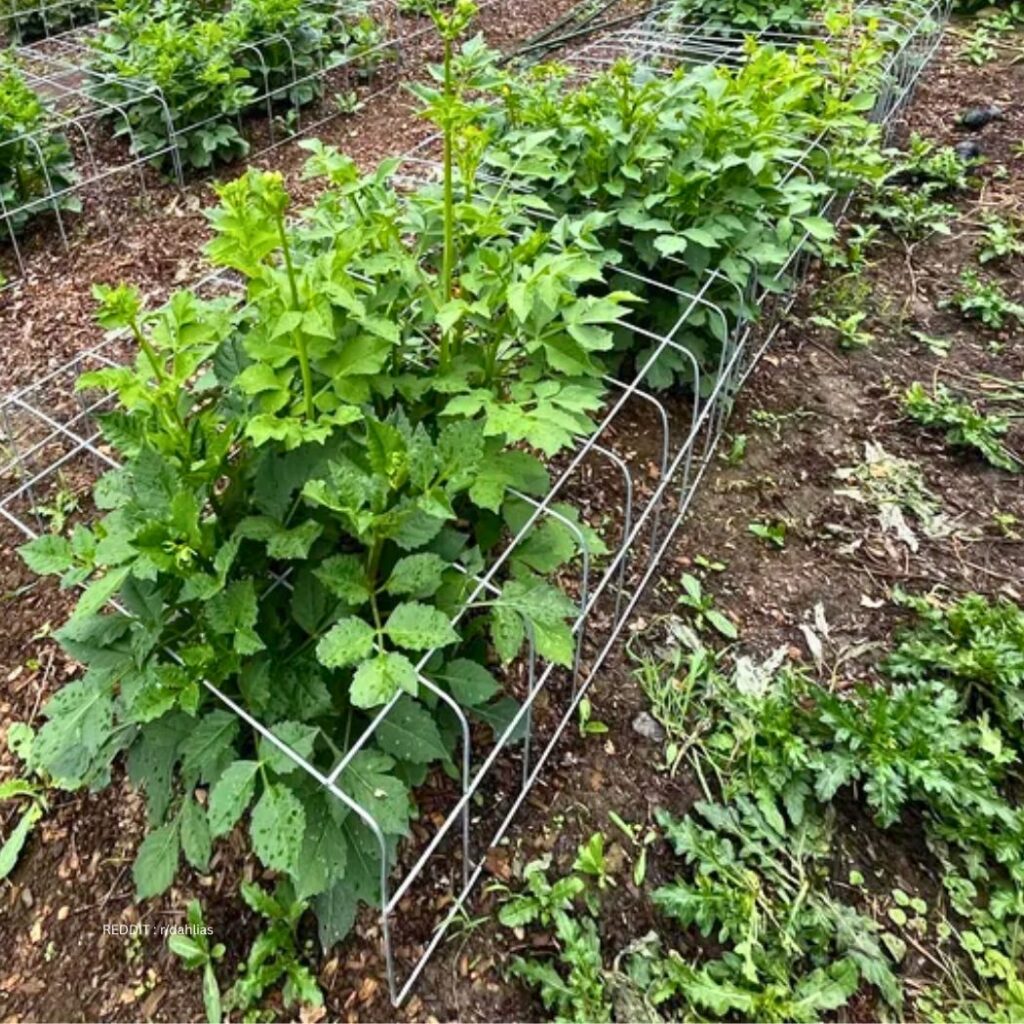
I put dahlia stakes in place early, then add soft ties as stems gain height. A quick check after heavy rain or wind keeps tall growth from leaning, splitting, or rubbing.
Place Stakes at Planting Time
I install dahlia stakes when I plant the tubers, before roots and shoots fill the soil. This lets me push each stake deep without stabbing a tuber later.
It also gives the plant clear support from its first tall growth. I use wooden stakes, a sturdy wood stake, or metal stakes that reach at least 4 to 5 feet above the soil.
For very tall dahlia types, I choose 6-foot stakes. I place one stake about 3 to 4 inches from the tuber, on the side where I can reach it easily.
Quick Tip: I press the stake at least 12 inches into firm soil. If it wobbles now, it won’t hold a heavy dahlia in summer.
In windy areas or exposed gardens, I use thicker dahlia stakes or add two stakes with twine between them. Wet soil can feel loose after rain, so I check that wooden stakes still stand straight.
Add the First Tie at 12 to 18 Inches
I begin tying dahlias when the main stem reaches 12 to 18 inches tall. At this size, the stem is still flexible and easy to guide.
Waiting until it bends over makes the job harder. I use soft garden tape, cloth strips, or padded plant ties, then make a loose figure-eight: one loop around the stake and one around the stem.
The crossed shape keeps the stem from rubbing against the stake in wind.
Quick Tip: I leave enough space for the stem to thicken. A tight tie can pinch it like a belt that’s one notch too small.
I add another tie every 10 to 12 inches as the dahlia grows. I support side stems with their own ties if they carry large buds. Big blooms look great, but they add weight fast.
Check Supports After Fast Growth and Storms
I check my dahlia supports once a week during fast summer growth. I look for loose ties, leaning metal stakes, cracked wood stakes, and stems pressing against a sharp edge.
After a storm, I inspect plants as soon as the leaves dry enough to handle. Rain can make flower heads heavy, while wind can twist stems around their ties.
I straighten a leaning stake slowly and firm the soil around its base with my foot.
Quick Tip: I replace a damaged tie right away. A frayed strip can snap during the next gust, usually at the worst moment.
In cooler zones, growth may slow after cool nights, so I need fewer new ties. In hot areas with strong summer storms, I check more often and add support before buds open.
Choose the Right Stakes, Posts, and Ties
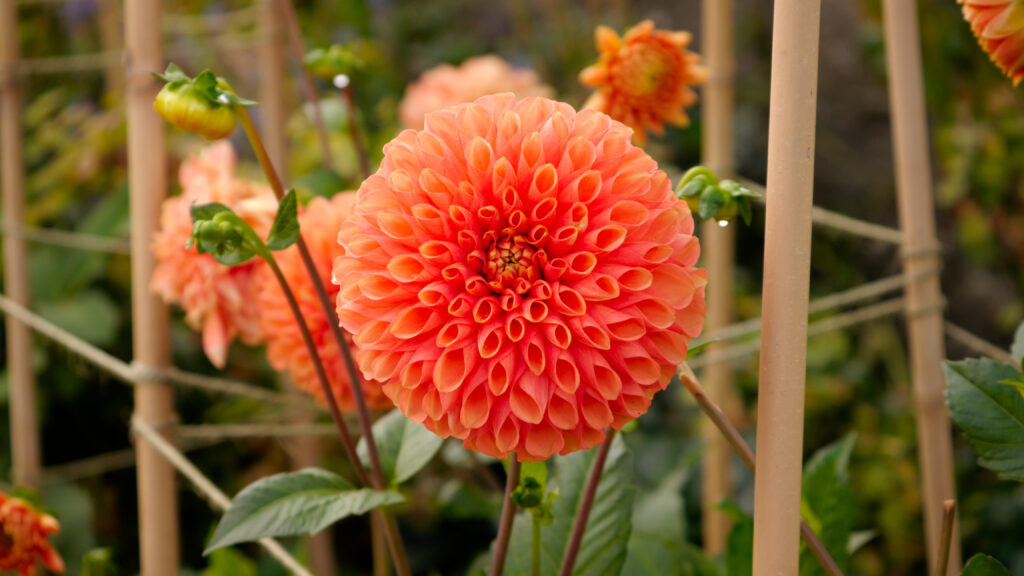
I choose supports that can handle a dahlia’s full height, wet soil, and summer wind. I also use soft ties that hold stems firmly without rubbing or cutting them.
Wood, Bamboo, and Metal Support Options
I use hardwood stakes for single dahlias because they last through a full season and stay steady in firm soil. A 1-inch-wide stake works well for most plants, while thick, tall varieties may need two or three stakes.
A bamboo cane or bamboo poles are light, natural-looking options. I avoid thin sticks for tall dahlias because they can split or bend after rain.
For windy gardens, I choose metal rebar or a metal T-post. Metal T-posts, often called t-posts, grip the ground well and work best for plants over 4 feet tall.
Quick Tip: I push stakes or posts 10 to 12 inches into the soil when I plant the tuber. Adding them later can damage roots.
Selecting Soft Materials That Will Not Chafe Stems
I tie stems with soft ties, plant tape, or soft twine. These materials bend with the stem and feel less harsh than wire or tight plastic ties.
Garden twine and jute twine work for loose figure-eight ties. I loop one side around the stake and the other around the stem, leaving a little room for growth.
I avoid using twist ties directly on a dahlia stem. Their metal core can pinch tender growth, especially after a rainy stretch when stems grow fast.
Quick Tip: I check every tie once a week. If it leaves a dent, feels tight, or rubs in the wind, I loosen or replace it.
Matching Support Height to Mature Plant Size
I match the stake height to the dahlia’s listed mature height, not its size at planting. A 3-foot variety needs a stake about 3 to 4 feet tall, while a 5-foot plant needs a 5- to 6-foot support.
I allow for the part buried in the ground. For example, I use a 6-foot bamboo pole if I need about 5 feet above soil level.
In windy areas or places with heavy summer storms, I use taller supports and add more than one tie point. I secure the main stem first, then add ties as side branches become heavy with flowers.
Quick Tip: I place the first tie about 12 inches above the soil, then add a new tie every 12 to 18 inches as the plant grows.
Use the Best Support Method for Your Garden Layout
I match the support to the number of plants and the space I have. A stake works for one dahlia, while wider systems keep beds tidy when wind and rain hit.
Secure Individual Plants With the Single Stake Method
I use the single stake method for one dahlia or for dahlias in containers. I push a 4- to 6-foot bamboo stake or metal stake into the soil about 6 inches from the tuber, ideally when I plant it.
I tie the main stem to the stake with soft garden twine as it grows. I make a loose figure-eight loop so the stem doesn’t rub against the stake.
Quick Tip: I add a new tie every 8 to 12 inches of growth, before the stem starts to lean.
Individual stakes look simple, but they need checking after storms. In windy areas or exposed gardens, I choose a heavier metal stake instead of thin bamboo.
Build a Bamboo Tripod or Use Tomato Cages
I use a bamboo tripod when a tall dahlia has several strong stems. I place three bamboo canes around the plant, push them firmly into the ground, and tie their tops together with garden twine.
The tripod gives stems room to spread without flopping into nearby plants. I loosely tie outer stems to each cane as they lengthen.
Quick Tip: I build the tripod early, while the plant is small. Trying to fit canes around a full plant can snap a stem fast.
Tomato cages can also work, especially for compact or medium-height dahlias. I set the cage over the plant at planting time, then guide stems through the openings.
Standard short cages may not hold tall varieties, so I use tall, sturdy cages or add bamboo canes beside them.
Support Rows With the Corral Method and Florida Weave
I use the corral method for a group of dahlias planted in a block. I set bamboo poles or T-posts at the corners, then run garden twine around the outside of the plants at several heights.
The twine forms a low fence that keeps stems standing while leaving the center open for air and easy picking. I add each level before the plants lean outward.
Quick Tip: I keep the first twine line low, about 12 inches above the soil, so young stems get support early.
For long rows, I use a Florida weave. I place T-posts at both ends and add posts every 6 to 8 feet, then weave twine back and forth between posts on both sides of the plants.
I tighten the twine enough to hold stems upright, but not so tight that it cuts into them.
Tie Stems Safely as Dahlias Grow
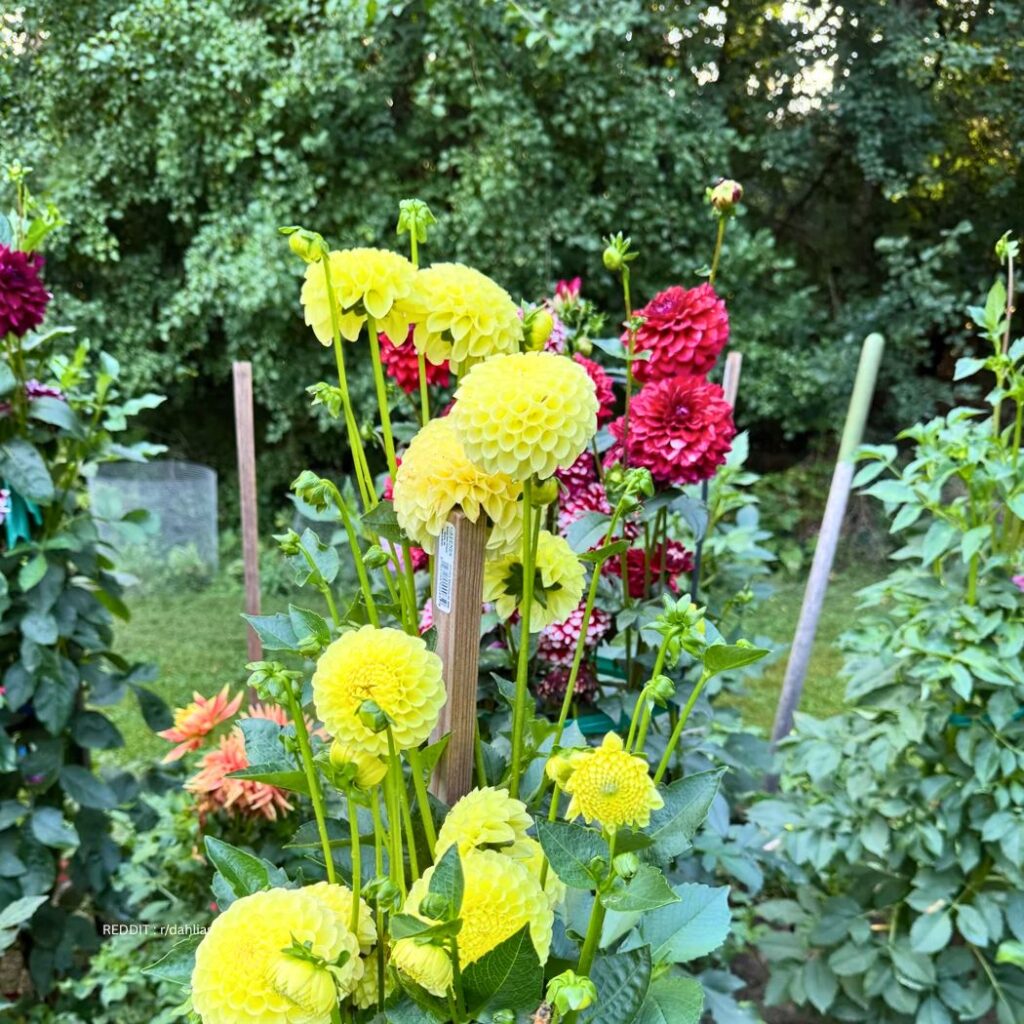
I use soft, loose ties that hold each stem steady without squeezing it. I also add support before wind, rain, or heavy blooms pull branches out of place.
Make a Loose Figure-Eight Knot to Prevent Stem Rubbing
I tie each main dahlia stem to its stake with a figure-eight knot. One loop goes around the stake, and the other goes around the stem. The crossed center keeps the stem from scraping against rough wood or bamboo.
I use plant tape, soft ties, or strips of old cotton fabric. Garden twine can work, but I avoid tying it directly around tender stems because it may rub or cut them as the plant moves.
Quick Tip: Leave room for one finger between the tie and the stem.
I place the first tie about 8 to 12 inches above the soil, then add another every 8 to 12 inches as the dahlia grows. I check each tie after heavy rain or strong wind.
A tie that felt loose last week may become tight once the stem thickens.
Add a Secondary Tie When Tall Branches Carry Heavy Blooms
I add a secondary tie when a tall stem leans away from the main stake or carries a large flower bud. I place the tie below the bud or near the point where the branch starts to bend.
The secondary tie should guide the branch upward, not pull it straight and stiff. I use a second short stake when one branch reaches far beyond the main support. This keeps weight off the main dahlia stem.
Quick Tip: Tie below the heavy part of the branch, not around the flower stalk itself.
In windy areas or exposed gardens, I add these ties early. Waiting until the branch hangs low can leave a sharp bend that may not recover.
I check tall plants after storms, especially when wet flowers add extra weight.
Support Side Branches Without Restricting New Growth
I support side branches once they grow long enough to flop or rest on nearby plants. I use soft plant tape to make a loose loop from the branch to the stake, cage, or support net.
I avoid tying near a branch tip. The tip keeps growing, and a tight tie there can pinch new growth. Instead, I tie the branch a few inches back from the end, where the stem feels firmer.
Quick Tip: Move or loosen ties whenever a stem presses against them.
I leave side branches with a little room to sway. A branch held too tightly can snap when wind pushes against it.
If a branch becomes too crowded inside the plant, I may remove a weak one rather than forcing several stems into the same small space.
Pinching, Maintenance, and Storm Recovery
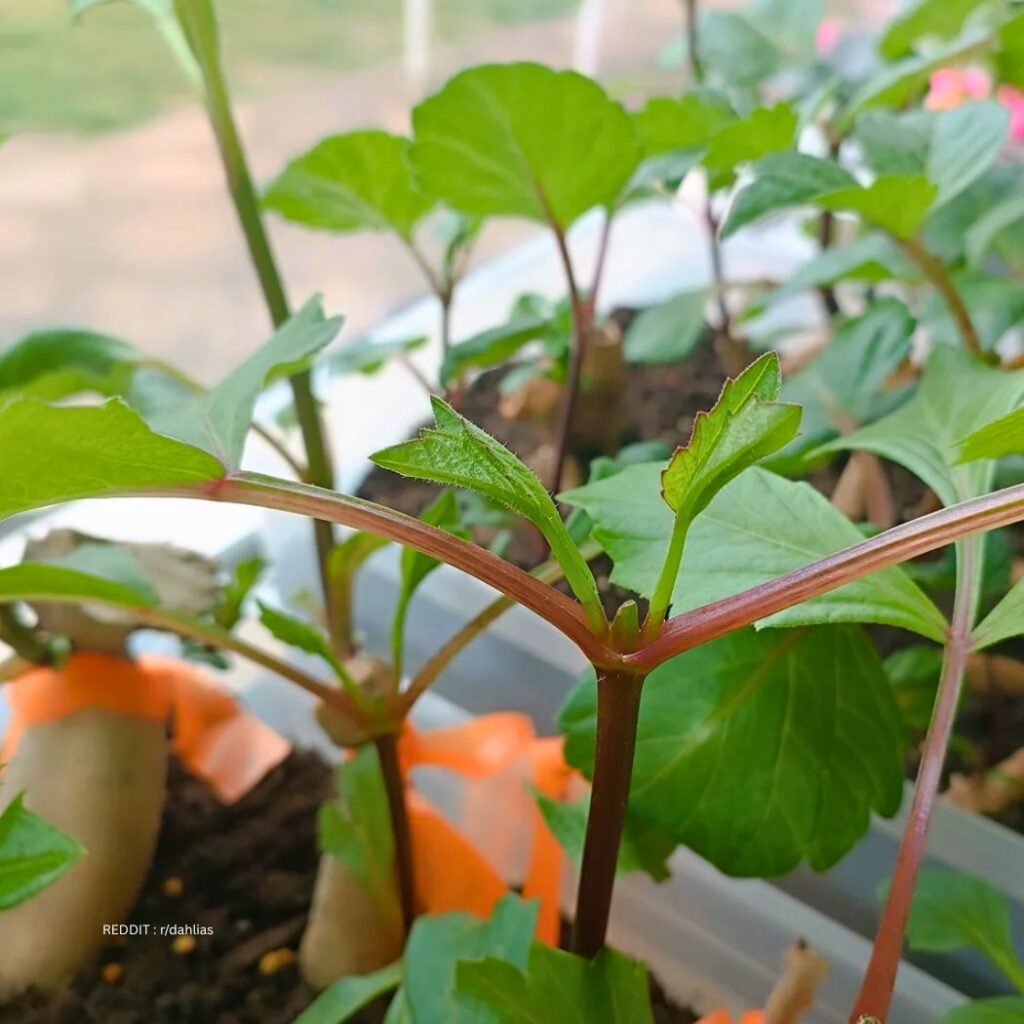
I pinch young plants to build fuller growth, check ties as stems thicken, and act quickly after rough weather. These small jobs help tall dahlias and dinnerplate dahlias stay upright through the season.
Pinch the Growing Tip for Bushier Plants
I pinch the growing tip when a dahlia has three or four pairs of leaves and stands about 12 to 16 inches tall. I use clean fingers or snips to remove the soft tip just above a set of leaves.
This tells the plant to grow side branches instead of one long main stem. More branches can mean more stems for cut flowers, though each bloom may be slightly smaller than one grown on a plant with a single main stem.
Quick Tip: I pinch only healthy, actively growing plants. I leave weak or recently planted dahlias alone until they settle in.
I do not pinch very late in the season, especially in short-season or cool zones. Late pinching delays flowers, and frost may arrive before new buds open.
Keep Ties and Supports Effective All Season
I check my stakes and ties every week and after heavy rain or strong wind. Dahlia stems grow fast and can press into string or tape before I notice.
I use soft garden ties, cloth strips, or wide plant tape in a loose figure-eight. One loop goes around the stake, and the other goes around the stem. This stops rubbing and gives the stem room to move.
Quick Tip: I add a new tie every 8 to 12 inches as tall dahlias rise, rather than pulling one tight tie around a heavy stem.
I also remove spent flowers and broken leaves near the lower stem. This makes it easier to see weak spots and keeps the support area less crowded.
Longfield Gardens recommends supporting dahlias early, before plants become top-heavy.
Rescue Leaning or Damaged Stems After Bad Weather
After a storm, I wait until the soil is no longer muddy, then inspect each plant. Heavy rain can loosen roots, while wet flower heads can pull stems sideways.
If a stem leans but has not cracked, I gently lift it and add a stake or another tie. I do not force it straight with one hard pull. A slow adjustment reduces the chance of snapping it.
Quick Tip: I cut off soaked, heavy blooms after a storm to reduce weight while the plant recovers.
For a split stem, I support both sides with soft tape or a splint and keep the area dry when possible. If the stem is badly crushed, I cut it cleanly below the damage. Side branches may still produce flowers.
Frequently Asked Questions
I use stakes, canes, rings, and netting to keep dahlia stems upright through wind and rain. Early support helps flowers face up instead of flopping into the soil.
What should I use to stake my dahlias?
I use 3- to 5-foot bamboo canes, wooden stakes, or metal plant stakes for most dahlias. Choose a stake at least 1 foot taller than the mature plant.
Tie stems with soft garden twine, cloth strips, or stretchy plant ties. Avoid thin wire, which can cut into green stems.
Quick Tip: I place stakes 4 to 6 inches from the main stem so I do not pierce the tuber.
How do I stake dahlias with bamboo canes?
I push a bamboo cane into the soil when I plant the tuber or when shoots are still short. Then I tie the main stem loosely as it grows, adding a new tie every 8 to 12 inches.
I make a loose figure-eight with the tie, placing one loop around the cane and one around the stem. This gives the stem room to move in the breeze without rubbing hard.
Quick Tip: I check ties after heavy rain or strong wind, since wet stems can lean fast.
What is the best way to support dahlias growing in pots?
I use a heavy pot with drainage holes and add three bamboo canes around the edge. I tie the canes together near the top to make a simple teepee.
For large varieties, I choose a pot at least 12 inches wide and deep. A light pot can tip over when the plant gets tall, especially on a windy patio.
Quick Tip: I place potted dahlias near a wall or railing if summer storms are common in my area.
How does the corral method work for supporting dahlias?
I place three or four stakes around each dahlia plant, forming a wide circle. Then I run twine around the outside of the stakes at several heights, usually every 12 inches.
The stems grow inside this loose corral and lean against the twine as needed. It supports several stems at once without tying every stem separately.
Quick Tip: I set up the corral while plants are small. Trying to thread twine around full plants is a bit of a mess.
Can I use netting or a support frame for dahlias?
I use square-hole garden netting or a metal grow-through support for a group of dahlias. I place it over young plants, then lift it upward on stakes as the stems grow.
A frame works well in beds where I grow several plants close together. I make sure the openings are large enough for me to reach in and remove faded flowers.
Quick Tip: I use netting with openings at least 4 inches wide so stems do not get trapped.
How can I encourage stronger stems and bigger dahlia blooms?
I plant dahlias in full sun and water deeply whenever the top inch of soil feels dry. When the plant has three or four sets of leaves, I pinch out the center shoot to encourage more branching.
For larger flowers, I remove some side buds and leave one main bud at the end of each stem. I avoid high-nitrogen fertilizer because it can produce lots of leafy growth and fewer flowers.
Quick Tip: I deadhead spent blooms often, cutting back to the next set of leaves so new flowers keep coming.