
Nothing beats walking outside and smelling fresh roses in June. But by midsummer, many rose bushes slow down, leaving you with more leaves than flowers. I’ve had plenty of seasons like that, and I learned that it usually comes down to a few simple habits.
To keep roses blooming all summer, cut off faded flowers, water deeply at the base, feed them on a regular schedule, and give them at least six hours of sun a day. Good rose care isn’t hard. It mostly means doing small jobs at the right time.
Quick Tip: Snip off a wilted bloom as soon as the petals turn brown and droopy. Then the plant can put its energy into new buds.
In this post, I’ll walk you through what I do, why each step matters, and what to watch for along the way. I’ll also point out where hot weather or your growing zone might change the plan. Try these steps, and you may see new buds forming again within a few weeks.
Start With a Rose That Can Rebloom
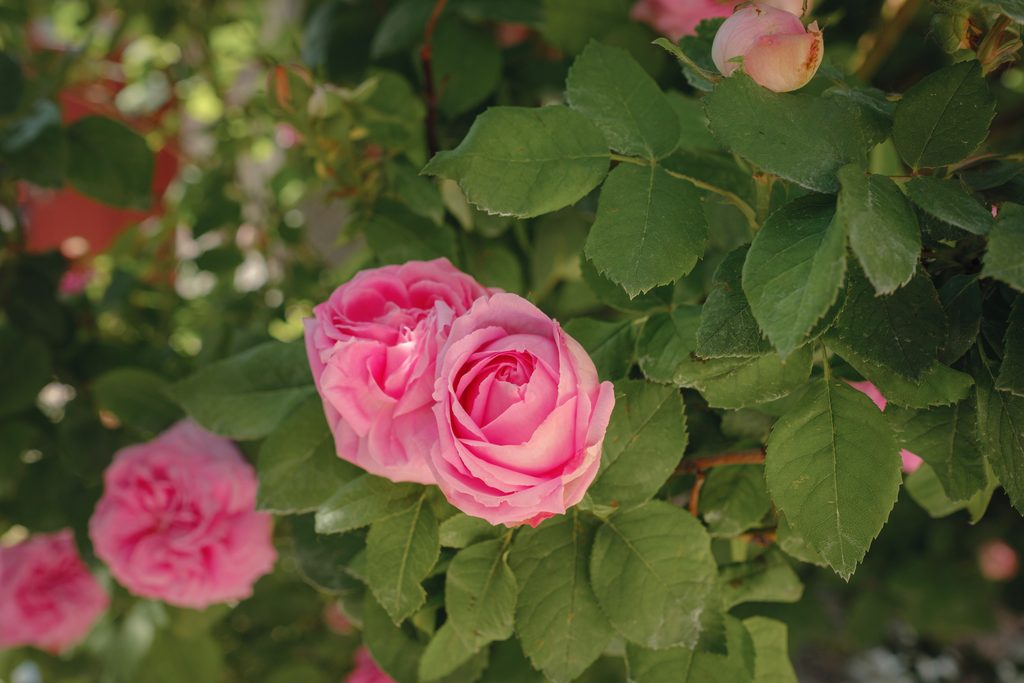
Some roses flower again and again from late spring to fall, while others bloom just once and then stop. Choose a repeat bloomer and give it 6 or more hours of sun to set yourself up for roses blooming all summer.
How to Tell Repeat-Blooming Roses From Once-Blooming Varieties (The Label Holds the Clue)
Here’s the catch: no amount of feeding or pruning will make a once-blooming rose flower twice. I learned that the hard way with a gorgeous old rambler that gave me three weeks of flowers and then nothing.
Check the plant tag or catalog for these words:
| Label Says | What It Means |
|---|---|
| Repeat, remontant, or reblooming | Flowers in waves all season |
| Continuous or everblooming | Flowers often, with short breaks |
| Once-blooming or summer-flowering | One big show, then done |
Hybrid tea roses are a safe pick. They make one large bloom per stem and flower again every 6 to 8 weeks. Floribundas, shrub roses, and most modern climbers also rebloom.
Many old garden roses, like albas and gallicas, bloom only once.
Quick Tip: If the tag is missing, ask the nursery staff before you buy.
Choose a Sunny Spot That Suits Your Climate (Morning Light Matters More Than You Think)
Roses need sunlight to keep flowering. I aim for at least 6 hours of direct sun a day, and 8 is even better.
Morning sun is my favorite. It dries dew off the leaves quickly, which helps prevent black spot and mildew. A spot that faces east or south usually works well.
Climate changes things a bit:
- Hot zones (8–10): Some afternoon shade keeps petals from getting crispy and faded.
- Cold zones (3–5): Pick hardy shrub roses and plant near a warm, south-facing wall.
- Humid areas: Leave space between plants so air can move.
Watch for long, floppy stems reaching one way. That means your rose wants more light.
Quick Tip: Track the sun in your yard for one full day before you dig.
Remove Spent Flowers and Prune With Care
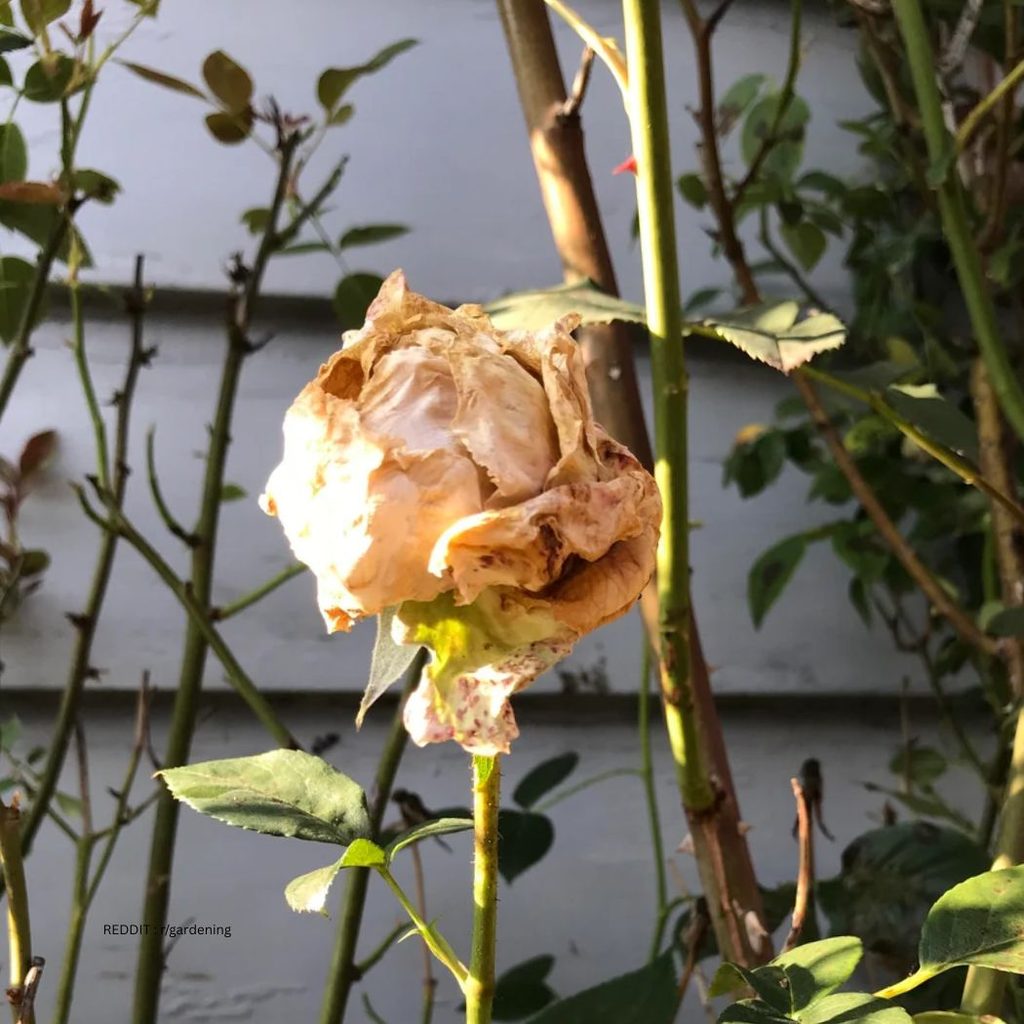
Cutting off faded blooms just above a five-leaflet leaf tells your rose to make more flowers instead of seeds. Light trims to remove dead, damaged, or crossing canes keep the plant healthy without costing you buds.
Deadhead Faded Blooms to Encourage the Next Flush (and the Leaf That Tells You Where to Cut)
Once a rose starts to brown, droop, or drop petals, it has done its job. If you leave it, the plant may start making seed pods called hips. That uses energy that could go into new flowers.
I follow the stem down from the old bloom to the first leaf with five leaflets. Then I cut about ¼ inch above it, at a slight angle. New shoots usually grow from that spot.
Quick Tip: Use clean, sharp bypass pruners. A crushed stem heals more slowly than a clean cut.
A few exceptions matter:
- Rugosa and other hip-forming roses: Leave some blooms in fall if you want the colorful hips.
- Cold zones (5 and below): Stop deadheading about 6 weeks before your first frost so the plant can slow down for winter.
Trim Damaged or Crowded Canes Without Overpruning (Less Is Often More in Summer)
Summer rose care is about small cleanups, not a hard cut. Save big pruning for late winter or early spring.
Look for these problem canes:
| What You See | What to Do |
|---|---|
| Brown, black, or shriveled canes | Cut back to green, healthy wood |
| Canes rubbing or crossing | Remove the weaker one |
| Thin, twiggy growth in the center | Snip it to open up airflow |
Better airflow helps leaves dry faster after rain. That can lower the chance of black spot and powdery mildew.
Quick Tip: Never remove more than about one-third of the plant during the growing season. If the cut end looks tan or dark inside, keep trimming until you see a white or pale green center.
Keep Roots Moist Through Summer
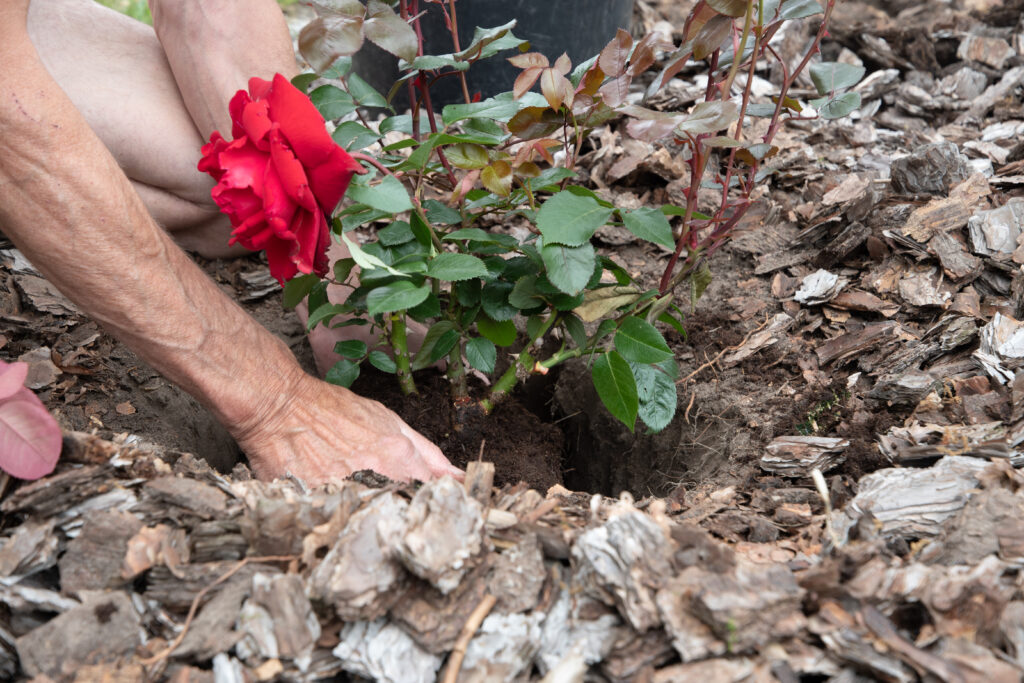
Roses need about 1 to 2 inches of water per week in summer, and they do best when that water soaks deep into the soil. Check the soil, use a slow drip system, and add organic mulch to keep roots cool and moist, even in hot weather.
Check the Soil Before Deep Watering: Your Finger Is the Best Tool You Own
Before you grab the hose, push one finger into the soil near the base of the plant. If the top 2 inches feel dry and crumbly, it’s time to water. If the soil feels cool and damp, wait a day.
When you water, go slow and deep. I aim to soak the soil 12 to 18 inches down, where most rose roots live. Deep watering two or three times a week works better than a light sprinkle every day. Shallow watering keeps roots near the surface, where they dry out fast.
Water in the morning so the leaves dry before night. Wet leaves in the evening can lead to black spot.
Quick Tip: In sandy soil or hot zones like 8 to 10, you may need to water every other day. In clay soil, water less often.
Use Drip Irrigation and Mulch to Hold Moisture: The Lazy Gardener’s Secret
Drip irrigation sends water straight to the roots, one slow drop at a time. Less water runs off, and the leaves stay dry. I like soaker hoses or drip lines on a simple timer. Set it and let it do the work.
Next, add 2 to 3 inches of organic mulch around each plant. Keep it about 3 inches away from the canes so they don’t rot.
| Mulch Type | What It Does |
|---|---|
| Shredded bark | Lasts a long time and holds moisture well |
| Compost | Feeds the soil as it breaks down |
| Pine needles | Light and airy; lets water through easily |
Mulch keeps the soil cooler on hot days and cuts down on weeds.
Quick Tip: Pull the mulch back once a month and feel the soil. If it smells sour or feels soggy, water less.
Feed Roses Without Pushing Excess Leaf Growth
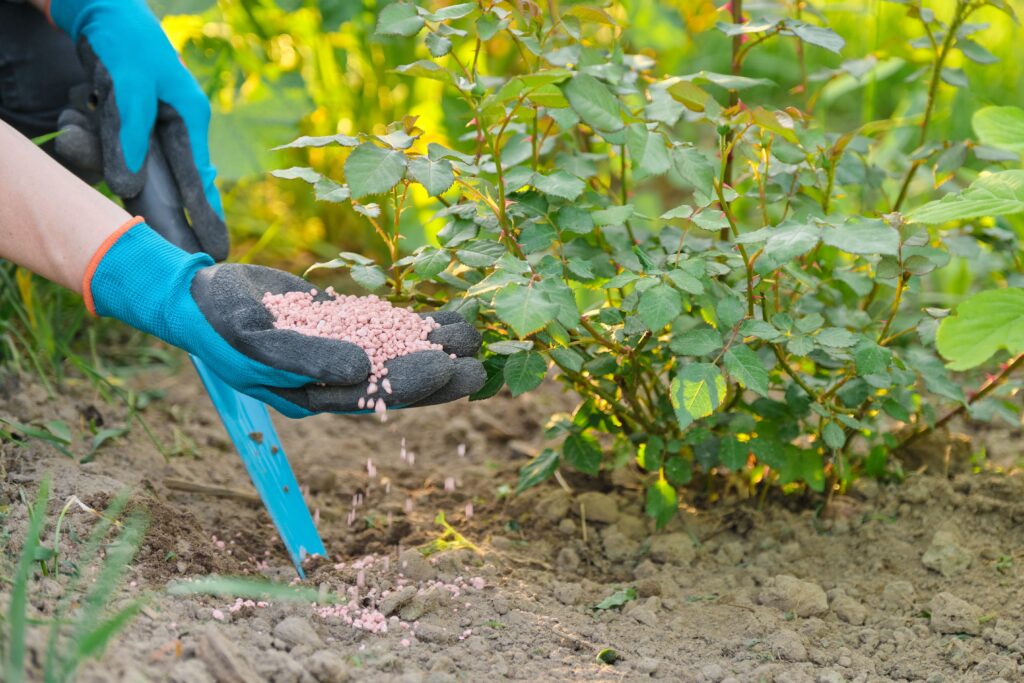
Roses bloom best in rich soil with a balanced diet, not a heavy dose of nitrogen. Feed from spring to late summer, then stop about 6 to 8 weeks before your first frost.
Improve Soil With Compost and Check Nutrient Needs: Why More Food Isn’t Always Better
I always start with compost before I reach for any bag of fertilizer. Spread 1 to 2 inches of compost around each rose in early spring. Keep it a few inches away from the canes.
Good compost smells earthy and feels crumbly. It feeds the soil slowly and helps it hold water.
Next, test your soil. A simple home kit or a test from your local extension office will show your pH and nutrient levels. Roses like a pH of about 6.0 to 6.5.
Here’s why testing matters: too much nitrogen gives you lots of dark green leaves and very few flowers. If the test shows your soil already has plenty of nitrogen, skip the high-nitrogen products.
Quick Tip: Test your soil every 2 to 3 years. Soil changes slowly, so you don’t need to test every season.
Apply Fertilizer During Active Growth and Know When to Stop: The Timing Trick Most People Miss
Start feeding when new leaves are about 4 to 6 inches long in spring. I use a balanced rose fertilizer, often labeled something like 5-10-5. The middle number is phosphorus, which supports blooms.
| Fertilizer Type | How Often |
|---|---|
| Granular (slow-release) | Every 6–8 weeks |
| Liquid | Every 2–4 weeks |
Water the soil well before and after you feed. Dry roots can burn from fertilizer.
Stop feeding about 6 to 8 weeks before your first frost date. Late feeding pushes soft new growth that cold weather can damage. In warm zones like 9 and 10, you may be able to keep feeding longer.
Quick Tip: Skip fertilizer during heat waves over 90°F. Stressed roses can’t use it well.
Protect Healthy Leaves and New Buds
Roses need healthy leaves to make food for new flowers. Watch for black spot and powdery mildew, keep air moving around the plant, and check for pests without harming beneficial insects.
Spot Fungal Problems Early and Improve Airflow (Your Watering Habits May Be Part of the Problem)
Black spot shows up as round black marks with yellow edges, usually on lower leaves first. Powdery mildew looks like white dust on leaves and buds. It often appears when days are warm and nights are cool.
I check my roses every few days and flip a few leaves over, too. Pull off spotted leaves as soon as you see them. Pick up fallen ones as well, since the fungus can spread from the soil back onto the plant.
Airflow helps a lot. Thin crowded stems in the center so the plant doesn’t become a tight tangle. Water the soil, not the leaves, and do it in the morning so splashes dry fast.
Quick Tip: If you live somewhere humid, like much of the Southeast, look for rose types labeled disease-resistant.
Check for Pests While Protecting Helpful Garden Insects (Some Bugs Are on Your Side)
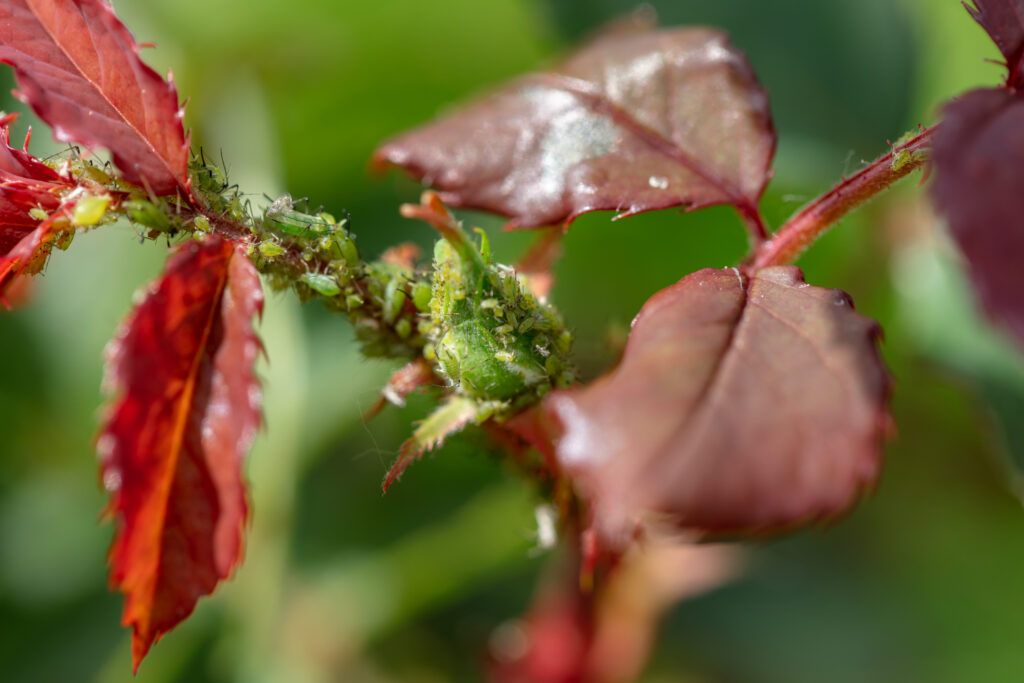
Aphids are the pests I see most. They cluster on soft new buds and stems, leaving them sticky. Other pests to watch for include:
- Japanese beetles: shiny green-bronze beetles that chew holes in petals
- Spider mites: tiny specks with fine webbing, common in hot, dry weather
- Rose sawfly larvae: small green worms that leave see-through patches on leaves
Before you grab a spray, look for beneficial insects. Ladybugs, lacewings, and hoverflies eat aphids for you. Broad sprays kill these helpful insects along with the pests.
I start by blasting aphids off with a firm stream of water from the hose. For beetles, I hand-pick them into a cup of soapy water. If you need more help, use insecticidal soap only on the problem spots.
Quick Tip: Spray in the early morning or evening, when bees are less active.
Adjust Your Routine When Blooming Slows
Midsummer heat, too much nitrogen, and skipped deadheading are the most common reasons roses stop flowering. A few small changes to watering, shade, feeding, and pruning can bring the buds back within a few weeks.
Ease Heat Stress Without Sacrificing Too Much Sun (The Afternoon Trick That Keeps Buds Coming)
When temperatures stay above 90°F, many roses slow down or drop buds. That’s normal. They’re protecting themselves, not giving up on you.
I water deeply in the early morning, about 1 to 2 inches per week. If the top 2 inches of soil feel dry, it’s time to water. A 2 to 3 inch layer of mulch keeps roots cool and damp.
Roses still need at least 6 hours of sun, so I block only the harsh afternoon rays with 30–40% shade cloth. That way, they still get the morning light.
Quick Tip: Skip fertilizer during heat waves. It pushes soft growth the plant can’t support.
In cooler zones or coastal areas, you may not need shade at all.
Troubleshoot Missing Buds, Small Flowers, and Long Gaps Between Flushes (Your Rose Is Probably Telling You Exactly What It Needs)
Good rose care often starts with reading the clues. Here’s what I check first:
| Problem | Likely Cause | What to Try |
|---|---|---|
| Lots of leaves, no buds | Too much nitrogen | Switch to a bloom food higher in phosphorus |
| Small flowers | Thirst or crowded canes | Water deeper and thin weak stems |
| Long gaps between flushes | Old blooms left on | Deadhead above a 5-leaflet leaf |
| Few flowers overall | Under 6 hours of sun | Move potted roses or trim nearby plants |
Some older roses bloom only once a year. No routine will change that. For roses that bloom all summer, pick repeat bloomers like floribundas or shrub roses.
Quick Tip: Feed every 4 to 6 weeks and stop about 6 weeks before your first frost date.
Frequently Asked Questions
Roses keep flowering when you cut off spent blooms every few days, feed them every 4 to 6 weeks, and give them at least 6 hours of sun and about 1 inch of water a week. Hot weather, bloom timing, and home remedies like Epsom salt also affect how many flowers you get.
How often should I deadhead roses to encourage more blooms? (Hint: It’s more often than you think)
I check my roses every two or three days during peak season. Once a flower fades, droops, or drops its petals, I snip it off. This tells the plant to stop making seeds and start growing new buds.
Cut just above the first leaf with five leaflets, pointing away from the center of the bush. That spot usually sends out a strong new stem. Clean, sharp pruners make a neat cut instead of crushing the stem.
In colder zones, stop deadheading about 6 to 8 weeks before your first frost. Letting rose hips form helps the plant slow down and prepare for winter.
Quick Tip: Carry your pruners on your morning garden walk. A two-minute snip session beats a big cleanup later.
What fertilizer helps roses bloom throughout the season? (The wrong one gives you leaves, not flowers)
I use a balanced rose fertilizer, like a 10-10-10 or a food labeled for roses. Start feeding in spring when new leaves appear. Then feed every 4 to 6 weeks.
Watch out for fertilizers that are very high in nitrogen, the first number on the bag. Too much gives you lots of green leaves and fewer flowers. Always water before and after feeding so you don’t burn the roots.
Stop feeding about 6 to 8 weeks before your first frost. New, soft growth late in the year can get damaged by cold.
Quick Tip: Mark feeding days on your calendar. It’s easy to forget, and roses notice.
How much sun and water do roses need to keep flowering? (Morning light matters more than you’d guess)
Roses need at least 6 hours of direct sun each day. I like spots with morning sun because it dries dew off the leaves fast. That helps prevent diseases like black spot.
For water, aim for about 1 inch per week. Give it all at once or split it into two deep soakings. If you push a finger into the soil and the top 2 inches feel dry, it’s time to water.
Water at the base, not over the leaves. Morning is best, so splashes dry before night.
Quick Tip: Roses in sandy soil or pots dry out faster. Check them more often.
When do roses typically bloom, and how long does each bloom cycle last? (Some roses flower just once, others keep going)
Most roses start blooming in late spring or early summer. In warm zones, the first flush can come as early as April. In cold zones, it may not happen until June.
Repeat-blooming roses usually flower again every 6 to 8 weeks after deadheading. Each flower lasts about a few days to a week, depending on the heat. Some old garden roses bloom only once a year, so check your plant tag.
Quick Tip: If your rose skipped a second round, look up its variety. It may be a once-bloomer, not a problem plant.
How can I help my roses keep blooming during hot summer weather? (Smaller flowers in July are normal)
Heat stresses roses. Flowers often get smaller, open faster, and fade in color when temperatures stay above 90°F. That’s normal, and they usually bounce back when it cools.
I spread 2 to 3 inches of mulch around the base to keep roots cool and hold in moisture. Keep the mulch a few inches away from the canes. Water deeply more often during heat waves, and hold off on fertilizer until temperatures drop.
In very hot zones, afternoon shade helps a lot. A shade cloth or a spot near a taller plant can protect blooms from scorching.
Quick Tip: Crispy brown petal edges mean heat or thirst. Check the soil first.
Do Epsom salt or baking soda help roses produce more flowers? (The answer might save you a trip to the store)
Epsom salt adds magnesium, but it only helps if your soil is low in magnesium. Most garden soil isn’t. I suggest testing your soil before adding it, since too much can throw other nutrients off.
Baking soda won’t help roses produce more flowers. Some gardeners spray it to fight fungus, but the results are mixed. Use it often, and sodium can build up in the soil, which roses don’t like.
Quick Tip: Skip the pantry fixes. Sun, water, food, and deadheading do most of the work.