
Your poinsettia doesn’t have to end up in the compost pile after Christmas.
Quick Tip: I keep a poinsettia alive by giving it bright, indirect light, warm indoor temperatures, and water only when the top inch of soil feels dry.
This holiday plant, Euphorbia pulcherrima, comes from Mexico’s warm climate. Cold drafts and soggy soil can make it drop leaves in no time.
I’ll walk you through keeping it happy through winter, coaxing it to grow again in spring, and dodging common problems.
Set Up the Right Indoor Conditions
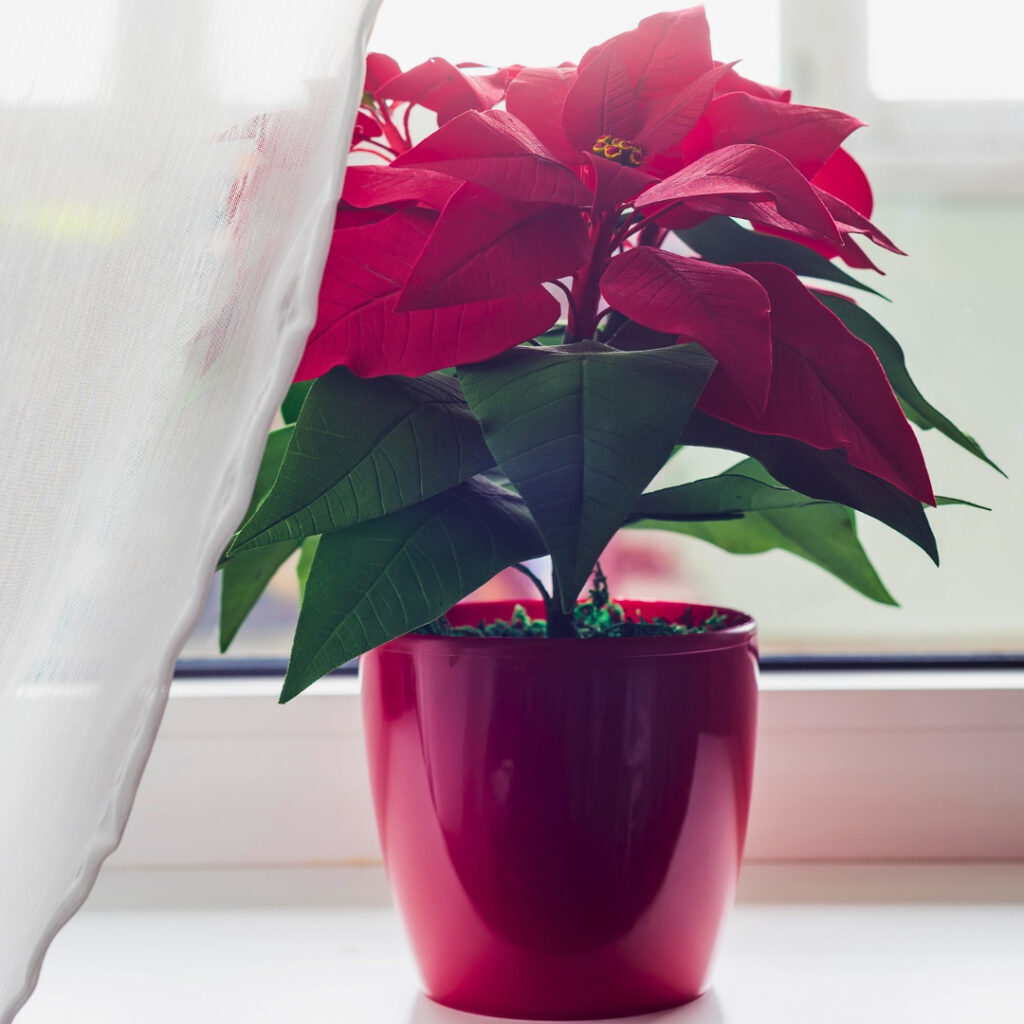
I give my poinsettia bright filtered light and steady warmth. It hates sudden air changes—these plants want a calm, stable spot, not a drafty or overheated one.
Provide Bright, Indirect Light
I put my poinsettia near a south-facing window with a sheer curtain between the plant and the glass. It needs about six hours of bright, indirect sunlight each day, especially during those short winter days.
Direct afternoon sun can bleach the red bracts or cause dry brown patches on the leaves. If it’s farther from the window, I turn it a quarter turn each week so all sides get some light.
Quick Tip: I use the shadow test: if the shadow is soft and blurry, the light is probably just right.
North-facing windows usually feel too dim in winter, but an east-facing window gives gentle morning light. I’ll scoot the plant closer to the window during long cloudy periods, but I make sure the leaves don’t touch cold glass.
Maintain Warm, Stable Temperatures
I keep my poinsettia in a room that stays between 65°F and 75°F during the day. At night, it can handle around 60°F, but anything below 50°F can make leaves drop.
Poinsettias are tropical, so they really dislike sharp temperature swings. A cozy room is fine, but moving it from a chilly entryway to a hot living room can stress it out.
Quick Tip: I check the spot at night too—rooms near windows can get way colder after sunset.
In mild winters, I might put it near a covered patio door for more light, but only if it stays warm. In cold areas, I keep it well inside during freezing weather.
Keep the Plant Away From Drafts and Dry Heat
I make sure my poinsettia isn’t near drafts from open doors, leaky windows, or air vents. A blast of cold air can cause yellowing and leaf drop, even if the rest of the room feels fine.
I also steer clear of radiators, fireplaces, space heaters, and forced-air vents. Dry heat sucks moisture from the leaves and soil, leaving the plant limp or with crispy edges.
Quick Tip: I hold my hand near the plant for a minute; if I feel air moving or it’s too hot, I move the pot.
I give it a little space from other houseplants for air flow, but I don’t stick it alone in a cold hallway or next to a door that’s always opening.
Water Without Causing Root Problems
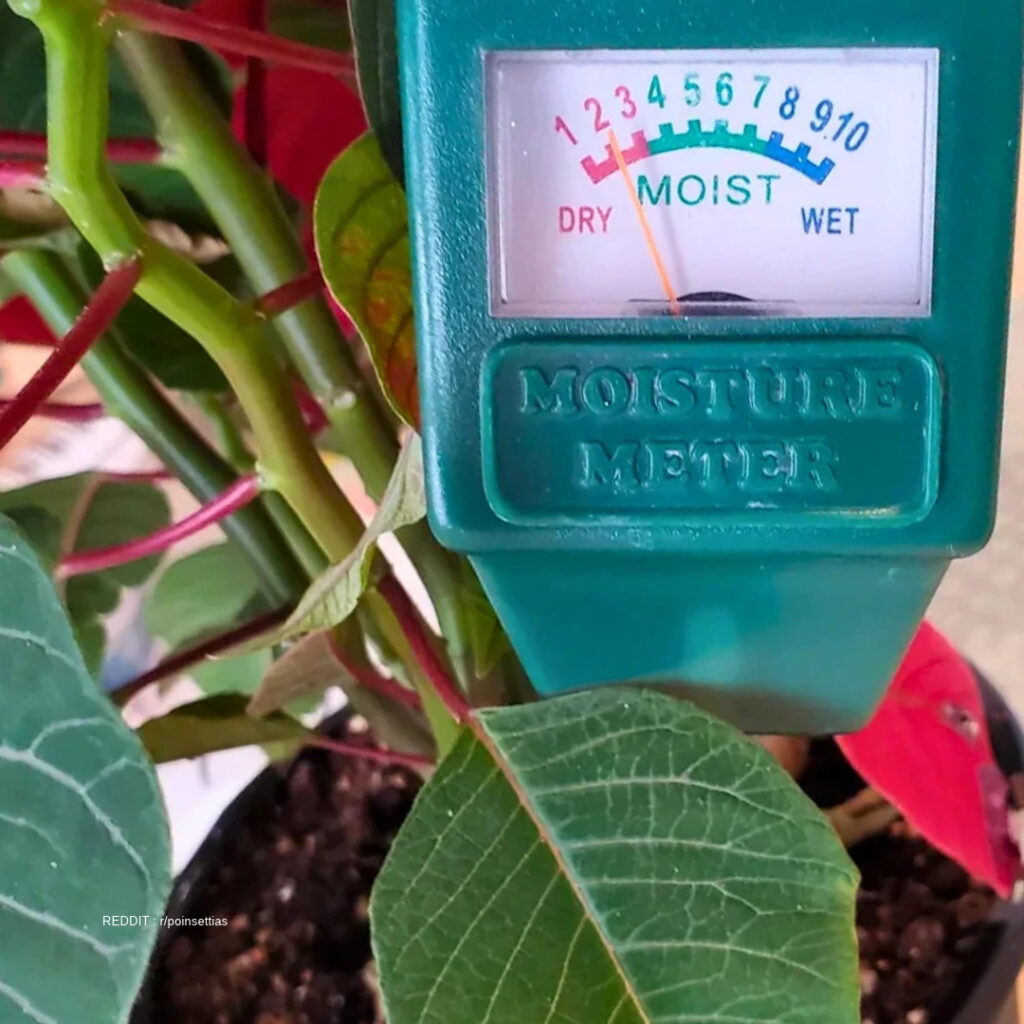
I keep the soil lightly moist and never let the pot sit in water. Good drainage and a quick check before watering make a huge difference.
Check the Soil Before Watering
I poke my finger about an inch into the soil before watering. If it feels dry at that depth, I water slowly until some drains out the bottom.
If the soil still feels damp or cool, I wait a day or two and check again. In cooler rooms or darker spots, the plant uses less water, so sticking to a strict schedule doesn’t work well.
Quick Tip: I lift the pot after watering, then again when it’s dry. If it feels light, it’s time to water.
I use room-temperature water and water the soil, not the leaves. Cold water can shock the roots, and soggy soil suffocates them.
Remove Decorative Foil and Empty Excess Water
I take off any decorative foil before watering. Foil usually blocks drainage holes and turns the bottom of the pot into a puddle—bad news for roots.
If I want to keep the foil, I punch holes in it and use a saucer. I water in the sink or tub, let it drain for 10–15 minutes, and then put it back on the saucer.
Quick Tip: I always empty the saucer after watering. Roots want moist soil, not standing water.
I also check the pot for open drainage holes. If it’s in a decorative pot without holes, I take the nursery pot out to water and let it drain before putting it back.
Recognize Overwatering and Root Rot
I watch for yellow lower leaves, soft stems, drooping leaves, and soil that stays wet for days. These usually point to overwatering, though a cold draft can also make leaves fall.
Root rot can make the soil smell sour or musty. When I slide the plant out of its pot, healthy roots look pale and firm. If roots are dark brown or black and feel mushy, that’s root rot.
Quick Tip: I stop watering if the soil stays wet and move the plant to a warm, bright spot away from direct heat.
If only some roots look bad, I trim away the soft parts with clean scissors and repot in fresh, well-draining soil. I use a pot with drainage holes and water lightly after repotting.
Support Healthy Growth Through Winter and Spring
I keep my poinsettia steady through winter with enough humidity, a break from fertilizer, and a little trimming. These steps help it stay healthy after Christmas without forcing new growth too early.
Manage Humidity in Dry Indoor Air
Dry heated air can make leaves crisp and drop early. I keep my plant away from heating vents, radiators, and cold window glass—sudden temperature shifts are rough on it.
I aim for indoor humidity around 40–60%. A humidifier works best, especially if other houseplants have brown edges too.
Quick Tip: I set the pot on a tray with pebbles and water, but make sure the pot sits above the water line. Wet roots rot fast.
I also group houseplants together to bump up the humidity a bit. If leaves turn yellow while the soil is wet, I check drainage before adding more moisture.
Know When to Pause and Resume Fertilizer
I skip fertilizer after Christmas while the plant rests. Short days and low light mean growth slows, so fertilizer just builds up in the soil.
I wait for fresh green leaves or new stems in spring—usually March or April, though sometimes later in low light.
Quick Tip: I use a balanced liquid houseplant fertilizer at half strength every two to four weeks once new growth starts.
I only fertilize after watering, never on dry soil. If I live in a warm, frost-free place and keep the plant outside, I start feeding when spring growth is obvious—not just because the calendar says so.
Prune Faded or Leggy Growth Safely
When the colored bracts fade and fall, I trim back long, bare stems to help the plant fill out. I use sharp, clean shears and cut each stem back to about 4 to 6 inches above the soil.
I cut just above a leaf node—a little bump on the stem. New shoots usually pop out from there.
Quick Tip: I wear gloves when pruning. The white sap can irritate skin and leave sticky spots on tables.
I remove weak, broken, or crowded stems first. If my poinsettia looks leggy in spring, I pinch the soft tips of new shoots once or twice to encourage branching. I stop pinching by late summer so it can form buds for the holidays.
Repot and Care for It During the Growing Season
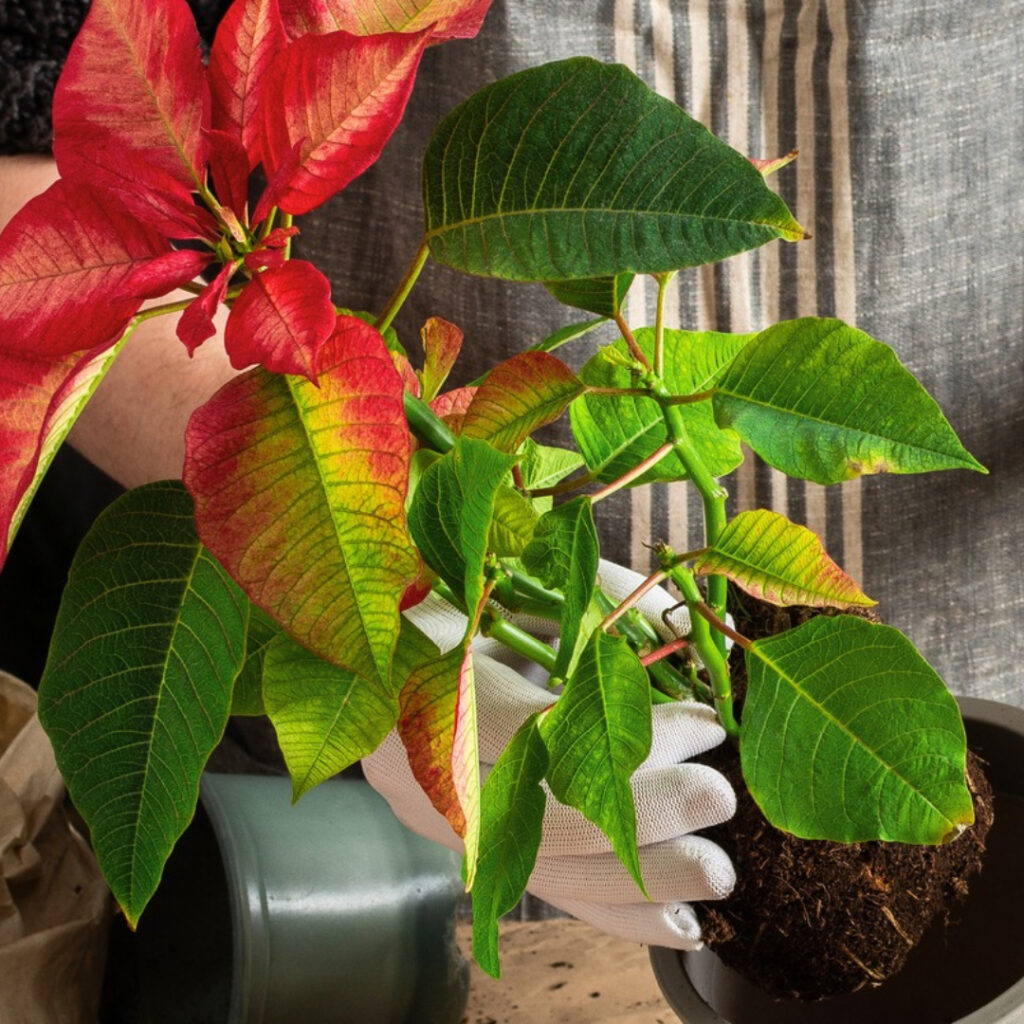
I repot my poinsettia in spring, use loose soil, and wait for steady warm weather before taking it outside. These steps help the roots grow strong without getting soggy or chilled.
Choose a Slightly Larger Pot
I move my poinsettia into a pot just 1 to 2 inches wider than its old one. A huge pot holds too much wet soil and can cause root rot. Honestly, bigger isn’t better—poinsettias can be picky about soggy feet.
I always pick a pot with drainage holes. If water can’t escape, roots turn brown, soft, and smelly. A saucer is fine, but I empty it after watering.
Quick Tip: I repot when new green growth shows up in spring, usually after trimming old stems.
I gently slide the plant from its pot and loosen just the outer roots. I don’t tear apart the whole root ball unless I see roots circling tightly around the edges.
Use Fresh, Well-Draining Soil
I use fresh, well-draining potting soil—not garden dirt. Garden soil gets heavy and compact in a pot, which keeps roots too wet.
A good mix for poinsettias has peat moss or coco coir, perlite, and bark. I look for one labeled for houseplants or containers. Poinsettias like slightly acidic soil, around pH 5.5 to 6.5, but most houseplant mixes are close enough.
Quick Tip: I leave about an inch of space below the pot rim so water doesn’t spill everywhere.
After repotting, I water until it runs out the drainage holes. Then I let the top inch of soil dry before watering again. All poinsettia types—red, white, pink, marbled—get the same basic soil care.
Move the Plant Outdoors Only When Conditions Are Safe
I wait until nighttime temps stay above 55°F (13°C) before moving my poinsettia outside. Cold nights, wind, and frost can wreck the leaves fast. In warm places, this might be earlier; in cooler areas, I wait until late spring.
I start with a sheltered spot that gets bright shade or gentle morning sun. I never put it right into hot afternoon sun—the leaves scorch and fade.
Quick Tip: I set the pot outside for a few hours at first, then add more time each day for about a week.
Once it adjusts, I leave it in bright light and water when the top inch of soil feels dry. I bring it indoors before fall nights get chilly.
Troubleshoot Leaf Drop, Disease, and Pests
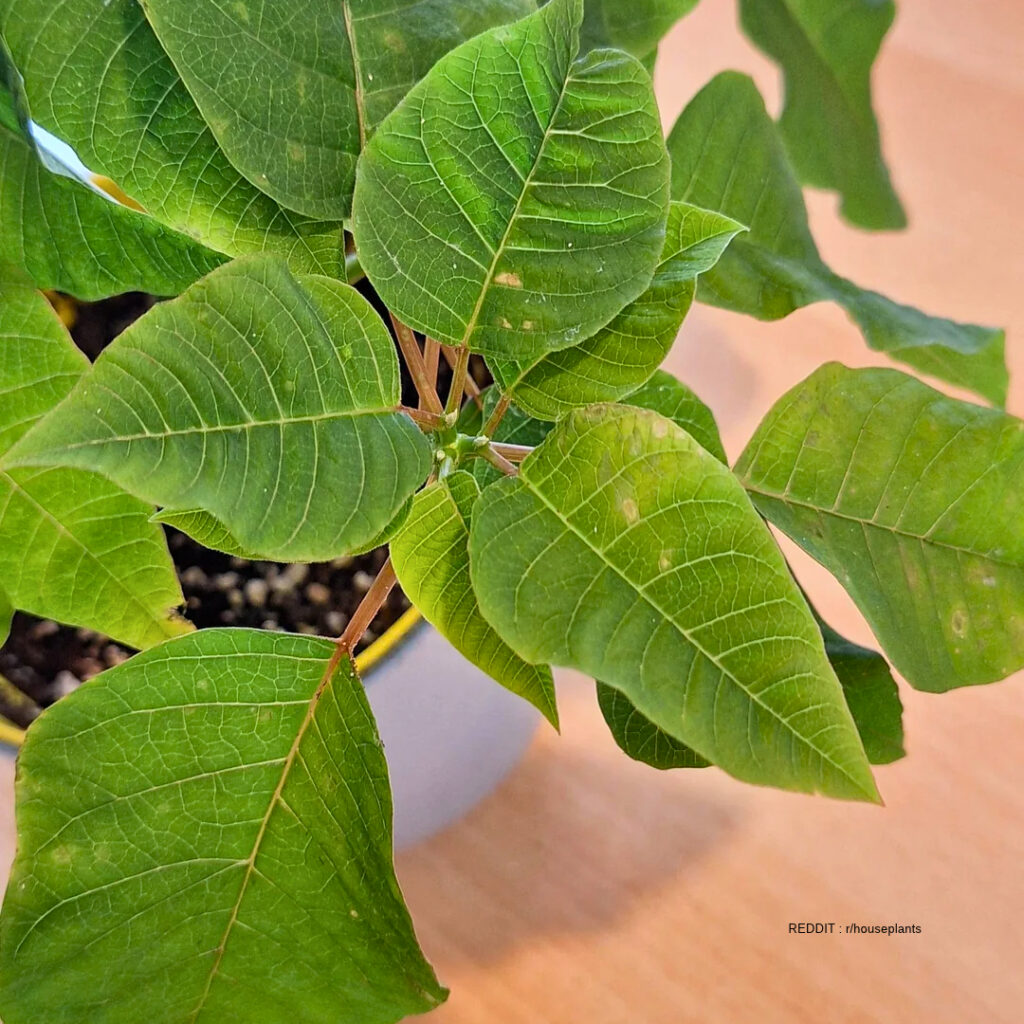
I check leaves, soil, and stems as soon as the plant looks unhappy. Acting fast can stop a little problem from turning into a big one.
Identify Common Reasons for Yellowing and Leaf Drop
Yellow leaves and leaf drop usually mean watering issues. I let the top inch of soil dry, then water until it drains out the bottom. I empty the saucer after 10 minutes so roots don’t sit in water.
Quick Tip: I feel the soil before watering—dry soil needs water, wet soil needs time.
Cold drafts also cause sudden leaf drop. I keep my poinsettia away from open doors, chilly windows, heating vents, and air conditioners. It does best around 65–75°F during the day.
If the soil stays wet and the plant smells sour, it could have root rot. I take the plant out, trim away soft brown roots, and repot in fresh, well-draining soil. Pots must have drainage holes—no way around it.
Treat Whiteflies and Other Sap-Sucking Pests
I check under the leaves every week. Whiteflies look like tiny white moths that flutter up if I nudge the plant.
Aphids and spider mites leave sticky spots, curled leaves, or sometimes a bit of fine webbing. I rinse pests off with a gentle stream of lukewarm water first.
Then I spray insecticidal soap on both sides of the leaves, following the label. I do this every 5–7 days until I stop seeing pests.
Quick Tip: If I spot an infested poinsettia, I move it away from my other houseplants right away.
Neem oil helps with stubborn pests, but I never spray it in direct sun. I always test it on just one leaf and wait a day to see what happens.
I wipe sticky leaves with a damp cloth because that residue attracts more problems.
Prevent Powdery Mildew and Other Moisture Issues
Powdery mildew looks like pale gray or white dust on leaves and stems. I snip off badly affected leaves with clean scissors and toss them in the trash, not the compost.
I give the plant breathing room so air can move around it. Crowded plants and damp leaves make mildew way too happy.
Quick Tip: I water the soil, not the leaves, and I do it early in the day.
I keep the room from getting too damp, especially during cold winter days. If my home feels humid or I live somewhere mild, I space plants out and skip misting.
If mildew keeps coming back, I use a fungicide labeled for houseplants and read the label closely.
Encourage Colorful Bracts Next Holiday Season
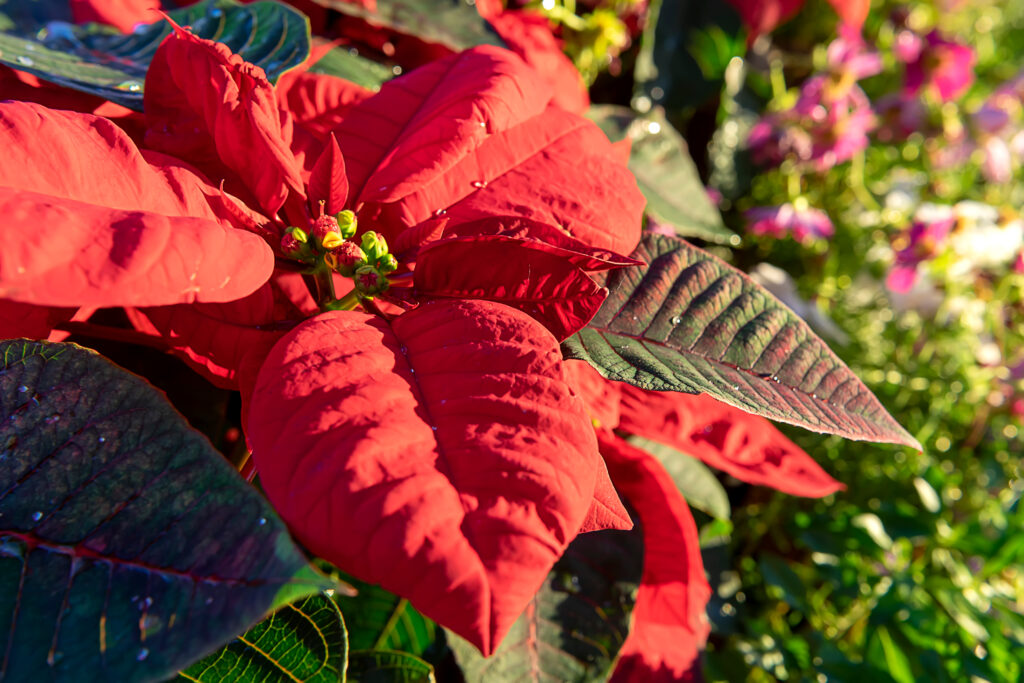
I keep my poinsettias healthy through spring and summer, then use long nights in fall to trigger bract color. Bright indirect sunlight, careful watering, and a strict dark schedule seem to matter most.
Follow a Spring and Summer Maintenance Timeline
After the colorful bracts fade, I water when the top inch of soil feels dry. I set the plant in bright, indirect sunlight and keep it away from cold drafts.
The green leaves look plain for a while, but that’s just how it goes.
| Time | What I Do |
|---|---|
| March–April | I cut stems back to about 4–6 inches after the bracts fade. |
| May | If roots fill the pot, I repot using fresh, well-draining potting mix. |
| June–August | I feed monthly with a balanced houseplant fertilizer and pinch new tips once or twice for a bushier shape. |
I move my poinsettia outside after nights stay above 55°F. It gets morning sun or filtered light, never the harsh afternoon sun.
In cold areas, I bring it inside before fall frost sneaks up.
Quick Tip: I stop pinching stems by late August so the plant can form flower buds.
Start the Long-Night Darkness Routine in Fall
Starting in late September or early October, I give my poinsettia 14 hours of complete darkness every day. I keep this up for 8–10 weeks.
Even a lamp, TV, or porch light can mess things up, so I don’t cheat the darkness schedule. I stick the plant in a closet, unused room, or big box from about 5 p.m. to 7 a.m.
During the day, it goes back to bright, indirect sunlight. I water normally, but I never let it sit in water.
I try to keep nights around 60–70°F and days between 65–75°F. Drafts, heat, or sudden changes can make leaves drop.
Quick Tip: I set a daily alarm to move the plant in and out of darkness. Poinsettias seem to like boring routines.
Set Realistic Expectations for Reblooming
I treat reblooming as a little experiment, not a sure thing. Holiday plants from stores come from greenhouses with perfect conditions, so home-grown poinsettias might have fewer bracts or patchier color.
The red, pink, white, or cream parts are bracts, not flowers. Tiny yellow centers show up when the plant’s ready, while bracts slowly shift color after several weeks of long nights.
If my poinsettia stays green, I check for light leaks first. Missed dark periods, late pruning, weak summer growth, or not enough light can delay color.
Even if the bracts don’t turn bright, a healthy green poinsettia still makes a decent houseplant.
Quick Tip: I focus on healthy growth first. Strong stems and full green leaves give the best shot at color next year.
Frequently Asked Questions
I keep poinsettias alive with bright light, careful watering, and steady warmth. For color next year, I prune in spring and stick to a strict dark-light schedule in fall.
How do I save a poinsettia for next year?
I put my poinsettia near a bright window after the red bracts fade. I water when the top inch of soil feels dry and let any extra drain out.
In spring, I cut the stems back to about 4 to 6 inches tall. I only move it outside after the frost risk is gone and nights stay above 50°F.
Quick Tip: I pinch the new stem tips once or twice through July so the plant grows bushier.
How long will a poinsettia live after Christmas?
If it gets bright, indirect light and stays away from cold drafts, I can keep a poinsettia looking good for months after Christmas. The colorful bracts usually last into February or March.
The plant itself can live for years. It’s a tropical shrub, not just a one-season wonder, even if it’s a bit fussy indoors.
Quick Tip: I keep mine away from heating vents, cold glass, and doors that open a lot.
How often should I water a poinsettia after the holidays?
I check the soil every few days instead of sticking to a schedule. When the top inch feels dry, I water until it runs out of the drainage holes.
I empty the saucer after 10 to 15 minutes. Soggy soil means yellow leaves and weak roots in no time.
Quick Tip: I lift the pot before watering—a light pot usually means it’s time for a drink.
When should I prune my poinsettia?
I prune in late March or April, after the colorful bracts fade and new green growth starts. I cut each stem back to about 4 to 6 inches.
Fresh shoots usually pop up soon after. I use clean, sharp pruners and wear gloves because that milky sap can irritate skin.
Quick Tip: I turn the pot a bit each week so new growth doesn’t lean hard toward the window.
When should I put my poinsettia in the dark to encourage reblooming?
I start the dark treatment in late September or early October. For 8 to 10 weeks, I give my poinsettia 14 to 16 hours of complete darkness every night.
I put it in a closet or cover it with a light-blocking box, then return it to bright light during the day. Even a hallway light can mess with the process. Sneaky light really matters.
Quick Tip: I set a daily alarm so I don’t forget the dark schedule.
Can I keep my poinsettia outside after Christmas?
I only keep my poinsettia outside when nighttime temps stay above 50°F. Usually, I start it off in a shaded, protected spot for about a week.
After that, I gradually let it get more sun. It just seems happier that way.
In USDA Zones 9 through 11, I can actually grow it outdoors all year if the soil drains well. If I live somewhere colder, I have to bring it inside before those chilly fall nights sneak in.
Quick Tip: I always shield outdoor plants from strong wind. The leaves are soft and honestly, the soil dries out way too fast otherwise.