
You can get a poinsettia, or Euphorbia pulcherrima, to rebloom for Christmas by giving it long, uninterrupted nights each fall and steady care all year.
I’ll show you how to use a simple darkness routine to bring back the bright red bracts that make this holiday plant shine.
Poinsettias need more than water and a sunny window to change color again.
I’ll cover the light schedule, basic watering, soil, and indoor conditions that help your Christmas star stay healthy.
Quick Tip: Keep the plant in complete darkness for about 14 hours each night starting in early fall.
A lamp, porch light, or even a quick peek can really mess up the color change.
The Light Rule That Triggers Red Bracts
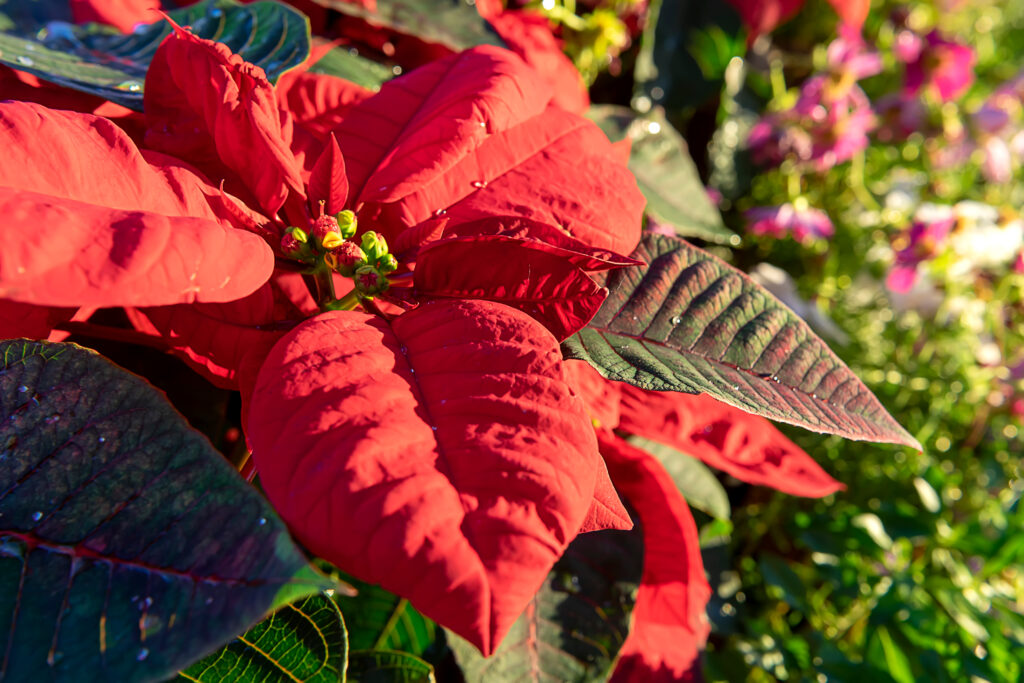
I use a strict dark schedule to tell my poinsettia that winter is near.
Complete darkness for 14 hours each day helps the green bracts change to red.
Why Poinsettias Are Short-Day Plants That Need Long Nights
I treat poinsettias as short-day plants, though long, unbroken nights are what really matter.
Their colored leaves, called bracts, begin forming when each night lasts about 14 hours.
The red color doesn’t come from a cold room or extra fertilizer.
The plant needs a steady cycle of darkness and daytime light for about 8 to 10 weeks before Christmas.
I start the short-day treatment in late September or early October.
That timing gives the bracts enough time to develop color.
Quick Tip: I count darkness, not daylight.
A 14-hour dark period leaves about 10 hours for bright, indirect light.
In warm climates, such as USDA Zones 9 to 11, outdoor plants may respond to naturally shorter fall days.
Porch lights, streetlights, and indoor window light can still disrupt the process.
How 14 Hours of Complete Darkness Changes the Bracts
I place my poinsettia in complete darkness for 14 straight hours every day.
For example, I cover or move it at 5 p.m. and return it to light at 7 a.m.
A closet, unused room, or large box can work if it stays dark and has air flow.
I don’t use a sealed plastic bag, since trapped moisture can cause leaf problems.
During its 10 hours of daytime, I give the plant bright indirect light near a sunny window.
I keep the room around 65°F to 70°F during the day and avoid cold drafts.
Quick Tip: I set a phone alarm for both moves.
Missing one night isn’t a disaster, but a messy schedule can delay red bracts.
I continue this routine every day, including weekends.
The plant likes consistency more than clever tricks.
Why Artificial Light Interruptions Can Stop Red Bract Color
I keep all artificial light away from my poinsettia during its dark hours.
Even a brief light interruption can confuse the plant’s seasonal signal.
A lamp switched on nearby, light from a hallway, or a TV glow can break the dark period.
The plant may keep growing green leaves instead of starting red bracts.
I check the space after dark before I begin treatment.
If I can see the plant clearly without turning on a light, the spot is probably too bright.
Quick Tip: I cover the plant with an opaque box only if the box doesn’t touch the leaves.
I remove it each morning so the plant can get light and fresh air.
I also avoid moving it between different rooms at random times.
A simple, repeatable schedule gives it the best chance to color by Christmas.
Set Up an Uninterrupted Darkness Routine
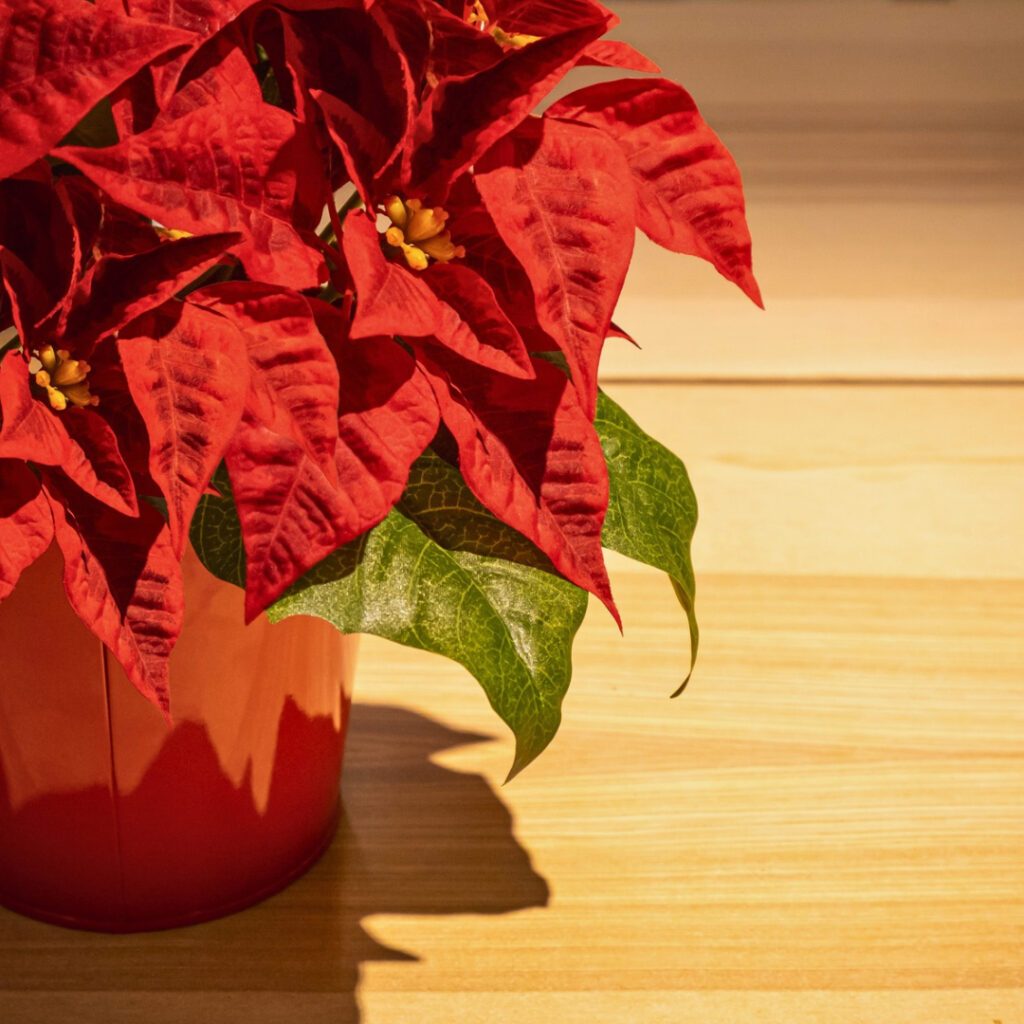
I give my indoor poinsettia the same long night every day to trigger color in its bracts.
The timing, darkness method, and daytime conditions all need to stay steady.
When to Begin the Fall Schedule for Christmas Color
I begin the darkness routine in late September or early October if I want color by Christmas.
I keep it going for 8 to 10 weeks, without skipping nights.
Each day, I give the plant 14 hours of complete darkness.
For example, I cover or move it at 5 p.m. and uncover it at 7 a.m. the next morning.
Quick Tip: I set a phone alarm for both times.
One missed night can slow poinsettia rebloom—this plant does not love a weekend off.
I watch the leaves as the weeks pass.
The green leaves near the top may begin to show red, pink, white, or another color, based on the variety.
Closet, Box, and Dark-Room Options That Block Every Light
I use a closet, spare room, or large box that blocks all light.
The plant needs complete darkness, not just dim light.
A closet works well if I can keep the door shut for the full 14 hours.
I make sure no light enters under the door or through a nearby window.
I can also place a large cardboard box over the pot.
I use a box tall enough that it doesn’t crush leaves, and I remove it each morning for light and airflow.
Quick Tip: I check the space at night with the room lights on.
If I can see even a small glow inside, artificial light may interrupt the routine.
I avoid rooms where someone switches on a lamp, TV, or hallway light.
A few minutes of light at night can confuse the plant.
Daytime Light and Ideal Temperatures for Healthy Growth
During the day, I place my poinsettia near bright, indirect sunlight.
A spot with gentle morning sun is usually fine, but hot afternoon sun can scorch the leaves.
I keep the plant at about 65 to 70°F during the day and near 60 to 65°F at night.
Cold glass, drafty doors, heating vents, and sudden temperature swings can cause leaf drop.
Quick Tip: I move the pot a few inches away from cold window glass at night, especially when outdoor weather turns chilly.
I water when the top inch of soil feels dry, then let extra water drain away.
In warm zones, I protect outdoor plants from cool nights; I bring them inside before temperatures fall near 50°F.
Follow the Year-Round Care Calendar

I keep poinsettia care on a simple schedule: rest after the holidays, prune in spring, build leafy growth in summer, then control light in fall.
Small timing changes matter because the plant needs a long, dark night to color up for Christmas.
Winter Recovery After the Holidays
After the red, pink, or white bracts fade, I move my poinsettia near a bright window with indirect light.
I keep it away from cold glass, heaters, and drafts. Aim for room temperatures of 60–70°F.
I water when the top inch of potting mix feels dry.
Then I empty the saucer so the roots don’t sit in water. Check that the pot has open drainage holes; wet roots can rot fast.
Quick Tip: I remove the decorative foil or punch holes in it before watering.
It looks nice, but trapped water causes trouble.
I stop fertilizer during this slower winter period.
Some leaf drop is normal after flowering, so I don’t panic if the plant looks a little bare.
Spring Pruning and Repotting
In April, I cut each stem back to about 4–6 inches tall.
I make each cut just above a leaf node, where new stems can grow. The plant may look stubby for a while, but it will fill out again.
If roots circle the pot or push through drainage holes, I repot it into a container only one size larger.
I use a fresh, well-draining potting mix rather than heavy garden soil.
Quick Tip: I choose a pot with drainage holes every time.
A pretty pot without a drain hole is a root-rot trap.
I place the plant in bright light and resume regular watering.
When new growth begins, I feed it every two to four weeks with a balanced fertilizer mixed according to the label.
Summer Growth, Feeding, and Pinching
Once night temperatures stay above 55°F, I can move my poinsettia outside.
I start it in shade for several days, then give it gentle morning sun and afternoon shade. Hot midday sun can scorch the leaves.
I water deeply when the top inch of soil dries, especially during warm weather.
In rainy areas, I make sure the pot drains well and doesn’t stay soggy.
Quick Tip: I turn the pot every week or two.
This helps the stems grow more evenly instead of leaning toward the light.
I pinch the growing tips in June and July to make the plant bushier.
I cut or pinch just above a leaf node, leaving several leaves on each stem. I stop pinching by late August so new growth has time to mature.
Early Fall Preparation
In early fall, I bring the plant indoors before cool nights arrive.
I keep feeding and watering normally through September, but I stop fertilizer when the color-change routine starts.
Around late September or early October, I give the plant 14–16 hours of complete darkness every night for about eight to ten weeks.
A closet, unused room, or lightproof box works, as long as no lamp, TV, or hallway light reaches it.
Quick Tip: I set a daily alarm for the dark period.
Even one bright night can delay the bracts from changing color.
During the day, I place it in bright indirect light and keep the soil lightly moist.
In warm zones, such as USDA Zones 9–11, outdoor light and temperatures may differ, but the plant still needs long, unbroken dark nights.
Water, Soil, and Environment Essentials
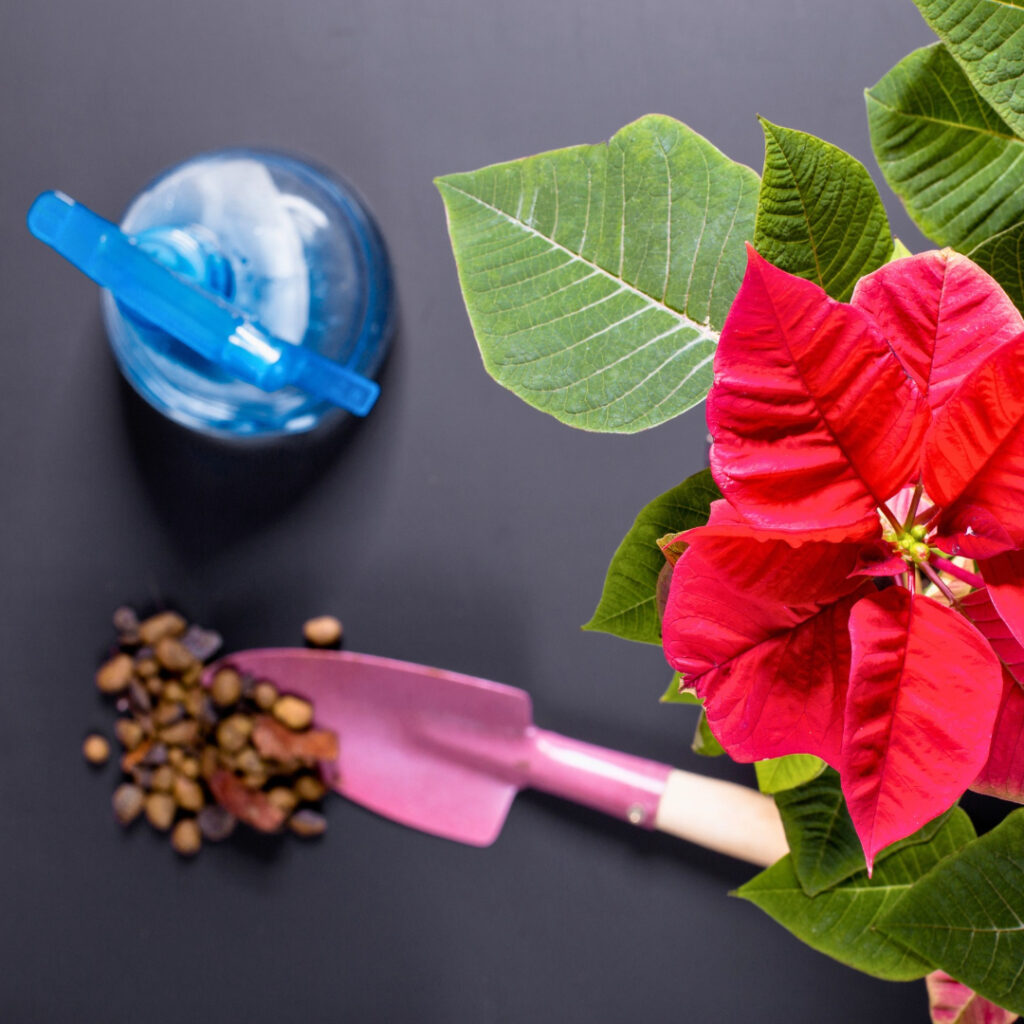
I keep the roots lightly moist, never soggy, and make sure excess water can escape.
I also protect my poinsettia from cold air, dry heat, and sudden temperature swings.
Water Without Causing Root Rot
I check the soil before I water.
When the top 1 inch feels dry to the touch, I water slowly until a little water runs from the bottom of the pot.
I empty the saucer after 10 to 15 minutes.
A poinsettia should not sit in standing water. That’s a fast path to overwatering and root rot.
Quick Tip: I lift the pot after watering, then again when it feels dry.
The lighter weight tells me it needs water.
Yellow leaves, soft stems, or a sour smell from the soil can point to too much water.
If I see these signs, I let the soil dry more before watering again and check that the pot drains freely.
I use room-temperature water.
Cold water can stress the roots, especially when the plant sits near a chilly window.
Choose a Pot With Proper Drainage
I always grow poinsettias in a pot with open drainage holes.
Decorative foil wraps often trap water around the pot, so I remove the wrap or punch holes in it before watering.
I use a well-draining potting mix made for houseplants.
The mix should feel loose and crumbly, not thick like mud. A heavy soil mix holds too much water around the roots.
Quick Tip: I place the nursery pot inside a decorative cover pot only after watering has finished draining.
If I repot my poinsettia, I choose a container only 1 to 2 inches wider than the old one.
A much larger pot holds extra wet soil that the roots can’t use.
I don’t pack the potting mix down hard.
I leave it loose enough for air and water to move through it. Roots need both, even if they never complain out loud.
Manage Temperature, Drafts, and Humidity
I keep my poinsettia in bright, indirect sunlight for at least six hours each day. An east-facing window usually does the trick.
With a north-facing window, I move it closer to the glass, but never let the leaves touch the cold pane. That’s just asking for trouble.
I aim for daytime temps around 65 to 70°F and let it cool down a bit at night. The plant stays far from doors, cold drafts, heating vents, fireplaces—you name it.
Quick Tip: I pick a steady spot and avoid shuffling the plant between rooms with different temps.
Dry air indoors? That can make leaves curl or fall. I bump up humidity by setting the pot near other plants or running a small humidifier.
I skip heavy misting because wet leaves get spotty. It’s not worth the risk.
If I live where winters are mild, I still bring the plant inside when nights dip below 60°F. Poinsettias just don’t like cold, even if it doesn’t feel that chilly to me.
Avoid Problems That Delay Reblooming
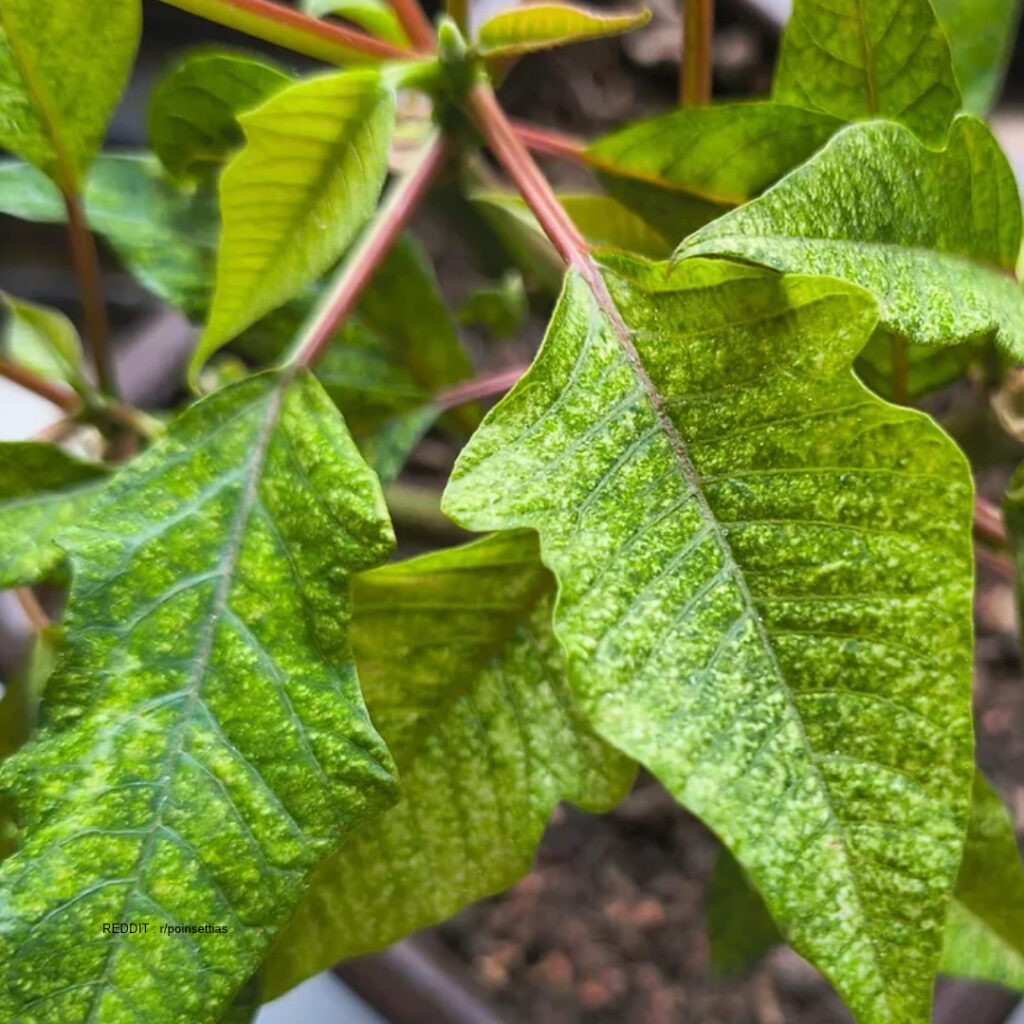
I protect the dark schedule, check leaves and roots often, and tweak care before little problems slow bud formation. Poinsettias can be picky, but the warning signs aren’t hard to spot.
Common Darkness-Schedule Mistakes
I give my poinsettia complete darkness for 14–16 hours every night, starting in late September or early October. Even a quick flash of light from a lamp, TV, or hallway can mess up the color change.
I stick to the same schedule daily. For example, I move the plant into darkness from 5 p.m. to 8 a.m., then let it soak up bright, indirect light during the day.
Quick Tip: I set a phone alarm for “cover plant” and “uncover plant.” It keeps me honest.
I avoid covering with a loose blanket or box that traps heat and moisture. A dark closet with steady temps and airflow works as long as there aren’t any light leaks.
In warmer places, I keep it away from hot patios and cold night air too.
Pests and Plant Health Checks
I check the leaves once a week, especially underneath. Whiteflies look like little white flecks that scatter when I touch the plant.
Sticky leaves, pale spots, or twisted growth usually mean pests. I rinse off small groups with room-temperature water.
Bigger outbreaks call for insecticidal soap—just follow the label and cover both leaf sides. I repeat treatments, since one round rarely gets every bug.
Quick Tip: I swipe a finger on the leaves before watering to check for sticky residue.
I look out for overwatering too. If the pot feels heavy, the soil stays wet for days, or leaves yellow and drop, I let the top inch dry out before watering again.
Soggy roots can cause root rot, which smells sour and makes stems wilt.
When to Adjust Care or Start Again
If the plant stays green but seems healthy, I double-check the darkness routine. Missed nights happen more than most folks realize.
I also move it to brighter daytime light if it’s been stuck in a dim north window. Quick Tip: I mark each night of darkness on a calendar so I don’t lose track.
If stems go soft, roots smell bad, or most leaves drop after fixing watering, I stop forcing reblooming. I’ll trim dead roots and repot if some healthy white roots remain, but a badly rotted plant probably won’t bounce back for Christmas.
If it comes to that, I start fresh with a healthy plant next year. I only keep the old one if it still has firm stems, clean roots, and new green growth.
Understand the Plant Behind the Holiday Display
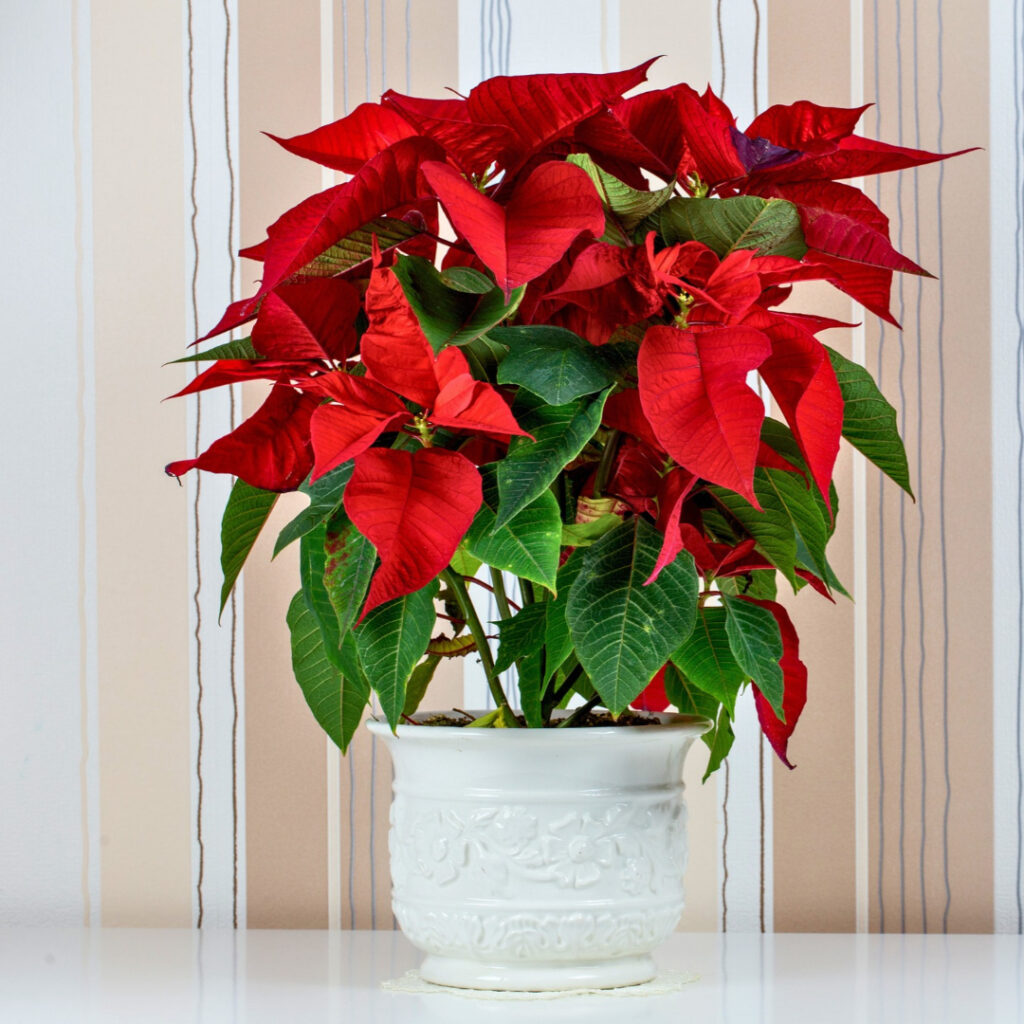
I treat a poinsettia as a tropical plant with a holiday timing trick, not just a throwaway decoration. Its colorful parts, warm-climate roots, and history all explain why reblooming takes patience.
Bracts Versus the True Flowers: The Color Is Not the Bloom
The big red bracts are actually modified leaves, not flower petals. They turn red, pink, white, or speckled when the plant gets long, dark nights in fall.
The real flowers are tiny yellow-green cups called cyathia in the center of the bracts. Sometimes you’ll spot a bit of pollen or nectar there.
Quick Tip: When I buy a poinsettia, I look for fresh yellow-green center flowers. If they’re gone, the plant’s already been on display a while.
Bracts need bright light to keep their color after they change. The plant also needs darkness each night before Christmas to form them again.
A Christmas cactus has a similar seasonal pattern, but its flowers and care are a whole different story.
Mexican Origins and the Euphorbiaceae Family: Why Cold Rooms Cause Trouble
Poinsettias grow wild in warm spots in Mexico and Central America. Their botanical name, Euphorbia pulcherrima, means “most beautiful euphorbia.”
They’re part of the Euphorbiaceae family—lots of these plants ooze a white, milky sap when cut. That sap can irritate skin, so I wash up after pruning and keep pets away from the leaves.
Quick Tip: I keep poinsettias above 60°F and away from cold windows, drafts, and heat vents. A chilly night can make the leaves drop in no time.
In frost-free USDA zones 9 through 11, poinsettias can grow outside as shrubs. In colder places, I treat them as houseplants and only bring them out when the weather’s reliably warm.
The Story of Joel Roberts Poinsett: How the Plant Got Its Name
Joel Roberts Poinsett was the first U.S. minister to Mexico. Back in the 1820s, he sent cuttings home from Mexico to South Carolina.
People started calling the plant a poinsettia after his name. The name stuck, even though Euphorbia pulcherrima was already known in Mexico as flor de Nochebuena, or Christmas Eve flower.
Quick Tip: I never expect a poinsettia to act like a winter-hardy holiday plant. Its Christmas color comes from controlled light, not a love of cold weather.
Frequently Asked Questions
I keep poinsettias on a steady routine of bright light, careful watering, pruning, and total darkness before Christmas. Even small timing slip-ups can delay those red, pink, or white bracts.
How do you force a poinsettia to bloom in time for Christmas?
I give my poinsettia 14 to 16 hours of total darkness every day for 8 to 10 weeks. A closet, unused room, or light-blocking box works, as long as no stray light sneaks in.
For the other 8 to 10 hours, I put it in bright, indirect light. I keep the room between 60°F and 70°F, away from cold windows and heat vents.
Quick Tip: I set a daily alarm. Just one night of light can mess up the bract color.
When should I start giving my poinsettia darkness each day?
I start the darkness routine in late September or early October to get color by Christmas. Starting by October 1 usually gives enough time.
I move or cover the plant at the same time each afternoon, then return it to the light in the morning. I don’t skip weekends—poinsettias notice, even if they don’t complain.
Quick Tip: I use darkness from about 5 p.m. to 8 a.m. for a simple 15-hour stretch.
What should I do with a poinsettia after the holidays?
After the holidays, I keep the plant in bright, indirect light and water when the top inch of soil dries out. I take off any decorative foil or poke drainage holes so water can drain.
When the bracts fade in late winter, I cut the stems back to 4 to 6 inches tall. I only move it outdoors after frost danger is gone and nights stay above 50°F.
Quick Tip: I never let the pot sit in a saucer of water. Soggy soil wrecks roots fast.
How do I prune a poinsettia to encourage new growth?
I prune my poinsettia in late winter or early spring after the bracts fade. I use clean, sharp pruners and cut each stem back to 4 to 6 inches above the soil.
New shoots usually pop up as days get longer. In early summer, I pinch the tips of new stems once or twice to make the plant bushier, but I stop pinching by late August.
Quick Tip: I wear gloves when pruning—the milky sap can irritate skin.
Can a poinsettia bloom again every year?
I can get a poinsettia to color up again every year if I keep it healthy through spring and summer, then stick to strict darkness in fall. The colorful parts are bracts, not the tiny yellow flowers in the middle.
Outdoor plants grow year-round in frost-free zones, usually USDA Zones 9 to 11. In colder places, I treat it as a houseplant and bring it in before cool fall nights.
Quick Tip: I keep the plant away from temps below 50°F. Cold drafts make leaves drop fast.
How much light and water does a poinsettia need to rebloom?
I like to give my poinsettia bright, indirect light in spring and summer. An east-facing window usually does the trick.
If you’ve only got a hot south-facing window, I’d toss up a sheer curtain to soften things a bit. That way, the leaves don’t get scorched.
I water when the top inch of soil feels dry. After that, I let the extra water drain out—no soggy roots here.
Even during the fall darkness routine, I stick to the same watering habit. I try not to let the soil get totally bone dry, but I’m not hovering over it either.
Quick Tip: I’ll pick up the pot before watering. If it feels light, that’s my cue it probably needs a drink.