
I divide dahlias by cutting a clean clump into pieces that each have a firm tuber, a visible eye, and part of the crown. Quick Tip: I make each division count by keeping one healthy eye with every tuber.
You will learn when to lift dahlia tubers, how to spot a viable division, and how to use clean tools without damaging the clump. A little dirt is normal; soft, mushy spots are not.
In cold areas, I usually divide after frost blackens the foliage. In warmer zones, you may divide in late winter or early spring, before new growth starts.
Know What Makes a Viable Division
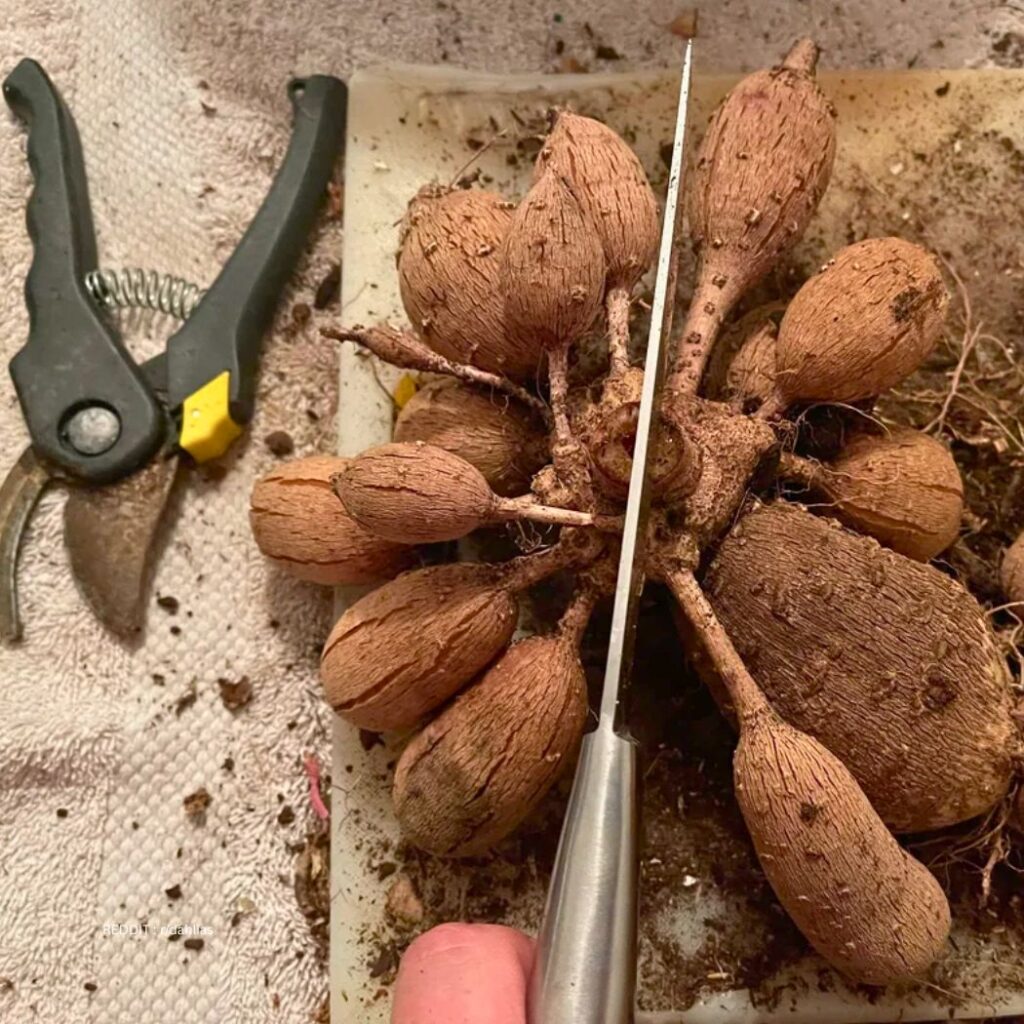
I look for an eye, a solid piece of crown, and an unbroken neck before I keep any dahlia division. A plump tuberous root alone cannot grow a new plant.
Identify the Crown, Eye, Neck, and Tuberous Root
The crown is the firm area where last season’s stems meet the tubers. It may feel woody or look like a knobby ridge at the top of a dahlia clump. Every viable dahlia division needs some of this crown.
An eye is a small bud on the crown. It can look like a raised bump, a tiny pale dot, or a short green or purple sprout. Different dahlia varieties show eyes in different colors, so I check closely in good light.
The neck is the narrow connection between the crown and the tuberous root. Keep it intact. If the neck snaps off, the tuberous root loses its link to the eye and will not produce a stem.
Quick Tip: I wait a day or two after washing clumps if I cannot see the eyes. The buds often swell a little and become easier to spot.
Spot the Mother Tuber and Feeder Roots
The mother tuber is the old tuber that supported the plant at the start of the season. It often looks darker, more wrinkled, or less firm than the newer tubers. It may sit near the center of the clump.
I do not keep a mother tuber just because it is large. If it has a healthy crown piece, a visible eye, and a firm neck, it can remain part of a dahlia division. If it feels hollow, soft, or badly shriveled, I remove it.
Feeder roots are thin, string-like roots attached to the tubers. They do not create new shoots, so I trim them away if they make the clump hard to handle. They can hide the crown, but they are not what makes a division viable.
Quick Tip: I gently squeeze each tuber. A firm, potato-like feel is good; a mushy feel means trouble.
Discard Blind, Broken, or Damaged Tubers
A blind tuber has no eye and no attached piece of crown. It may look healthy and full, but it cannot make a new dahlia plant. I discard it instead of giving it space in storage or the garden.
I also remove tubers with broken necks. A clean break between the crown and tuberous root ends that tuber’s chance of growing. Do not try to tape it back together. Dahlias are not that forgiving.
Cut away small damaged spots if the remaining tissue feels firm and looks clean inside. Discard tubers with soft rot, deep cracks, mold, a sour smell, or dark, wet tissue. Clean your knife between cuts to avoid spreading rot through the rest of the dahlia clump.
Quick Tip: I keep only divisions with one eye, crown tissue, an intact neck, and a firm tuberous root.
Choose the Right Time to Lift and Divide
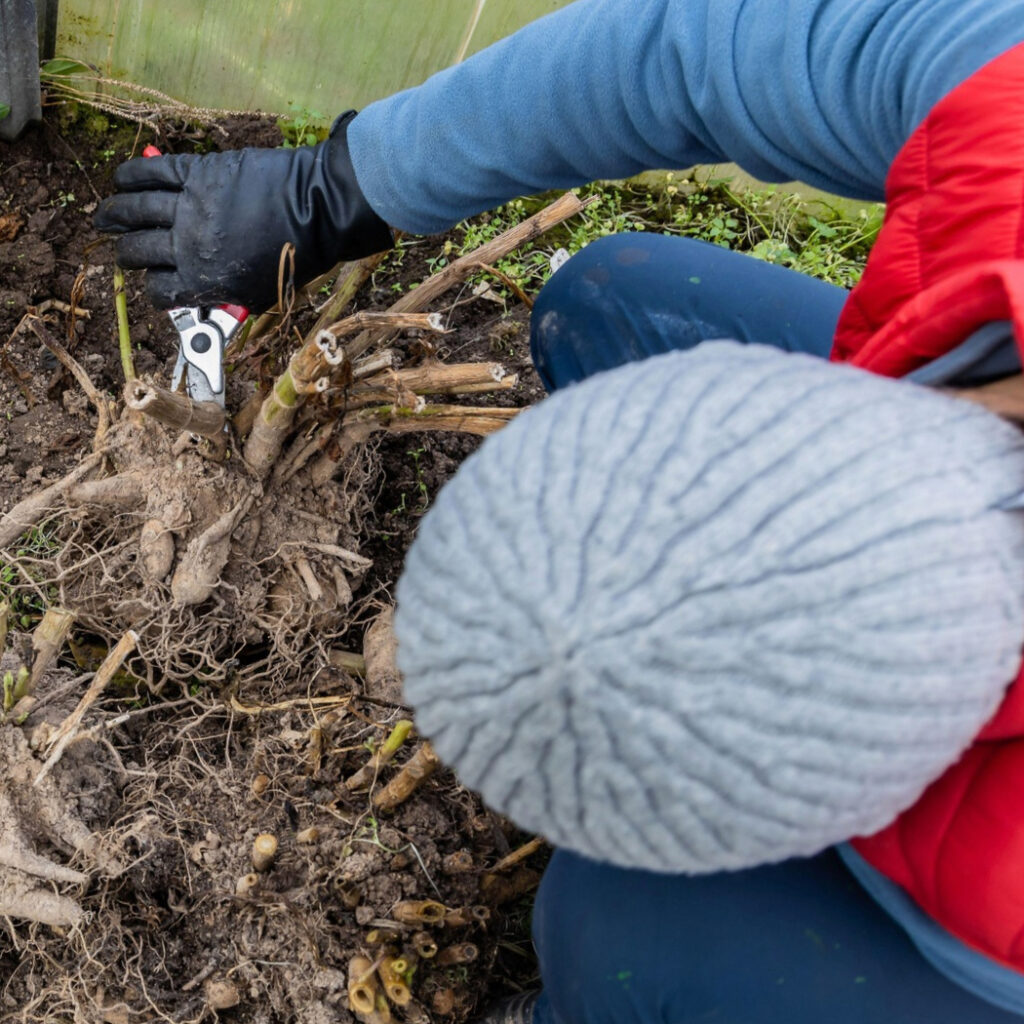
I divide dahlia tubers either after frost in fall or just before planting in spring. My choice depends on whether winter freezes the soil in my USDA hardiness zone.
Fall Division After the First Frost
I wait for the first frost to blacken the dahlia leaves and stems. This tells me the plant has stopped growing above ground and has started sending energy into the tubers.
I do not rush out during a light frost if the plants still look mostly green. A hard frost or killing frost turns the tops dark, limp, and mushy. Then I cut stems to about 4 to 6 inches and lift the clump once the soil is no longer soaking wet.
Quick Tip: I let lifted clumps dry in a sheltered, frost-free spot for a day or two before dividing them.
Fall division works well in cold areas because I can inspect each tuber before storage. I remove soft, broken, or rotten parts, then store healthy divisions where they stay cool but do not freeze.
Spring Division When Eyes Are Easier to See
I divide dahlia tubers in spring when small growth buds, called eyes, begin to swell near the stem area. The eyes look like tiny bumps or pale green points, and they show me where each new plant can grow.
This timing makes dividing dahlia tubers simpler for beginners. In fall, eyes can be hard to find. In spring, they stand out, so I am less likely to cut a tuber with no growing point.
Quick Tip: I wait until eyes show clearly, but I divide before shoots become long and easy to snap.
I check stored tubers every few weeks before spring division. If a tuber feels shriveled, I do not soak it; I simply inspect it for a firm neck and a visible eye. A soft tuber or one with mold belongs in the discard pile.
Adjust Timing for Your USDA Hardiness Zone
In USDA hardiness zones 7 and colder, I lift dahlias after the first killing frost because the ground can freeze deeply enough to damage tubers. I finish before repeated freezes make the soil hard and muddy.
In zones 8 through 10, dahlias may survive outdoors when the soil does not freeze. I can leave clumps in the ground, cover them with mulch in winter, and divide them in spring when eyes appear.
Quick Tip: I check my local winter lows, not just the zone map, because a rare hard freeze can still harm unprotected tubers.
If I garden in a mild zone with wet winter soil, I still watch for rot. Heavy rain and poor drainage can damage tubers just as quickly as cold weather.
Gather and Sanitize Your Tools
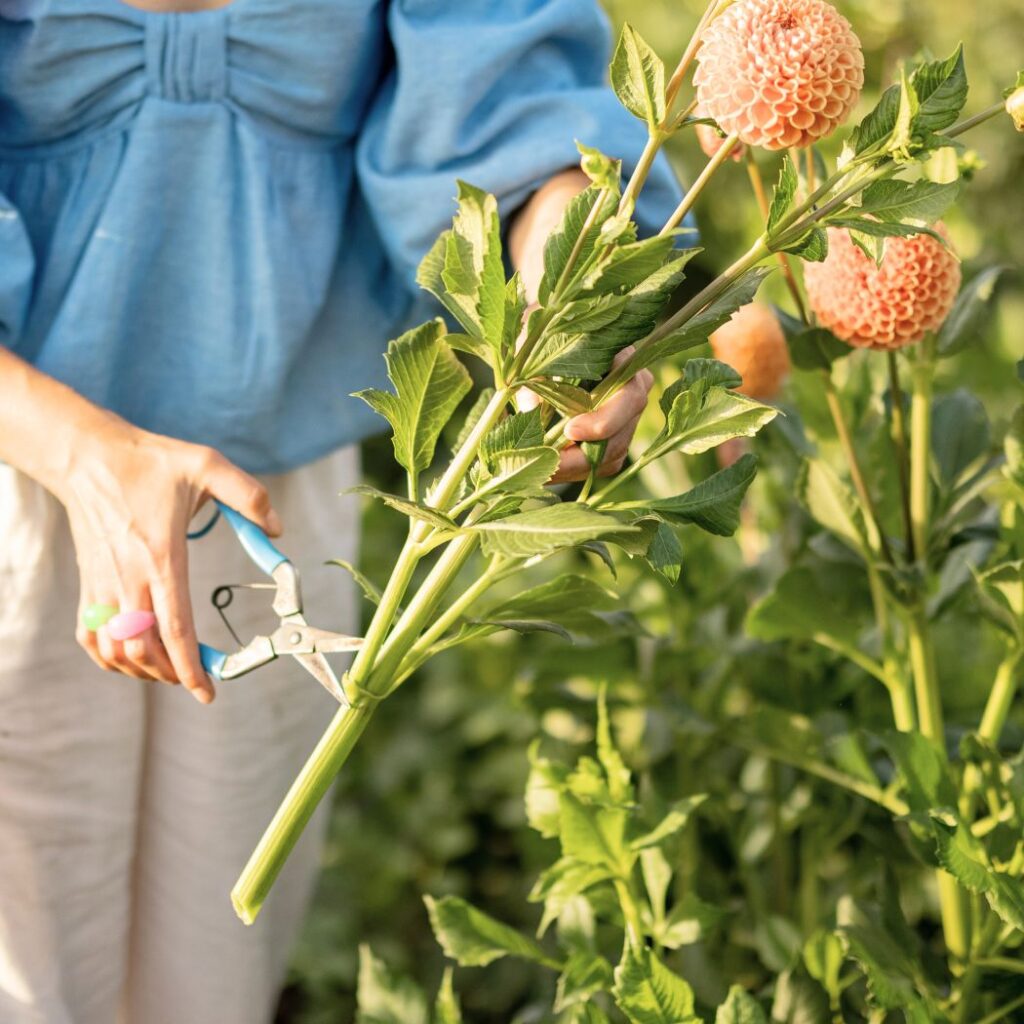
I set out clean, sharp tools before I lift a single clump. Clean cuts and clear labels make dividing easier and help protect healthy tubers.
Tools for Lifting and Cutting
I use a garden fork or pitchfork to lift dahlia clumps. I push it into the soil 8 to 12 inches from the main stem, then lift slowly. A fork is safer than a shovel because it is less likely to slice through tubers.
For cutting, I keep bypass pruners, pruning shears, or garden shears for stems and thin roots. I use loppers only for thick, woody stems. A sharp knife or floral knife works best for dividing the crown between tubers.
| Tool | Best use |
|---|---|
| Garden fork or pitchfork | Lifting whole clumps |
| Bypass pruners | Cutting stems and small roots |
| Loppers | Cutting thick old stems |
| Sharp knife or floral knife | Separating tubers at the crown |
Quick Tip: I sharpen my knife before I start. A clean, firm cut causes less damage than a dull blade that tears the crown.
Prevent Disease Transfer Between Clumps
I clean soil from my tools, then disinfect them between each dahlia clump. This matters most if a plant has soft spots, dark rot, mold, or streaked stems. Disease can move on a blade without looking obvious.
I wipe blades with isopropyl alcohol and let them air-dry. I can also use a fresh 10% bleach solution: one part household bleach to nine parts water. I do not mix bleach solution with other cleaners.
After using bleach, I rinse metal tools with clean water and dry them well. Bleach can rust blades if it sits too long. On a cool, wet digging day, I keep extra clean cloths nearby because muddy tools spread mess fast.
Quick Tip: I use two knives when dividing many clumps. One stays clean while I disinfect the other.
Label Each Variety Before Storage
I label each clump before I cut it apart. Once tubers separate, many varieties look alike, and memory gets unreliable quickly. I write the variety name on a plastic tag with a waterproof marker.
I attach the tag to the clump or place it beside the tubers as I divide them. I also mark the year and flower color if I know it. This helps me catch mix-ups when I plant in spring.
Paper labels often turn soft or fade during storage. I use plastic plant tags, metal labels, or sturdy waterproof tags instead. In rainy areas or humid storage spaces, I check that the marker ink has dried before packing the tubers.
Quick Tip: I label one clump at a time. It takes seconds and saves a lot of guessing later.
Lift, Clean, and Prepare the Clump
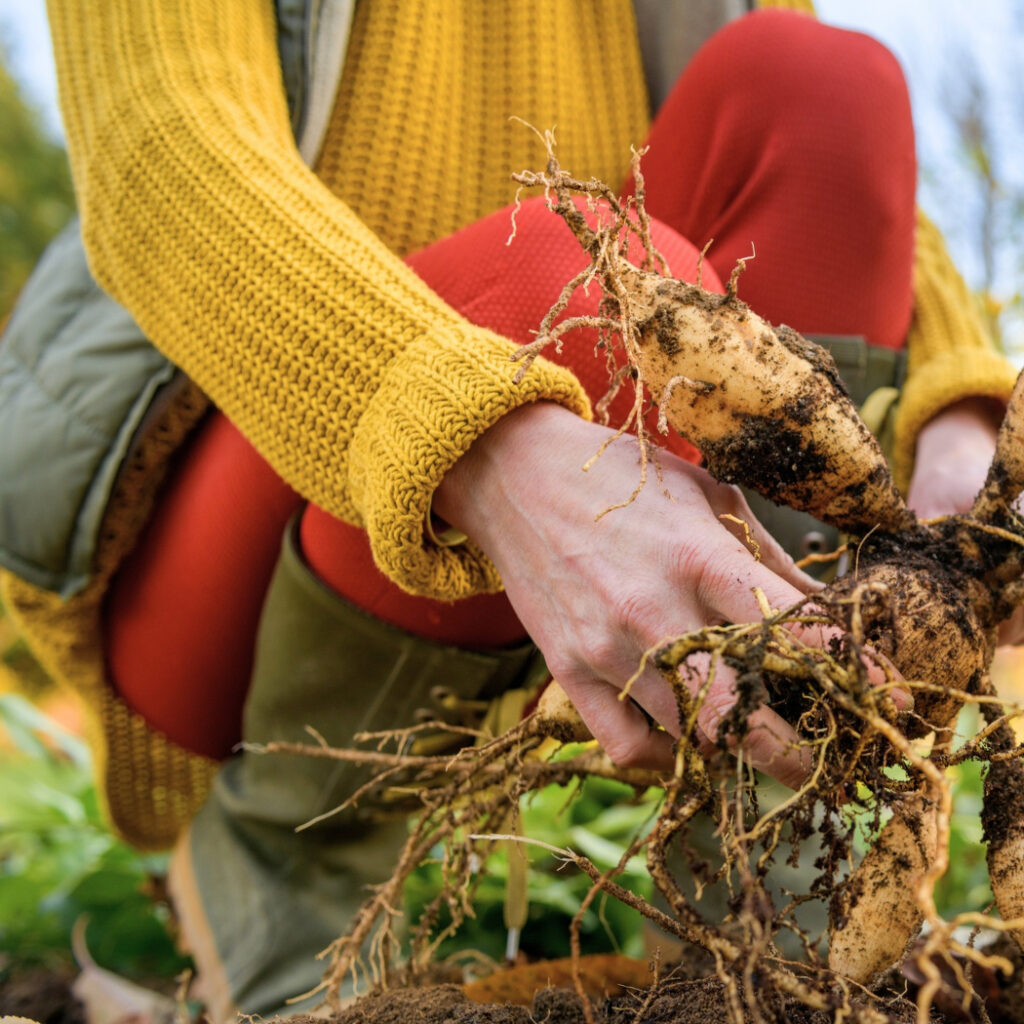
I lift the clump gently, wash away packed soil, and let the tubers dry before dividing them. This helps me find healthy eyes, firm necks, and signs of disease.
Cut Back Stems and Lift Without Damaging Necks
I wait until frost blackens the foliage, then cut the stems to about 4 to 6 inches above the ground. The short stems give me a handle, but I do not pull on them. Dahlia necks can snap easily, and a broken neck may leave a tuber without an eye.
I push a garden fork into the soil 10 to 12 inches from the stem. Then I loosen the soil around the full clump before lifting it from several sides. I avoid stabbing straight under the crown. That is how good dahlia stock gets damaged.
Quick Tip: I lift after a dry day when possible. Muddy soil adds weight and hides broken tubers.
In warm areas where frost does not arrive, I lift after the plants slow down in fall. I do not wait until the ground stays cold and wet for weeks.
Remove Soil With a Garden Hose So Eyes and Damage Show
I carry the clump to a clear work area and use a gentle spray from a garden hose. I wash soil from the crown, necks, and tubers until I can see their shape. A hard jet can break thin necks, so I keep the pressure low.
I hold the clump by the main stem or sturdy crown, not by individual tubers. I turn it slowly and let water rinse between the tubers. Packed soil often hides soft spots, cuts, and tangled roots.
Quick Tip: I use my fingers to loosen stubborn dirt while the water runs. I do not scrape the skin with a tool.
Clean tubers make later cuts safer. I can see where each tuber joins the crown and spot tissue that looks dark, mushy, or rotten.
Dry and Inspect Tubers Before Cutting Into the Crown
I place the washed clump upside down or on its side in a shaded, airy place for several hours. I keep it out of direct sun, which can dry and shrivel the tubers too quickly. The surface should feel dry, but the tubers should still feel firm.
I check each clump before cutting and remove tubers with soft rot, deep cracks, or hollow, shriveled flesh using clean cuts. I also watch for crown gall and leafy gall, which can cause rough, swollen growths around the crown or unusual leafy shoots.
Quick Tip: I disinfect my knife between clumps, especially if I find signs of dahlia diseases.
I do not save clumps with suspected gall. I bag and discard them instead of composting them, so I don’t spread the problem to healthy dahlias.
Separate the Tubers Step by Step
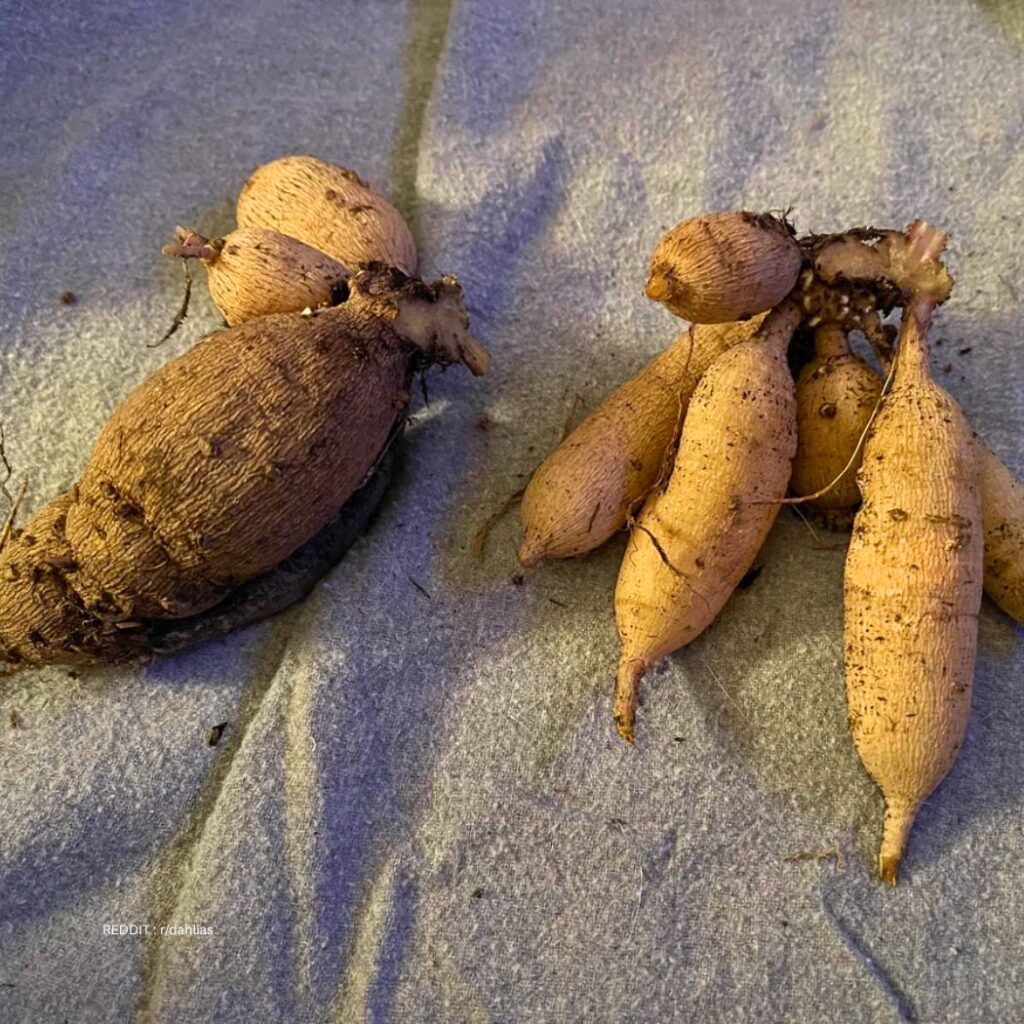
I check for a live eye, cut through firm crown tissue, and remove weak or damaged parts. Each saved division needs at least one healthy tuber connected to a piece of crown with an eye.
Find an Eye Before Making Each Cut
I look for eyes on the crown, where last season’s stem meets the dahlia clump. An eye looks like a tiny raised bump, a pale nub, or a small pointed bud.
It may be hard to spot on dormant tubers, so I brush away loose soil and use good light. Each division needs one eye and one firm tuber.
A large tuber without an eye won’t grow a new plant, no matter how plump it looks. The mother tuber may have an eye, but I keep it only if it feels firm and has no rot.
Quick Tip: I mark each eye with a small pen dot before cutting. This stops me from making a fast cut through the one part that can sprout.
If I can’t find eyes, I wait a few days in a warm, dry indoor spot. The buds often swell enough to see more clearly.
Make Clean Cuts Through the Crown With a Sharp Knife
I use a sharp knife and wipe the blade with rubbing alcohol before dividing dahlias. A clean blade makes smooth cuts and lowers the chance of spreading disease between dahlia clumps.
I cut through the hard crown tissue, keeping an eye attached to its tuber. I don’t pull or twist the tubers apart unless they separate with very little force.
Pulling can tear the crown and break off an eye. Quick Tip: I make one planned cut at a time.
Splitting dahlia tubers isn’t a race, and a careful cut wastes fewer good divisions. I remove old stem pieces if they are hollow, soft, or dark inside.
I also cut away thin feeder roots. They don’t help the division grow and can hide soft spots.
Trim, Sort, and Keep Only Healthy Divisions
After I divide dahlia tubers, I inspect every piece closely. I keep tubers that feel solid, have an attached eye, and show no wet, mushy, or deeply shriveled areas.
I trim small damaged spots back to clean, pale tissue. If rot reaches the crown or spreads through most of the tuber, I discard that division.
Soft brown tissue has no place in storage. Quick Tip: I set questionable pieces aside instead of mixing them with healthy divisions.
One rotten tuber can cause trouble in a storage box. I let fresh cuts dry in a shaded, airy place before storing them.
In cold-winter zones, I store divisions after curing. In warm zones where dahlias can stay in the ground, I replant healthy divisions once frost danger has passed.
Cure, Store, and Replant Your Divisions
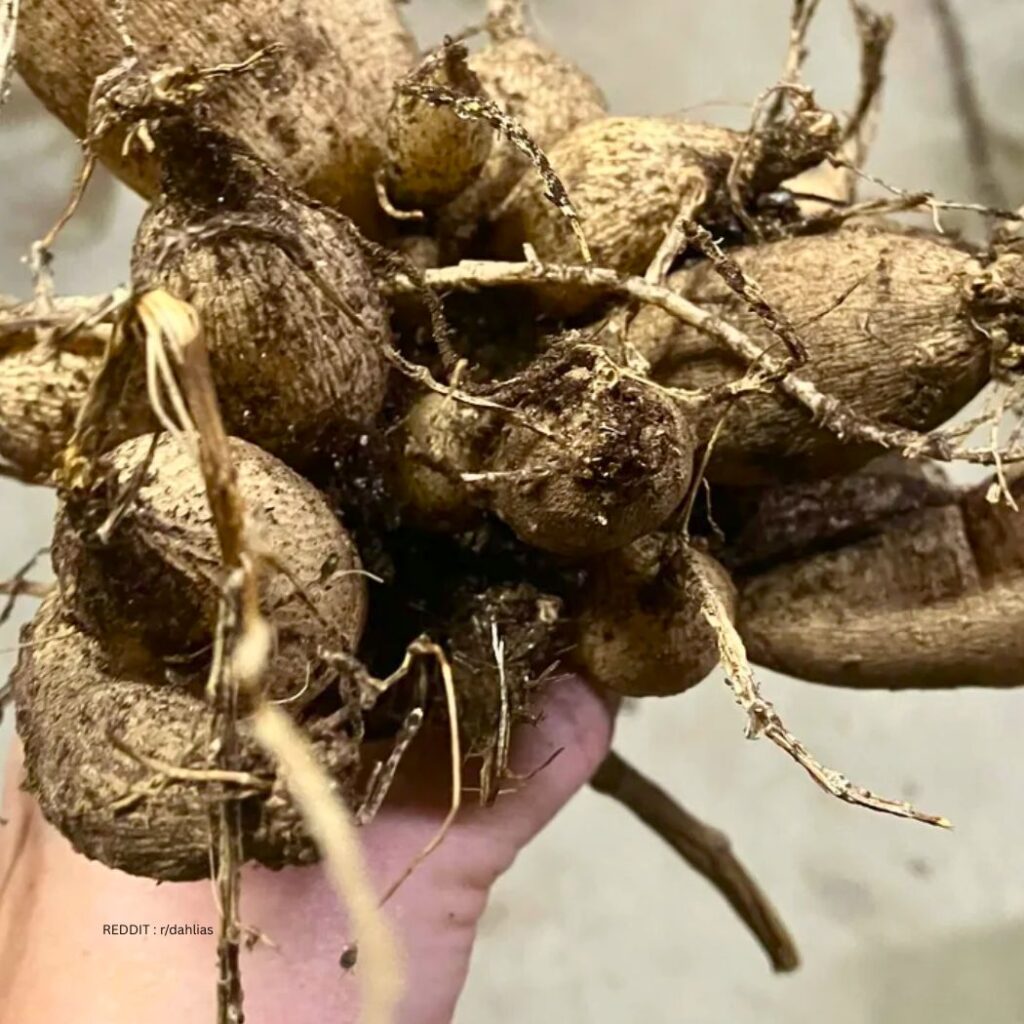
I let fresh cuts dry, keep tubers from getting too wet or too dry, and plant only firm divisions in spring. These steps help my dahlia garden start strong when the weather warms.
Let Cut Surfaces Cure
After dividing, I set the tubers in a dry, shaded spot with good airflow for 1 to 3 days. The cut surfaces should feel dry and slightly firm, not wet or sticky.
I keep them out of direct sun, rain, and freezing temperatures. A garage, shed, or covered porch works well if it stays above freezing.
In damp fall weather, I give them extra time to dry. Quick Tip: I dust off loose soil before curing, but I don’t wash the cuts or seal them with wax.
Curing helps the cut area form a dry skin before storage. If a division turns soft, dark, or smells rotten, I discard it.
One bad tuber can spoil the bunch, rude but true.
Store Tubers at the Right Moisture Level
I store dahlia tubers in a box, crate, or paper bag at 40°F to 50°F. I use slightly damp vermiculite, peat moss, or pine shavings to keep them from drying into wrinkled little sticks.
I place the tubers in one layer when possible, then cover them loosely with the storage material. I label each group with the variety name before closing the box.
Quick Tip: I check stored tubers once a month and remove any that feel mushy or show mold.
If tubers wrinkle, I lightly mist the packing material, not the tubers themselves. If mold appears, the material is too wet or the storage space has poor airflow.
The American Dahlia Society and growers such as Longfield Gardens also advise keeping tubers cool, dark, and protected from frost.
Plant Healthy Tubers in Spring
I plant only firm tubers with a visible eye or sprout. In spring, I wait until frost danger has passed and the soil has warmed.
Cold, wet ground can rot a healthy division fast. I choose a sunny spot with well-drained soil.
Before planting, I mix compost into the bed to improve soil texture, but I avoid adding too much high-nitrogen fertilizer. Quick Tip: I plant the tuber about 4 to 6 inches deep, with the eye facing up or sideways.
In colder zones, I plant later or start tubers indoors in pots. I water lightly after planting, then wait to water again until shoots appear unless the soil is very dry.
Frequently Asked Questions
I divide tubers when the eyes are easy to spot and make sure every piece has at least one eye. Good storage keeps the cut tubers firm and ready to plant when spring returns.
When is the best time to divide dahlia tubers?
I usually divide dahlia tubers in late winter or early spring, about 4–8 weeks before planting time. The eyes begin to swell then, so they’re much easier to find.
In cold zones, I wait until the danger of hard frost has passed before planting. In warm zones, I can plant earlier if the soil has warmed.
Quick Tip: I divide tubers when the eyes look like small bumps or pale dots near the crown.
How do I find the eyes on a dahlia tuber?
I look at the crown, which is the firm area where the tubers join the old stem. Eyes form on the crown, not on the long, potato-like part of the tuber.
I place the clump in a warm, bright spot for a few days if I can’t see the eyes. Tiny green, pink, or white buds often appear after that.
Quick Tip: I use a flashlight and look closely around the old stem. The eyes can be very small.
Can I divide dahlia tubers in the spring after they have sprouted?
I can divide tubers after they sprout, but I handle them gently. The new shoots snap easily, and a broken shoot can slow the plant down.
I cut each section so it has one healthy eye or shoot and at least one firm tuber. I plant it soon after dividing.
Quick Tip: I make clean cuts with a sharp, sanitized knife. Ragged cuts invite rot.
Do dahlia tubers need to have an eye to grow?
Yes. I keep at least one eye on every tuber section because the eye produces the new stem and leaves.
A tuber with no eye may look firm and healthy, but it won’t grow a new plant. It’s just stored energy with nowhere to go.
Quick Tip: I don’t save “blind” tubers without eyes, even if they’re large.
What happens if I do not split my dahlia tubers?
A clump can grow without splitting, but it may become crowded over time. Crowded clumps often produce smaller plants and fewer strong stems.
I divide my clumps every one to three years, depending on how large they get. If the crown looks packed with tubers, it’s asking for a little elbow room.
Quick Tip: I remove shriveled, soft, or damaged tubers while dividing.
How should I store divided dahlia tubers over winter?
I let the cut surfaces dry for a day or two in a cool, dry place. Then I put the tubers in boxes or paper bags with barely damp peat moss, vermiculite, or wood shavings.
I store them in a dark spot between 40°F and 50°F. A basement, garage, or unheated room works well, as long as it doesn’t freeze.
Quick Tip: I check the stored tubers once a month. If they wrinkle, I add a little moisture. If they feel soft, I remove them before the rot spreads.