
Faded, brown rose blooms don’t do your garden any favors. They look tired and can slow your plant’s next round of flowers. I’ve found that a few quick snips can make a real difference.
To deadhead roses, cut off each spent bloom just above the first leaf with five leaflets. Use clean, sharp pruners and make a slight angle. This tells the plant to stop making seeds and put its energy into new buds. Some roses, including many shrub and “self-cleaning” types, need less deadheading. In cooler zones, stop deadheading in late summer so the plant can get ready for winter.
Quick Tip: If the petals feel papery and droop when you touch them, the bloom is ready to go. Keep reading, and I’ll show you where to cut, when to skip it, and which small mistakes can cost you flowers.
Make the Right Cut
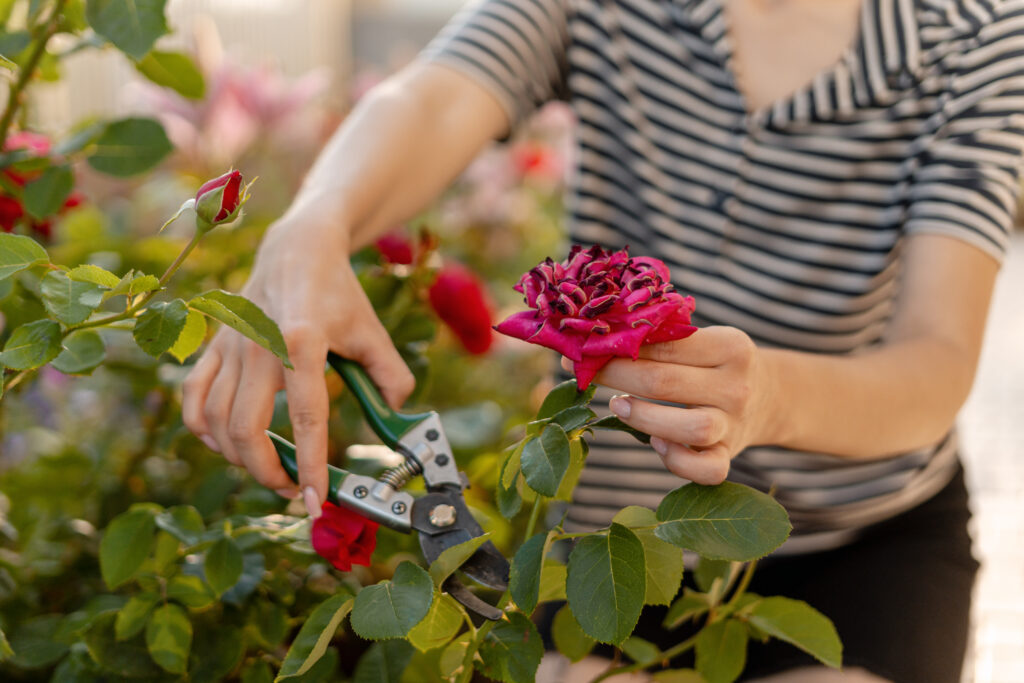
A clean cut with sharp bypass pruners, made about ¼ inch above a five-leaflet leaf, tells your rose where to grow next. The best cut depends on whether your plant has single blooms or clusters.
Gather Your Tools and Find a Healthy Leaf: The Magic Number Is Five
I always grab bypass pruners before I start. Their blades slide past each other like scissors and slice the stem cleanly. Anvil-style pruning shears can crush stems, which then heal slowly.
Wipe the blades with rubbing alcohol first. That helps stop disease from spreading between plants.
Next, look down the stem below the faded flower. Skip the small three-leaflet leaves near the top, and keep going until you find one with five leaflets. That leaf marks a spot where the stem can push out a new flowering shoot.
Quick Tip: Wear thick gloves. Rose thorns are sharp, and you’ll thank yourself later.
Cut Above an Outward-Facing Bud: Aim It Where You Want It to Grow
Where the five-leaflet leaf meets the stem, you’ll see a tiny bump. That’s a bud, and the new stem will grow in the direction it faces.
I choose a bud that points away from the center of the bush. Outward growth keeps the middle open, letting air move through so leaves dry faster after rain. That makes it harder for black spot to take hold.
Make a 45-degree cut about ¼ inch above the bud. Angle it so the low side slopes away from the bud. Then rainwater runs off instead of sitting on it.
Quick Tip: In cold zones (5 and below), stop cutting about 6 weeks before your first frost. Tender new growth won’t have time to harden before winter.
Remove Individual Flowers or a Finished Cluster: Spray Roses Play by Different Rules
Hybrid teas usually have one bloom per stem, so the steps above work well. Floribundas and shrub roses often bloom in clusters, called sprays, so you’ll handle them a little differently.
When only a few blooms in a cluster fade, I pinch or snip off each spent rose bloom at its small stem. The fresh flowers still look nice.
Once the whole cluster turns brown and droopy, cut the entire spray back to the first healthy five-leaflet leaf.
| Rose Type | What to Remove | Where to Cut |
|---|---|---|
| Single bloom | Whole flower stem | Above first five-leaflet leaf |
| Partly faded cluster | Individual flowers | At each small flower stem |
| Finished cluster | Entire spray | Above first five-leaflet leaf |
Quick Tip: Check your roses every few days in summer. Removing spent flowers regularly keeps the job quick and simple.
Know When to Remove Faded Flowers
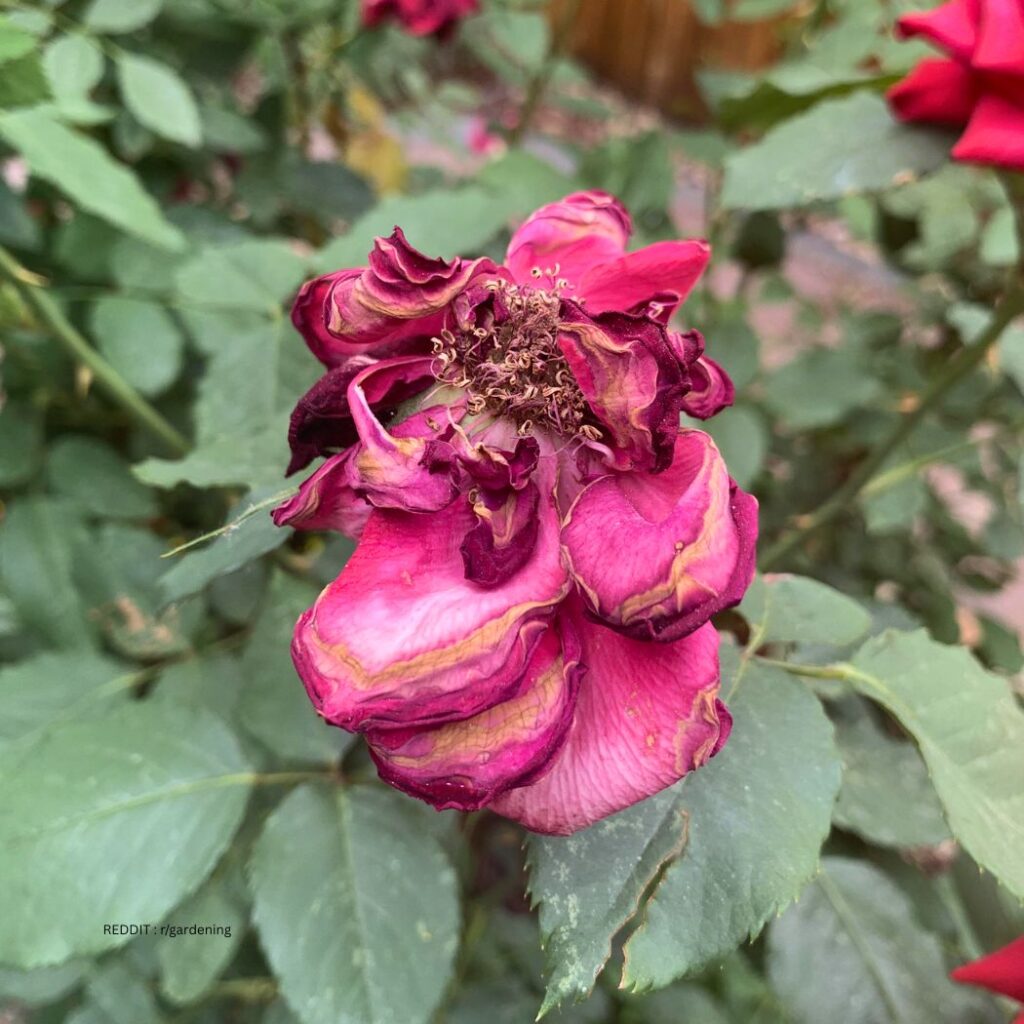
Rose blooms are ready to come off when the petals droop, turn brown, or drop. Check for spent blooms every few days from late spring through late summer. About six to eight weeks before your first frost, you can stop cutting and let the plant rest for winter.
Spot the Signs a Bloom Is Spent (Hint: The Petals Tell You First)
A spent bloom is easy to spot once you know what to look for. The petals lose their color, then curl or turn brown at the edges. Many also feel soft or papery to the touch.
Here are the main signs I watch for:
- Faded color: Bright red turns dull, and white turns tan.
- Drooping head: The flower hangs down instead of facing up.
- Dropping petals: A light tap makes petals fall.
- Less smell: The scent is weak or gone.
- Swelling base: A small green bump forms under the flower. That means a hip is starting to grow.
Don’t wait for every petal to fall. Once a flower starts making a hip, the plant puts energy into seeds instead of new buds.
Quick Tip: If a bloom looks tired and sheds petals when you brush it, cut it.
Check Roses Throughout Their Blooming Season (Every Few Days Pays Off)
Deadheading roses isn’t a one-time job. Most repeat-blooming roses flower in waves from late spring to early fall, so new spent blooms keep appearing.
I like to walk past my roses every two or three days. A quick look is enough. In hot, dry weeks, flowers fade faster, so you may need to check more often.
| Season | How Often to Check | What to Expect |
|---|---|---|
| Late spring | Every 3–4 days | First big flush of blooms |
| Summer | Every 2–3 days | Fast fading in heat |
| Early fall | Once a week | Fewer, slower blooms |
One thing to note: some roses bloom only once a year. Deadheading won’t bring more flowers on those plants, so check the tag.
Quick Tip: Keep your pruners by the back door so a quick snip takes seconds.
Ease Off Before Frost (Your Roses Need a Nap, Too)
Late in the year, it’s time to put the pruners down. Cutting spent blooms encourages the plant to grow new shoots, but those soft shoots can freeze and die when cold weather hits.
I stop deadheading about six to eight weeks before my first expected frost. You can find your average frost date online by entering your zip code. After that, let the old flowers stay. They’ll turn into rose hips, signaling the plant to slow down and harden off.
Bonus: many hips turn bright orange or red and look nice in winter. Birds like them too.
In warm places like USDA zones 9–11, frost is rare, so you can often keep deadheading much longer.
Quick Tip: Mark your stop date on a calendar in late summer so you don’t forget.
Understand What Deadheading Can—and Cannot—Do
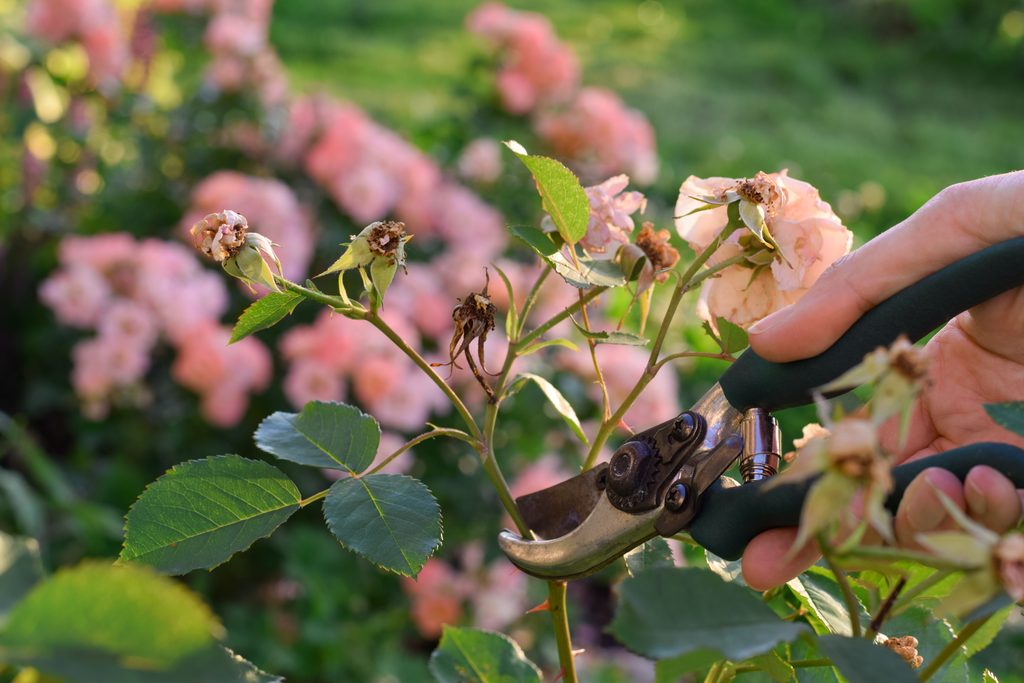
Deadheading can encourage repeat-blooming roses to make another round of flowers, but it won’t make a once-blooming rose flower again. It also prevents rose hips from forming, so you’ll need to decide what you want more in fall: flowers or colorful fruit.
Encourage Another Flush on Repeat-Blooming Roses (and Why Some Roses Just Won’t Play Along)
Here’s the deal. When a rose finishes blooming, it starts making seeds. Cut off the faded flower, and the plant can skip the seeds and grow new buds instead.
This works best on repeat bloomers, such as hybrid teas, floribundas, grandifloras, and most shrub roses like Knock Out. Once-blooming roses, including many old garden roses and some ramblers, flower just once in late spring or early summer. No amount of snipping will change that.
I check the plant tag first. If it says “repeat” or “reblooming,” deadheading is worth your time.
Quick Tip: In colder zones (5 and below), stop deadheading about 4 to 6 weeks before your first frost. This gives the plant time to slow down and get ready for winter.
Choose Between More Flowers and Fall Hips (You Might Want the Fruit Instead)
If you leave old flowers on the plant, many roses form rose hips. These round fruits turn red, orange, or dark purple in fall. They look cheerful against bare stems, and birds like to eat them.
You can’t have both from the same flower, though. Every bloom you cut means one less hip.
| Your Goal | What to Do | Good Rose Types |
|---|---|---|
| More flowers | Deadhead all summer | Hybrid teas, floribundas |
| Fall color and bird food | Stop deadheading by late summer | Rugosa, species roses |
| A little of both | Deadhead until August, then stop | Many shrub roses |
I like the “little of both” plan. I get plenty of summer blooms, then a nice show of hips later.
Quick Tip: Not every rose makes big, showy hips. Rugosa roses produce some of the largest ones, often about the size of a cherry tomato.
Adapt Your Approach to the Rose
Hybrid teas and floribundas need different cuts, while climbers and young plants need only a light touch. You can often leave once-bloomers, hip-producing roses, and many landscape roses alone.
Deadhead Single Blooms and Flower Clusters (They Don’t Get the Same Cut)
Hybrid tea roses and most grandiflora roses grow one big bloom per stem. When the petals droop and turn papery, I follow the stem down to the first leaf with five leaflets. Then I snip about ¼ inch above it.
Floribunda roses bloom in clusters, so the job takes two steps. First, pinch off each spent flower as it fades. That keeps the rest of the cluster looking fresh.
Once the whole cluster is done, cut the entire stem back to a healthy five-leaflet leaf. Skip that second cut, and you’ll end up with a bare, twiggy stub.
| Rose Type | Bloom Style | Where to Cut |
|---|---|---|
| Hybrid tea | One per stem | Above first 5-leaflet leaf |
| Grandiflora | Single or small clusters | Above first 5-leaflet leaf |
| Floribunda | Large clusters | Pinch singles, then cut whole stem |
Quick Tip: Look for a small bump where the leaf meets the stem. That’s the bud that will push out your next flower.
Go Lightly on Climbers and Young Plants (Less Cutting Means More Flowers Later)
Climbing roses flower on short side shoots that grow off their long main canes. If you cut deep into those canes, you’ll remove the wood that makes next year’s blooms. I just snip the spent flower back to the first set of leaves on the side shoot.
Young roses in their first year need leaves more than they need a tidy look. Every leaf helps build roots. So I pinch off only the dead flower head and leave the stem alone.
Quick Tip: On a new rose, use your fingers instead of pruners. A gentle pinch removes the bloom and saves the leaves.
Leave Once-Blooming and Hip-Producing Roses Alone (You Might Get a Fall Bonus)
Many old garden roses and species roses bloom only once, usually in late spring or early summer. Deadheading won’t make them bloom again. It just takes away their fall show.
That show is rose hips. These round fruits turn bright red or orange as the weather cools. Rugosa roses are famous for large, shiny hips that look like cherry tomatoes. Birds eat them in winter, too.
If you’re in a colder zone, I suggest stopping deadheading all roses about six weeks before your first frost. Letting hips form signals the plant to slow down and harden off for winter.
Quick Tip: Not sure if your rose blooms once? Watch it for a full season before you cut anything.
Decide Whether Self-Cleaning Roses Need Help (Some Do the Work for You)
Many landscape roses and some shrub roses are called “self-cleaning.” Their old petals fall off on their own, and new buds keep coming. Popular types like Knock Out roses fall into this group.
You don’t have to deadhead these. Still, I give mine a quick trim now and then. Brown, crispy petal clumps can hang on after rain, and a light shearing makes the plant look tidy again.
If your self-cleaning rose starts setting hips, flowering may slow down. A quick cut brings it back.
Quick Tip: Use hedge shears and take off the top 2 to 3 inches all at once. It takes a few minutes, and the plant handles it fine.
Keep Your Roses Healthy Between Bloom Cycles
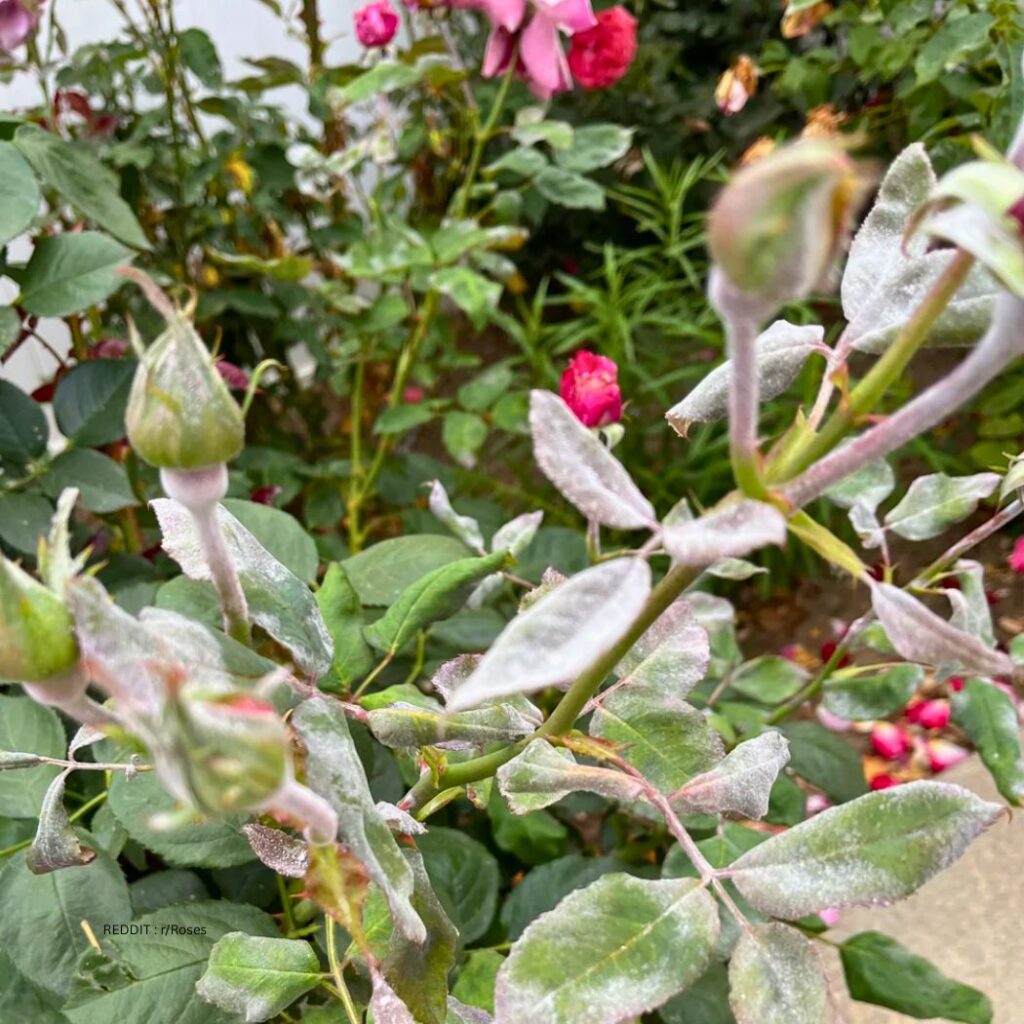
Roses need a little care during the quiet weeks after you deadhead. Keep the bed clean, check the leaves regularly, and make gentle cuts to help the plant put its energy into the next round of flowers.
Clear Away Fallen Petals and Diseased Clippings (Your Compost Pile May Not Want Them)
Old petals look nice on the ground for about a day. After that, they turn brown and soggy and start to smell a bit sour. Wet plant debris gives fungal spores a place to live and spread.
I rake up fallen petals and snipped flower heads each time I deadhead. It takes a few minutes and keeps the rose garden tidy. It also removes places where disease can hide.
Pay close attention to leaves with spots or a white coating. Do not put diseased clippings in your compost. Most home compost piles don’t get hot enough to kill fungal spores. Bag them and put them in the trash instead.
Quick Tip: Wipe your pruning shears with rubbing alcohol after cutting sick stems so you don’t carry disease to healthy ones.
Watch for Leaf Problems and Pests (The Underside of the Leaf Tells the Real Story)
I check my roses once a week, and I always flip a few leaves over. Many problems start underneath, where you won’t see them from above. Here’s what I look for:
| Problem | What You’ll See | What to Do |
|---|---|---|
| Black spot | Round black spots with yellow edges | Remove spotted leaves; water at the base, not the leaves |
| Powdery mildew | White, dusty coating on leaves and buds | Improve airflow; trim crowded stems |
| Spider mites | Tiny specks, fine webbing, speckled pale leaves | Spray leaves with a strong stream of water |
Weather matters here. Black spot spreads fast in warm, wet summers. Powdery mildew likes dry days with humid nights. Spider mites show up most in hot, dry spells, especially in warmer zones.
Quick Tip: Water in the morning so leaves dry out before evening.
Avoid Cutting Too Much Foliage at Once (Leaves Are How Your Rose Makes More Flowers)
It’s easy to get carried away with the pruning shears. I’ve done it. But leaves make the food your rose uses to grow new buds, so cutting off too many slows the next bloom.
When you deadhead, cut back to the first healthy leaf with five leaflets. That’s usually enough. Try not to remove more than about one-third of the plant’s leaves at a time.
This matters most in hot weather. Leaves shade the canes and help protect them from sunscald. If you’re in a hot climate, go lighter on the cuts during the peak of summer.
Quick Tip: If a stem looks bare after deadheading, leave the plant alone for a few weeks and let new growth fill in.
Frequently Asked Questions
Cut just above a five-leaflet leaf with clean, sharp pruners, ideally on a cool morning. Keep going through summer, then stop about 6 to 8 weeks before your first frost so the plant can get ready for winter.
Where Should I Cut a Rose Stem When Deadheading? (Hint: Count the Leaves)
I look for the first leaf below the faded bloom that has five leaflets. On many roses, the leaves right under the flower have only three, and those spots tend to produce weak, skinny stems.
Make your cut about ¼ inch above that five-leaflet leaf. Aim for one facing outward, away from the center of the bush. The new stem will grow in that direction, keeping the middle open and airy.
Quick Tip: Angle the cut at about 45 degrees so rainwater runs off instead of sitting on the stem.
When Is the Best Time to Deadhead Roses During the Summer? (Your Coffee Break Counts)
I like to deadhead in the morning. The air is cooler, the stems feel firm and full of water, and I’m not sweating through my shirt. Once blooming kicks into gear, a quick walk-through every few days works well.
Try to snip flowers once the petals turn brown, droop, or start dropping. If you wait too long, the plant may start forming seed pods called hips. That shifts its energy away from new buds.
Quick Tip: Skip the job right after a heavy rain. Wet leaves spread fungal problems like black spot more easily.
Should I Use Pruners or My Fingers to Remove Spent Rose Blooms? (One Is Faster, One Is Neater)
Both can work. For shrub roses and landscape roses with lots of small blooms, I sometimes just pinch or snap off the old flower heads. It’s quick and gets the job done.
For hybrid teas and other roses with long stems, I always grab bypass pruners. They make a clean cut lower on the stem, right where you want new growth to start. Fingers can crush or tear the stem, and torn tissue heals more slowly.
Quick Tip: Wipe your pruner blades with rubbing alcohol between plants, especially if one bush has spotty leaves.
Will Roses Bloom Again After I Deadhead Them? (It Depends on the Rose)
Most modern roses are repeat bloomers. Hybrid teas, floribundas, grandifloras, and many shrub roses will push out new buds after deadheading. In warm weather, you’ll often see new flowers in about 4 to 6 weeks.
Once-blooming roses are different. Many old garden roses and some climbers and ramblers flower once a year, no matter how much you snip. Deadheading them won’t bring more blooms.
Quick Tip: Not sure which kind you have? Check the plant tag or look up the variety name before you start cutting.
When Should I Stop Deadheading Roses Before Winter? (Your Frost Date Holds the Answer)
I stop deadheading about 6 to 8 weeks before the average first frost in my area. Leaving the last flowers on lets the plant form hips. That signals the rose to slow down and toughen up for cold weather.
If you keep cutting late into fall, the plant may send out soft new growth. A hard freeze can damage those tender shoots. In mild areas like zones 9 and 10, you can often keep deadheading longer because frost is rare or light.
Quick Tip: Look up your local first frost date and mark a calendar reminder 8 weeks before it.
What Common Mistakes Should I Avoid When Deadheading Roses? (A Few Sneaky Ones Here)
The biggest mistake I see is using dull pruners. They mash the stem rather than slicing it cleanly. Another is cutting too low on a young rose and removing leaves the plant needs to grow.
Here are a few others to watch for:
- Leaving fallen petals and leaves on the ground. They can harbor fungal spores, so rake them up.
- Deadheading once-bloomers. You’ll lose the fall hips without getting any extra flowers.
- Cutting above a three-leaflet leaf. New stems that grow from these spots are often thin and weak.
- Deadheading “self-cleaning” roses. Some varieties, like many Knock Out roses, drop old petals on their own and don’t need much help.
Quick Tip: In a rose’s first year in the ground, cut just below the flower head and leave as many leaves as you can.