
Quick Tip: I cut each faded dahlia bloom down to the next set of healthy leaves or side buds, which encourages the plant to make more flowers until the first frost.
I’ll show you how to spot spent blooms without snipping fresh buds by mistake. You’ll also learn where to make a clean cut so your dahlia plant keeps sending up new color.
Deadhead every few days during the growing season, especially when warm weather speeds up fading. I’ll also cover simple care between trims, because healthy dahlias bloom longer.
Why Removing Faded Flowers Extends Blooming
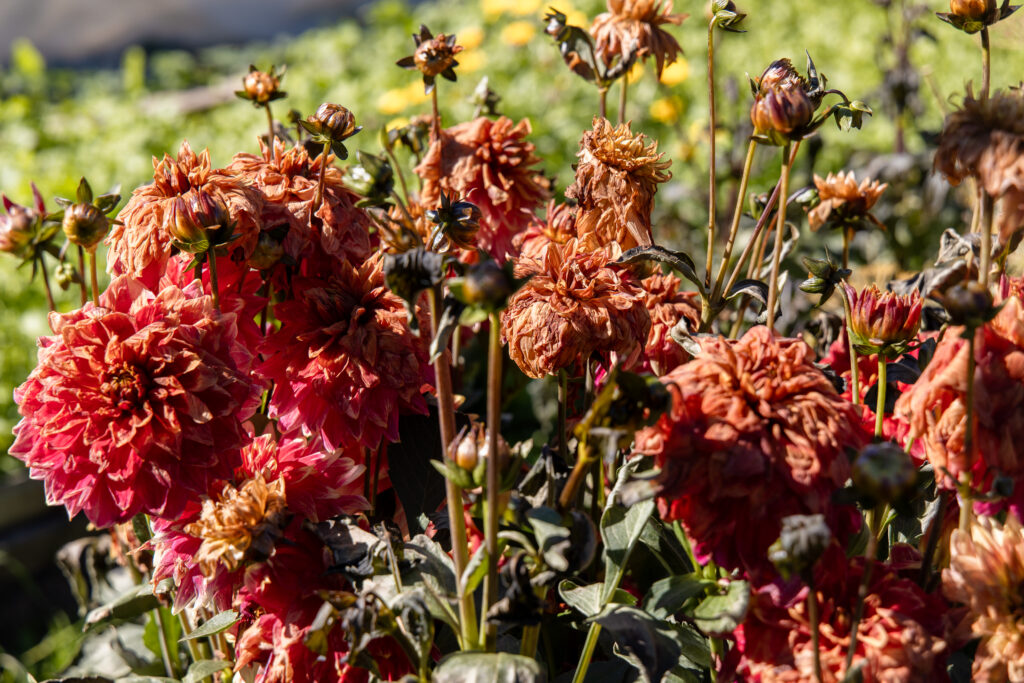
I remove spent blooms so my dahlias put their energy into new flower buds instead of making seeds. This also keeps the plant tidy and makes fresh flowers easier for bees and other pollinators to find.
Redirecting Energy From Seed Production
After a dahlia flower fades, the plant starts working toward seed production. If I leave spent flowers on the stem, the plant sends sugars and water toward forming seeds inside that old bloom.
Deadheading dahlias stops that process early. I cut the faded flower stem back to the first strong set of leaves or a side shoot with new growth.
The plant can then use its stored energy to develop new flower buds.
Quick Tip: I remove flowers when petals look limp, brown, or papery. I don’t wait for the whole bloom to fall apart.
This matters most during the main flowering season, when dahlia plants can produce buds quickly. In very hot, dry weather, I also water deeply as needed; deadheading can’t make up for a thirsty plant.
Benefits for Flower Production and Garden Appearance
Regular deadheading can encourage more blooms because it keeps the plant focused on flower production rather than seed making. I check my dahlias every few days and remove spent blooms before they become brown, soggy, or covered with insects.
Fresh dahlia flowers also make the garden look cleaner. Old blooms can hang down among bright new ones, and they may trap moisture after rain.
Snipping them off improves air flow around the stems.
Quick Tip: I leave a few flowers untouched if I want bees to visit, but I deadhead them once they fade. Bees use open, fresh flowers; they don’t need shriveled petals.
In short-season areas or cooler zones, I deadhead often to help the plant keep making flowers before the first frost.
Recognizing Spent Blooms Without Cutting Healthy Buds
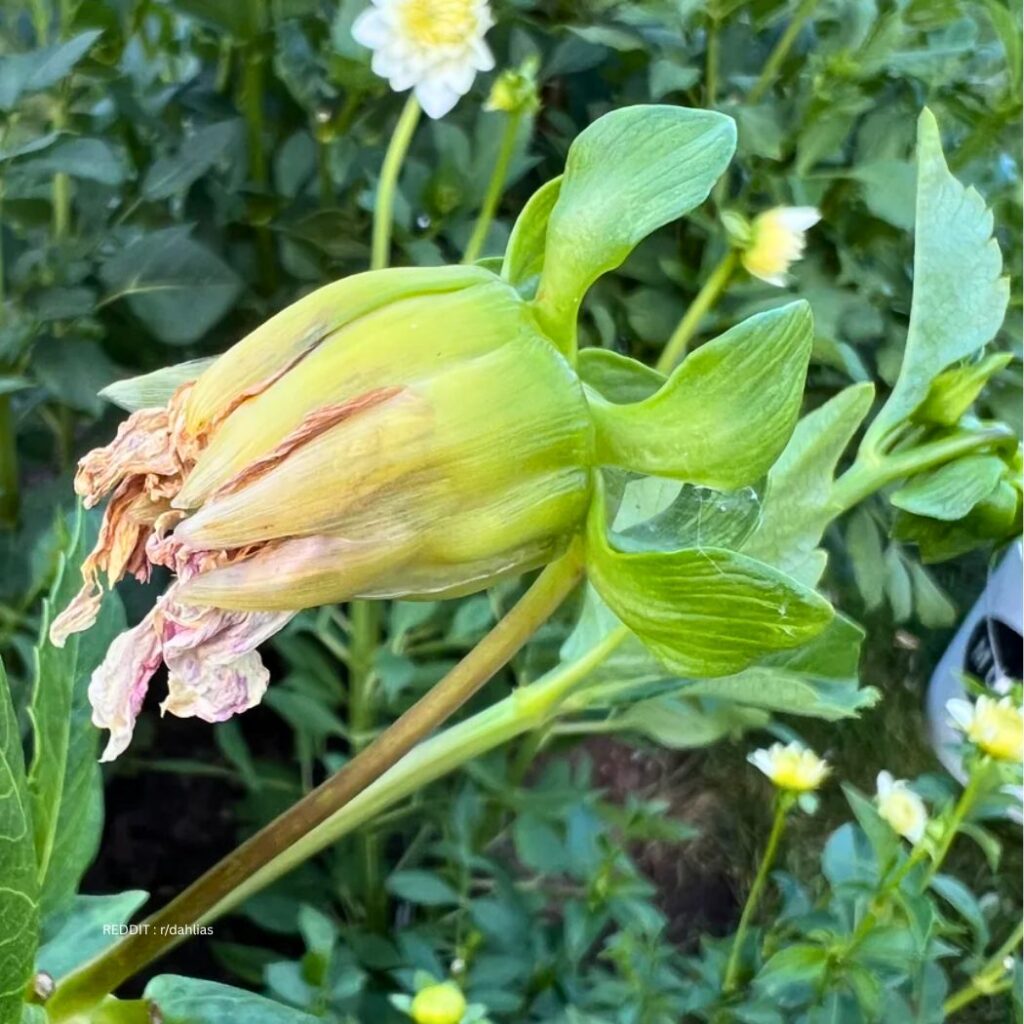
I check the shape and condition of each head before I cut. A dahlia bud can look close to a spent bloom at first glance, but a few clear clues prevent mistakes.
The Round Bud Versus Pointed Spent Head Test
I use the shape test first. Healthy dahlia flower buds are usually round, plump, and firm, like a small marble or ball at the end of the stem. Their outer green bracts fit tightly around the bud.
Spent flower heads look more pointed or cone-shaped after the petals fade. They often narrow toward the tip and feel lighter than a full bud.
That pointy little head is ready to go.
Quick Tip: I leave any round, firm dahlia buds alone, even if they sit close to a faded flower.
Some dahlia blooms make this harder because new buds may grow beside spent blooms. I trace the stem down from the faded flower and cut just above the next set of leaves or side buds.
I don’t snip the rounded buds nearby. In cool, wet weather, spent heads may stay soft and hold their shape longer, so I check the petals too.
Texture, Petal Remnants, and Other Visual Clues
I look for old petals next. Spent blooms have petals that feel dry, papery, brown, or limp. Some petals cling to the center, while others drop and leave a messy, dull-looking head behind.
Healthy dahlia flower buds have no loose petals. They feel smooth and tight, with clean green bracts around the outside.
The head should look fresh, not wrinkled or faded.
Quick Tip: I deadhead when the flower has lost its color and the center looks tired, not when it still has firm petals.
I also watch for fading stems. A spent flower’s short stem may turn pale, bend, or feel weak. In hot weather, dahlia blooms can fade fast, so I check every few days.
In cooler areas or during cloudy spells, flowers may last longer, but brown petals still signal that it’s time to cut.
The Correct Cutting Method
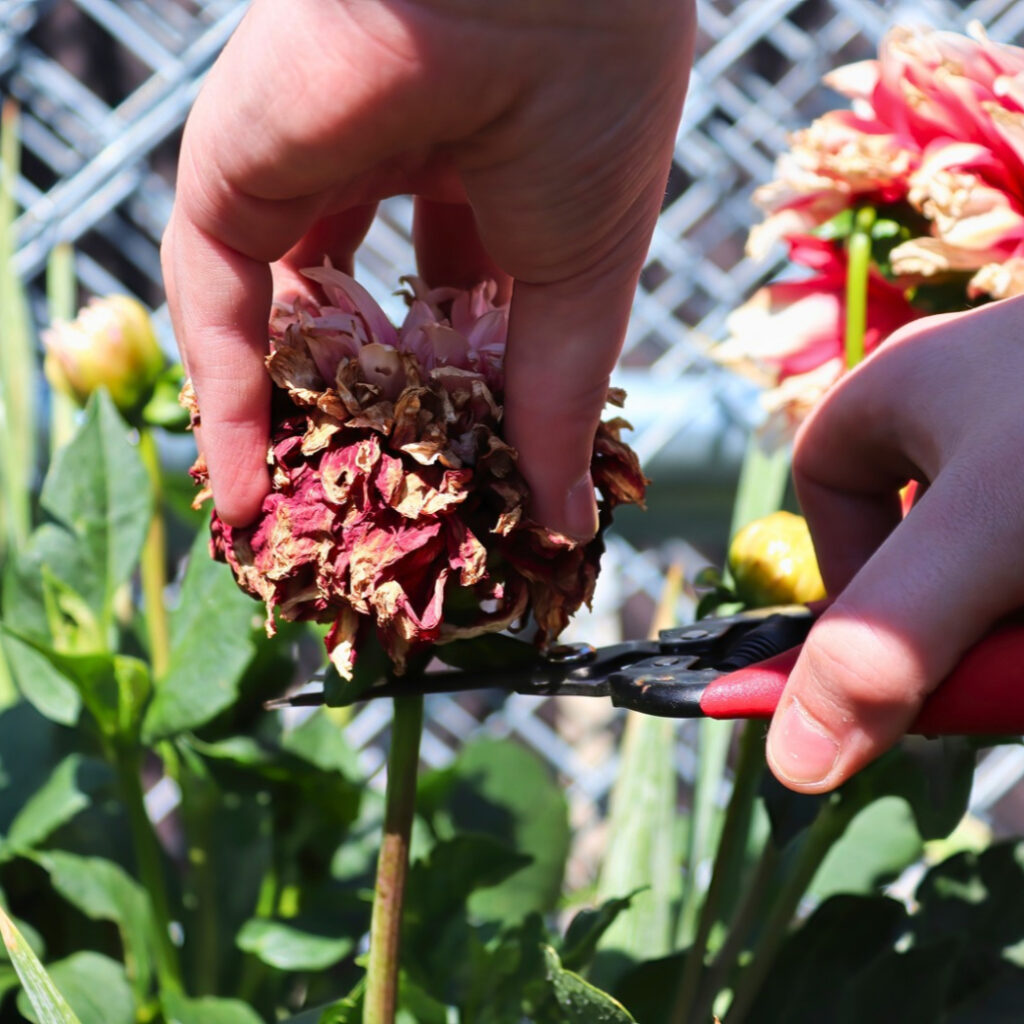
I use clean, sharp tools and cut each spent bloom back to a leaf node, not just below the flower. This helps the plant send energy into new stems and buds instead of making seeds.
Tools to Clean and Prepare
I use sharp bypass pruners, secateurs, garden snips, or sharp scissors for deadheading dahlias. Bypass pruners make a clean slice through thicker dahlia stems without crushing them.
Before I start, I wipe the blades with rubbing alcohol and let them air-dry. This lowers the chance of moving disease from one plant to another, especially if leaves show spots, mildew, or soft brown areas.
I wear gardening gloves when stems feel rough or when I work through a dense plant. They also help me hold a stem steady while I cut.
Quick Tip: I keep a small cup of rubbing alcohol and a clean rag near my plants, so I can wipe blades between plants in under a minute.
Where to Cut Back on Dahlia Stems
I follow the flower stem down from the faded bloom until I find the first strong leaf node. A leaf node is the point where a pair of leaves, side stems, or buds grows from the main dahlia stem.
I cut about ¼ inch above that node. New growth often comes from the buds near it, so I don’t leave a long, bare stem above the cut.
That leftover stub can dry out and look messy.
I don’t simply snip off the flower head. That removes the brown bloom, but it leaves the old stem in place and can slow new flowering.
A clean cut lower on the stem gives the plant a clearer signal to grow again.
Quick Tip: I look for a firm green node with healthy leaves. I skip weak, yellow, or damaged parts of the stem when choosing my cut point.
A Quick Step-by-Step Routine
I check my dahlias every few days during their main bloom period. In hot weather, flowers can fade quickly, so I remove spent blooms before they turn dry and papery.
- I find the faded flower and trace its stem down into the plant.
- I locate the first healthy leaf node below the bloom.
- I hold the stem still and make one clean, angled cut above the node.
- I remove any loose petals from the plant and discard diseased material in the trash.
- I wipe my pruning shears with rubbing alcohol before moving to another plant if I see signs of disease.
Quick Tip: I deadhead in the morning after dew dries. Dry stems are easier to see, and wet leaves can spread fungal problems in humid areas.
Timing and Frequency for Continuous Flowers
I remove spent blooms at the right time, check plants often, and slow down as cold weather arrives. This keeps dahlia plants focused on making new buds during the growing season.
When to Deadhead Dahlias
I deadhead dahlias as soon as a flower looks faded, droopy, or dry around the edges. Fresh blooms feel firm and look bright, while spent blooms often turn papery and begin to point downward.
I don’t wait for petals to fall off. Once a bloom starts losing color, it has done its job.
Removing it early helps the plant send energy toward new flowers instead of making seeds.
I cut the flower stem back to the next main stem or a pair of healthy leaves. I avoid snipping only the flower head, since the short stem left behind can look messy and may die back.
Quick Tip: I carry clean hand pruners when I pick flowers, then remove fading blooms at the same time.
How Often to Check Plants During the Growing Season
I check my dahlia plants every two to three days during warm weather. In peak summer bloom, some dahlia varieties can fade fast, especially after hot sun, heavy rain, or strong wind.
I look closely under open flowers because spent blooms can hide behind new ones. A quick check takes only a few minutes, and it keeps the bed from filling with brown, tired-looking heads.
I deadhead weekly at the very least if I can’t check more often. I also remove broken stems and flowers damaged by rain, since wet petals can turn soft and brown.
In cooler areas or during cloudy weeks, flowers may last longer. I still inspect plants often, because changing weather can speed up fading.
Quick Tip: I check dahlias when I water or cut flowers, so I don’t forget the small spent blooms.
When to Stop Near the First Frost
I keep deadheading until the first frost is close, usually within about one to two weeks. If my local forecast shows a light frost, I can still remove faded flowers and enjoy any buds that may open before cold weather ends the show.
I stop cutting deeply once hard frost seems likely. At that point, new buds may not have enough time to open, and I let the plant begin its seasonal slowdown.
After the first hard frost blackens the leaves and stems, I don’t deadhead for more flowers. The growing season has ended, and I shift my attention to cutting back the plant and preparing tubers for winter if my zone requires lifting them.
Quick Tip: I watch the local overnight forecast in early fall; frost dates can vary a lot within the same region.
Use Cutting and Early Pinching to Support More Blooms
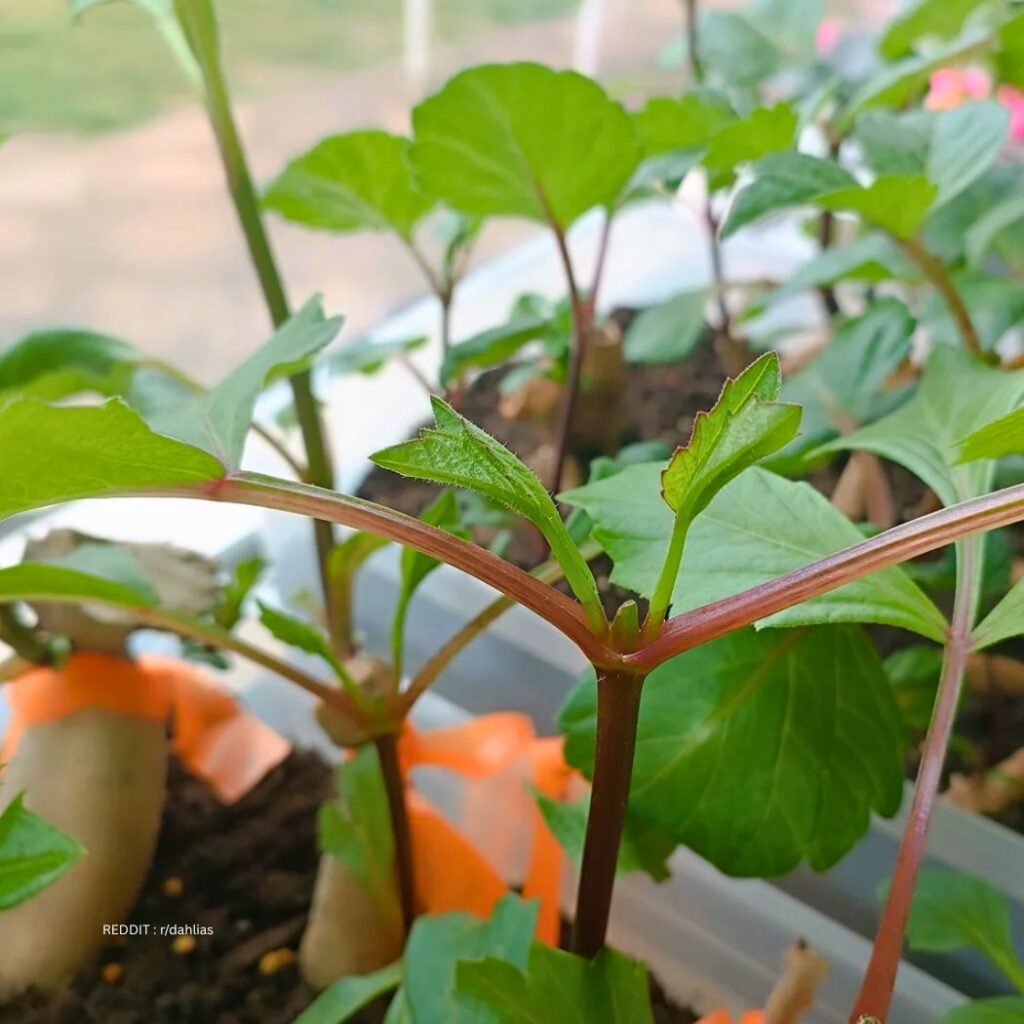
I use early pinching to shape dahlia plants, then cut flowers often to keep new buds coming. These jobs serve different purposes, but both help the plant spend energy on fresh growth.
Deadheading Versus Pinching Dahlias
I deadhead dahlias after flowers fade. I follow the stem below the spent bloom to the first strong set of leaves or a side shoot, then make a clean cut.
Leaving the old flower in place can slow new dahlia buds because the plant may start making seeds instead.
Pinching dahlias happens much earlier. When a young plant has three or four sets of true leaves, I snip out the small center tip just above a pair of leaves.
Two new stems usually grow from that spot.
Quick Tip: I pinch only healthy plants with firm stems and active new growth. I don’t pinch weak plants, recently transplanted plants, or plants stressed by heat or dry soil.
In short growing seasons or cool zones, I pinch early, often by late spring. Pinching too late can delay the first dahlia flowers.
Harvesting Dahlias as Cut Flowers
I treat cutting dahlias as part of deadheading. When I cut a flower at its best, I remove the stem far enough down to encourage side shoots and more blooms.
A short cut leaves a bare stub and wastes a useful stem.
I harvest in the cool morning or evening, when stems feel crisp and flowers hold their shape. I choose blooms that are fully open or nearly open; tight dahlia buds usually don’t open well in a vase.
The center should show color and look firm, not green and tightly closed.
Quick Tip: I place cut stems in clean water right away. I also remove leaves that would sit below the water line, since wet leaves can rot.
I check plants every two to three days during peak bloom. Regular cutting keeps old flowers from turning brown and leaves fewer fading blooms hidden among the fresh ones.
Choosing Between More Flowers and Larger Blooms
I decide what I want from each dahlia plant before I start cutting. For more, smaller flowers, I let several side buds grow and harvest often. This works well for border dahlias and dahlias used as cut flowers in mixed bouquets.
For fewer but larger blooms, I disbud the plant. I keep the center bud at the end of a stem and remove the two smaller side buds beside it while they’re pea-sized. The remaining flower gets more of the plant’s energy.
Quick Tip: I don’t disbud every stem unless I want show-size flowers. It takes time, and the plant will make fewer blooms.
I keep watering steady during hot, dry weather, especially while buds form. If the top inch of soil is dry, I water deeply at the base so the plant can support its flowers without drooping.
Keep Plants Healthy Between Trimming Sessions
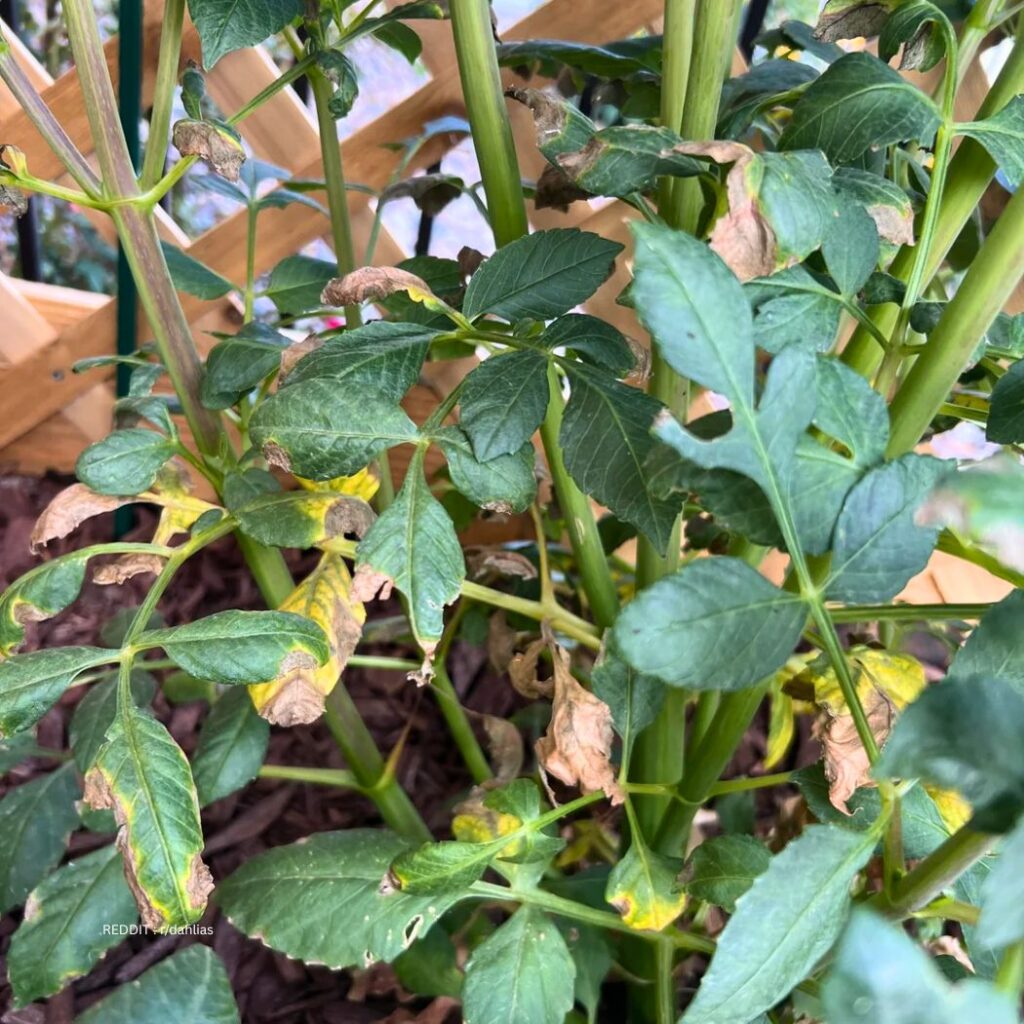
Between deadheading sessions, I keep the plant open, clean, and checked often. Good airflow, early pest control, and a clear fall plan help dahlias keep making flowers.
Improving Airflow and Removing Debris
Every few days, I remove spent flowers, fallen petals, and yellow leaves from the soil. Wet plant pieces can trap moisture around stems, especially after rain or heavy watering.
I also cut off leaves that touch the ground and remove crowded stems near the center of the plant. This lets air move through the foliage and helps leaves dry faster in humid weather.
Quick Tip: I water the soil at the base in the morning, not the leaves. If the top inch of soil feels dry, I water deeply.
Good airflow lowers the chance of powdery mildew, which looks like pale gray or white dust on leaves. I avoid removing too much healthy foliage at once because the plant still needs leaves to make energy.
Watching for Pests and Disease
I check the undersides of leaves twice a week for aphids, small green or black insects that cluster on soft new growth. A strong spray of water often knocks them off before they become a bigger problem.
I look for slugs after damp nights. They leave shiny trails and chew ragged holes in leaves, buds, and spent flowers. I hand-pick them in the evening or use slug bait labeled for garden use.
Quick Tip: I remove badly spotted or mildewed leaves and put them in the trash, not in my compost pile.
For pest control, I inspect buds before they open and watch for sticky leaves, curled growth, or dark spots. Longfield Gardens also recommends keeping the area around dahlias free of weeds and plant debris because both can shelter pests.
End-of-Season Choices for Seeds and Tubers
I stop deadheading a few flowers only if I want seeds. I leave selected blooms on the plant until the flower head dries and turns brown. Seeds may not grow true to the parent plant, so the new flowers can look different.
Dahlias came from Mexico and nearby parts of Central America, though gardeners also grow them across South America and many other regions. In cold zones, I protect dahlia tubers from freezing soil.
Quick Tip: I label my best plants before frost so I know which tubers I want to save.
After the first hard frost blackens the foliage, I cut the stems back and lift the tubers after several dry days. In warm, frost-free areas, I can often leave tubers in the ground if drainage is good.
Frequently Asked Questions
I deadhead faded blooms as soon as they look dull, brown, or droopy. I also cut stems at the right leaf joint, which helps the plant send energy into new flower buds.
When is the best time to deadhead dahlias?
I deadhead dahlias every few days during the growing season. I remove blooms once the petals fade, curl inward, or feel dry and papery.
Quick Tip: I check plants twice a week, especially after rain or hot weather, when blooms can fade fast.
In cool areas, dahlias may keep flowering into fall. In warmer zones, summer heat can slow blooming for a while, even with regular deadheading.
How do I remove spent dahlia blooms correctly?
I use clean, sharp pruners or scissors. I follow the stem below the faded flower until I find the first strong set of leaves or a side branch, then cut just above it.
Quick Tip: I look for the round, pointed new bud before cutting. I don’t want to snip it by mistake.
A spent flower often has a thicker, cone-shaped base. A new bud looks rounder and tighter, like a small green marble.
Where should I cut a dahlia stem to encourage more flowers?
I cut the stem down to the next leaf node or branching point, not just below the old flower head. This leaves a neat stem and helps new side shoots grow.
Quick Tip: I make my cut about 1/4 inch above a pair of leaves or a branch junction.
A short snip leaves a bare stem behind. That stem won’t make a new flower, so I cut lower when I can.
Will cutting dahlias for bouquets help them bloom more?
Yes, I can cut dahlia stems for bouquets, and it works much like deadheading. Removing open flowers stops the plant from trying to make seeds.
Quick Tip: I cut flowers early in the morning, when stems feel firm and the air is cool.
I choose blooms that are fully open because dahlia buds don’t open much after cutting. I also strip off leaves that would sit below the water line.
Do dahlias bloom again after deadheading?
Yes, dahlias usually make more blooms after I deadhead them. New buds often open within two to three weeks, depending on sun, water, and weather.
Quick Tip: I keep the soil evenly moist, especially when the top inch feels dry.
Cool nights and early fall frost can slow or stop flowering. In short-season areas, I deadhead often so plants use their remaining warm days well.
Why are my dahlias growing leaves but not producing flowers?
I check whether my dahlias get at least six to eight hours of direct sun. Too much shade can lead to lots of green leaves but few or no flowers.
Quick Tip: I avoid using high-nitrogen lawn fertilizers near dahlias. They encourage leafy growth instead of blooms.
Young plants may simply need more time to form buds. Crowded plants, dry soil, damaged roots, and long spells of extreme heat can delay flowering, too.