
I keep my poinsettia healthy indoors with bright, indirect light, careful watering, and steady warmth away from drafts.
Quick Tip: I water when the top inch of soil feels dry, but I never let the pot sit in water.
This holiday plant, Euphorbia pulcherrima, comes from Mexico and Central America. Cold windows and dry heat can really mess with it.
I watch for yellow leaves, drooping stems, and tiny pests before they spread.
Set Up the Right Indoor Location
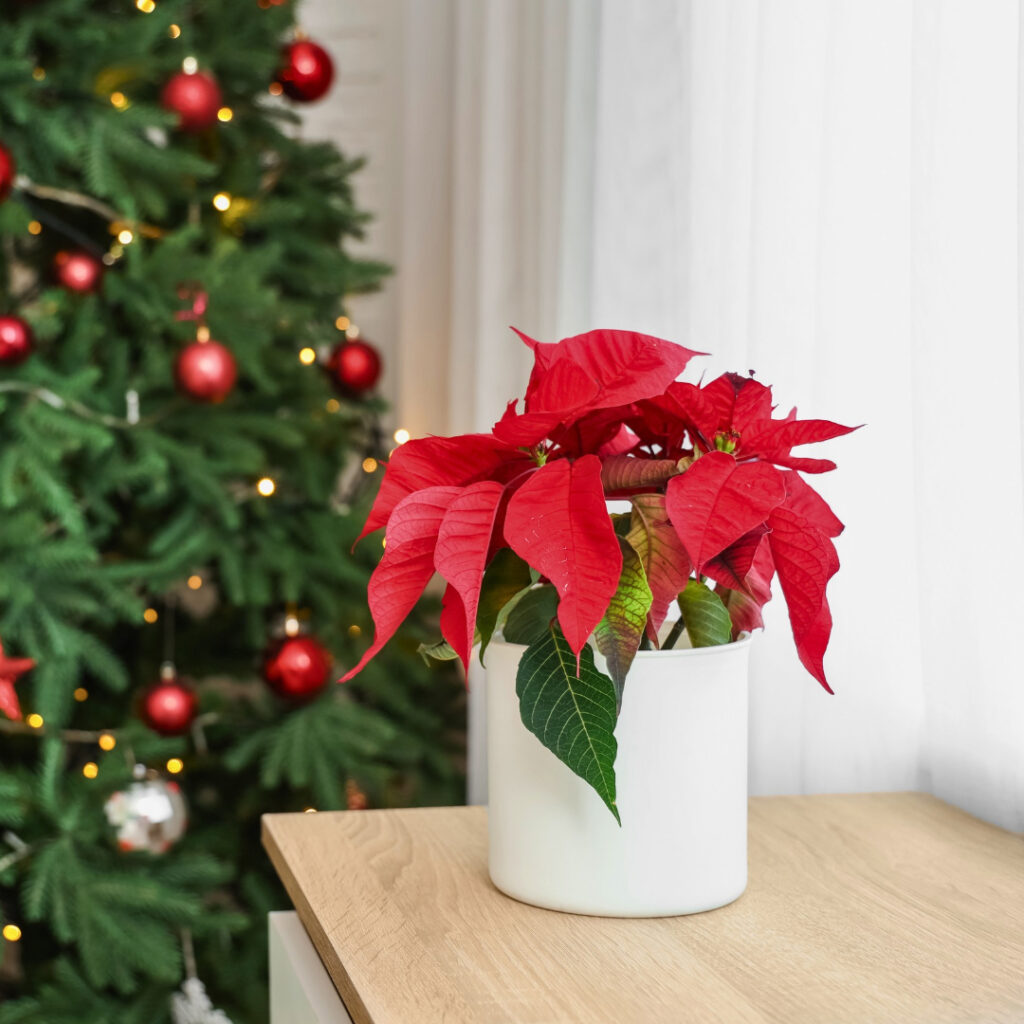
I place my poinsettia where it gets soft light, stable warmth, and protection from chilly air.
A good spot helps the colored bracts stay bright and the leaves stay full.
Provide Bright, Indirect Sunlight
I give my poinsettia indoors bright, indirect sunlight for about six hours each day.
Direct afternoon sun can scorch the leaves or fade the red, pink, or white bracts.
An east-facing window often works well because it provides gentle morning sun.
I can also place the plant a few feet back from a south- or west-facing window, especially if strong light hits the glass.
If my room has weak winter light, I use a grow light.
I keep it about 12 to 18 inches above the plant and run it for several hours daily.
Quick Tip: I watch the leaves.
Pale growth may mean too little light, while dry, faded patches can mean too much direct sun.
Choose a Safe Window Location
I keep my poinsettia near a window, but not pressed against cold glass.
In winter, glass can feel icy at night, even when the room seems warm.
I avoid spots beside exterior doors, open windows, and air vents.
Cold drafts can cause leaves to yellow and drop, which is a rude surprise after the plant looked fine the day before.
A north-facing window may not provide enough light unless it stays very bright.
In cloudy areas or colder zones, I move the plant closer to better daylight or add a grow light.
Quick Tip: I leave at least a few inches between the pot and the windowpane so cold air does not reach the roots and leaves.
Keep Temperatures Steady
I keep my poinsettia in a room with an indoor temperature of about 65°F to 75°F during the day.
At night, it can handle slightly cooler conditions, but I avoid temperatures below 60°F.
Temperature swings stress poinsettias more than many houseplants.
I do not place mine near a radiator, fireplace, stove, or heating vent, where hot, dry air can hit the leaves.
I also move it away from windows during severe cold snaps.
If the room feels drafty on my hand, the plant will notice it too.
Quick Tip: I choose a spot where the temperature stays steady, not one that swings from cold to hot every few hours.
Water Without Soaking the Roots
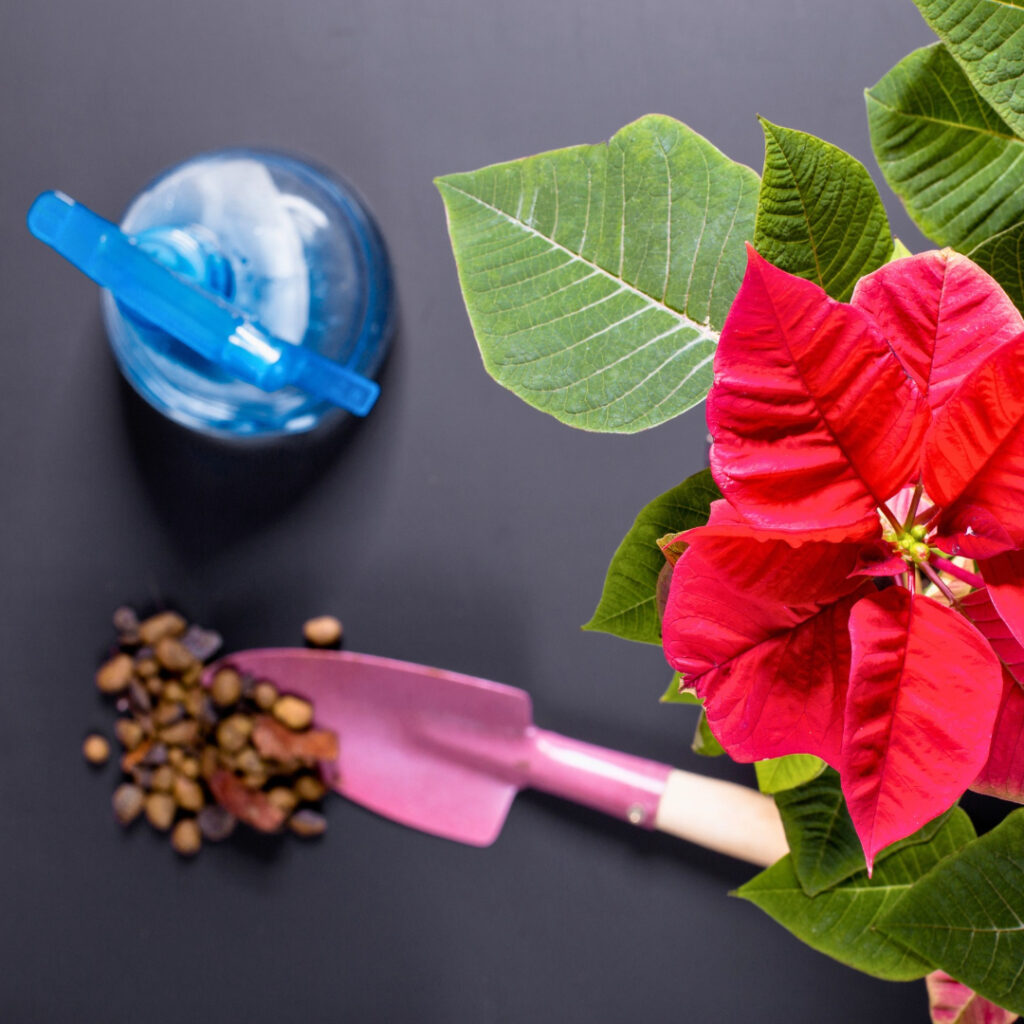
I water poinsettias when the soil starts to dry, not on a fixed schedule.
Good drainage and a quick check of the pot help me prevent soggy roots, yellowing leaves, and wilted poinsettia leaves.
Check Soil Before Watering
I press a finger about 1 inch into the potting soil before I water.
If it feels dry at that depth, I water slowly. If it still feels cool or damp, I wait a day or two and check again.
A poinsettia may need water more often in a warm, sunny room and less often in a cool room or near a north-facing window.
Dry indoor heat can speed up water loss, while cloudy winter days slow it down.
Quick Tip: I lift the pot before watering.
A light pot often means the soil has dried enough, while a heavy pot usually still holds plenty of water.
I use room-temperature water and pour it evenly over the soil surface.
Cold water can stress the plant, especially when the room is already cool. I stop when a little water runs from the drainage holes.
Drain Excess Water Completely
I never let my poinsettia sit in standing water.
Water trapped under the pot keeps roots wet, and that can lead to root rot.
Many store-bought poinsettias come wrapped in decorative foil.
The foil looks nice, but it can act like a tiny bathtub. I remove the pot from the foil before watering, or I punch drainage holes in the foil and empty it afterward.
Quick Tip: I let the pot drain in a sink for 10 to 15 minutes before placing it back in its saucer or foil cover.
I also empty the saucer after each watering.
The roots need air as well as moisture, so good drainage matters just as much as the amount of water I add.
Avoid Common Watering Mistakes
I avoid watering a little every day.
Small, frequent drinks can leave the lower soil wet while the top looks dry. Instead, I water thoroughly when the soil needs it, then let excess water drain away.
Overwatering often causes yellowing leaves, soft stems, or leaves that drop even though the soil feels wet.
Underwatering can make poinsettia leaves droop, curl, or feel thin and dry. The plant is not being dramatic; it is giving me a useful clue.
Quick Tip: I check the soil before I react to drooping leaves.
Both overwatering and underwatering can cause droop, so guessing can make the problem worse.
I also keep water off the leaves when possible.
Wet foliage in a cool room can stay damp for too long. I water the soil near the base of the plant instead.
Use the Right Soil and Humidity
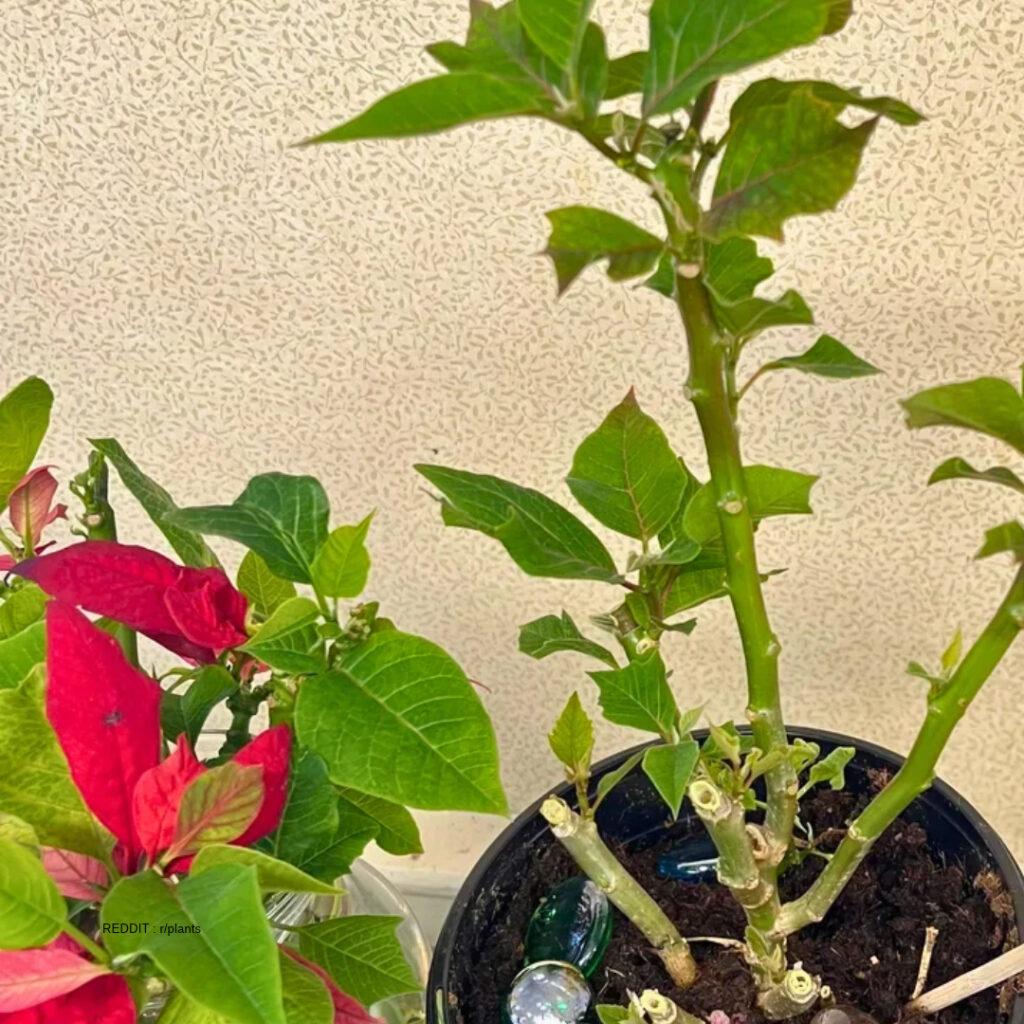
I use loose soil that drains fast, then add moisture to the air when winter heat turns rooms dry.
Wet roots and dry air can both cause trouble, so I watch for simple signs.
Select a Well-Draining Potting Mix to Protect Sensitive Roots
I plant my poinsettia in a well-draining potting mix made for houseplants.
A standard indoor potting mix works well if the pot has drainage holes and excess water can run out freely.
I avoid heavy garden soil. It holds too much water, packs down hard, and can leave roots sitting in cold, soggy soil. That is a quick path to yellow leaves and root rot.
If my mix feels dense or stays wet for many days, I mix in perlite or coarse bark.
I also empty the saucer about 15 minutes after watering. Nobody wants roots soaking in a tiny swamp.
Quick Tip: I check the top inch of soil with my finger.
If it feels dry, I water slowly until a little water drains from the bottom.
Raise Humidity During Dry Winter Weather Without Soaking Leaves
I keep my poinsettia away from heating vents, fireplaces, and radiators.
Warm indoor air can feel dry, especially during winter, and the leaf edges may turn brown or crisp.
I run a humidifier nearby when indoor air feels dry.
I aim for moderate humidity, around 40% to 60%, without placing the plant directly in the mist stream.
A pebble tray can also help a little.
I fill a shallow tray with pebbles and water, then set the pot on the pebbles—not in the water. As the water evaporates, it adds moisture close to the plant.
I skip regular misting.
Wet leaves can develop spots or fungal problems when air movement is poor. In mild outdoor winter areas, indoor heating may matter less, but I still keep the plant away from cold drafts.
Quick Tip: I group poinsettias with other houseplants to create a slightly more humid pocket of air.
Maintain Your Plant After the Holidays
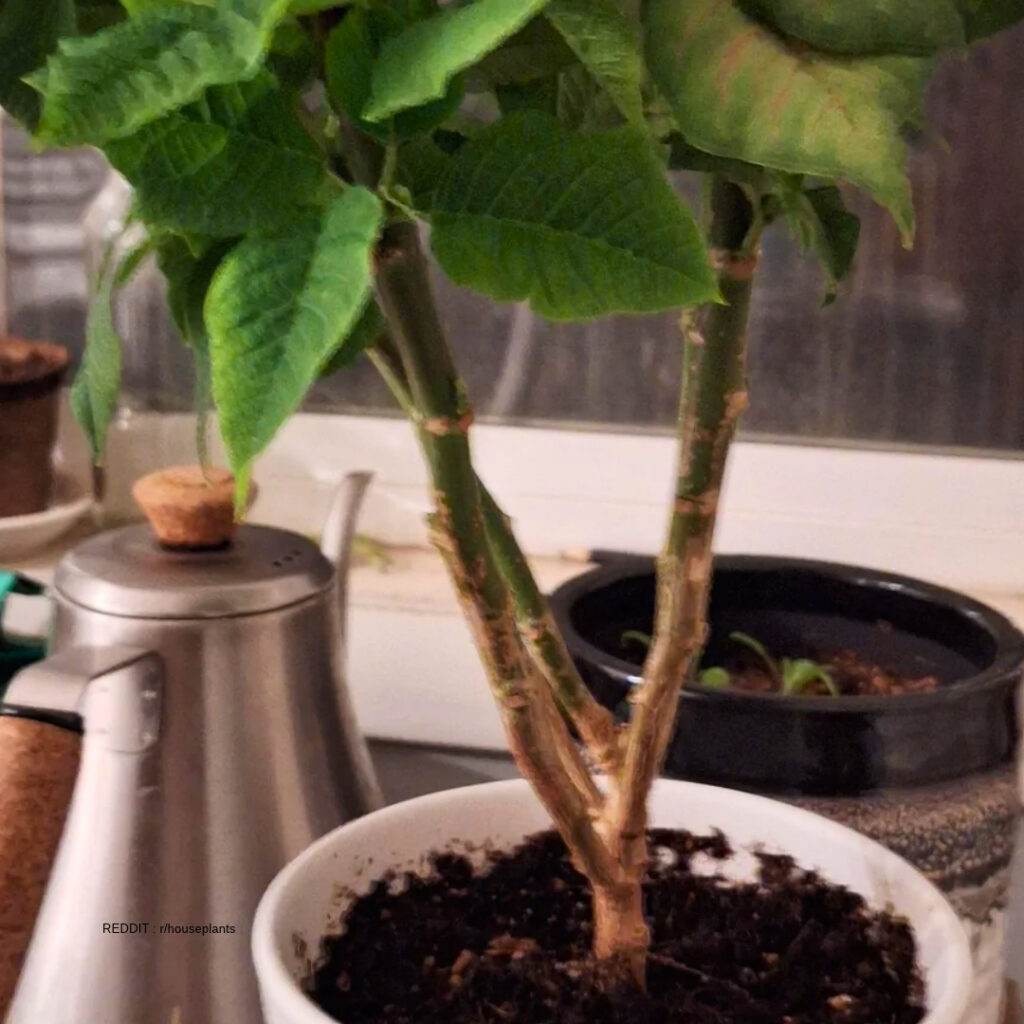
I help my poinsettia rest, then I feed, prune, and repot it at the right times.
With healthy stems and steady care, I can also start new plants from cuttings.
Know When to Fertilize
I stop fertilizing while my poinsettia still has colorful bracts and grows slowly in winter.
The plant uses less food during this time, so extra fertilizer can build up in the soil and stress the roots.
I begin feeding in spring when I see fresh green leaves or new stem growth.
I use a balanced fertilizer, such as 10-10-10 or 20-20-20, mixed at half the label strength. I apply it every two to four weeks after watering.
Quick Tip: I never fertilize dry soil.
I water first, then feed the plant while the root ball is damp.
I stop feeding in early fall if I plan to help my red poinsettia form colored bracts again.
In warm outdoor zones, I may keep feeding lightly while it actively grows, but I stop if nights turn cool.
Prune and Repot for New Growth
I prune my poinsettia in late winter or early spring, after the colored bracts fade and fall.
I cut each stem back to about 4 to 6 inches tall, leaving a few leaf buds on each stem. The bare look seems harsh, but it makes room for fuller growth.
Quick Tip: I use clean, sharp pruners and wear gloves.
The milky sap can irritate skin and leave a sticky mess.
I repot only when roots fill the pot, circle the bottom, or push through drainage holes.
I move the plant into a pot just 1 to 2 inches wider, with drainage holes and fresh, loose potting mix.
I keep the plant in bright, indirect light after pruning.
I water when the top inch of soil feels dry. Soggy soil is a bigger problem than a missed day of watering.
Propagate Healthy Cuttings
I take cuttings in late spring or summer, when new stems feel firm and green.
I choose a healthy stem without flowers or damaged leaves, then cut a 3- to 5-inch piece just below a leaf joint.
I remove the lower leaves and leave two or three leaves at the top.
I dip the cut end in rooting hormone if I have it, then place it in a small pot of moist seed-starting mix.
Quick Tip: I cover the pot loosely with a clear plastic bag to hold humidity, but I keep the bag off the leaves and open it daily for fresh air.
I keep cuttings warm in bright, indirect light.
The mix should feel lightly damp, not wet. New leaves or gentle resistance when I tug the cutting usually show that roots have formed.
Troubleshoot Leaf Problems, Pests, and Disease
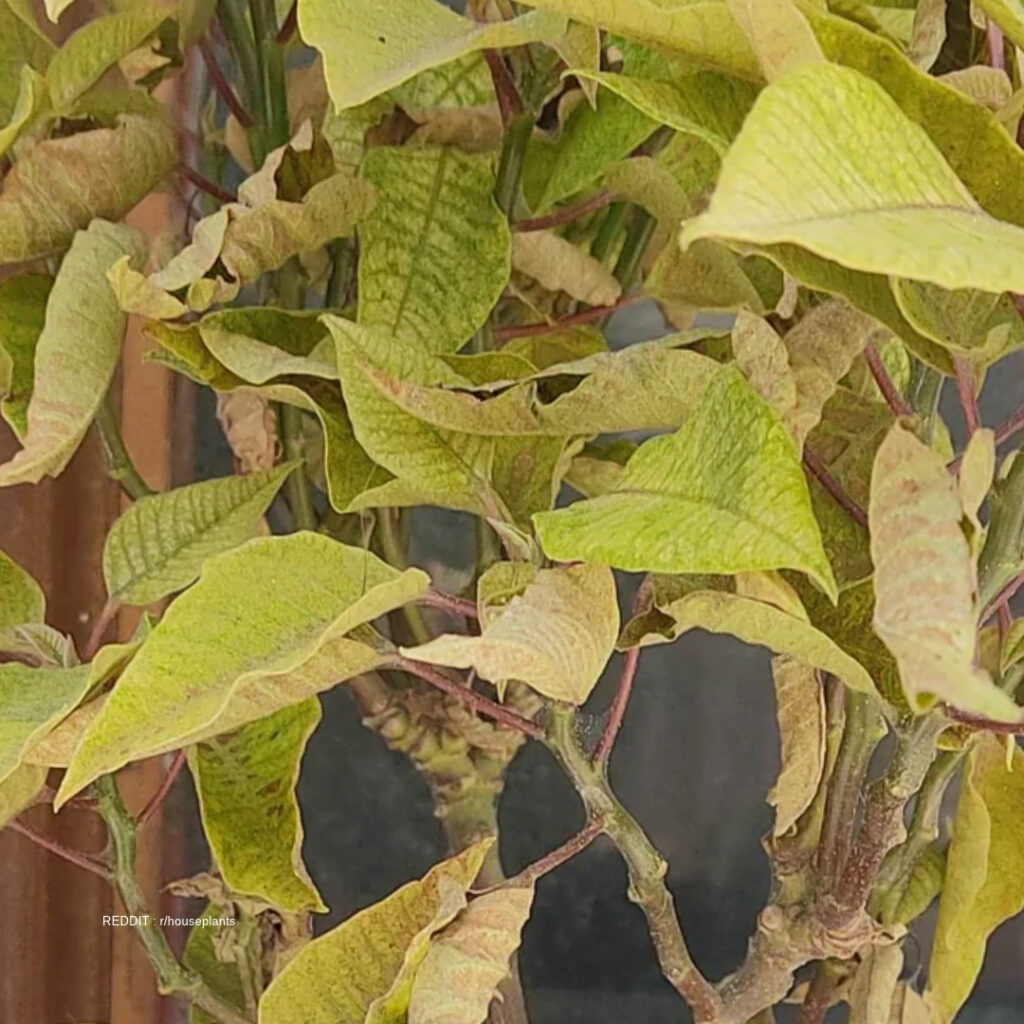
I watch leaf color, soil moisture, and stems for early signs of trouble.
Most problems improve when I adjust watering, remove pests quickly, and keep leaves dry.
Diagnose Yellowing and Dropping Leaves
Yellowing leaves often point to overwatering.
If the soil feels wet, heavy, or sour-smelling, I stop watering and empty the saucer. Constantly wet soil can cause root rot, which makes roots brown, soft, and weak.
Quick Tip: I water only when the top inch of soil feels dry, then let all extra water drain away.
Underwatering can also cause yellowing and leaf drop.
The soil may pull away from the pot edge, and leaves can feel thin or limp. I water slowly until it runs from the drainage holes.
Cold drafts also make poinsettias drop leaves.
I keep mine away from doors, cold glass, and heating vents. A steady room temperature works best.
Treat Common Indoor Pests
I check under the leaves and around stem joints every week. Aphids crowd onto fresh growth, and whiteflies burst up in a tiny cloud when I nudge the plant.
Mealybugs look like little bits of white cotton. Spider mites spin fine webbing and leave pale, speckled spots, especially when my indoor air gets dry.
Quick Tip: I always move a pest-covered poinsettia away from my other plants right away.
I rinse off small pest groups with lukewarm water. If things look worse, I spray insecticidal soap on both sides of the leaves and along the stems.
I repeat the spray every 5 to 7 days, just like the label says. If that doesn’t help, I’ll try neem oil, but never in direct sun.
I always test neem oil on one leaf first, since poinsettias can be a little picky.
Prevent Fungal Problems
Fungal issues pop up when leaves stay wet or the air feels too still. Powdery mildew makes dusty white or gray patches on leaves and stems.
I snip off those leaves with clean scissors and toss them out. Quick Tip: I water the soil, not the leaves, and make sure air can move around the plant.
I skip misting, especially in a cool room. I also keep my poinsettia away from damp windows during cold, rainy spells, since condensation likes to hang around on the leaves.
If I spot root rot, I pull the plant from its pot and check the roots. I cut away any soft, dark bits and repot in fresh mix with good drainage in a clean pot.
Encourage Color Again Next Winter
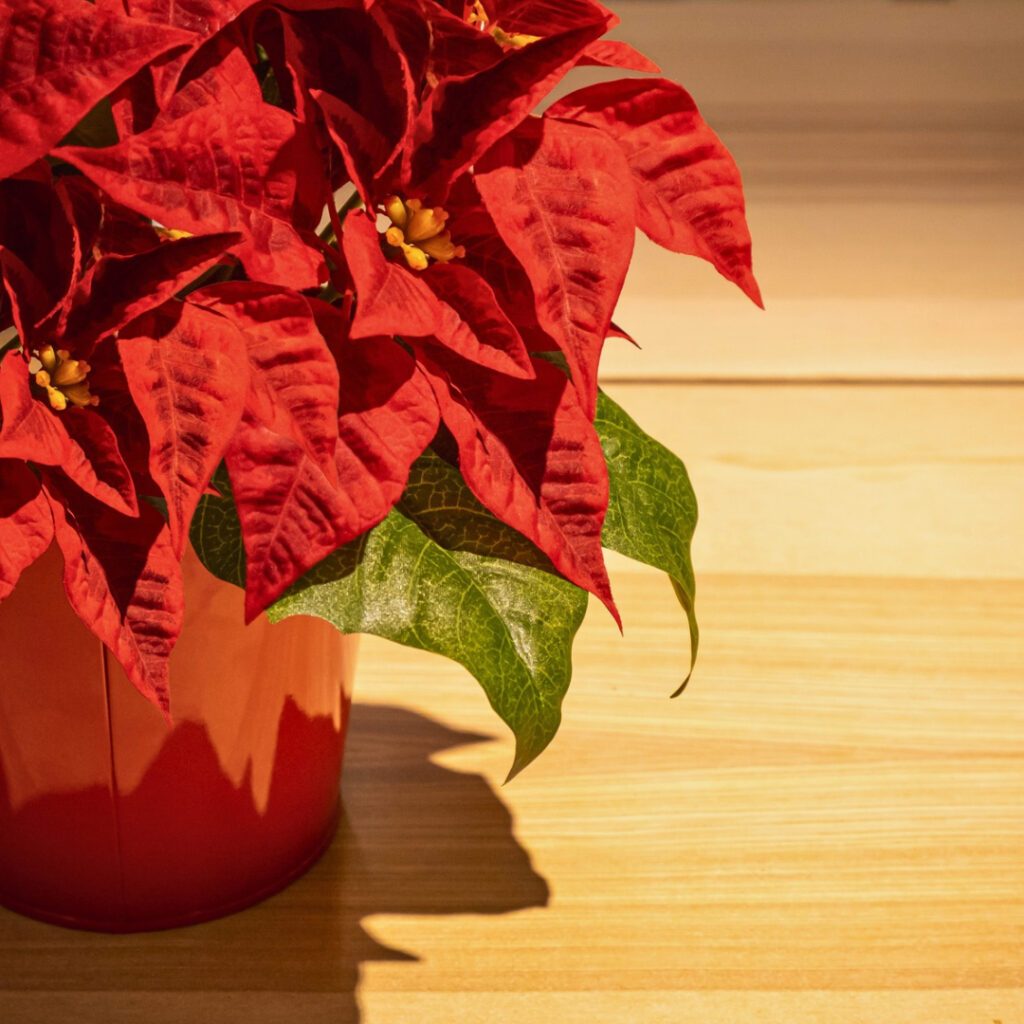
I give my poinsettia long, dark nights in the fall to help it grow new colored bracts. Those red, pink, or white parts? They’re actually just fancy leaves, and the plant needs a steady routine to change color again.
Follow the Short-Day Darkness Schedule
I start the darkness routine in late September or early October. For 8 to 10 weeks, I make sure the plant gets 14 to 16 hours of total darkness every day, then bright daylight for 8 to 10 hours.
I usually stash it in a dark closet from about 5 p.m. to 8 a.m. A box works too, as long as it doesn’t squish the leaves.
Even a bit of hallway light or a TV glow can mess up the schedule. Poinsettias are kind of stubborn about this, honestly.
Quick Tip: I set a phone alarm so I don’t forget the dark time.
During the day, I put the plant near a sunny window, but not pressed against cold glass or near heat vents. I only water when the top inch of soil feels dry and let any extra water drain away.
Return to Normal Light Once Bracts Color
When the bracts show strong color, usually late November or December, I stop the darkness routine. I move the poinsettia into bright, indirect light during the day and let it have normal night darkness.
Some poinsettias color up faster than others. If mine stays green after a few weeks, I double-check for stray light at night.
Quick Tip: I keep the colored bracts looking good by keeping the room between 60°F and 70°F.
I avoid cold drafts from doors and windows. If my house gets chilly at night, I move the plant a few feet away from the glass.
Frequently Asked Questions
I keep my poinsettias happy with steady light, careful watering, and warm rooms. If leaves drop, I usually find wet soil, cold spots, or sudden changes are to blame.
How often should I water a poinsettia indoors?
I poke the soil every few days and water when the top inch dries out. I water slowly until some drains out, then dump the saucer.
Quick Tip: I never let the pot sit in water. Soggy roots rot fast.
How much sunlight does a poinsettia need inside?
I keep mine near a bright window with indirect light for at least 6 hours a day. East-facing windows seem to work best for me.
I steer clear of harsh afternoon sun, especially by south or west windows. Hot glass can burn the leaves.
Quick Tip: If the leaves feel hot or look faded, I move the plant back a bit.
What temperature is best for keeping a poinsettia healthy?
I aim for a room between 65°F and 75°F during the day. At night, 60°F is fine too.
I keep it away from cold windows, open doors, heating vents, and fireplaces. Poinsettias really don’t like sudden temperature swings.
Quick Tip: I never leave one in a cold car, not even for a quick stop. Chilly air makes leaves drop fast.
How long will a poinsettia last indoors?
With decent care, I can keep the colorful bracts looking good for weeks or even a couple months. The small yellow flowers in the center usually fade out first.
The plant itself can outlive the holidays by a long shot. The bright red, pink, or white parts are actually leaves, not flower petals.
Quick Tip: I pull off faded leaves and try to keep the plant in one spot, rather than moving it around.
Why are my poinsettia’s leaves turning yellow or falling off?
I always check the soil first. Yellow leaves usually mean I watered too much, while crispy ones mean the plant’s thirsty.
Cold drafts, low light, or moving the plant suddenly can also make leaves drop. Sometimes poinsettias are just a little dramatic about change.
Quick Tip: I check for a cold window or heat vent before messing with my watering routine.
How can I keep my poinsettia alive for next year?
I keep watering it and make sure it gets bright, indirect light after those colorful bracts fade. When spring rolls around, I trim the stems back to about 4 to 6 inches.
If the plant looks rootbound, I’ll repot it. Once the frost danger is gone, I move it outside—but I stick to partial shade at first.
In colder climates, I bring the poinsettia back inside before nighttime temps dip below 50°F. It’s a bit of a hassle, but it’s worth it.
Quick Tip: Starting in late September or early October, I give the plant 14 hours of total darkness every night for 8 to 10 weeks. It’s a weird ritual, but it really helps bring back the color.