
Water established roses deeply about once or twice a week, and water new roses more often while their roots grow. That’s a useful starting point, but your soil gets the last word.
I check the top inch of soil before watering. If it feels dry, I water; if it feels damp, I wait. Hot weather and sandy soil can dry it out faster, while rain or cool weather may let me skip a watering.
Quick Tip: Water at the base until the soil feels moist several inches down, and try to keep the leaves dry. If your roses droop or their leaves turn yellow, check the soil before reaching for the hose.
A Simple Watering Schedule for Your Roses
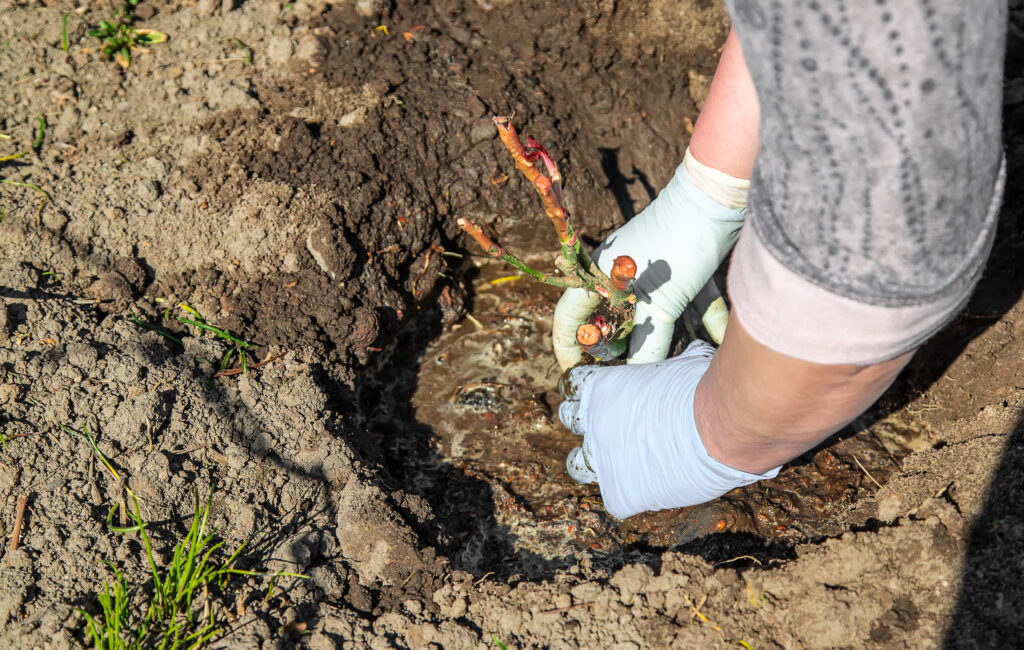
I give established roses a deep drink about once a week, but I check the soil before turning on the hose. New plants and potted roses need more frequent checks, especially in hot weather.
Established Roses in the Ground
I aim to give established roses in the ground about 1 inch of water per week, including rain. I water slowly at the base of each plant so the water reaches the roots instead of running off.
Before watering, I push a finger about 2 inches into the soil. If it feels damp, I wait. If it feels dry, I give the rose a deep soak rather than a quick splash. In hot, dry weather, I may split the water into two sessions.
Quick Tip: I use a rain gauge or a straight-sided cup to see how much rain my roses got that week.
Newly Planted Roses
I check newly planted roses every day or two for the first few weeks. Their roots haven’t spread far yet, so I keep the soil around the root ball lightly moist, not soggy.
I usually water two or three times a week, slowly enough to soak both the root ball and the soil beside it. I check the top inch first. If it still feels cool and damp, I skip the hose.
Hot sun or wind may dry the soil faster, while steady rain may do the job for me.
Quick Tip: I check beneath the mulch before watering. The surface can look dry while the soil below still feels damp.
Roses Growing in Containers
I check container roses more often because pots dry out faster than garden soil. When the top inch of potting mix feels dry, I water until some runs from the drainage holes. Then I empty any water left in the saucer.
In summer heat, I may need to water a pot every day, or even twice on a very hot, windy day. In cool weather, I often wait several days. I let the soil guide me instead of following a fixed calendar.
Quick Tip: I lift a small pot before watering. A light pot often needs water; a heavy one may still be wet.
Check the Soil Before You Water
I check the soil before watering my roses because a dry surface can hide damp soil below. When the soil needs water, I give it enough to reach the roots, not just wet the top.
How to Test Soil Moisture
I push a finger about 2 inches into the soil near the rose, away from its main stem. If the soil feels cool and damp, I wait. If it feels dry and crumbly at that depth, I water.
I check more often during hot, windy weather and after long dry spells. Rain can wet the surface without soaking the roots, so I still test the soil. Roses in pots can dry out faster than roses in the ground, especially in full sun.
Quick Tip: I test a few spots around a large rose. Shade and sun can leave the soil wetter on one side than the other.
How Much Water to Give Each Time
I water slowly at the base of the rose so the water sinks in rather than running off. For a rose in the ground, I start with a few gallons, then check whether the soil feels moist 6 to 8 inches down. A small new rose may need less than a large, established one.
For a potted rose, I water until I see water drain from the bottom. Then I empty the saucer so the roots don’t sit in water. I let the soil dry slightly before watering again.
Quick Tip: If water pools on the surface, I pause and let it soak in before adding more.
Adjust for Weather, Seasons, and Soil
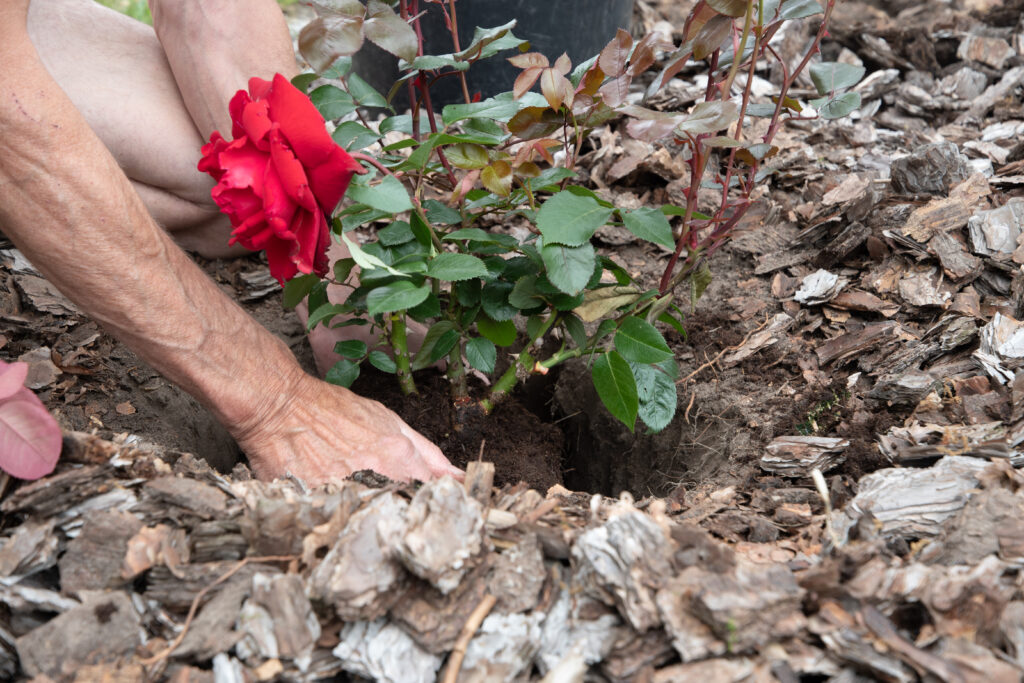
I check soil moisture before watering my roses. Hot wind can dry the soil fast, while rain, heavy clay, and cool weather can keep it wet for days.
Hot, Dry Weather and Rainy Weeks
In hot, dry weather, I check the soil every day or two. If it feels dry a few inches down, I water deeply at the base of the rose. A quick splash may wet the surface without reaching the roots.
Wind can dry the soil even when the air doesn’t feel hot. After a rainy week, I skip my usual watering day and check the soil instead. I also look under the leaves because they can block light rain from reaching the ground.
Quick Tip: I push a finger a few inches into the soil before watering. If it still feels cool and damp, I wait.
Sandy Soil, Clay Soil, and Drainage
Sandy soil feels gritty and lets water drain fast. I check it more often, especially during summer, because it may dry out sooner than other soil. A layer of mulch helps my soil hold moisture longer.
Clay soil holds water longer. I water it more slowly so the water can soak in instead of running across the surface. Then I wait until the soil starts to dry before watering again.
Quick Tip: If water sits around my rose for hours after rain, I check the drainage. Roses need moist soil, not roots that stay soggy.
Cooler Months and Winter Dormancy
As days cool and growth slows, I water less often. I still check the soil, since a dry fall can leave roses short of water before winter. I water when the ground feels dry a few inches down.
In winter, dormant roses need far less water than roses in active growth. If the ground is frozen, I don’t water because the water can’t soak in. In mild areas where the ground stays soft, I check soil moisture during long dry spells.
Quick Tip: I check potted roses through winter, too. Their small amount of soil can dry out even when garden beds stay damp.
Water Deeply Without Wetting the Leaves
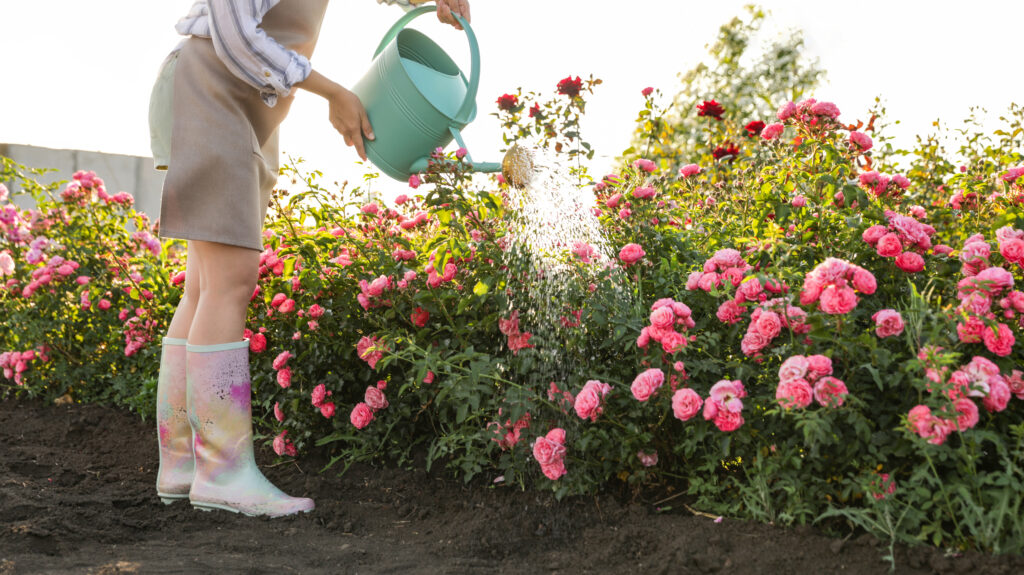
I water roses slowly at the soil, not over the leaves. I aim to soak the roots, then let the top inch of soil dry before watering again.
Why Morning Watering Works Well
I water in the morning so the soil can take in moisture before the day gets hot. If I splash a leaf, it has time to dry. Wet leaves can help black spot spread, especially in damp weather.
I check the soil before I start. If the top inch feels dry, I water slowly and check that the soil is moist several inches down. A quick sprinkle may look like enough, but it often leaves deeper roots dry.
Quick Tip: I point the water at the soil and keep it off the leaves. During a heat wave, I may check the soil again later in the day.
Using Drip Irrigation, Soaker Hoses, or a Watering Can
I use drip irrigation or a soaker hose when I want water to reach the soil slowly. I place the line near the roots, a little away from the main stems. Then I check the soil after the water runs; wet ground on top doesn’t always mean the water reached deep enough.
With a watering can, I remove any spray head that scatters water over the leaves. I pour gently around the base of the rose, pause to let the water sink in, and pour again if the soil is still dry below the surface.
Quick Tip: I look for puddles or water running off. If I see either one, I slow down so more water reaches the roots.
Watering Pots Until They Drain
When I water roses in containers, I pour slowly until water runs from the drainage holes. That tells me the water has moved through the pot, though I still check the soil if it dried out completely. Very dry potting mix can pull away from the pot’s edge and let water slip straight through.
I empty the saucer after the pot drains. I don’t leave the roots sitting in water. Pots also dry faster in hot or windy weather, so I check them more often instead of following a fixed schedule.
Quick Tip: If water rushes out of a very dry pot, I wait a few minutes and water it again, slowly.
Spot and Fix Watering Problems
I check the soil before changing my rose watering routine. Drooping leaves can mean dry roots or soggy ones, while leaf spots may point to disease instead.
Signs Your Roses Need More Water: I Check Below the Surface
When my rose needs water, its leaves may droop, curl, or feel dry at the edges. Blooms may wilt sooner than usual. On a hot afternoon, though, leaves can droop even when the soil is moist, so I check before reaching for the hose.
I push a finger about 2 inches into the soil near the plant. If it feels dry there, I water slowly at the base until the soil is moist below the surface. A quick splash may wet the top while leaving deeper roots dry.
Quick Tip: I check soil moisture again the next morning. If the leaves still droop and the soil feels moist, I look for another cause instead of adding more water.
Signs the Soil Is Staying Too Wet: I Give the Roots a Break
Wet soil can also make my rose droop. I look for yellow leaves, soft stems near the base, or soil that still feels soggy days after watering. A sour smell is another clue that water is sitting too long.
I pause watering until the top few inches begin to dry. I also check whether a sprinkler runs too often or water pools around the plant. If my rose grows in a pot, I make sure water can drain out of the bottom.
Quick Tip: I skip my usual watering after steady rain. In cool weather, soil often dries more slowly; in hot, dry weather, I check it more often.
When Leaf Spots Are Not a Watering Signal: I Look for a Pattern
Spots on leaves don’t always mean I watered too much or too little. Black spot, a common rose disease, often makes dark, round spots with uneven edges. The leaves may turn yellow and fall, even when the soil moisture is right.
I remove spotted leaves and pick up fallen ones so they don’t sit under the rose. When I water, I aim at the soil instead of spraying the leaves. I also leave room around the plant for air to move through its branches.
Quick Tip: I test the soil before changing my watering schedule. If the moisture feels right but new spots keep appearing, I treat them as a leaf problem, not a request for more water.
Frequently Asked Questions
I check the soil before watering my roses. Pots dry faster than garden beds, while cool or rainy weather can keep both wet longer.
How often should I water roses in pots?
I check potted roses every day in warm weather. If the top inch of soil feels dry, I water until it runs from the drainage holes.
A small pot in full sun may need water daily. A large pot in cool weather may need it only every few days.
Quick Tip: I lift the pot when I’m unsure. A light pot often needs water.
How often should I water roses planted in the ground?
I water established roses deeply about once or twice a week when rain is scarce. I check the soil a few inches down first; if it still feels damp, I wait.
I water newly planted roses more often while their roots grow. I keep the soil moist, not soggy.
Quick Tip: I water at the base so the water reaches the roots.
How often do roses need water in summer?
I check my roses two or three times a week in summer, and more often during hot, dry spells. Roses in sandy soil or hot, dry areas may need water more often.
I water deeply when the soil feels dry a few inches down. A quick splash can leave the roots dry.
Quick Tip: I water early in the day, before the afternoon heat.
How often should I water roses in winter?
I water dormant roses only when the soil is dry and unfrozen. In a dry winter, I might water every two to four weeks, though steady rain may do the job for me.
I check potted roses more often since their soil dries faster. If the soil feels wet, I skip watering.
Quick Tip: I never pour water onto frozen soil.
Should I water my roses every day during extreme heat?
I check the soil daily, but I don’t water by the calendar alone. A potted rose may need water every day, while one in the ground may not.
If the soil feels dry a few inches down, I water deeply. If it feels damp, I leave the hose alone.
Quick Tip: I check again after a hot, windy day. Wind can dry soil fast.
How can I tell if I’m overwatering my roses?
I look for yellow leaves, drooping growth, and soil that stays soggy. But drooping can also mean a rose is too dry, so I feel the soil before watering.
If the soil feels wet, I let it dry before watering again. I also make sure water can drain from pots.
Quick Tip: I empty any saucer with standing water under a rose pot.