
Quick Tip: I water my poinsettia when the top inch of soil feels dry, usually every few days to once a week.
Your poinsettia, or Euphorbia pulcherrima, likes its soil moist but not soggy. I check the soil with my finger before adding water, since indoor heat, light, and the season all mess with plant schedules.
Too much water leads to yellow leaves and root rot. If the soil dries out, leaves start to droop or fall off.
I’ll show you how to spot both problems and keep your Christmas plants healthy long after the holidays.
The Simple Rule for Knowing When to Water
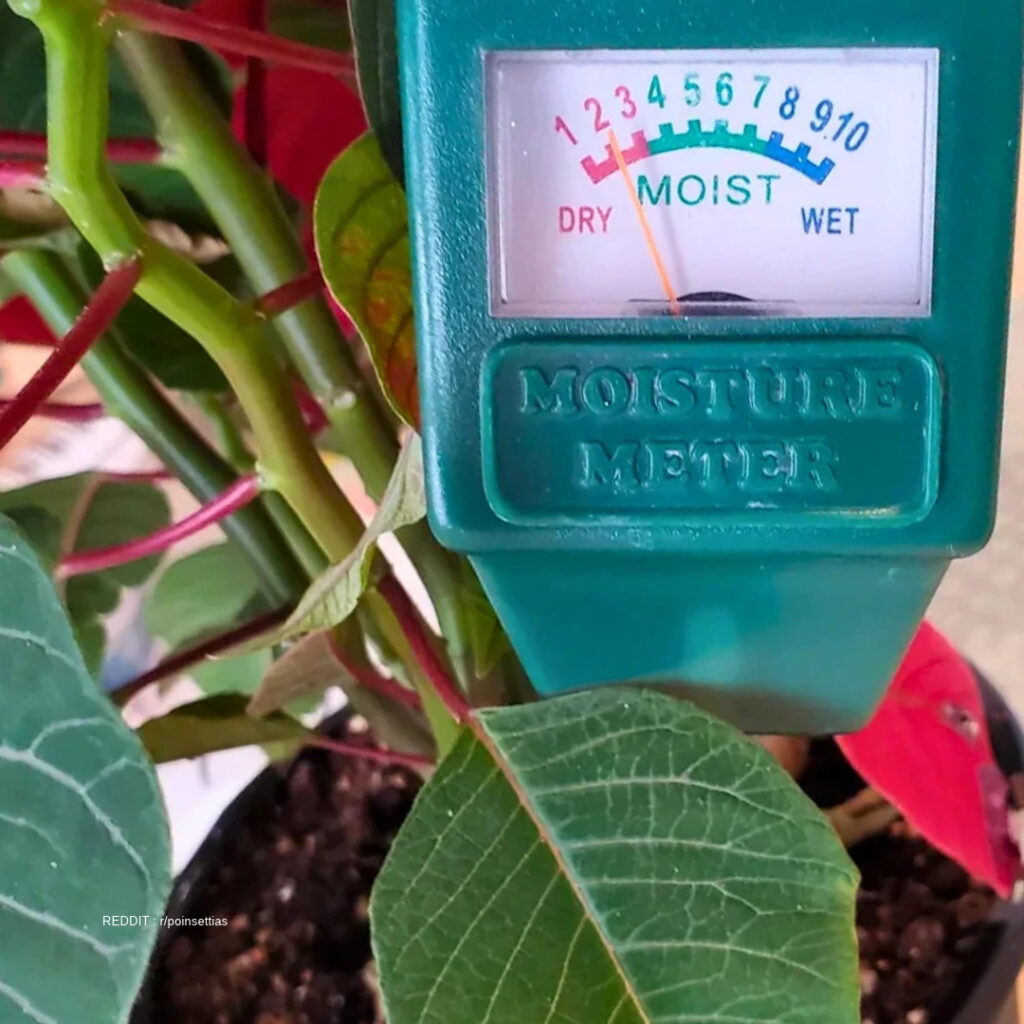
I water my poinsettia based on the soil, not the calendar. The top inch of soil, the pot’s weight, and the room’s conditions tell me when it needs a drink.
Check the Top Inch of Soil
I press my finger about 1 inch into the soil near the edge of the pot. If it feels dry and crumbly, I water the plant.
If it feels cool or damp, I wait a day or two and check again. The surface dries fast, but the roots might still have plenty of water below.
That’s why I don’t just water when the top looks pale.
Quick Tip: I water slowly until a little water runs from the drainage holes, then I empty the saucer after about 10 minutes.
A potted poinsettia might need water every few days indoors, but this changes with heat, light, and pot size. Plants near heaters or sunny windows dry out faster.
In a cool, north-facing window, it might go longer between drinks.
Use Pot Weight and Soil Moisture Tools
I lift the pot before watering. A dry pot feels much lighter than one with moist soil.
After doing this a few times, I can judge by weight alone. If I’m unsure, I use a soil moisture meter or gauge.
I put the probe halfway between the stem and the pot edge, pushing it down a few inches. I avoid sticking it right against the roots.
Quick Tip: I clean the soil moisture meter after each use so dried soil doesn’t mess up the next reading.
Moisture gauges help with big pots or hard-to-read soil. Still, I trust more than one sign—if the meter says moist but the pot feels light, I check again before watering.
Why a Fixed Watering Schedule Can Fail
I never water my poinsettia every Monday or every three days without checking first. Fixed schedules can leave soil too wet during cloudy, cool weather, or let it dry out in warm, dry conditions.
Poinsettias use more water in bright light and less in dim light. Dry winter air, heating vents, and small pots speed up drying, while heavy soil, low light, and cool rooms slow it down.
Quick Tip: I check soil moisture more often during warm, sunny weeks, but I don’t water unless the top inch feels dry.
Too much water causes more trouble than a short wait. Leaves turn yellow and drop if roots sit in soggy soil.
A pot with drainage holes and a soil-based watering check make it much easier to know how often to water poinsettias.
Water Thoroughly Without Leaving Roots Soggy
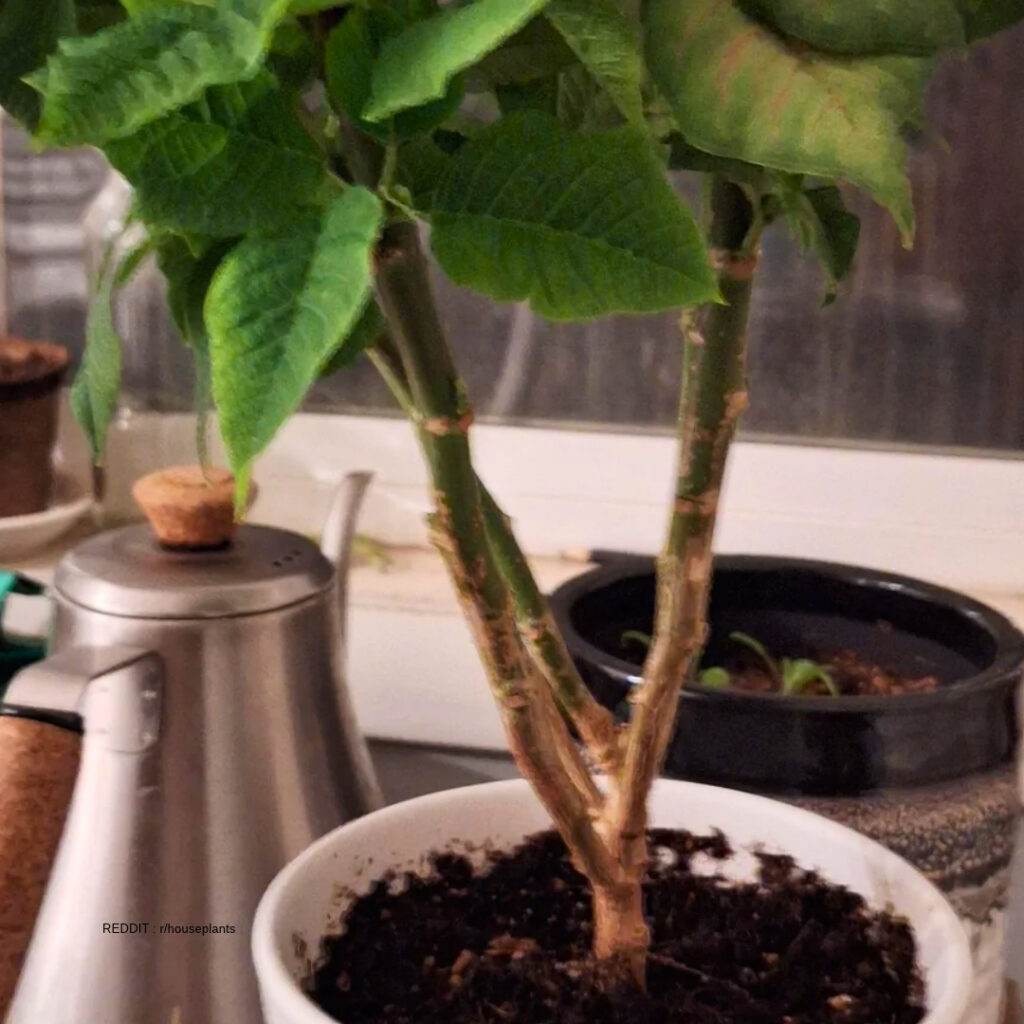
I water poinsettias deeply when the top inch of soil feels dry. Then I let every extra drop drain away.
The goal is moist soil around the roots, not a pot sitting in water.
How Much Water the Plant Needs
How much water a poinsettia needs depends on pot size, light, and room temperature. I pour in enough to wet the whole root ball and watch for a small amount to run from the drainage holes.
For a small 4-inch pot, that’s about half a cup. A bigger 6-inch pot might need 1 to 2 cups, but honestly, I just watch for drainage instead of measuring.
Quick Tip: Stop pouring when water reaches the saucer, then empty the saucer after 10 minutes.
The soil should feel cool and lightly damp, not muddy. In a warm, sunny window, the plant dries out faster. In a cool north-facing window, or during cloudy weather, it stays wet longer.
Top Watering Step by Step
Top watering is the easiest way I’ve found to water poinsettias. I use a watering can with a narrow spout and pour slowly over the soil, near the pot’s edge.
- Check that the top inch of soil feels dry.
- Move the plant to a sink, or put it on a tray.
- Pour water slowly until it runs from the drainage holes.
- Let the pot drain for 10 to 15 minutes.
- Empty any water left in the saucer or decorative cover.
Quick Tip: If the poinsettia came wrapped in foil, I remove it before watering or make sure the foil has drainage holes.
I try not to pour water onto the leaves and colored bracts. A few drops won’t ruin anything, but wet leaves can get spots and stay damp in a cool room.
When Bottom Watering Makes Sense
I use bottom watering when the soil’s gotten really dry and starts pulling away from the pot sides. Top watering can run straight through those dry gaps and miss thirsty roots.
I set the pot in a shallow bowl or sink with about an inch of water. The pot needs drainage holes. I let it sit for 15 to 20 minutes, then lift it out and let it drain.
Quick Tip: If the soil surface still feels dry after 20 minutes, I give it a small drink from the top.
I never leave a poinsettia soaking for hours. Roots need air as well as water, and soggy soil leads to yellow leaves and root rot.
Prevent Overwatering and Root Rot
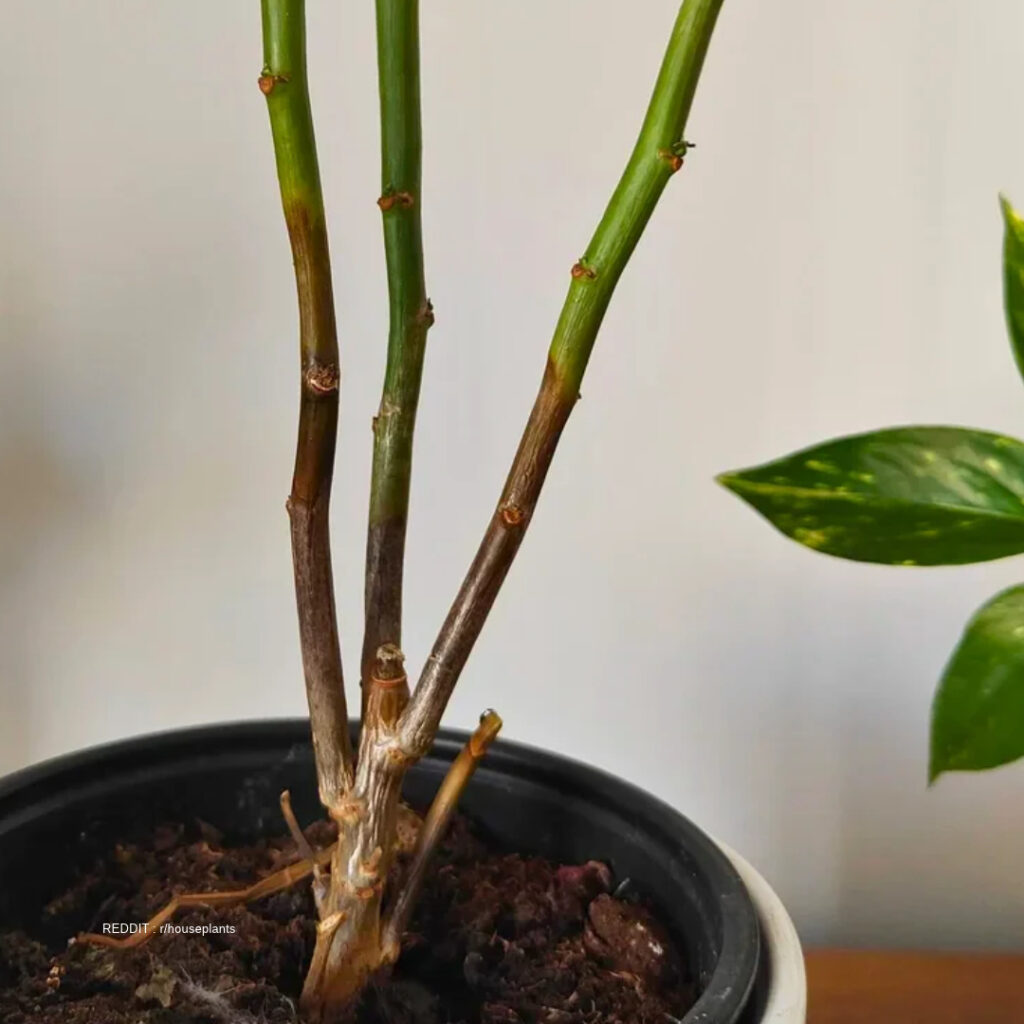
I keep excess water away from the roots by using good drainage and emptying any water that collects. An overwatered poinsettia usually has soft, yellowing leaves and soil that stays wet for days.
Remove Decorative Foil Before Watering to Let Excess Water Escape
I always take off decorative foil or plastic pot covers before watering. They look nice, but trap water at the bottom of the pot.
The roots end up sitting in a cold, soggy puddle, which can lead to root rot. I water the poinsettia in the sink, let it drain for 10 to 15 minutes, and only put it back in its cover when the pot stops dripping.
Quick Tip: I poke drainage holes in a foil cover if I have to leave it on, but I still remove the cover when I water.
If the plant feels heavy and the potting soil smells sour or musty, I check the bottom right away. Sometimes it’s just a wet cover causing the trouble.
Choose a Pot and Mix That Drain Well to Protect the Roots
I use a pot with drainage holes in the bottom. Without them, extra water has nowhere to go and the soil turns to mud fast.
I pick a light potting mix, not dense garden soil. Good potting soil usually has peat moss for moisture and perlite for air spaces. That combo makes well-draining soil that stays moist but doesn’t stay soaked.
Quick Tip: I avoid putting rocks in the bottom of the pot. They don’t help drainage and can actually keep water near the roots.
In a cool room or a north-facing window, soil dries more slowly. I check the top inch with my finger before watering, especially during cloudy winter weather.
Empty the Saucer After Draining So Roots Do Not Soak
I always check the saucer about 15 minutes after watering. If there’s water, I pour it out.
Leaving the pot in standing water keeps the lowest roots wet for too long. A poinsettia doesn’t need a full saucer after every drink. It needs damp soil with air around the roots.
Quick Tip: I use a small towel or turkey baster to get water out of a deep saucer when lifting the pot is awkward.
If I find a saucer full of water, I empty it and wait before watering again. Warm, dry homes dry plants faster, but I always let the extra water drain away.
Recognize Underwatering and Overwatering Symptoms
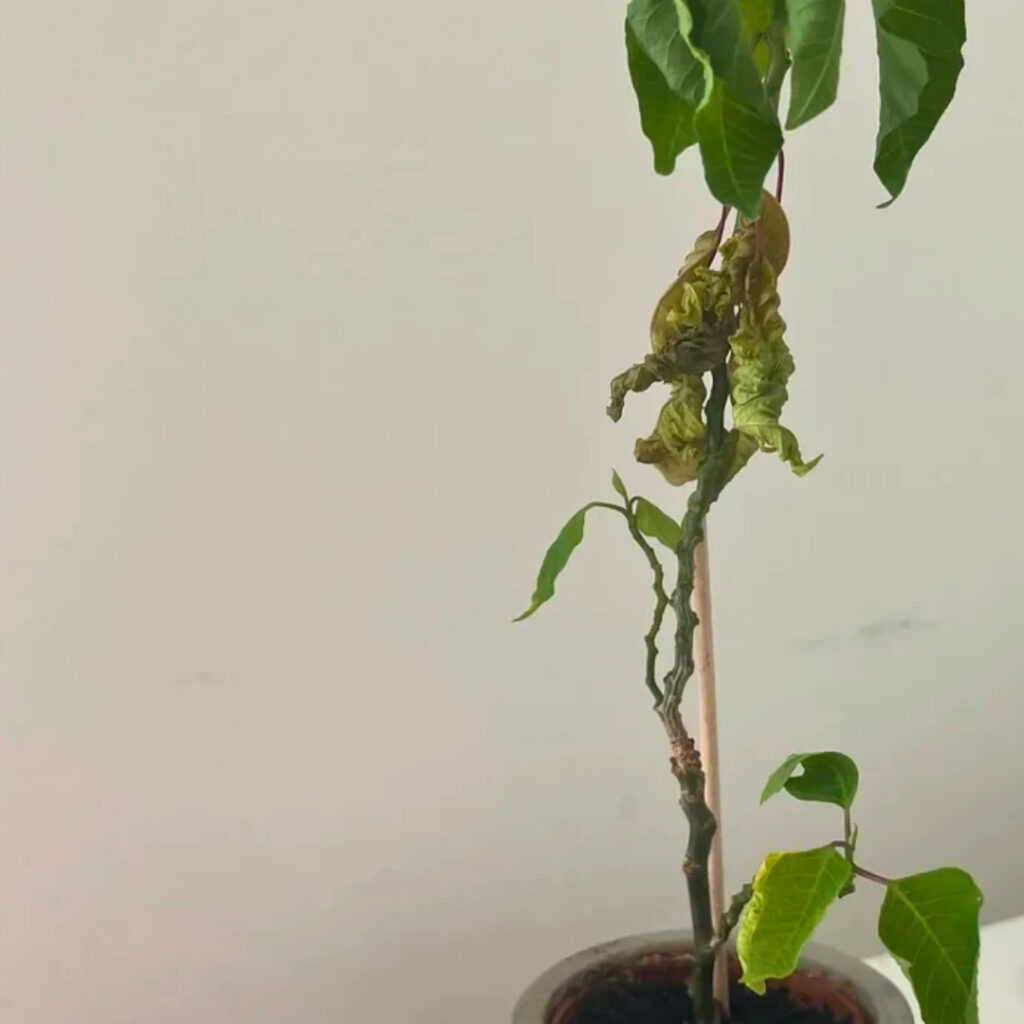
I check the soil, leaves, and stems together before I change my poinsettia watering routine. Too little or too much water both cause leaf drop, but soil moisture tells me the most.
Signs of an Underwatered Poinsettia
An underwatered poinsettia usually has dry soil pulling away from the pot edges. When I lift the pot, it feels much lighter than usual.
The leaves droop, curl inward, or feel thin and papery. Lower leaves turn yellow, then dry and fall. The colorful bracts can wilt or lose their shape.
Quick Tip: I water slowly when the top inch of soil is dry, stopping when water runs from the drainage holes.
Warm rooms, heating vents, and sunny windows dry soil fast. In a cool north-facing window, my plant might need water less often, so I always check first.
Signs of Too Much Moisture
An overwatered poinsettia can look wilted even though the soil is wet. Soggy roots can’t take in water well.
The leaves turn soft, yellow, and limp before they drop. I watch for a musty smell from the pot and dark, mushy stems near the soil line.
These signs point to root rot, which starts when roots stay wet too long. Pots sitting in saucers of water are a common culprit.
Quick Tip: I empty the saucer 10 to 15 minutes after watering so the roots don’t soak in standing water.
I check for drainage holes. Decorative foil can trap water, so I remove it or poke holes in it before watering.
What to Do When Leaves Wilt or Drop
When leaves wilt, I press a finger about an inch into the soil. If it’s dry, I water the plant fully and let the extra water drain away.
I don’t give little splashes every day—they just wet the surface. If the soil feels wet, I wait until the top inch dries before watering again.
I move the plant away from cold drafts, hot vents, and direct blasts of warm air. Sudden temperature changes can make leaves drop, too.
Quick Tip: I remove yellow or fallen leaves and check the stem base for softness each time I water.
If the soil stays wet for days or smells sour, I take the plant out of its pot and check the roots. I trim brown, mushy roots with clean scissors and repot in fresh, well-draining soil.
Adjust Watering for Your Home and Season
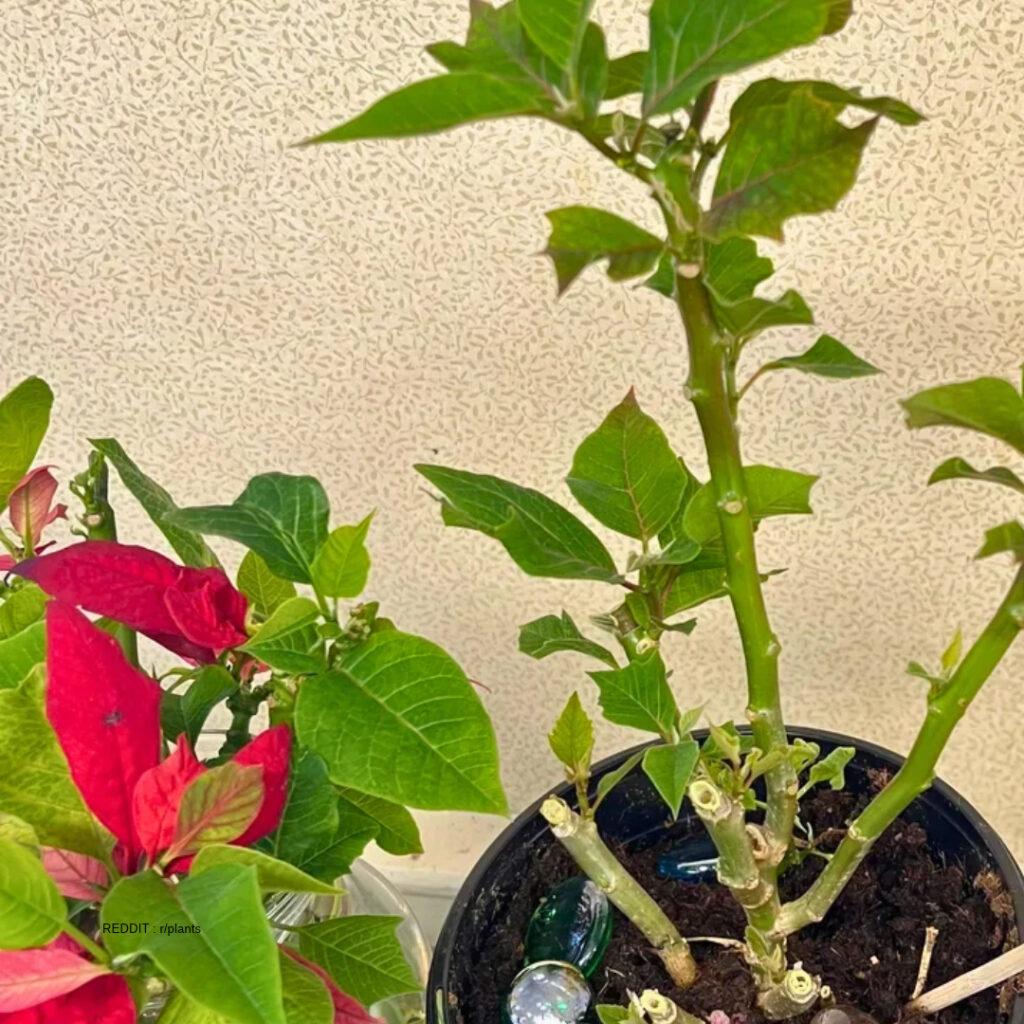
I check light, room temperature, humidity, pot size, and soil before watering a potted poinsettia. These indoor plants use water differently as conditions shift.
Light, Temperature, and Humidity
I water more often when my poinsettia sits in bright, indirect light. Light helps this tropical plant use water, so the potting mix dries faster near an east- or west-facing window.
I check the top inch of soil every few days. If it feels dry and crumbly, I water slowly until a little water drains from the bottom.
Quick Tip: I move the plant away from cold window glass and heat vents. Both can dry soil moisture unevenly.
Warm, dry rooms make a houseplant thirsty faster. In a cool room or north-facing window, I wait longer because the soil stays wet longer. I never water on a fixed calendar—the soil tells me more than the date ever will.
Pot Size, Soil Type, and Root Growth
I always check the pot before deciding how much water to give. A small pot dries out fast, while a big one can keep the soil wet for too long.
Well-draining soil lets extra water escape from the roots. If my potting mix feels heavy or packed, I water less and make sure the pot has drainage holes.
Quick Tip: I empty the saucer about 15 minutes after watering. Poinsettias shouldn’t sit in a puddle.
Roots suck up more water when they fill the pot and grow strong. If roots circle the bottom or poke through the holes, I might need to water more often or think about repotting after the main display season.
I use fresh, airy potting mix when it’s time to repot.
Winter Heating and Summer Growth
During winter, I watch my poinsettia extra closely. Furnaces and heaters dry out the air, and the soil can dry quicker than you’d expect.
I keep it away from hot air vents. If I see dry leaves, crispy edges, or the pot feels really light, it might need water—but I always check the soil first.
Quick Tip: I water in the morning with room-temp water and let any extra drain away.
In summer, poinsettias can grow faster if I keep them in bright, indirect light. They might need water more often, especially when it’s hot or dry.
If I move the plant outside in a warm climate, I check the soil daily and make sure it doesn’t get scorched by afternoon sun or battered by heavy rain.
Common Watering Methods and Mistakes to Avoid
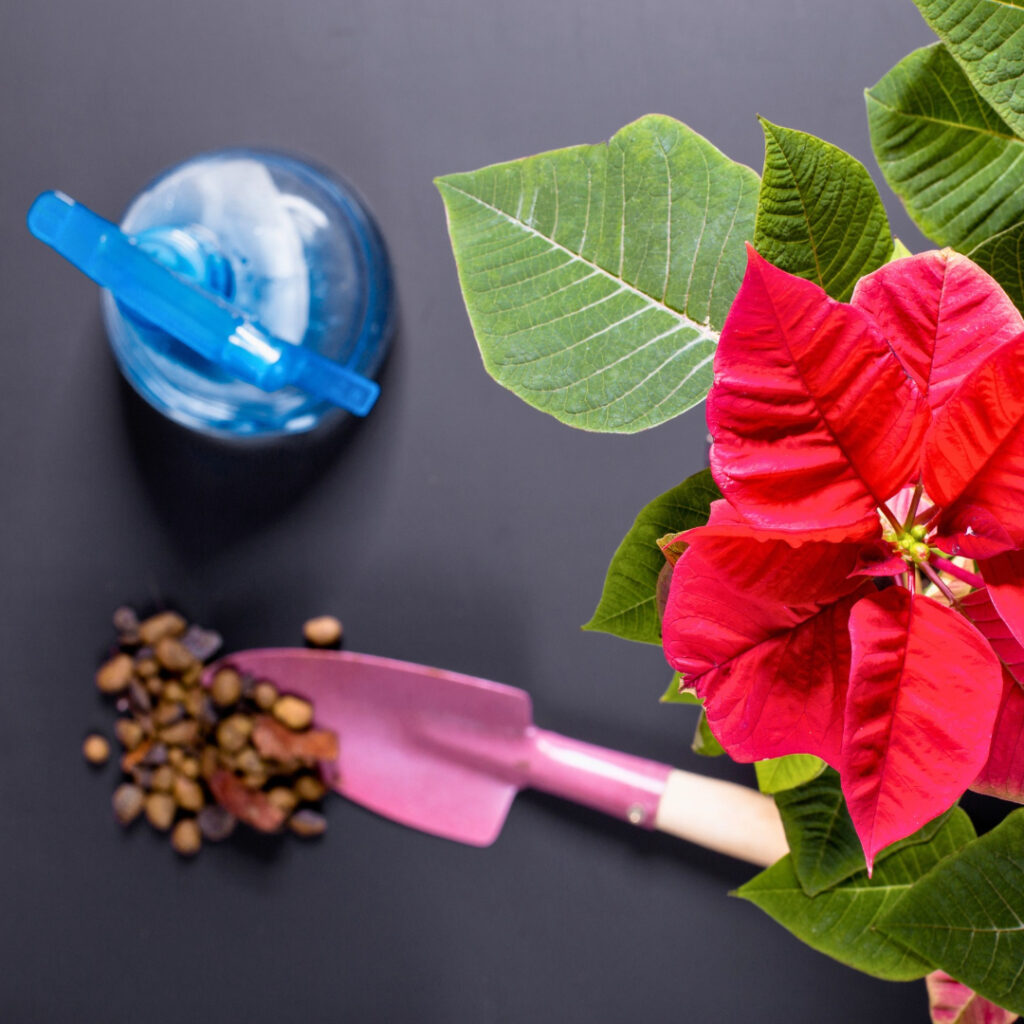
I use a watering can with a narrow spout to control where the water lands. I keep the leaves dry and always empty the saucer after watering.
Should You Use Ice Cubes?
I don’t recommend watering poinsettias with ice cubes. Ice melts slowly, but cold water can shock the roots. Poinsettias want steady moisture and warmth, not a chilly surprise.
I stick with a small watering can. I pour water slowly around the base until a bit drains out the bottom.
Quick Tip: Use enough water to moisten the whole root ball, but stop when water reaches the saucer.
Top watering works best for me. It flushes old salts from the soil and I can see when the pot drains.
Bottom watering can work too: I set the pot in a shallow dish of water for 15 to 20 minutes, then let it drain. I never leave it soaking for hours—roots hate that.
Avoid Wet Foliage and Standing Water
I aim the water at the soil, not the leaves or red bracts. Wet foliage can get spots or mold, especially in a cool room with lousy airflow.
After watering, I check the saucer under the pot. I pour out any water that collects there within 10 or 15 minutes. Sitting in water can lead to soft, unhappy roots.
Quick Tip: If the soil feels soggy, smells off, or lower leaves turn yellow, I let the pot dry more before watering again.
Decorative foil covers can trap water around the pot. I either remove the foil before watering or poke holes in it and empty any water inside. It’s such a simple fix, but it saves a lot of trouble.
Use Room-Temperature Water for Happier Roots
I use room-temperature water, about 65 to 75°F. Cold tap water can stress roots, while hot water isn’t good for them either.
If my tap water comes out cold, I let it sit in a container for a few hours. That also brings it to room temp before I use it.
Quick Tip: I test the water with my hand first—it should feel neither cold nor warm.
In winter, if the poinsettia sits near a drafty window, it dries slowly. I check the top inch of soil before watering.
In a sunny or heated room, the soil dries out faster. I follow the soil, not the calendar—plants don’t care about schedules.
Frequently Asked Questions
I check the soil before watering, use room-temp water, and keep my poinsettia in bright, indirect light. Winter heat, dry air, and low light all affect how fast the soil dries.
How can I tell when my poinsettia needs water?
I press my finger about an inch into the soil. If it feels dry, I water until a little drains from the pot.
If the soil still feels cool and a bit damp, I wait a day or two. Droopy leaves can mean dry soil—or maybe the plant just got too cold.
Quick Tip: I lift the pot. A dry pot always feels lighter than a freshly watered one.
Should I water a poinsettia from the top or the bottom?
I usually water from the top, slowly and evenly over the soil. I stop when water runs into the saucer, then empty it after about 15 minutes.
Bottom watering works if the soil pulls away from the pot and gets really dry. I set the pot in a shallow dish of water for 15 or 20 minutes, then let it drain well.
Quick Tip: I never let the pot sit in water for hours. Wet roots are not happy roots.
Can I use ice cubes to water my poinsettia?
I don’t use ice cubes. Cold water stresses poinsettia roots, especially if the plant already sits near a cold window.
I stick to room-temperature water. I pour it in slowly so the soil absorbs it evenly.
Quick Tip: I fill a watering can and let it sit indoors for a few hours before using it.
How often should I water a poinsettia during winter?
I usually water every 5 to 10 days in winter, but I always check the soil first. Indoor heat can dry the soil quickly, while low light keeps it damp longer.
In a warm, dry home, I might need to water more often. In a cool room or near a north window, I water less because the soil dries out slowly.
Quick Tip: I follow the soil, not the calendar.
What happens if I overwater a poinsettia?
Overwatering turns leaves yellow and makes them drop. The soil can smell sour, and stems might get soft at the base.
I let the soil dry out a bit before watering again and make sure the pot has drainage holes. If roots stay wet too long, root rot can show up.
Quick Tip: I remove any foil cover or poke drainage holes in it before watering.
How much sunlight does a poinsettia need indoors?
I usually put my poinsettia close to a bright window, but not right in the direct sun. Indirect light seems to work best.
About six hours of bright light each day keeps it happy, in my experience.
Harsh afternoon sun? I avoid it, since it can scorch the leaves. Cold glass, drafts, or heating vents—those are trouble too, so I move the plant away from them.
Quick Tip: If the sunlight feels hot on my hand, I’ll hang up a sheer curtain to soften it.