
Dahlias come in many flower types, from neat ball and pompon blooms to spiky cactus forms and wide decorative flowers. I’ll help you tell dahlia types apart so you can choose blooms that suit your garden, vase, and style.
You can look for rounded petals, soft open centers, or long pointed petals that give each dahlia form its own look. Some dahlia varieties also offer pollen for visiting bees and butterflies.
Quick Tip: I recommend checking the flower form on the plant label, since two dahlias can share a color but look completely different in bloom.
How Dahlia Classifications Work
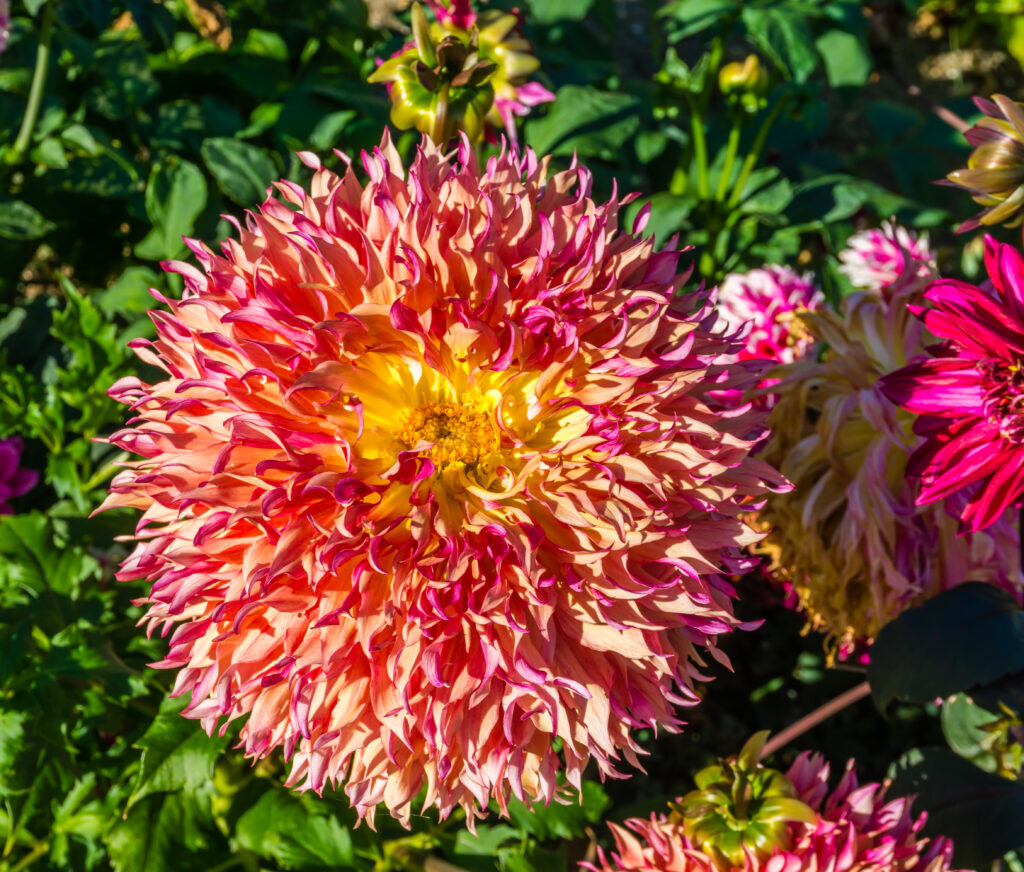
I use dahlia classifications to describe a flower’s shape and size, not just its color or plant height. One dahlia variety can fit both a flower-form group and a bloom-size group.
Flower Form Versus Variety: Why Names Can Get Confusing
A dahlia form describes how the bloom looks when it opens. Ball dahlias have rounded flowers with tightly arranged petals, while cactus types have narrow, pointed petals that create a spiky look. Decorative dahlias have broad petals and a full, layered face.
A variety is the named plant itself, such as a specific cultivar sold by a grower. That variety also has a color, height, and bloom form. Think of the form as the category and the variety as the individual plant name.
The labels can feel messy at first. A dahlia may be listed as a formal decorative variety, for example, while another may be a ball variety. The form tells me what flower shape to expect in the garden or vase.
Quick Tip: I check the flower form before buying tubers if I want a certain look, such as neat round blooms or loose, wide petals.
Bloom Size Categories and Dinner Plate Dahlias: Size Changes the Garden Plan
Dahlia types also fall into bloom-size categories. The American Dahlia Society measures the flower across its widest point, not the height of the plant.
| Bloom size group | Flower width |
|---|---|
| Miniature | Up to 4 inches |
| Small | Over 4 to 6 inches |
| Medium | Over 6 to 8 inches |
| Large | Over 8 to 10 inches |
| Giant | Over 10 inches |
Dinner plate dahlias usually fall into the large or giant groups. Their blooms often reach 8 to 10 inches or more, depending on the variety and growing conditions. These flowers look striking, but rain and strong wind can damage their heavy stems.
I give large-flowered plants sturdy stakes early, before their stems start leaning. In hot, dry weather, steady watering helps plants produce better blooms. In rainy areas, good spacing helps the leaves dry faster.
Quick Tip: I plant dinner plate dahlias where I can support them easily, not in a crowded bed where their stems will flop.
The American Dahlia Society Classification System: The Labels Behind Show Dahlias
The American Dahlia Society uses a detailed system to judge and name dahlia forms. It groups blooms by petal shape, how the petals curve, and the flower’s overall form.
The system includes forms such as single, anemone, collarette, waterlily, decorative, ball, pompon, cactus, and semi-cactus. Decorative dahlias split into formal and informal types based on how evenly the petals are arranged.
This system helps growers compare dahlia varieties accurately. A pompon dahlia, for example, has a small, round bloom with tightly rolled petals, while a ball dahlia has a similar shape but usually grows larger.
I don’t need to memorize every class to choose plants well. Knowing the main forms makes seed catalogs and tuber listings much easier to read.
Quick Tip: I use American Dahlia Society terms as a guide, but I also check photos because bloom color and petal texture can vary with weather and growing zone.
Rounded, Fully Double Forms
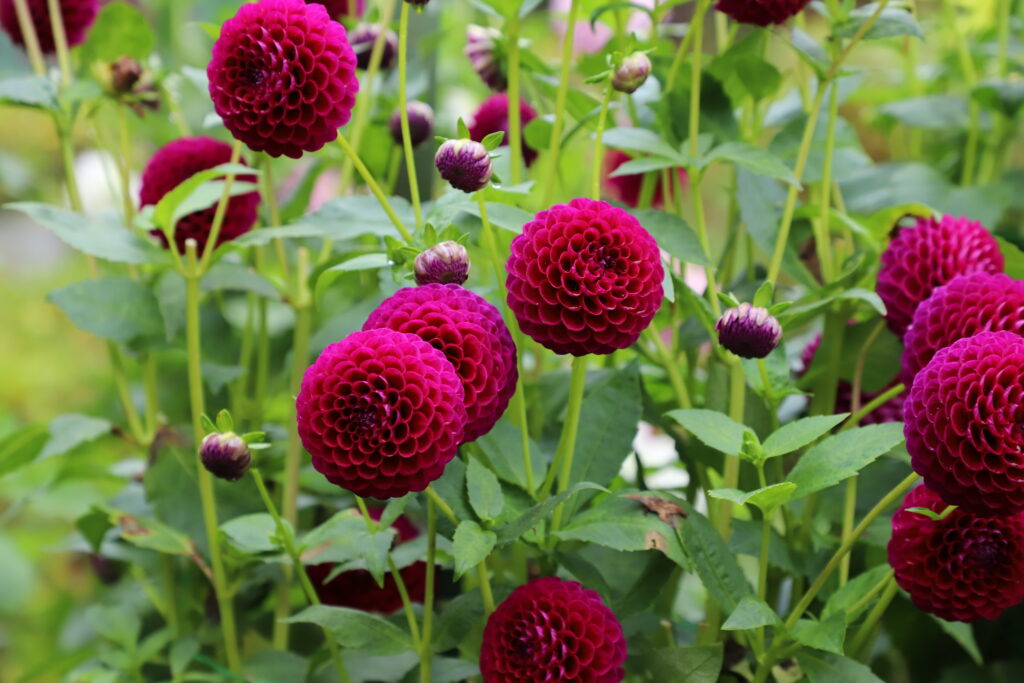
I recognize these dahlias by their packed petals and neat, full blooms. Their flower shape ranges from tight spheres to flatter, open-faced doubles.
Ball Dahlias and Miniature Ball Dahlias
Ball dahlias form rounded blooms with petals that curve inward. The flowers look full but not perfectly round, often showing a slightly flattened face. Ball dahlias usually grow blooms over 3½ inches wide, while miniature ball dahlias measure about 2 to 3½ inches.
I like ball types for cutting because their sturdy blooms hold their shape well in a vase. Cornel has rich red flowers, while Ivanetti produces deep purple blooms. Both give beds and bouquets a clean, polished look.
Quick Tip: I cut stems early in the morning, when the flowers feel firm and the petals have fully opened.
Tall ball dahlia plants may need staking, especially in windy gardens. In cooler zones, I wait to plant tubers until frost has passed and the soil has warmed.
Pompon Dahlias: Small, Near-Perfect Flower Balls
Pompon dahlias make small, almost perfectly round flowers. Their petals roll tightly into tubes, creating a smooth, button-like surface. Most pompon blooms measure less than 2 inches across, but they carry plenty of detail up close.
I use pompons when I want lighter texture among large dinner plate or decorative dahlias. Franz Kafka produces soft pink pompons, and Small World has clean white flowers. Their small size makes them useful for vase arrangements without crowding other blooms.
Quick Tip: I pick pompons when the center feels solid; soft or loose blooms won’t last as long indoors.
These plants still need sun and regular watering. If the top inch of soil feels dry during hot weather, I water deeply at the base instead of wetting the flowers.
Waterlily Dahlias: Flat Blooms With Soft, Layered Petals
Waterlily dahlias have broad, flat petals arranged in open layers. A waterlily dahlia looks less tightly packed than a ball or pompon, with a shallow center and a smooth, balanced shape. The blooms resemble a waterlily floating on a pond, minus the muddy water.
I choose waterlily dahlias for a softer look in borders and bouquets. Their petals often spread wide enough to show their color clearly from a distance, yet the flower stays tidy rather than spiky.
Quick Tip: I remove spent blooms just above a set of leaves to keep new flowers coming.
Heavy rain can bend or mark the wide petals, so I stake taller plants before storms arrive. In humid areas, I space plants well and water near the soil to help the leaves dry quickly.
Decorative, Cactus, and Other Statement Blooms
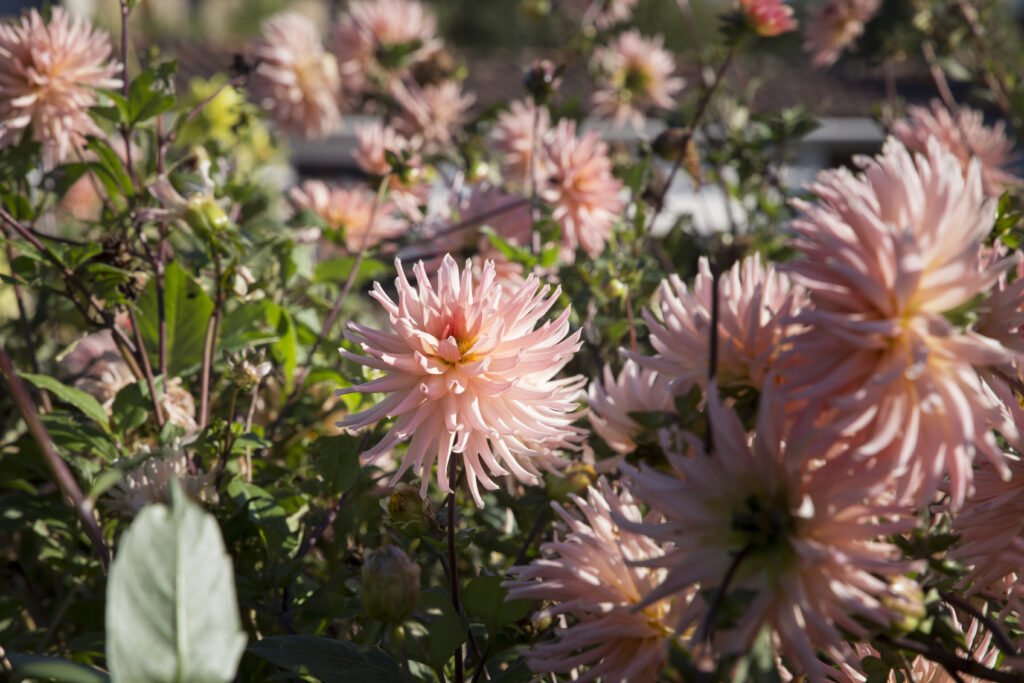
These dahlias stand out through petal shape, size, and texture. I look at the flower face first: broad petals create a full, soft look, while narrow rolled petals add sharp detail.
Formal and Informal Decorative Dahlias
Decorative dahlias have fully double flowers with a mostly hidden center. Their broad, flat petals give blooms a full, layered look that works well in beds and cut-flower arrangements.
Formal decorative dahlias place their petals in neat, even rows. Each bloom looks balanced and tidy, with little twisting or uneven spacing. This type suits gardeners who like a clean, planned look.
Informal decorative dahlias have petals that may twist, wave, or curl. They look looser and more natural, even when the bloom is very large. Café au Lait is a well-known informal decorative dahlia with soft cream, blush, and peach tones, while Thomas Edison produces deep purple flowers.
Quick Tip: Stake large decorative dahlias early. Heavy blooms can pull stems down after rain or strong wind.
Cactus, Semi-Cactus, and Incurved Cactus Dahlias
Cactus dahlias have narrow petals that roll backward along much of their length. The blooms often look spiky, but the petals are still soft. They add a lively, starburst shape to gardens and bouquets.
A cactus dahlia has tightly rolled petals, creating a sharp, full flower. Park Princess is a compact cactus type with pink blooms and a bright, crisp shape.
Semi-cactus dahlias have wider petals that roll less tightly. They sit between decorative and cactus forms, offering texture without looking too prickly. American Dawn often shows warm blends of peach, coral, pink, and gold.
Incurved cactus dahlias bend their narrow petals toward the flower center. This creates a rounder, more contained bloom than standard cactus types.
Quick Tip: Cut cactus blooms when the flower is fully open. Tight buds usually don’t open well in a vase.
Orchid, Star, and Laciniated Forms
Orchid dahlias usually have one ring of long, narrow petals around an open center. Many petals roll inward, giving the flower a delicate, airy shape. Orchid dahlias bring a lighter look than dense double blooms.
Star dahlias also show an open center, but their petals are narrow and often folded or curved. The flowers resemble small stars, making them useful near larger, heavier dahlia forms.
Laciniated dahlias have split, fringed petal tips. The cuts create a feathery edge and a textured flower face. Their blooms can look slightly wild, in a good way, especially when mixed with smoother decorative dahlias.
Quick Tip: Give open-centered types full sun for the strongest flowering. In very hot zones, light afternoon shade can help blooms keep their color longer.
Open-Centered Dahlias for Pollinators
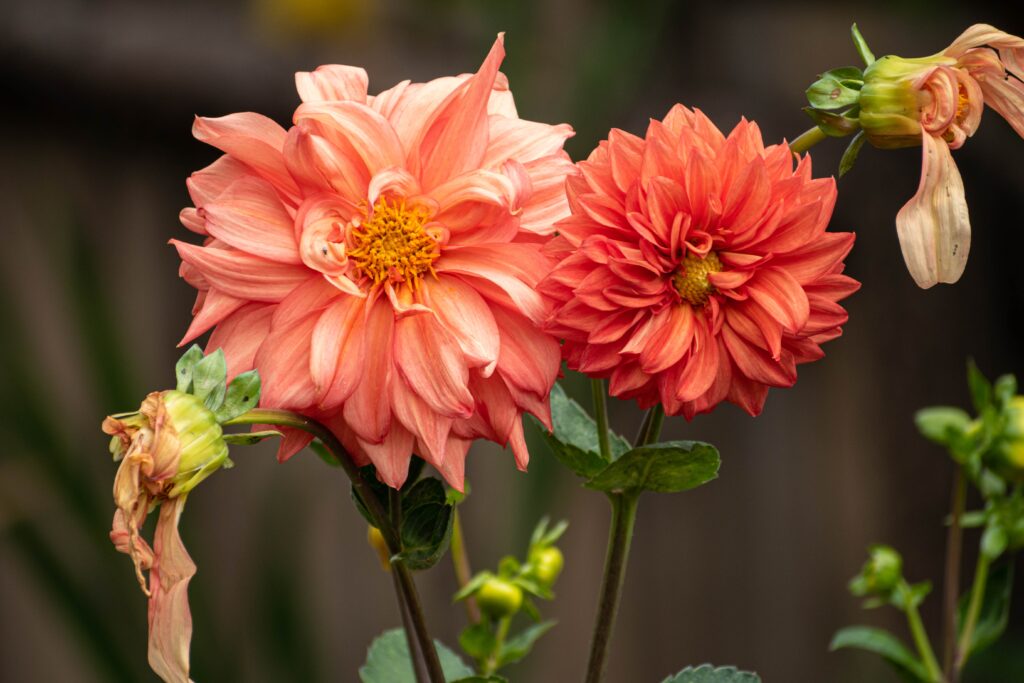
I grow open-centered dahlias when I want flowers that feed bees and butterflies, not just fill a vase. Their visible yellow centers make pollen and nectar easier for insects to reach.
Single and Mignon Single Dahlias: Simple Petals, Easy Landing Spots
Single dahlias, also called single-flowered dahlias, have one ring of flat petals around an open central disc. Bees can land on the petals, then move straight to the pollen-rich center. Butterflies also visit these flowers on warm, calm days.
Mignon dahlias are the smaller version. They usually grow shorter and produce many small blooms, which suits pots, borders, and the front of a bed. I like them where I can watch the flower traffic up close.
Quick Tip: Deadhead spent single dahlias often. New flowers mean more food for pollinators through late summer and early fall.
Choose a sunny spot with soil that drains well. In very hot, dry weather, water at the base when the top inch of soil feels dry; dry plants make fewer flowers.
Anemone and Collarette Dahlias: Frilly Centers With Food Still in Reach
Anemone dahlias have a ring of broad outer petals and a raised, cushion-like center packed with short tubular petals. The center looks full, but it often still offers pollen to visiting bees. Polka is a well-known anemone type with creamy petals and a warm yellow center.
Collarette dahlias have one outer ring of petals plus a smaller inner collar around the disc. That open disc remains the main target for insects, while the two layers give the flower a tidy, ruffled look without blocking access completely.
Quick Tip: Plant several open-centered dahlias together instead of one lone plant. A patch of blooms is easier for bees to spot.
I avoid spraying insecticides on buds or open flowers. Even products labeled for garden pests can harm visiting pollinators, especially when flowers are in full bloom.
Peony-Flowered Dahlias: Loose, Layered Blooms That Draw Visitors
A peony dahlia, often called a peony type, has two or more rows of broad, loose petals around an open center. The flowers look fuller than single dahlias, yet many still leave enough of the yellow disc exposed for bees and butterflies.
Waltzing Mathilda is a useful example. Its soft peach and pink petals surround a visible center, and the changing flower color adds interest as blooms age. Totally Tangerine also has a loose, open form with orange petals and a dark center that attracts frequent insect visits.
Quick Tip: Check the center before buying. If you can clearly see the disc, pollinators can usually reach it more easily.
I grow peony-flowered dahlias in full sun and stake taller plants before stems lean in summer storms. In colder zones, I lift and store tubers after frost; in mild, frost-free areas, they may stay in the ground with winter mulch.
Choosing the Right Form for Your Garden and Vase
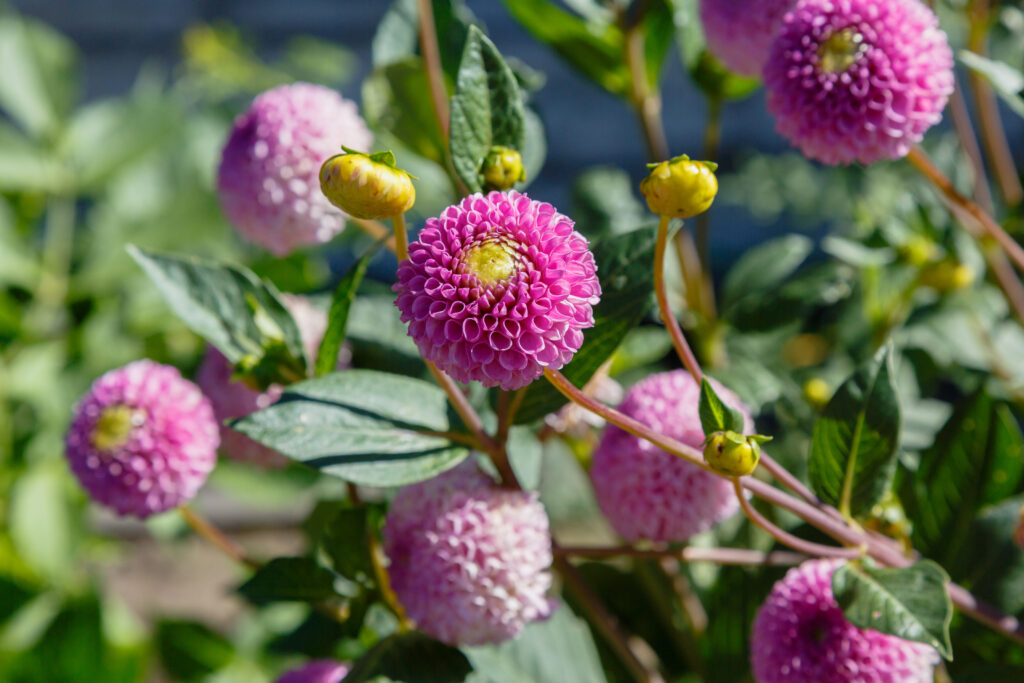
I choose dahlia forms based on where I will grow them and how I plan to use the blooms. Stem length, plant height, color, and weather all affect the best choice.
Best Dahlias for Cut Flowers
I grow ball and pompon dahlias for reliable cut flowers. Their tight petals hold up well in a vase, and round blooms add a neat, full look to mixed bouquets. Cornel gives me deep red dahlias with strong stems and rich color.
For large focal flowers, I plant Café au Lait. Its dinner-plate blooms bring soft cream, blush, and pale peach tones to a vase. I cut flowers early in the morning, when stems feel firm and blooms have just opened.
Quick Tip: I cut dahlia stems at an angle and place them in clean, cool water right away. Dahlias do not open much after cutting, so I pick blooms that are already open.
Best Types for Borders, Containers, and Color Schemes
I use shorter ball, pompon, and decorative dahlias in borders and containers. Compact plants are easier to manage than tall dinner-plate types, especially in windy yards. I place tall cactus and decorative dahlias toward the back of a border, where their long stems do not block smaller plants.
For a warm color scheme, I combine red dahlias such as Cornel with orange American Dawn. American Dawn has peach, coral, pink, and golden tones, so it softens darker red blooms without looking dull.
Quick Tip: I group three to five plants of the same variety for a cleaner look. One lonely dahlia can seem a bit lost in a busy bed.
Matching Flower Form to Your Growing Conditions
I plant most dahlias in full sun, with at least six hours of direct light. Cactus and large decorative types need sturdy stakes because wind and heavy rain can bend their long stems. Ball and pompon forms usually handle rough weather better because their blooms are smaller and tighter.
I choose medium or compact varieties for exposed gardens, containers, and cooler areas with short summers. In hot, dry places, I water deeply when the top inch of soil feels dry. I also mulch lightly to help keep roots cool.
Quick Tip: I wait to plant dahlia tubers until frost danger has passed and the soil has warmed. In colder zones, I lift tubers after frost kills the tops and store them indoors for winter.
Growing Tips for Better Dahlia Blooms
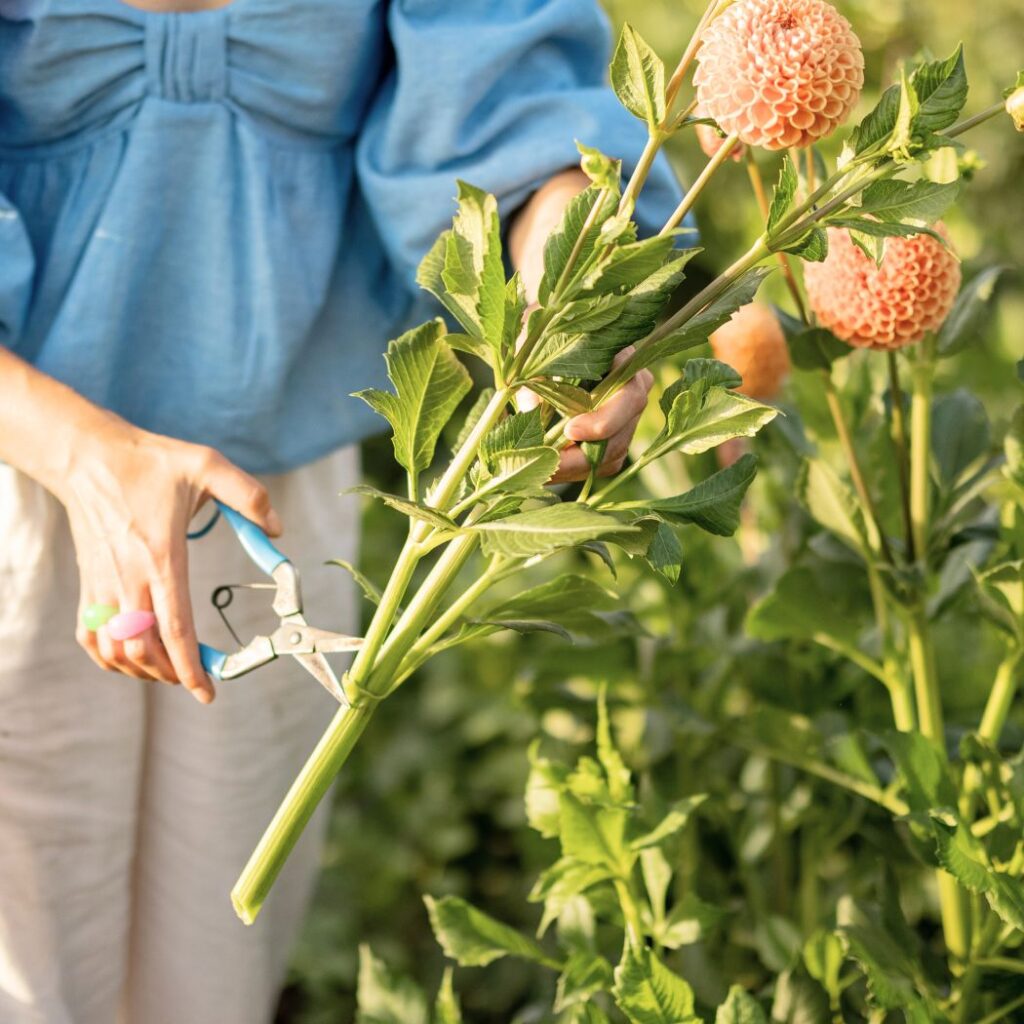
I give dahlias steady sun, deep watering, and support before their stems get heavy. A few small habits keep plants productive and make cutting flowers easy.
Planting, Sun, and Soil Basics
I plant dahlia tubers after the last frost, when the soil feels warm and night temperatures stay above 50°F. In cooler zones, I wait a little longer rather than planting into cold, wet ground.
I choose a spot with full sun for at least six to eight hours each day. Light shade can work in very hot areas, but too much shade means fewer dahlia blooms and weak, stretching stems.
I loosen the soil about 12 inches deep and mix in compost. The ground should drain well because tubers can rot in soggy soil. I plant most tubers 4 to 6 inches deep, with the growing eye facing up.
Quick Tip: I water deeply when the top inch of soil is dry, but I do not soak newly planted tubers until green growth appears.
Staking, Deadheading, and Weather Protection
I place stakes at planting time, especially for tall decorative, cactus, and dinnerplate dahlias. Adding support later can stab a tuber or snap a stem. A bamboo stake, tomato cage, or sturdy plant support all work.
As stems grow, I tie them loosely with soft twine. I check after wind and rain because heavy blooms can pull branches down fast. It is a little annoying, but broken stems are worse.
I remove faded flowers by cutting the stem back to a side shoot or pair of leaves. This tells the plant to make more buds instead of seeds.
Quick Tip: I protect growing dahlias from frost with a cloth cover overnight, then remove it in the morning. Wet, chilly weather calls for less watering and good air flow.
Harvesting Dahlias for Long-Lasting Arrangements
I cut dahlia blooms in the cool morning or evening, when stems hold plenty of water. I choose flowers that are fully open or nearly open because dahlia buds do not open much after cutting.
I use clean, sharp snips and cut long stems above a leaf joint. I place the stems straight into a bucket of clean water. In a cut-flower garden, frequent cutting acts like deadheading and keeps more flowers coming.
At home, I remove leaves that would sit below the water line. I change the vase water every day or two and recut the stems when they look tired.
Quick Tip: I harvest before a hard frost and enjoy the last fresh flowers indoors; cold nights can quickly turn open blooms brown.
Frequently Asked Questions
I group dahlias by flower shape, petal form, and bloom size. Ball, pompon, cactus, and decorative types each bring a different look to garden beds and vases.
What are the different types of dahlia flowers?
I sort dahlias into types such as single, anemone, collarette, waterlily, decorative, ball, pompon, cactus, semi-cactus, and dinnerplate. Some plants also produce orchid-style blooms with narrow, curved petals.
Flower form matters because it changes the bloom’s shape, texture, and use. Flat single blooms often attract pollinators, while full decorative blooms make a stronger display in a vase.
Quick Tip: I check the flower type on the plant label before buying, since photos can hide the bloom’s true size.
How many main dahlia flower types are there?
I recognize about 14 main dahlia flower types under common classification systems. The exact number can vary slightly by country or dahlia society.
These groups describe the flower, not the plant’s growing needs. Most dahlias need full sun, rich soil, and steady water during dry weather.
Quick Tip: I choose bloom shape first, then check mature height so tall plants do not crowd smaller flowers.
What is the difference between ball and pompon dahlias?
I tell ball and pompon dahlias apart by size and shape. Ball dahlias have round or slightly flattened blooms, usually over 2 inches wide, with tightly rolled petals.
Pompon dahlias are smaller, more perfectly round, and usually less than 2 inches wide. Both hold up well in bouquets because their petals stay neat and firm.
Quick Tip: I pick pompons when I want small, tidy blooms that add texture without taking over a vase.
What makes cactus dahlias different from decorative dahlias?
I identify cactus dahlias by their narrow petals, which roll back or curl into pointed tubes. Their blooms look spiky and airy, with sharp lines that stand out in the garden.
Decorative dahlias have broad, flat petals and a full, layered face. They look softer and heavier, especially after rain, so staking helps tall plants.
Quick Tip: I grow cactus types when I want a lively, starburst shape and decorative types when I want big, full blooms.
What does pompon dahlia mean?
I use “pompon” to describe a small, round dahlia with tightly packed petals. Each petal curves inward, giving the flower a smooth, button-like shape.
Pompon dahlias often bloom in groups on strong stems. They work well for cutting, and their compact flowers last nicely in mixed arrangements.
Quick Tip: I cut pompon stems early in the morning, when the flowers feel cool and firm.
Which dahlia varieties are most popular for gardens and cut flowers?
I often see ‘Cornel’ and ‘Jowey Winnie’ grown as ball dahlias because they make reliable cut flowers. ‘Wizard of Oz’ is a popular soft pink pompon, while ‘Cafe au Lait’ is widely grown for its large decorative blooms.
For cactus flowers, I like varieties such as ‘Karma Sangria’ and ‘Myrtle’s Folly’ for their narrow, lively petals. In hot, dry areas, I water deeply at the base. In cool or wet zones, I give plants extra space for better airflow.
Quick Tip: I choose varieties with strong stems and blooms that are partly open, rather than fully flat, for the longest vase life.