
Black spots on your rose leaves can make your heart sink. One day the plant looks fine. A week later, the leaves have dark, fuzzy-edged spots and yellow patches, and they start dropping to the ground.
Black spot on roses is a common disease caused by the fungus Diplocarpon rosae. You can control it by removing infected leaves, keeping foliage dry, improving airflow, and using a fungicide when needed. The disease spreads fast in warm, wet weather, so it tends to show up more in humid areas and rainy summers. The good news is that it rarely kills roses outright, though it can weaken them over time if you leave it alone.
In this post, I’ll walk you through what causes black spot, how I treat it when it shows up, and the simple habits that help keep it from coming back. Quick Tip: If you see even one spotted leaf, pull it off and throw it in the trash, not the compost.
How to Recognize Black Spot: Early Signs You Can Spot in Minutes
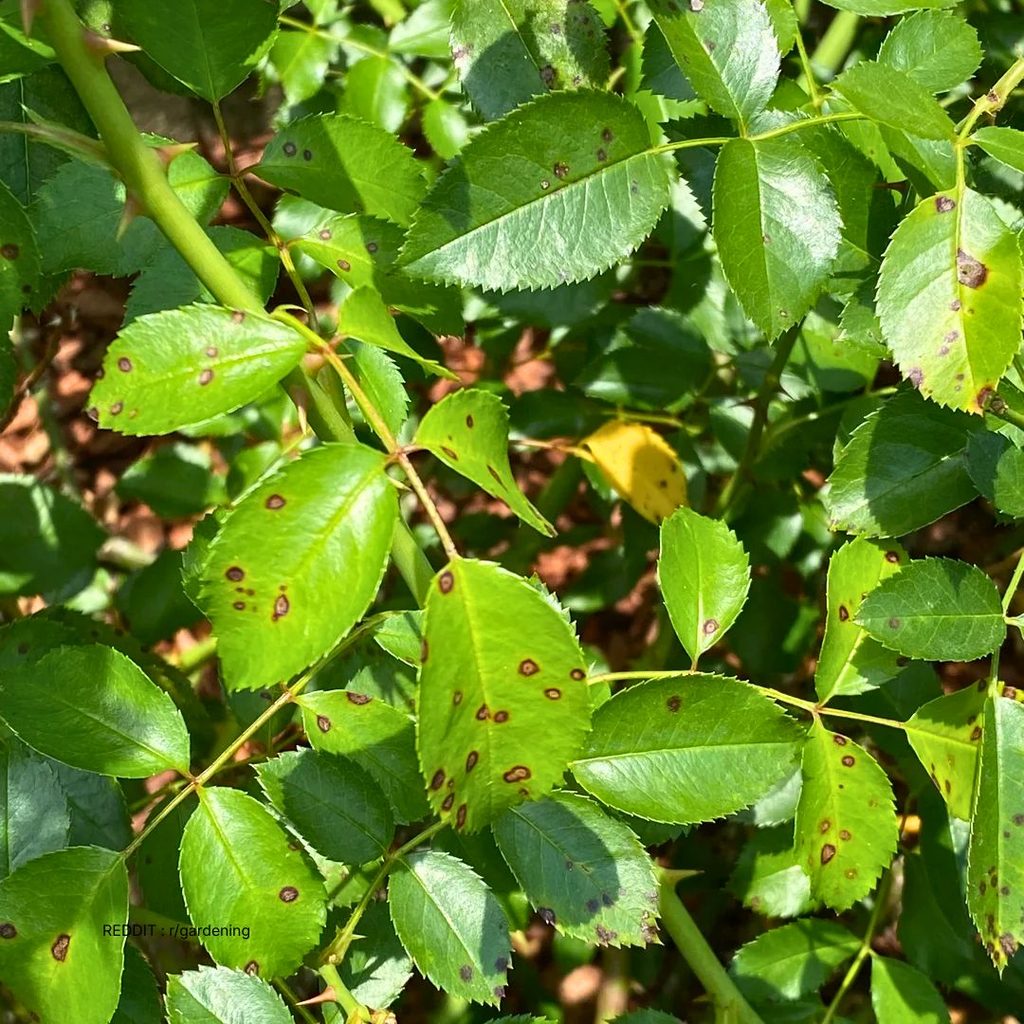
Rose black spot starts with round black spots with fuzzy edges, followed by yellowing leaves that fall off early. It can also leave dark patches on young canes. It looks a lot like another leaf spot called cercospora.
Check Leaves for Dark Spots, Yellowing and Early Drop (Start at the Bottom)
I always start checking at the lowest leaves. Black spot often starts there because rain splashes the fungus up from the soil.
Look for round black spots about 1/16 to 1/2 inch wide. Their edges look feathery or fringed, not smooth. Soon a yellow ring forms around each spot, and then the whole leaf turns yellow.
The last stage is premature leaf drop. A bad case can leave a rose with bare lower canes by midsummer. You may see yellow leaves piled on the ground under the plant.
Quick Tip: Flip a spotted leaf toward the light. That makes black spot’s fringed edges easier to see.
Spots show up fastest after warm, wet weeks. In dry climates, you may see only a few.
Look for Lesions on Young Stems (The Spot Most People Miss)
Leaves get the attention, but black spot can also hit first-year canes. These are the smooth green stems that grew this season.
Stem lesions look like:
- Purple-red to black blotches
- Flat or slightly raised patches
- Irregular shapes, not neat circles
These marks matter because the fungus can survive winter on the canes. Then it spreads to new leaves in spring.
Quick Tip: Run your eye along each green cane during spring pruning. Cut out canes with dark blotches and throw them in the trash, not the compost.
In cold zones, winter damage can look similar. Check for spots on leaves above the cane before you decide.
Tell Black Spot Apart From Cercospora (Close Cousins, Different Clues)
Cercospora leaf spot looks a lot like black spot at first. I’ve mixed them up myself. The clues are in the color and the edges.
| Feature | Black Spot | Cercospora |
|---|---|---|
| Spot size | Up to 1/2 inch | Smaller, about 1/8 to 1/4 inch |
| Edges | Fringed and feathery | Smooth, sharp borders |
| Color | Solid black | Dark purple rim with tan or gray center |
| Leaf drop | Often heavy | Usually lighter |
| Common where | Wet areas everywhere | Hot, humid areas like the Southeast U.S. |
Quick Tip: Look at the center of a spot. A pale tan middle points to cercospora.
Both diseases thrive on wet leaves, so the same care habits help with each.
Entities: Quick Glossary of Rose Black Spot Terms You’ll Hear
Here are the terms I use most when talking about this disease:
- Rose black spot: A fungal disease caused by Diplocarpon rosae.
- Black spot symptoms: Round black spots, yellow rings, yellowing leaves and leaf drop.
- Yellowing leaves: Leaves that turn yellow around spots, then all over.
- Premature leaf drop: Leaves falling well before autumn.
- Stem lesions: Dark purple or black patches on young canes.
- Cercospora: A different fungal leaf spot with smooth edges and pale centers.
Quick Tip: Snap a photo of any odd spot. It makes comparing easier later.
What to Do When You First See Spots
Pick off the spotted leaves, but leave enough green for the rose to keep feeding itself. Then clean up the ground and inspect every rose nearby, since black spot spores travel fast in wet weather.
Remove Infected Leaves Without Stripping the Rose Bare (Hint: Stop Before You Hit One-Third)
Removing infected leaves is the first step in treating black spot. Look for dark, round spots with fuzzy edges and yellowing around them. Those leaves won’t recover, so they can go.
Here’s the catch: leaves are how your rose makes food. If you pull off every leaf with a spot, you could weaken the plant more than the disease would.
I stick to these rules:
- Take the worst leaves first, meaning the ones that are mostly yellow or covered in spots.
- Stop at about one-third of the plant’s leaves at a time.
- Bag the leaves. Don’t compost them. Most home compost piles don’t get hot enough to kill spores.
Quick Tip: Wipe your pruners with rubbing alcohol between plants so you don’t carry spores to the next rose.
Clear Fallen Debris and Check Nearby Roses (The Ground Is Where Spores Wait)
Black spot spores thrive on leaves sitting on the soil. When rain or a hose splashes water onto them, the spores bounce right back up onto your rose. That splash plays a big part in how black spot spreads.
So rake up every fallen leaf under the plant. Feel around the base, too. Soggy, dark leaves tend to hide there.
Next, walk over to your other roses. Flip a few lower leaves and look closely. Spots often show up near the bottom first.
Quick Tip: In humid areas or rainy spells, check nearby roses every few days, not just once a week.
Why the Disease Takes Hold and Spreads
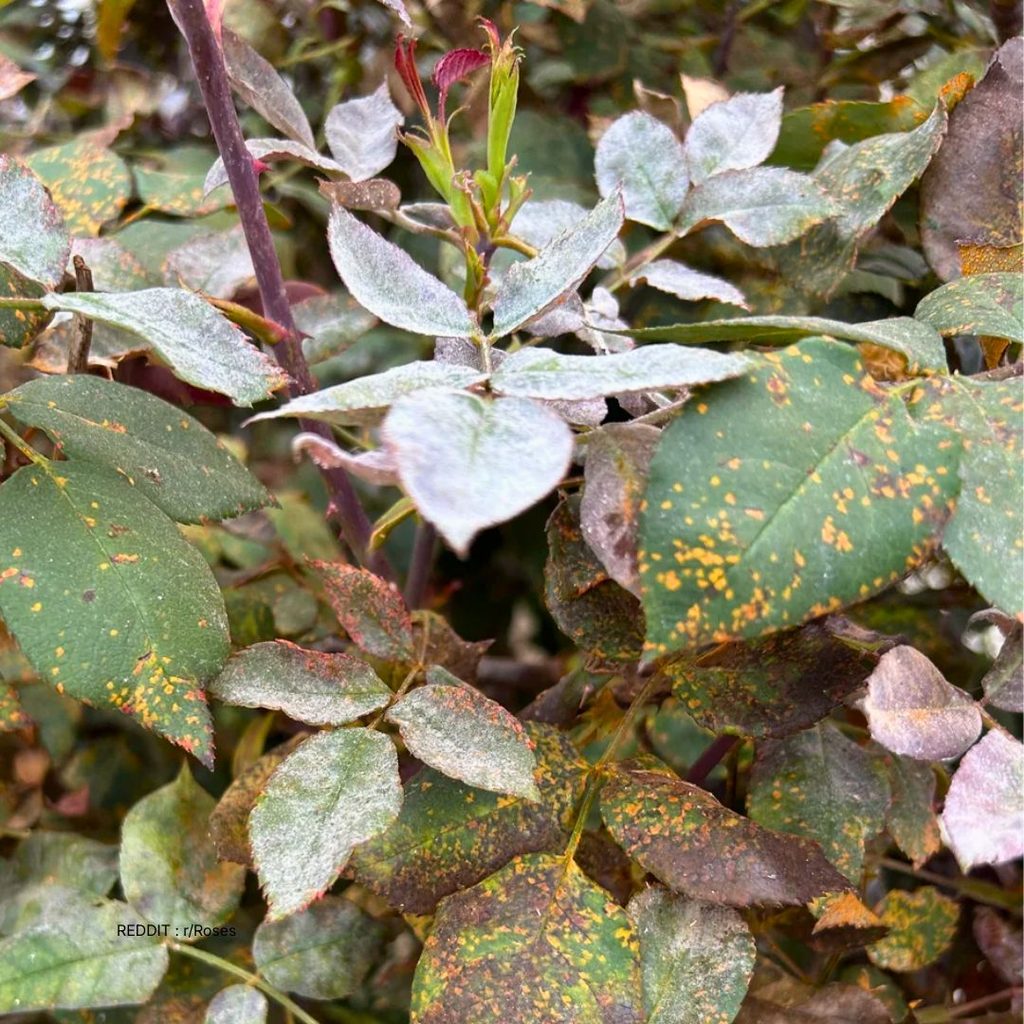
The fungus that causes black spot survives winter on old leaves and canes. It spreads when water splashes its spores onto wet rose leaves and they stay damp for several hours.
Understand the Fungus and Its Spores: The Tiny Culprit Hiding in Last Year’s Leaves
The black spot fungus has a scientific name: Diplocarpon rosae. It only attacks roses, so your tomatoes and lilies are safe from this one.
The fungus survives winter on fallen leaves and infected canes. When spring arrives, it produces new fungal spores. These spores can’t travel far on their own. They need water to carry them from old debris to fresh leaves.
Once a spore lands on a wet leaf, it can get inside in less than a day. Black spots usually show up about 3 to 10 days later. By then, each spot is making new spores.
Quick Tip: Rake up and bin fallen rose leaves in fall and early spring. I don’t put them in my compost pile.
See How Rain, Wet Leaves and Watering Fuel Infection: Why Seven Wet Hours Matter More Than You Think
Spores need wet conditions to start an infection. The key number is leaf wetness duration, or how long a leaf stays wet. Studies show spores need about 7 hours of steady leaf wetness to infect a leaf.
Here is what raises the risk:
| Cause | Why It Helps the Fungus |
|---|---|
| Rain | Splashes spores from soil and old leaves onto new growth |
| Overhead watering | Wets leaves and splashes spores, just like rain |
| Evening watering | Leaves stay damp all night |
| Warm, humid weather | Leaves dry slowly, and spores grow best around 65–75°F |
Overhead irrigation from sprinklers is a common problem I see in home gardens. Water at the base of the plant instead, and do it in the morning.
In humid areas like the U.S. Southeast, you may see black spot all summer. In dry climates, it often shows up only during rainy stretches.
Quick Tip: Touch a leaf in the late morning. If it still feels wet and cool, your roses need more sun or better airflow.
When and How to Use Fungicides
Gentle sprays like neem oil and potassium bicarbonate work best early, before black spot spreads. For outbreaks that keep coming back, stronger rose-labeled fungicides like chlorothalonil or myclobutanil can help. Rotate products and follow the label.
Compare Neem Oil and Other Lower-Impact Options (One Works Better as a Shield Than a Cure)
I always start with the mild stuff. These sprays mostly protect healthy leaves. They won’t clear spots that are already there.
| Option | How It Helps | Watch Out For |
|---|---|---|
| Neem oil | Coats leaves so spores have a harder time taking hold | Can burn leaves in hot sun |
| Potassium bicarbonate | Makes the leaf surface less friendly to fungus | Washes off in rain |
| Copper fungicide | Stops spores from sprouting | Can build up in soil with heavy use |
Spray every 7 to 14 days, or sooner after rain. Wet both sides of the leaves evenly, but don’t let them drip.
Quick Tip: Skip neem oil when it’s above about 90°F. In hot zones, spray at dusk to keep leaves from scorching.
Choose a Rose-Labeled Fungicide for Persistent Outbreaks (Contact vs. Systemic Makes a Big Difference)
If black spot returns every summer, I move up to a true rose fungicide. Check that the label lists roses and black spot. If it doesn’t, move on.
There are two main types:
- Contact fungicides, like chlorothalonil, sit on the leaf surface. They block new infections but wash off over time.
- Systemic fungicides, like myclobutanil, soak into the leaf. They last longer and hold up better in rain.
Products such as BioAdvanced Disease Control for roses are systemic and easy to find at garden stores. They’re handy in wet climates, where contact sprays rinse away fast.
Quick Tip: Start spraying in spring when new leaves open. If you wait until the bush is half bare, you’re playing catch-up.
Apply Treatments Safely and Limit Fungicide Resistance (Using the Same Spray Every Time Can Backfire)
Black spot fungus can adapt. If you use one product over and over, it may stop working. That’s called fungicide resistance.
To slow it down, rotate products that work in different ways. Look for the FRAC group number on the label, and switch groups every one or two sprays. For example, you could alternate myclobutanil (Group 3) with chlorothalonil (Group M5).
Follow these safety basics:
- Wear gloves and long sleeves.
- Spray on a calm, dry day when no rain is expected for 24 hours.
- Keep kids and pets away until the leaves dry.
- Never mix products unless the label says you can.
Quick Tip: Rake up fallen spotted leaves before each spray. Fewer spores on the ground means your spray has less to fight.
Everyday Habits That Help Keep Leaves Healthy
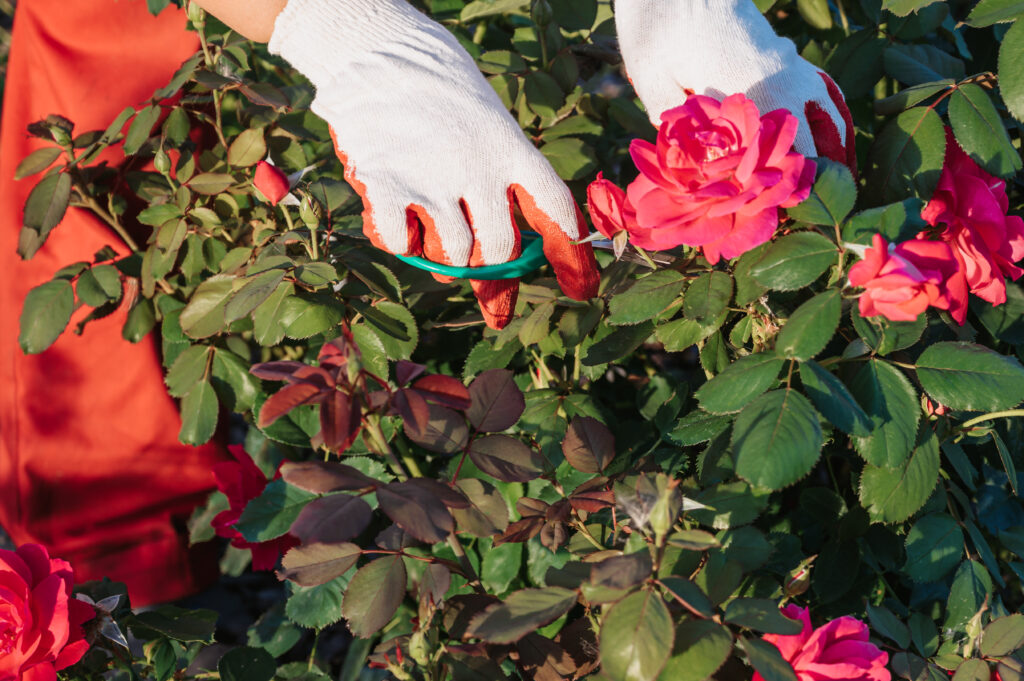
Black spot spreads when rose leaves stay wet for hours. The goal is simple: keep water off the foliage, let air move, and clear away fallen debris. A few small routines each week can make a real difference.
Water at the Base With Soaker Hoses: The Easy Switch That Keeps Leaves Dry
Black spot spores need water on a leaf to sprout. They usually need about seven hours of leaf wetness to infect it. Overhead irrigation from sprinklers gives them exactly that, and it splashes spores from the soil onto low leaves.
Soaker hoses fix both problems. They drip water slowly into the soil, right where roots can use it. The leaves stay dry, while the soil gets a deep, even soak.
I lay mine in a loose loop around each rose and cover it with mulch. If the top inch or two of soil feels dry, it’s time to water.
Quick Tip: Water in the morning. If you must hand-water, aim at the soil, not the plant.
In hot, dry zones, you may need to water more often. In rainy climates, skip watering after a good soak from the sky.
Prune and Space Roses So Foliage Dries Faster: Why Crowded Bushes Stay Sick
Dense, tangled roses trap moisture. After rain or morning dew, inner leaves can stay damp long after the outside dries. That damp center is where black spot often starts.
Pruning opens up the plant so air and sunlight can reach every leaf. Here’s what I cut:
- Dead or damaged canes, down to healthy green wood
- Crossing canes that rub together
- Thin, weak stems in the center of the bush
Spacing matters, too. Give most shrub roses about 3 feet between plants, or more for large varieties. You should be able to see light through the bush.
Quick Tip: Clean your pruners with rubbing alcohol between plants so you don’t carry spores from one rose to the next.
Do your main pruning in late winter or early spring. In mild zones, you may be able to start as early as January.
Keep Beds Clean Through the Growing Season: Small Chores That Stop Spores Early
Black spot spores survive on fallen leaves and old stems. When rain hits them, the spores splash back onto your roses. A tidy bed breaks that cycle.
Removing infected leaves is the biggest step. Pick off any leaf with black spots or yellowing, and rake up any that drop. Bag them and put them in the trash. Don’t compost them, since home piles often don’t get hot enough to kill spores.
| Task | How Often |
|---|---|
| Pick off spotted leaves | Every few days |
| Rake fallen leaves | Weekly |
| Refresh mulch | Spring and fall |
A 2 to 3 inch layer of fresh mulch helps block splashing from the soil.
Quick Tip: Walk your roses with a small bag in hand. It turns a chore into a quick five-minute habit.
Choose Roses Wisely and Prepare for Next Season
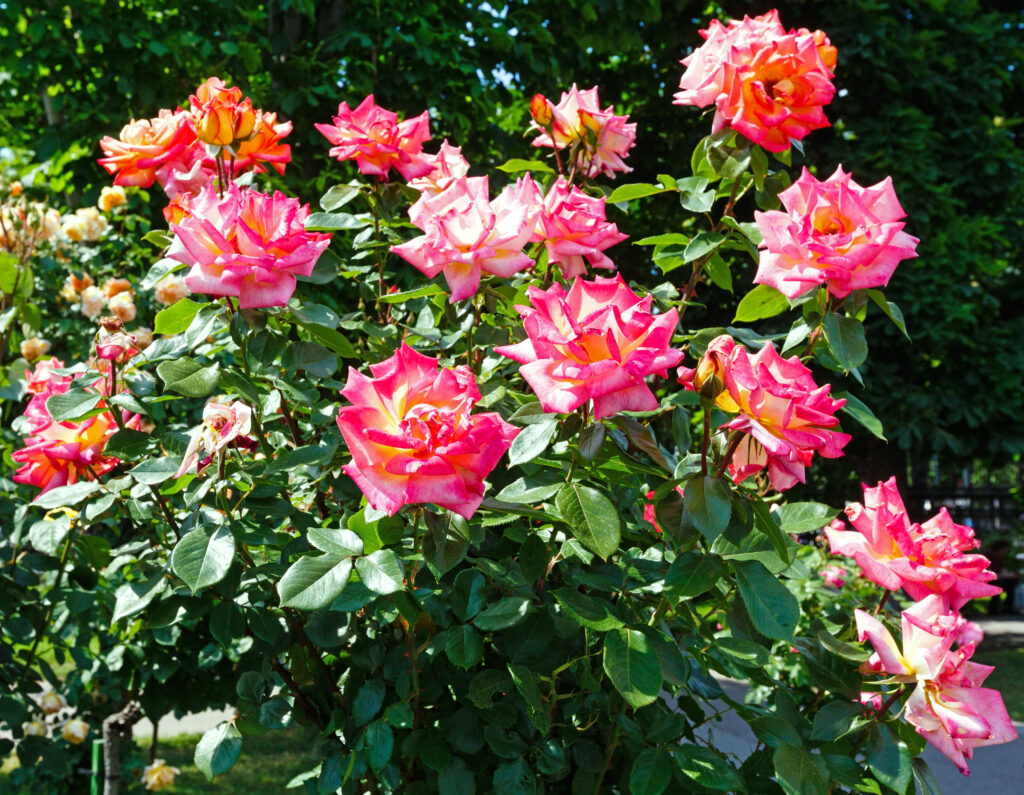
Roses bred to fight disease are less likely to get rose black spot. Clearing out infected leaves and canes in late winter also removes the fungus that could restart the cycle in spring.
Select Disease-Resistant Varieties Suited to Your Area (Your Climate Matters More Than the Label)
I always tell friends that the best spray is the one you never need. Disease-resistant rose varieties get black spot less often, and they shake it off faster when they do.
Look for these on plant tags:
| What to Look For | What It Means |
|---|---|
| ADR rating | Passed years of German field tests with no spraying |
| “Disease resistant” + local trial results | Tested in conditions closer to yours |
| Shrub or landscape type | Often tougher than hybrid teas |
Some well-known picks include Drift, Oso Easy, Easy Elegance, and many Kordes roses.
Your region still matters. A rose that stays clean in dry Colorado may spot badly in humid Georgia. Ask a local nursery or extension office what holds up near you.
Quick Tip: Check a public rose garden in late summer. The roses with the fullest, greenest leaves are the ones to write down.
Know What to Expect From Knock Out Roses (Resistant Does Not Mean Immune)
Knock Out roses earned their fame for good reason. They bloom a lot, need little care, and resist black spot better than most classic roses.
But here’s the catch: Knock Out roses can still get black spot. It happens most in hot, humid areas, shady spots, or when plants are packed too close together. Some gardeners also report more spotting as their plants get older.
What to watch for:
- Yellow leaves with dark, fuzzy-edged spots on the lower branches
- Leaves dropping in mid to late summer
- Thin growth in the center of the shrub
Quick Tip: Give each Knock Out a few feet of space and prune the middle open in late winter. Air moving through the plant keeps the leaves drier.
Remove Overwintering Debris Before Spring Growth (The Fungus Is Hiding in Plain Sight)
Black spot doesn’t leave in winter. It waits. The fungus survives in fallen leaves on the ground and in small purple-black stem lesions on the canes.
When spring rain splashes, spores jump from that debris onto fresh new leaves. That’s how last year’s problem becomes this year’s problem.
Before buds swell, do this:
- Rake up every old leaf under and around your roses.
- Pull off any dried leaves still stuck to the canes.
- Cut out canes with dark stem lesions, down to clean green or white wood.
- Bag it all and throw it out. Don’t compost it.
- Add fresh mulch to block splashing from the soil.
In warm zones where roses keep their leaves all winter, strip off the old foliage by hand during your late-winter pruning.
Quick Tip: Wipe your pruners with rubbing alcohol between plants. It takes five seconds and keeps you from spreading spores.
Frequently Asked Questions
Black spot comes from a fungus called Diplocarpon rosae that spreads through splashing water and thrives on wet leaves. You can slow it down by removing sick leaves, using the right spray, and changing how you water and space your roses.
What Causes Black Spot on Roses? (Hint: Wet Leaves Are the Real Troublemaker)
Black spot comes from a fungus called Diplocarpon rosae. It lands on leaves as tiny spores, then waits for water.
The spores need about seven hours of wet leaves to start an infection. Warm, damp weather between 60°F and 80°F makes things even easier for them. That’s why I see the worst outbreaks in humid spring and early summer.
You’ll first notice round black spots with feathery, fringed edges. Soon, the leaf turns yellow around the spots and drops off.
Quick Tip: Run your hand over the leaves in the evening. If they still feel damp, the fungus has a good chance to settle in.
How Does Rose Black Spot Spread? (It Hitches a Ride on Every Raindrop)
Water is the main way black spot spreads. Rain or a garden hose splashes spores from sick leaves onto healthy ones. Those splashes can reach nearby roses, too.
The fungus also spends winter on fallen leaves and canes. When spring rain hits that old debris, the cycle starts again. Your hands, pruners, and gloves can carry spores as well.
In dry climates, like parts of the Southwest, black spot shows up far less often. In wet, humid areas, such as the Southeast, you’ll likely fight it every year.
Quick Tip: Wipe your pruners with rubbing alcohol after cutting a spotted plant, before you move on to the next one.
How Can I Treat Black Spot on My Roses? (Spoiler: Spotted Leaves Won’t Heal)
Here’s the honest truth: once a leaf has black spots, it won’t turn green again. Treatment is about stopping the spread to healthy leaves.
This is the order I follow:
- Pick off spotted leaves from the plant.
- Rake up fallen leaves from the ground below.
- Throw them in the trash, not the compost pile.
- Spray a fungicide on the remaining leaves, tops and bottoms.
- Repeat the spray as the label directs, often every 7 to 14 days.
Don’t strip a badly hit rose bare in one day. Losing all its leaves at once stresses the plant. Remove the worst ones first, then keep going over a week or two.
Quick Tip: Spray on a calm, dry morning so the leaves dry before evening.
Which Fungicide Works Best for Black Spot on Roses? (A Few Names Keep Showing Up)
Several fungicides work well if you use them on a schedule. Here are some common choices you’ll find at garden centers:
| Fungicide | Type | Notes |
|---|---|---|
| Chlorothalonil | Synthetic | Protects healthy leaves; spray before spots spread |
| Myclobutanil | Synthetic | Moves into the leaf; helps with early infections |
| Tebuconazole | Synthetic | Found in many rose care products |
| Sulfur | Organic | Don’t use above 85°F or it can burn leaves |
| Copper | Organic | Can build up in soil with heavy use |
| Neem oil | Organic | Works best as prevention; mild effect |
For a bad outbreak, I’d choose a product with myclobutanil or tebuconazole. I switch between two types during the season. Using one product over and over can let the fungus become resistant.
Always read and follow the label. It’s the law, and it keeps your roses and you safe.
Quick Tip: Start spraying in spring when new leaves open, not after the spots take over.
Are Homemade Remedies Effective Against Black Spot on Roses? (Some Help a Little, None Are Magic)
The most popular home recipe is baking soda spray. Mix 1 tablespoon of baking soda and a few drops of mild dish soap into 1 gallon of water. It changes the leaf surface and can make it harder for the fungus to grow.
Results are mixed, though. It works better as prevention than as a cure. Too much baking soda can burn leaves and leave salt in the soil.
Some gardeners try milk sprays or vinegar. I haven’t seen strong proof that these work better than a real fungicide. They’re fine to test on a mild case, but I wouldn’t count on them for a serious one.
Quick Tip: Test any homemade spray on a few leaves first. Wait two days and check for brown, crispy edges.
How Can I Prevent Black Spot From Coming Back? (Small Habits Beat Big Sprays)
Prevention starts with where and how you grow your roses. A few simple changes can make a real difference.
- Choose resistant roses. Types like Knock Out and many shrub roses are less likely to get black spot.
- Give them sun. Aim for at least 6 hours a day. Morning sun dries dew quickly.
- Water the soil, not the leaves. A soaker hose or watering can at the base works well.
- Water in the morning. If you water at dusk, leaves may stay wet overnight.
- Leave space between plants. Good airflow helps leaves dry quickly.
- Add mulch. A 2- to 3-inch layer keeps soil spores from splashing up.
- Clean up in fall. Remove every fallen leaf before winter.
In late winter, I also prune out old, dark canes. That removes places where the fungus may hide.
Quick Tip: If you can smell damp, musty leaves under your rose bush, it’s time to clean up.