
Asters bring bright color to your garden in late summer and fall. Like most plants, though, they can run into trouble. Knowing what to look for helps you catch problems early.
The most common aster problems are powdery mildew, aster yellows, rust, leaf spot, and pests like aphids, lace bugs, and spider mites. You can prevent or manage most of these problems with good spacing, proper watering, and regular checks.
In this guide, you’ll learn how to spot each pest and disease. You’ll also find simple steps to keep your asters healthy and blooming.
Start With the Symptoms
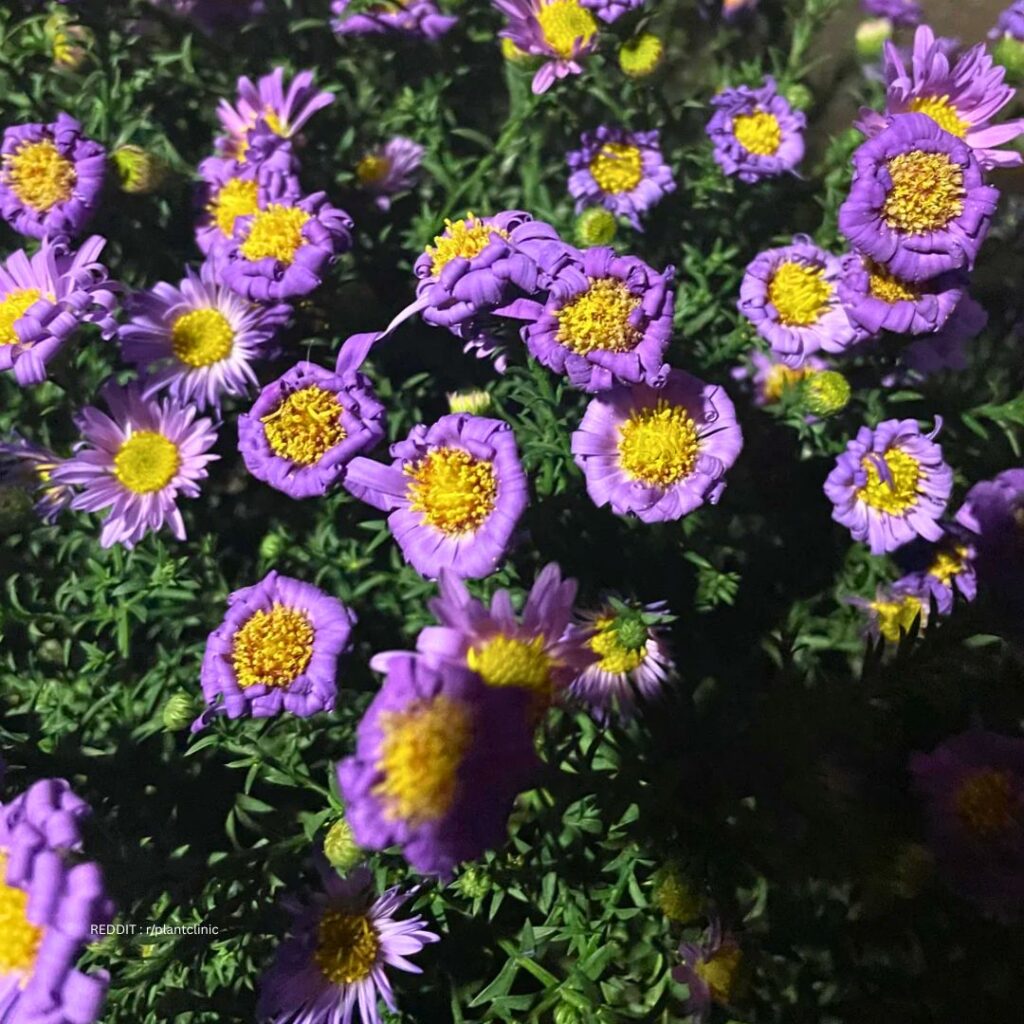
What you see on your asters can point to the problem. White powder usually means powdery mildew, while yellow or drooping plants can signal wilt or root trouble. Fine webs, sticky leaves, or holes often mean spider mites, aphids, or caterpillars.
White Coatings, Spots, and Damaged Flowers
A white or gray powder on the leaves is the most common sign of powdery mildew. It often shows up in late summer, when days are warm and nights are cool and damp. The powder can spread to stems and flower buds.
Leaf spots look different. You may see round brown, black, or purple marks, sometimes with a yellow ring around them. Over time, spotted leaves can turn yellow and drop.
Check the flowers too. Look for these signs:
- Brown or mushy petals, which can mean gray mold (Botrytis) in wet weather
- Green, twisted flowers, which can point to aster yellows
- Buds that never open, which may result from mildew or insect feeding
Yellowing, Wilting, and Stunted Growth
If your aster droops even when the soil is moist, it may have wilt. Fusarium wilt is a fungus that blocks the plant’s water flow. Leaves often turn yellow on one side first, and you may see brown streaks inside the stems when you cut them.
Root rot can look similar, but you can tell by checking the roots. Healthy roots are white and firm, while rotted roots are brown and soft.
Use this quick guide:
| Symptom | Possible Cause |
|---|---|
| Yellow, drooping leaves in moist soil | Wilt or root rot |
| Small, bushy, pale growth | Aster yellows |
| Slow growth with curled leaves | Heavy aphid feeding |
Stunted plants that stay small all season deserve a closer look, since several problems can cause them.
Webbing, Sticky Leaves, and Chewed Foliage
Fine, silky webs between leaves are a classic sign of spider mites. These pests are tiny, so you may notice pale speckles on the leaves first. Hold a white paper under a branch and tap it. Moving specks mean mites are present.
Sticky, shiny leaves usually point to aphids. They leave behind a sugary liquid called honeydew, which can grow black, sooty mold. Look under leaves and on new stems for clusters of small green, black, or brown insects.
Holes or ragged leaf edges often come from caterpillars. Check for:
- Small dark droppings on leaves below
- Rolled or folded leaves tied with silk
- Missing petals or chewed buds
Slugs can also chew leaves, but they leave shiny slime trails behind.
Fungal Problems on Leaves and Flowers
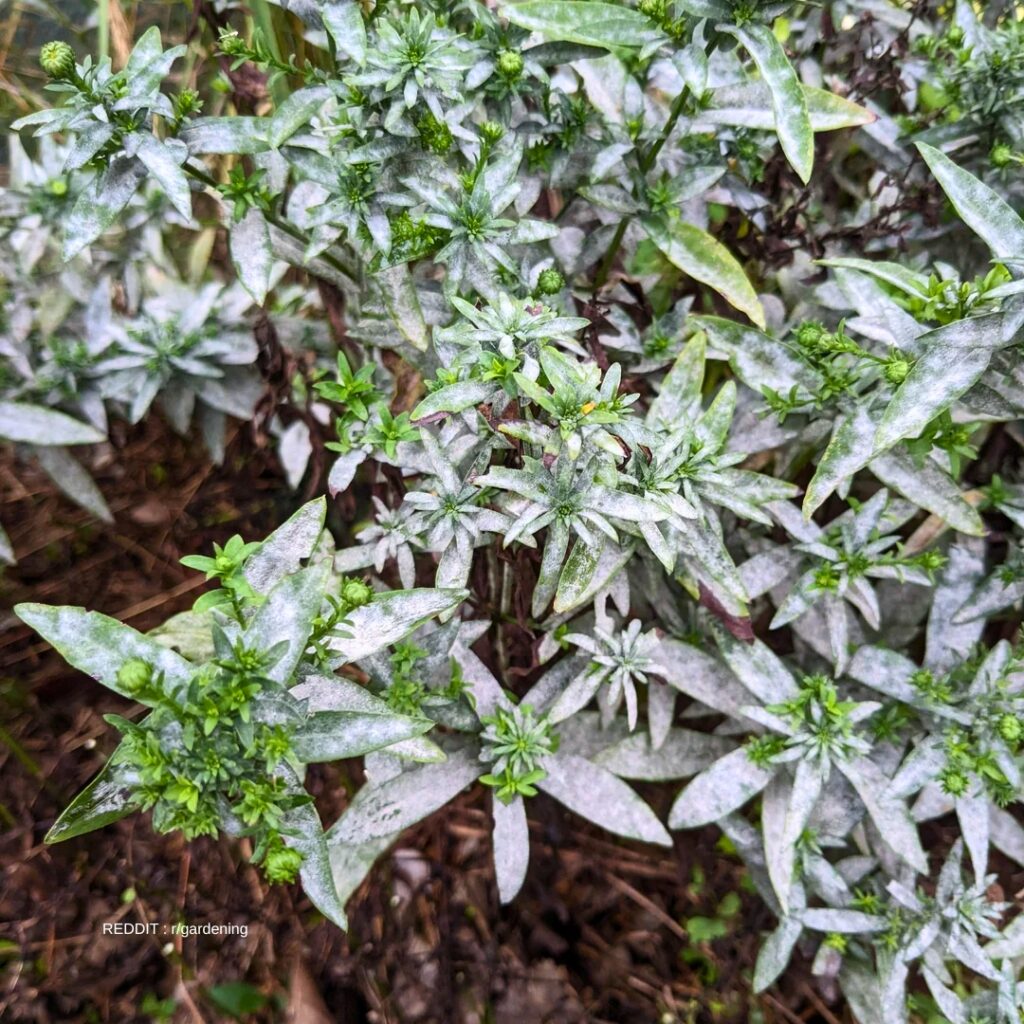
Fungal diseases on asters often show up as white powder, orange bumps, dark spots, or gray fuzz on leaves and blooms. Most spread in damp, crowded conditions, so good airflow and smart watering go a long way.
Powdery Mildew
Powdery mildew is one of the most common problems on asters. You’ll see white or gray powder on the leaves, usually starting in mid to late summer.
The fungus likes warm days, cool nights, and crowded plants. Leaves may curl, yellow, and drop early. It rarely kills the plant, but it can leave it looking weak and messy.
Ways to manage it:
- Space plants so air can move between them.
- Water at the base, not over the leaves.
- Remove badly infected leaves and throw them in the trash.
- Choose resistant types, such as Aster novae-angliae ‘Purple Dome.’
If the problem comes back every year, you can spray a fungicide with sulfur or potassium bicarbonate. Start early, before the powder spreads.
Rust and Leaf Spots
Rust appears as small orange, yellow, or brown bumps, mostly on the undersides of leaves. Rub a leaf, and orange dust may come off on your finger. Some aster rusts spend part of their life on nearby pine trees.
Leaf spots look different. They form round or uneven brown, black, or purple marks on the leaves. The spots may grow together, and the leaves can turn yellow and fall off.
| Problem | What You See | Where It Starts |
|---|---|---|
| Rust | Orange or brown raised bumps | Undersides of leaves |
| Leaf spots | Flat dark spots, sometimes with a yellow ring | Lower leaves first |
To control both, pick off infected leaves and clean up fallen debris in fall. Avoid wetting the leaves when you water. A labeled fungicide can help if you apply it at the first sign of trouble.
Botrytis Blight
Botrytis blight, also called gray mold, attacks flowers, buds, and soft stems. It appears most often during cool, rainy weather.
At first, you may see brown, water-soaked spots on the petals. Soon, fuzzy gray mold covers the damaged parts. Buds may turn brown and never open.
Steps to stop it:
- Cut off and bag any moldy flowers or stems right away.
- Deadhead old blooms, since the fungus feeds on dying tissue.
- Thin out thick clumps to improve airflow.
- Water in the morning so plants dry before night.
Keep mulch a few inches away from the stems to reduce moisture. In very wet seasons, you can use a fungicide labeled for botrytis on ornamental plants. Always follow the label directions.
Serious Diseases Affecting Growth and Roots
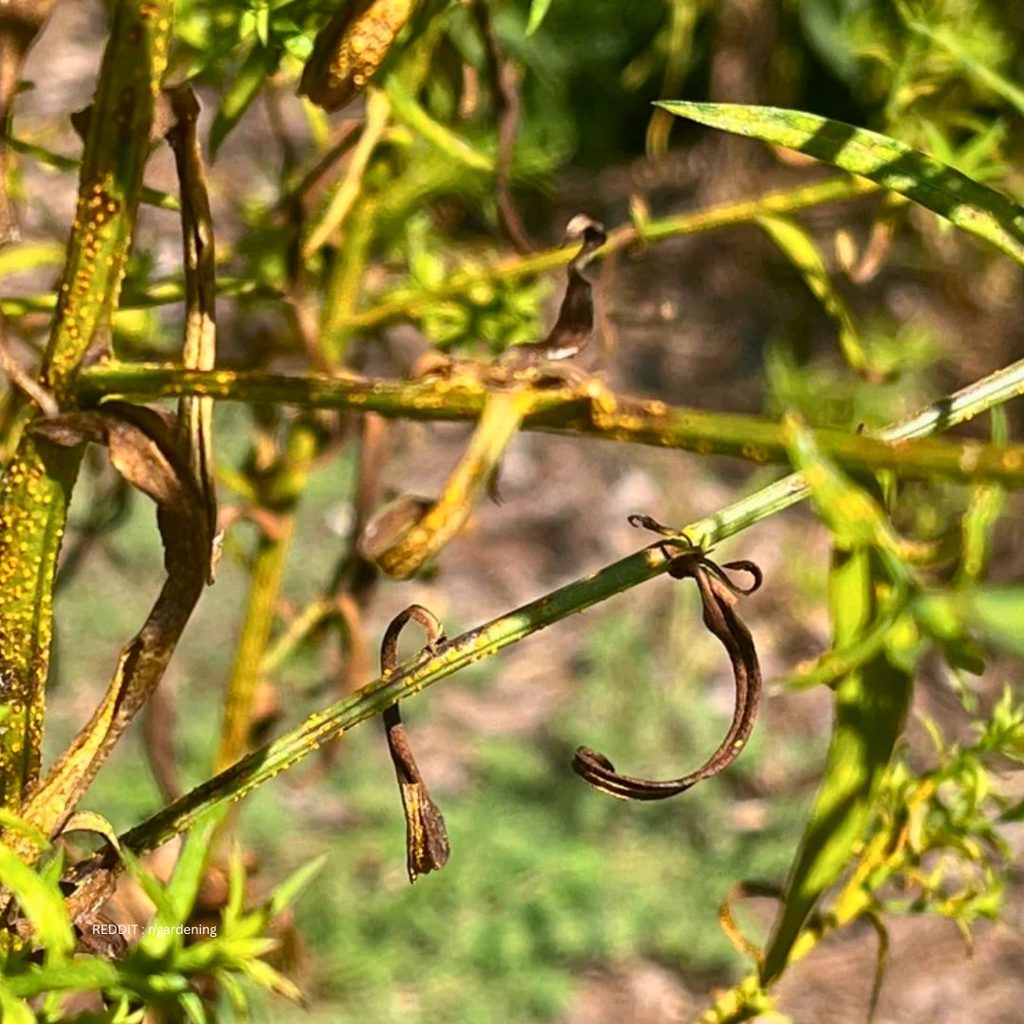
Some aster diseases go deeper than spotted leaves. Insects can spread a tiny organism, while a soil fungus can block water flow and soggy soil can rot roots. Any of these problems can kill your plants if you don’t catch them early.
Aster Yellows and Its Leafhopper Connection
Aster yellows comes from a phytoplasma, a tiny bacteria-like organism that lives in the plant’s sap. It can’t spread on its own. Instead, leafhoppers carry it from sick plants to healthy ones as they feed.
Watch for these signs:
- Leaves turn pale yellow
- Flowers stay green or look twisted
- Stems grow thin, upright, and bunched together
- Plants look stunted
There is no cure. Pull up infected plants and throw them away right away, so leafhoppers can’t spread the disease further. Don’t add them to your compost.
To prevent it, control weeds where leafhoppers hide. You can also cover young plants with light row covers.
Fusarium Wilt
Fusarium wilt comes from a fungus that lives in the soil. It enters through the roots and clogs the tubes that move water up the stem. Even with plenty of water, your plant can’t drink.
The first sign is usually wilt on one side of the plant. Lower leaves turn yellow, then brown. Cut the stem, and you may see brown streaks inside.
| Step | What to Do |
|---|---|
| Remove | Dig out sick plants with the roots |
| Rotate | Don’t plant asters in the same spot for several years |
| Choose | Buy wilt-resistant varieties when you can |
| Clean | Wash tools after working with infected plants |
The fungus can stay in soil for years, so prevention matters most.
Root Rot
Root rot happens when roots sit in wet soil for too long. Fungi and water molds attack the weakened roots, turning them brown, soft, and mushy. Healthy roots should be white or tan and firm.
Above ground, your aster may wilt, yellow, or stop growing. These signs can look like thirst. Many gardeners then add more water, which only makes the problem worse.
The best defense is well-draining soil. Here’s how to help:
- Mix compost into heavy clay soil
- Plant in raised beds if your yard stays wet
- Water at the base only when the top inch of soil is dry
- Use pots with drainage holes
If rot is severe, remove the plant. For mild cases, trim off bad roots and replant in fresh, dry soil.
Insects and Mites to Watch For
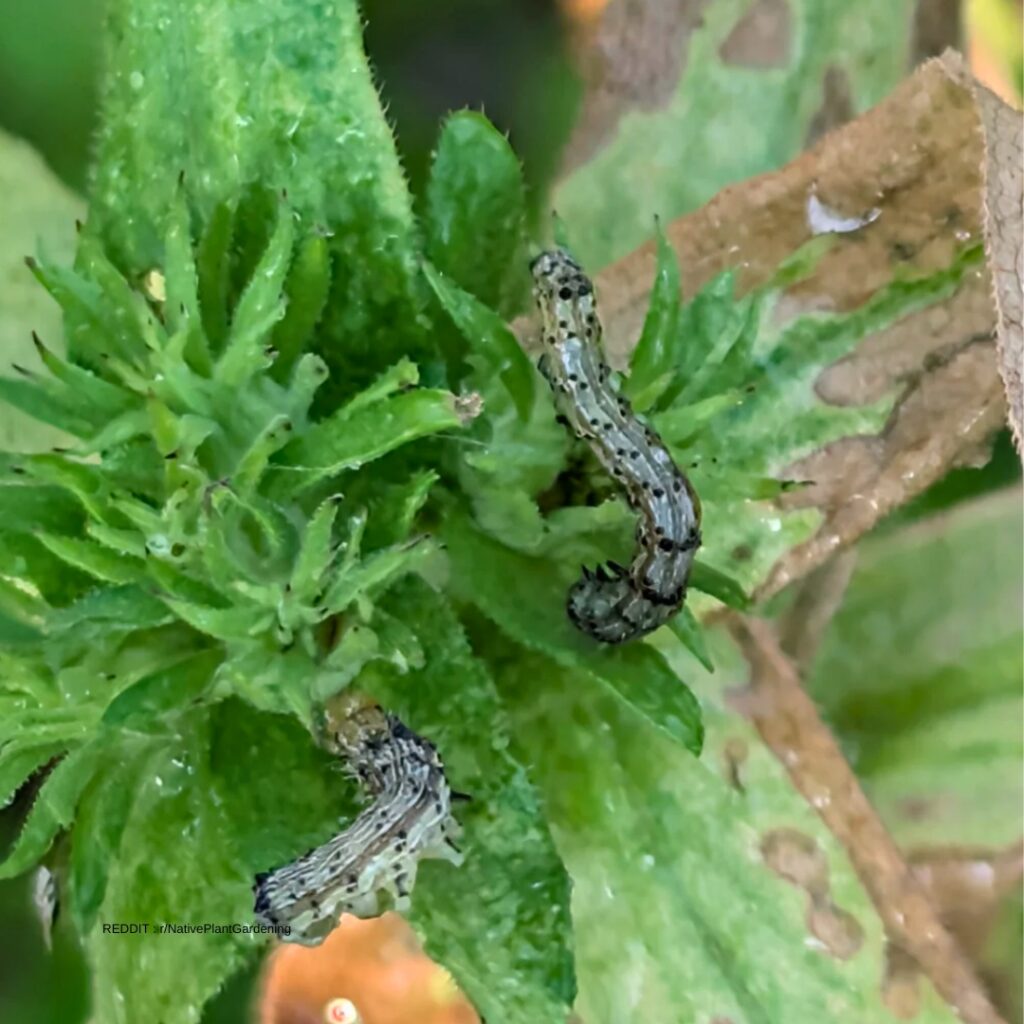
Most pests on asters are small sap-feeders that hide under leaves, while caterpillars chew visible holes. Check your plants once a week and encourage helpful insects like lacewings and ladybugs to help keep most problems small.
Aphids, Thrips, and Leafhoppers
Aphids are soft, pear-shaped insects that gather on new growth and flower buds. They suck plant sap, which can curl leaves and leave a sticky coating called honeydew. A strong spray from your hose can knock many of them off.
Thrips are tiny, thin insects that scrape flower petals and leaves. Look for silver streaks, brown spots, or flowers that fail to open.
Leafhoppers are small, wedge-shaped insects that jump when you touch the plant. They’re most concerning because they can spread aster yellows, a disease with no cure.
| Pest | Main Sign | Simple Control |
|---|---|---|
| Aphids | Sticky, curled leaves | Water spray, insecticidal soap |
| Thrips | Silver streaks on petals | Remove damaged blooms |
| Leafhoppers | Yellowing, odd green flowers | Row covers, remove sick plants |
Spider Mites
Spider mites aren’t insects. They’re tiny relatives of spiders, and you may need a magnifying glass to see them. They thrive in hot, dry weather, so keep an eye out in mid to late summer.
Signs of spider mites include:
- Tiny yellow or white dots on the tops of leaves
- Fine webbing under leaves or between stems
- Leaves that turn bronze, dry out, and drop
To check, hold a white sheet of paper under a branch and tap it. If you see moving specks, mites are present.
Spray water on the undersides of leaves every few days to raise humidity and wash mites away. If that doesn’t help enough, use insecticidal soap or horticultural oil. Avoid broad-spectrum pesticides because they kill predatory mites that eat spider mites.
Caterpillars
Caterpillars are the young stage of moths and butterflies. On asters, you may find several kinds, including loopers and pearl crescent butterfly larvae. They chew ragged holes in leaves and sometimes eat buds.
Look for these clues:
- Holes or missing edges on leaves
- Small dark droppings on lower leaves
- Rolled or webbed leaves where larvae hide
If you find just a few caterpillars, pick them off by hand and drop them in soapy water. For larger groups, Bacillus thuringiensis (Bt) is a natural spray that targets caterpillars without harming bees.
Some caterpillars become native butterflies, so you may want to leave them if the damage is light. Beneficial insects such as lacewings, parasitic wasps, and birds will often keep their numbers in check.
Choose the Right Response
Some aster problems mean you need to pull the plant, while others clear up with a gentle spray. Match the fix to the pest or disease to save time and protect the rest of your garden.
When to Remove Damaged Leaves or Entire Plants
Pruning is often your first and easiest step. If only a few leaves show leaf spot, rust, or powdery mildew, cut them off and throw them in the trash. Don’t add them to your compost pile.
Some problems call for removing the whole plant:
- Aster yellows: Look for yellow, stunted growth and green, leafy flowers. There’s no cure, so dig up the plant, roots and all.
- Root rot: If the stems are mushy at the base and the plant wilts in wet soil, it likely won’t recover.
- Heavy wilt or stem damage: Plants that are mostly brown or broken are hard to save.
Pull plants with aster yellows quickly to keep leafhoppers from spreading the disease to healthy plants.
When Soaps, Oils, or Miticides May Help
Soft-bodied pests like aphids, lace bugs, and spider mites often respond well to mild sprays.
| Product | Best For | Tips |
|---|---|---|
| Insecticidal soap | Aphids, young lace bugs, mites | Must touch the pest to work |
| Neem oil | Aphids, mites, early powdery mildew | Spray in the evening to avoid leaf burn |
| Miticides | Large spider mite outbreaks | Use only if soaps and oils fail |
Spray both the tops and bottoms of the leaves. You’ll likely need to repeat every 5 to 7 days for a few weeks.
Avoid spraying when temperatures exceed 90°F or when bees are active. Always read the product label first.
When a Fungicide Is Appropriate
A fungicide makes sense when fungal disease keeps coming back or spreads quickly. Powdery mildew, rust, and leaf spot are the most common reasons gardeners use fungicides on asters.
Most fungicides work best as prevention. They protect healthy leaves, but they won’t heal leaves that are already damaged. Start spraying at the first sign of trouble, or before humid weather if your asters had problems last year.
Keep these points in mind:
- Remove infected leaves before you spray.
- Choose a product labeled for ornamental flowers and your specific disease.
- Switch between products with different active ingredients to keep them working.
Fungicides won’t help with aster yellows. A bacteria-like organism causes the disease, not a fungus.
Keep Asters Healthier Next Season
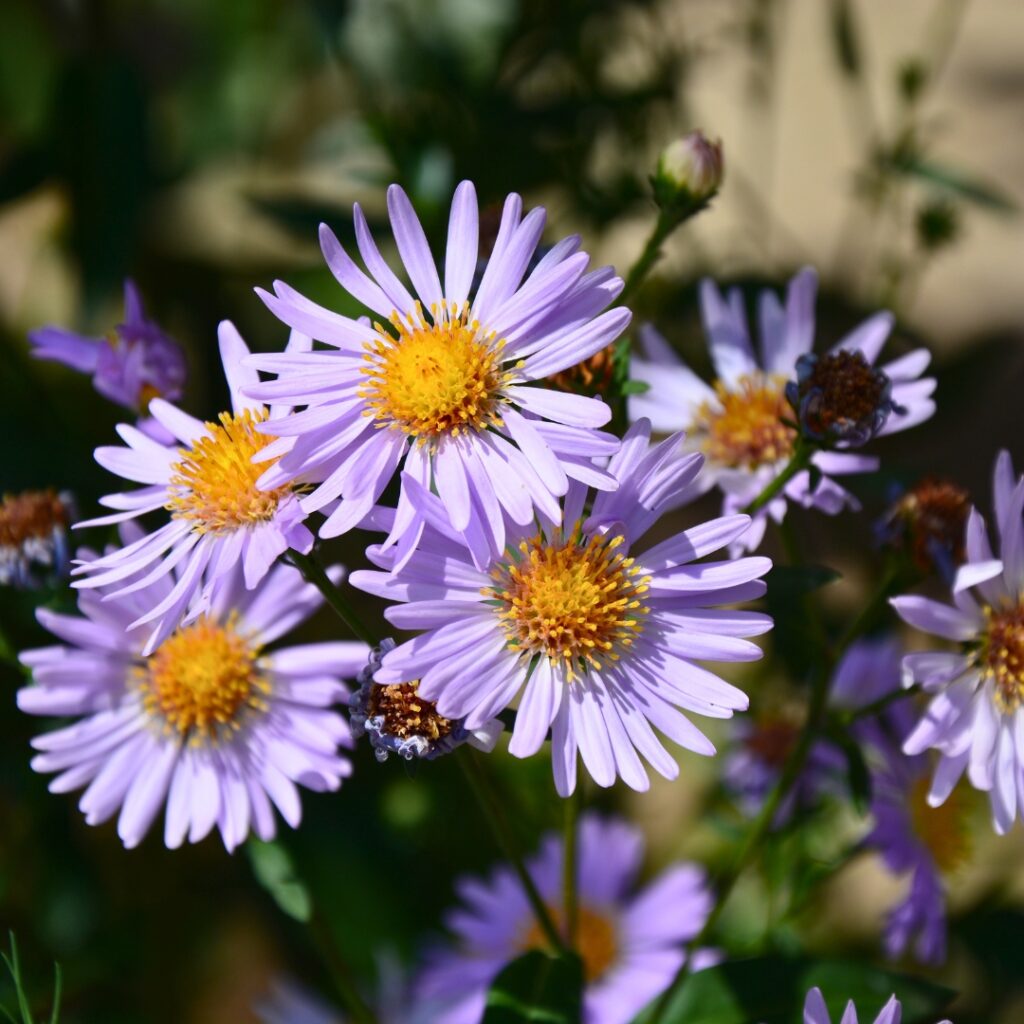
Asters stay healthiest with full sun, room for air to move, and well-drained soil. Careful watering, a clean garden bed, disease-resistant aster varieties, and crop rotation for annual types can also reduce the risk of mildew, wilt, and insect damage.
Give Plants Sun, Space, and Good Drainage
Most asters need full sun, or at least 6 hours of direct light each day. Shady spots keep leaves damp longer, making it easier for powdery mildew and leaf spot to take hold.
Spacing matters too. Leave about 1 to 3 feet between plants, depending on how wide your variety grows. That gives air room to move through the leaves, helping them dry faster.
Plant asters in well-drained soil. Wet, heavy soil can lead to root rot and wilt.
- Mix compost into clay soil before planting.
- Use a raised bed if water sits in your yard after rain.
- Divide crowded perennial clumps every 2 to 3 years in spring.
Water Carefully and Clear Away Debris
How you water makes a big difference. Water at the base of the plant, rather than over the leaves. A soaker hose or drip line works well.
Try to water in the morning, so any wet leaves dry before night. Give plants about 1 inch of water per week, and skip watering if the soil is still moist.
Fungus spores and insect eggs can survive winter in old plant parts. Keeping the bed clean helps prevent problems from coming back.
- Rake up fallen leaves that show spots or mildew.
- Cut stems back to the ground after frost.
- Throw diseased material in the trash, not the compost pile.
- Pull out any plant with aster yellows right away.
Choose Suitable Varieties and Rotate Annual Plantings
Some aster varieties handle disease better than others. When you shop, look for plants labeled as mildew-resistant.
| Variety | Type | Known For |
|---|---|---|
| Aster × frikartii ‘Mönch’ | Perennial | Good mildew resistance |
| ‘Bluebird’ smooth aster | Perennial | Good mildew resistance |
| ‘October Skies’ aromatic aster | Perennial | Handles dry soil and resists mildew |
| Wilt-resistant China asters | Annual | Bred to resist fusarium wilt |
Annual China asters are prone to fusarium wilt, which can stay in the soil for years. Plant them in a new spot each year as part of crop rotation. Wait at least 3 to 4 years before planting them in the same place again.
You can also invite beneficial insects into your garden. Ladybugs and lacewings eat aphids. Plant flowers like dill, yarrow, and alyssum nearby to attract them, and avoid broad-spectrum insect sprays that kill these helpful insects.
Frequently Asked Questions
Aphids, lace bugs, leafhoppers, and spider mites are the pests you’ll see most often on asters. Powdery mildew, rust, leaf spot, and aster yellows are the main diseases. Good airflow, clean garden habits, and quick action on sick plants keep most problems under control.
What pests are most likely to eat my asters?
Aphids, aster lace bugs, leafhoppers, spider mites, and Japanese beetles are the most common pests on asters. Slugs and snails may also chew young leaves in spring.
Here’s what each one usually does:
- Aphids: Small green, black, or brown bugs that cluster on new growth and flower buds.
- Spider mites: Tiny pests that cause speckled, dull leaves and fine webbing, mostly in hot, dry weather.
- Japanese beetles: Shiny green and copper beetles that chew holes in leaves and flowers.
- Slugs and snails: Leave ragged holes and slimy trails, often on low leaves.
Deer and rabbits may nibble your asters, too. They aren’t insects, but they can cause a lot of damage.
How can I tell if my asters have a disease?
Look closely at the leaves, stems, and flowers. Signs of disease include white powder, orange or brown spots, yellowing, wilting, or flowers that look green and twisted.
Pests often leave holes, sticky residue, or visible bugs. Diseases tend to cause spots, coatings, or changes in color and shape. If you see no bugs but the plant still looks sick, a disease is more likely.
Check the undersides of leaves, too. Rust appears there as small orange bumps.
What does aster yellows look like, and can it be treated?
Aster yellows turns leaves pale yellow and makes stems grow thin and spindly. The flowers often stay green, look twisted, or grow small leafy tufts instead of petals.
A tiny organism called a phytoplasma causes this disease. Leafhoppers spread it when they feed on one plant and then move to another.
There’s no cure for aster yellows. Pull up the sick plant, roots and all, and throw it in the trash. Don’t put it in your compost pile, since that can help the disease spread.
How do I get rid of powdery mildew on asters?
Powdery mildew looks like white or gray dust on the leaves. It often appears in late summer, when days are warm and nights are cool and damp.
Try these steps to treat it:
- Cut off the leaves with the worst damage.
- Thin out crowded stems so air can move through the plant.
- Water at the base of the plant in the morning, not on the leaves.
- Spray with a fungicide made for powdery mildew, such as one containing sulfur, potassium bicarbonate, or neem oil.
Always follow the label directions on any spray. Some gardeners also choose aster types bred to resist mildew, including certain New York aster varieties.
What are the signs of aster lace bugs or leafhoppers?
Aster lace bugs make the tops of leaves look pale, speckled, or bleached. Flip a leaf over and you may spot small dark specks of waste and the bugs themselves, with their clear, lacy wings.
Leafhoppers are slim, wedge-shaped insects that jump or fly away quickly when you touch the plant. Their feeding can cause small white or yellow dots on leaves. More concerning, they spread aster yellows.
Knock off lace bugs with a strong spray of water. Insecticidal soap works on both pests when you spray it directly on them, especially on the undersides of leaves.
How can I prevent pests and diseases from coming back to my asters?
Healthy plants are better at handling pests and diseases. A few simple habits can make a big difference.
- Give plants room: Space asters about 1 to 3 feet apart, depending on the type, to let air flow.
- Water the soil, not the leaves: Wet leaves encourage fungus to grow.
- Clean up in fall: Remove dead leaves and stems, where pests and disease spores can spend the winter.
- Divide clumps: Split your asters every 2 to 3 years to keep them from getting crowded.
- Check often: Look over your plants once a week to catch problems early.
- Invite helpful insects: Ladybugs, lacewings, and small wasps eat aphids and other pests.
Avoid using too much nitrogen fertilizer. It encourages soft new growth that aphids and mildew both like.