
I’ve gathered 25 dahlia varieties that can fill your late summer garden with flower colors, shapes, and sizes for every style of planting.
From huge dinnerplate blooms to neat pompons and spiky cactus dahlia flowers, I’ll help you find varieties that fit your space and make great cut flowers. You’ll also see which forms bring soft texture, bold color, or an unusual look to the garden.
Quick Tip: I plant dahlias after frost danger passes; gardeners in cool zones may need to start later or lift tubers before winter.
How to Choose Dahlias for Your Garden
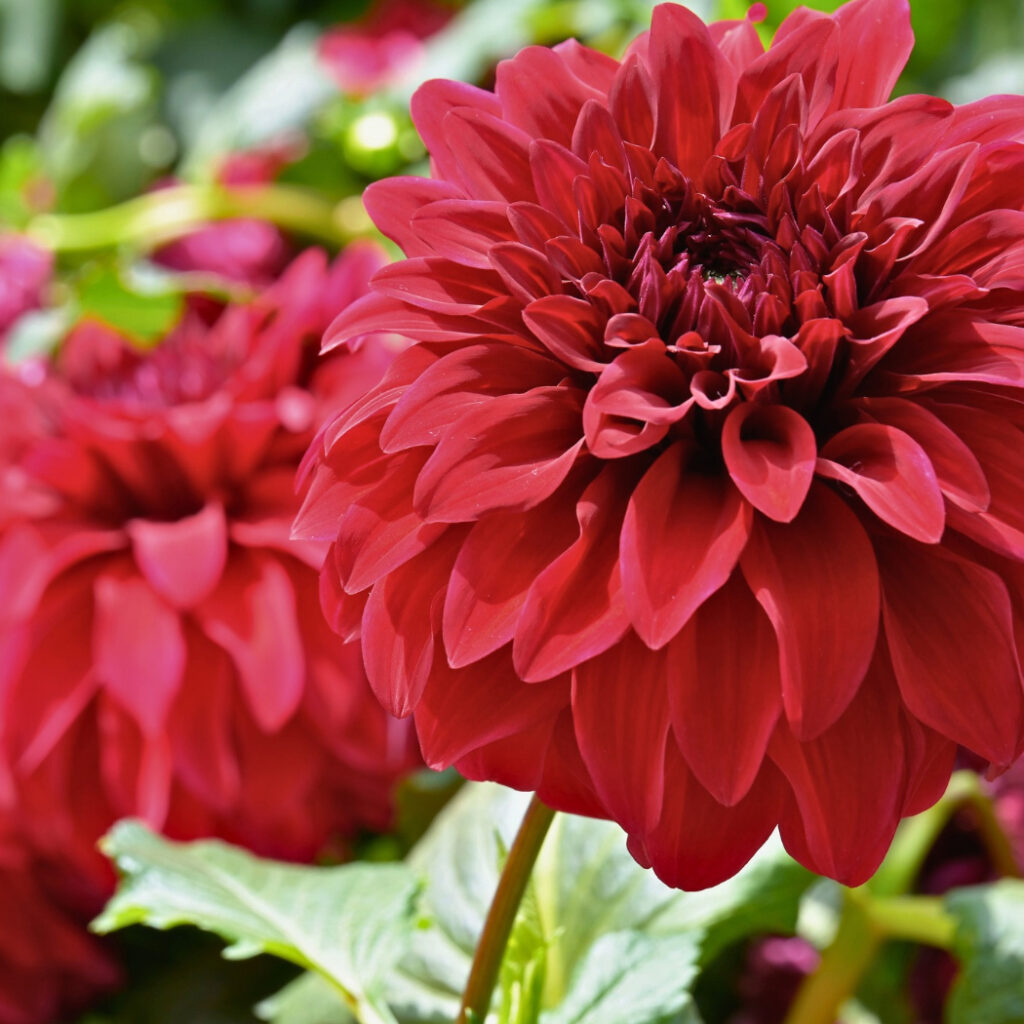
I choose dahlias by checking mature height, bloom size, and how I plan to use the flowers. A giant bloom can look stunning, but it needs room, strong support, and a spot away from smaller plants.
Match Bloom Size and Plant Height to Your Space
I use dahlia classification labels to compare bloom size and growth habit before I buy. Small pompon and ball dahlia cultivars often fit neatly into mixed borders, while tall decorative types need more open ground.
Dinner plate dahlias and other giant dahlias can produce flowers wider than 8 inches. I give them sturdy stakes at planting time and place them toward the back of cottage gardens or large beds.
Rain and wind can knock heavy blooms around, so sheltered sites work best. For tight spaces, I choose compact plants with smaller flowers.
They suit containers, window boxes, and narrow border edges without hiding nearby plants.
Quick Tip: I check the plant label for its mature height, not just its flower photo. A 4-foot dahlia can quickly shade a shorter plant.
Choose Forms for Borders, Containers, and Cutting
I pick dahlia types based on the job I need them to do. Formal decorative, cactus, and semi-cactus blooms add texture to borders, while round ball and pompon flowers give a tidy, repeated look in mixed borders.
For containers, I choose shorter dahlia cultivars with strong stems and medium or small blooms. I use a large pot with drainage holes, since even compact dahlias need steady moisture in warm weather.
I grow ball, pompon, and waterlily forms in cutting gardens because their stems usually hold up well in a vase. I cut flowers early in the morning, when the petals feel cool and firm.
Quick Tip: I avoid planting giant-flowered dahlias in small containers. The plant may grow, but the pot can dry out fast and struggle to hold the tall stems upright.
Showstopping Dinnerplate and Decorative Varieties
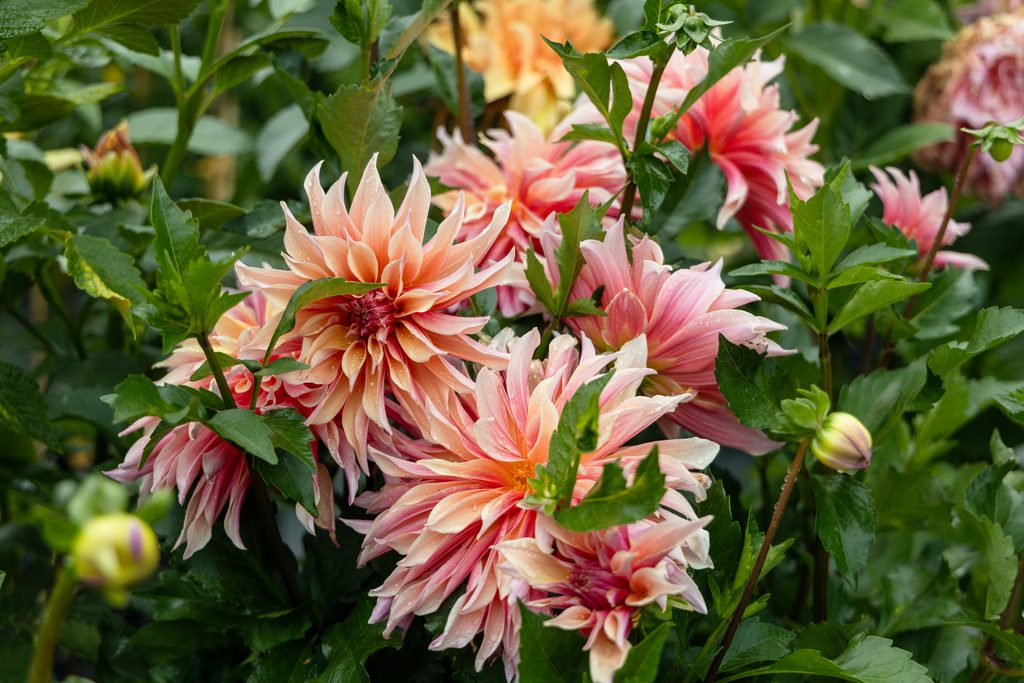
Dinnerplate dahlias produce blooms that can reach 8 to 12 inches wide, while decorative dahlias fill the garden with layered, broad petals. I grow these types with sturdy stakes, full sun, and regular watering because large flowers need steady support.
Café au Lait
The Café au Lait dahlia is a favorite dinnerplate dahlia for its soft, shifting color. Its huge blooms often open creamy beige, then show blush pink, peach, or pale mauve tones as they age.
No two flowers look exactly alike, which is part of the fun. I plant Café au Lait where I can see it up close.
The loose, wide petals make it an informal decorative dahlia, rather than a neat formal type. The flowers look beautiful in late-summer borders and cut-flower arrangements.
Give it a stake at planting time. Rain and wind can bend stems holding flowers that may reach 8 to 10 inches across.
Quick Tip: Cut Café au Lait blooms early in the morning, when the petals feel cool and firm.
Labyrinth
The Labyrinth dahlia has warm pink petals brushed with peach, coral, and creamy yellow near the center. Its flowers usually reach about 8 inches wide, with curled and slightly twisted petals that give each bloom a soft, full look.
I use Labyrinth when I want color without a harsh contrast. It pairs well with pale yellow, burgundy, and white flowers, and it stands out against deep green leaves.
This variety is usually classed as an informal decorative dahlia. Keep deadheading spent blooms every few days so the plant keeps making fresh flowers instead of putting energy into seeds.
Quick Tip: Stake Labyrinth before it gets tall; trying to tie up a leaning plant later is a bit of a wrestling match.
Break Out
The Break Out dahlia produces large, pale blooms with petals in white, cream, blush pink, and light lavender. Its color often changes with the weather and the age of the flower, especially during cool nights.
This dinnerplate variety has a softer shape than many formal decorative dahlias. The broad petals may curl and overlap in different directions, giving it a relaxed, ruffled look.
Flowers can grow 8 to 10 inches wide. I give Break Out room to breathe, space plants well, and remove damaged leaves.
Water the soil instead of soaking the foliage when possible. Humid areas may need extra airflow to help prevent mildew.
Quick Tip: If the top inch of soil feels dry, water deeply at the base rather than giving the plant a light sprinkle.
Kelvin Floodlight
The Kelvin Floodlight dahlia brings clear, sunny yellow to the garden. Its bright blooms can reach 10 to 12 inches across, making it one of the larger plate dahlias for cutting gardens and bold borders.
This variety is an informal decorative dahlia with long, broad petals that curve and twist slightly. The flowers have a cheerful, open look, but their size means they need dependable support.
One heavy rain can make an unstaked stem flop. I plant Kelvin Floodlight in full sun, with at least six hours of direct light.
In very hot climates, a little afternoon shade can help flowers last longer and keep their yellow color from looking faded.
Quick Tip: Tie stems loosely with soft garden twine so they can move without rubbing against the stake.
Thomas Edison
The Thomas Edison dahlia has rich purple blooms that look especially striking beside pale flowers. The color can range from violet-purple to deep plum, depending on light, soil, and the age of the bloom.
Its flowers usually grow 6 to 8 inches wide. Thomas Edison is a decorative dahlia with neatly arranged petals, but it still has enough texture to avoid looking stiff.
I like it near white cosmos, creamy dahlias, or silver-leaved plants. Pinch young plants when they reach about 12 inches tall if you want stronger branching and more usable flower stems.
You will get fewer blooms at first, but the plant often becomes bushier and easier to manage.
Quick Tip: Remove the two side buds below a main flower bud if you want one larger bloom for a vase.
Spartacus
The Spartacus dahlia produces deep red flowers with darker, velvety-looking petals near the center. The blooms can reach 8 to 10 inches wide, so this plant earns its place in a border without needing much help from nearby flowers.
Spartacus is usually described as an informal decorative dahlia. Its petals have a loose, layered form instead of the even pattern found on formal decorative dahlias.
The dark red color looks strongest in late summer light. I grow Spartacus where it gets good air movement and morning sun.
Dark flowers can show damage more clearly after hard rain, so I remove torn petals and spent blooms promptly.
Quick Tip: Harvest Spartacus when the bloom is fully open; tight dahlia buds usually do not open well in a vase.
Fleurel
The Fleurel dahlia has large white blooms with a soft yellow or cream center. The petals are long, broad, and slightly curved, creating a clean look that works in both bright borders and quiet white gardens.
This is a large decorative dahlia, often reaching 8 to 10 inches across. I find Fleurel especially useful for cutting because white flowers blend with nearly every other color, from soft pink Café au Lait blooms to dark purple Thomas Edison flowers.
Pure white petals can show dirt after rain or splashes from bare soil. A layer of mulch helps keep mud off the lower leaves and flowers.
In cool zones, Fleurel often blooms well through early fall until frost ends the season.
Quick Tip: Check white blooms after rain and snip away any browned outer petals for a cleaner display.
Best Ball and Pompon Dahlias for Reliable Cut Flowers
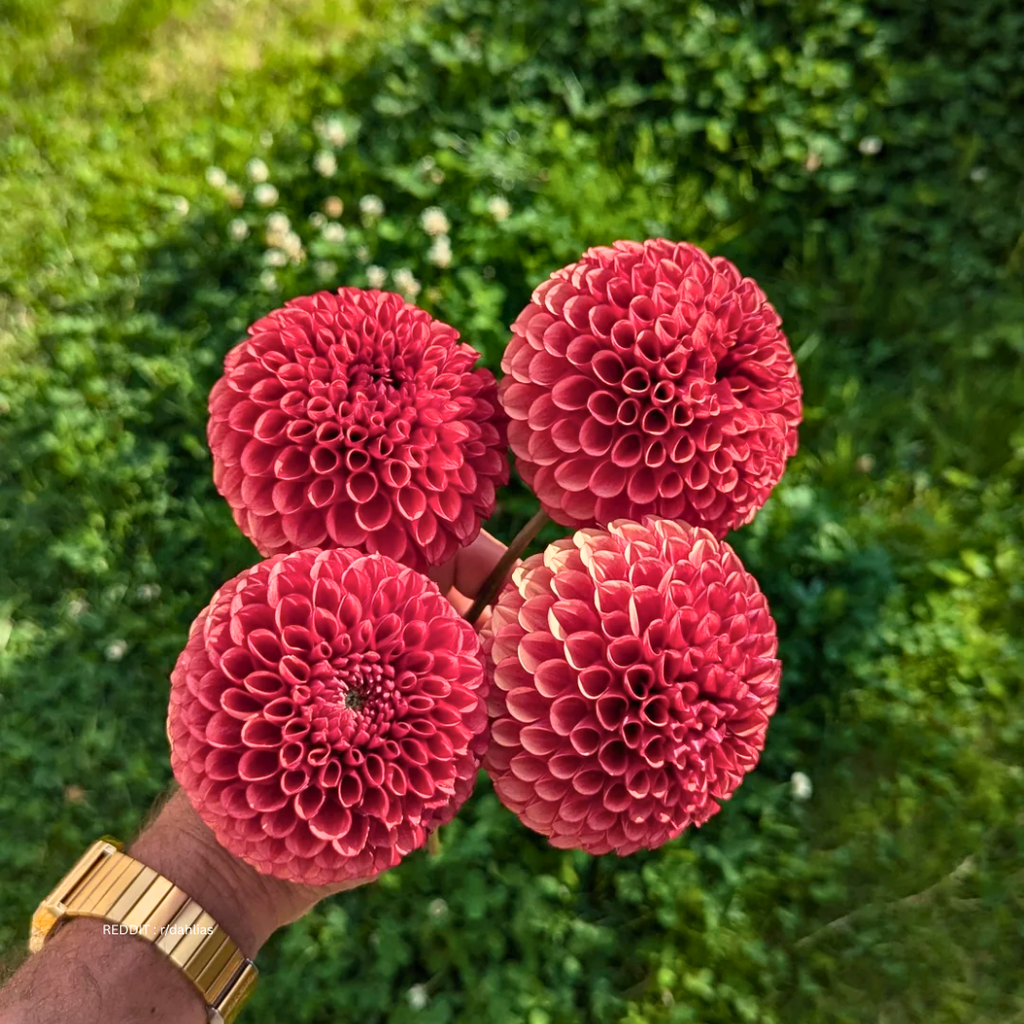
I grow ball dahlias and pompon dahlias when I want tidy, long-lasting blooms for bouquets. Their tightly packed petals handle cutting, transport, and floral arrangements better than many open-faced flowers.
Cornel
I choose Cornel dahlia for its deep, rich red blooms. This ball dahlia produces rounded flowers about 3 to 4 inches wide, with petals packed into a neat spiral.
It gives me the classic look many people want from red dahlias. The dark stems and warm red color work well with pale grasses, cream blooms, and late-summer foliage.
Flower farmers often grow Cornel because the blooms hold their shape after cutting and look polished in market bouquets. I cut stems early in the morning, when the flowers feel firm and fully open.
A bloom that is still too tight may not open well indoors.
Quick Tip: I cut Cornel stems long, strip the lower leaves, and place them straight into clean water. They often last about 5 to 7 days in a vase with fresh water.
Cornel Bronze
Cornel Bronze has the same useful ball dahlia shape as Cornel, but its color shifts toward burnt orange, copper, and soft bronze. I use it when I want warm fall tones without relying only on orange flowers.
Its blooms usually measure around 3 to 4 inches across. The rounded form fills gaps in floral arrangements, and the color pairs easily with burgundy, rust, gold, and dusty pink flowers.
I find Cornel Bronze especially useful in late summer and early fall bouquets. In hot, dry weather, I water deeply at the base so the plant can keep producing strong stems.
In cool, wet areas, I give plants space for air to move around them.
Quick Tip: I harvest Cornel Bronze when the center petals no longer feel soft or loose. Firm blooms travel better and keep their round shape in a vase.
Jowey Winnie
The Jowey Winnie dahlia is a soft pink ball dahlia with a gentle blush tone. Its blooms are usually about 3 to 4 inches wide, and the full, rounded flowers bring a calm look to mixed bouquets.
I like using Jowey Winnie with white cosmos, pale roses, chocolate-brown foliage, or deep plum dahlias. It softens stronger colors without disappearing in the arrangement.
This variety can produce many usable stems when I keep cutting regularly. I also remove spent blooms before they form seed, since that tells the plant to keep making flowers instead.
Quick Tip: I pick Jowey Winnie when the bloom is fully colored and the petals look crisp. I avoid flowers with brown edges, since pale pink petals show damage quickly.
Gerrie Hoek
Gerrie Hoek dahlia is a creamy white pompon dahlia with small, nearly round blooms. The flowers are often 2 to 3 inches wide, making them useful as bright accents rather than large focal flowers.
I use Gerrie Hoek in wedding-style floral arrangements, simple bud vases, and mixed garden bouquets. Its clean color works with almost anything, from soft pastels to dark red dahlias.
Pompon dahlias have tightly rolled petals, so rain can sit in the flower head. After heavy rain, I check blooms for damage and cut any that have started to brown.
In humid climates, good spacing helps leaves dry faster.
Quick Tip: I add Gerrie Hoek after larger flowers in an arrangement. Its small white pompons fill empty spaces and make darker blooms stand out.
Moor Place
Moor Place dahlia is a miniature ball dahlia with warm salmon, peach, and coral tones. Its smaller blooms add color without making a bouquet feel heavy, and the rounded shape gives arrangements a neat finish.
I reach for Moor Place when I want a softer alternative to bright orange or red dahlias. It blends well with apricot roses, pale yellow flowers, and silvery leaves.
The compact flowers also suit smaller jars and hand-tied bunches. I cut them once the bloom feels firm, since immature miniature ball dahlias may wilt before they fully open.
Quick Tip: I change the vase water every two days for Moor Place. Small blooms can last about 5 to 7 days when I keep the water clean and remove fading flowers.
Textural Cactus and Semi-Cactus Picks
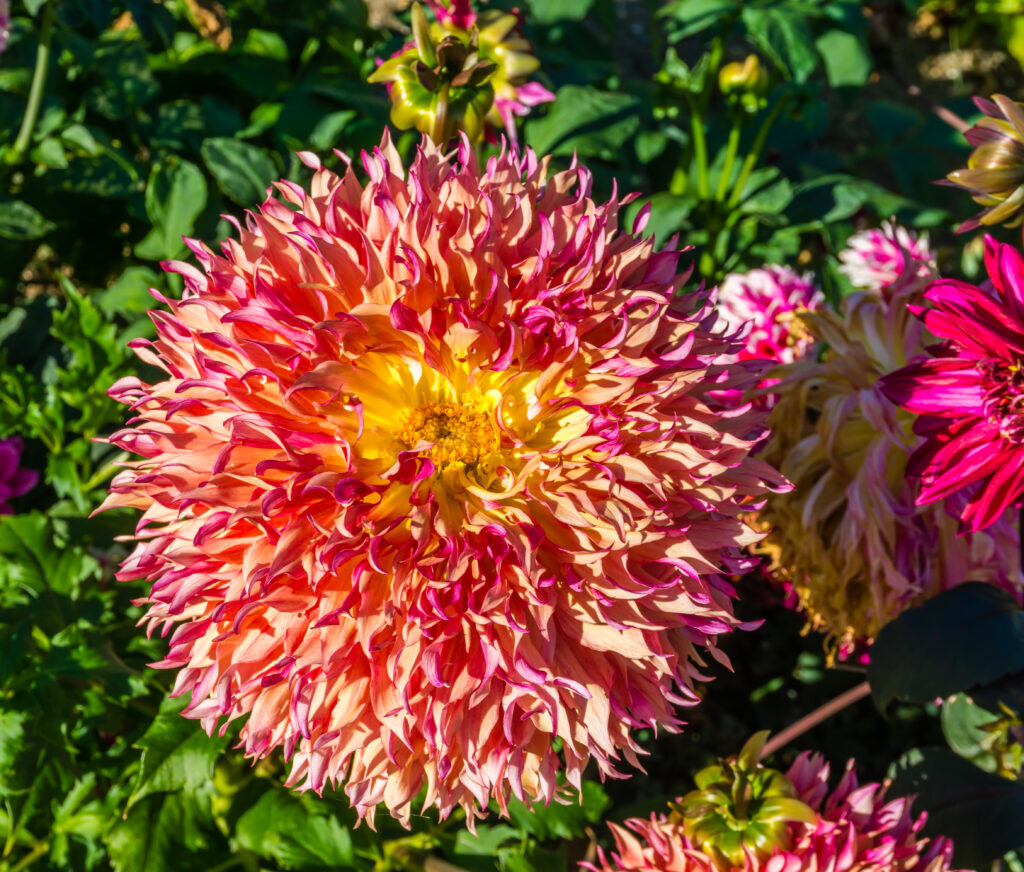
Cactus and semi-cactus dahlias bring narrow, rolled petals and lively texture to summer borders. I grow them where their pointed blooms can catch the light and stand apart from rounder flowers.
Alfred Grille
Alfred Grille has soft peach, yellow, and pink tones that shift as the flower opens. Its narrow, curved petals give this semi cactus dahlia a full, lightly tousled look without making it feel too wild.
I like Alfred Grille near pale pink cosmos, white zinnias, or silver-leaved plants. The warm coloring works well in cottage-style beds and cutting gardens, especially when the flowers open from midsummer into fall.
Give the Alfred Grille dahlia full sun and rich, well-draining soil. Stake it early, since rain and wind can bend the stems once the blooms get heavy.
Quick Tip: Cut flowers when they are fully open. Tight dahlia buds don’t open well indoors.
In cool or wet areas, wait to plant tubers until the soil warms in late spring. Frost can damage young shoots quickly.
American Dream
American Dream produces soft lavender-pink blooms with deeper purple streaks and a pale center. The pointed petals create the spiky shape people expect from cactus dahlias, but the colors keep it gentle.
I find this variety especially useful when a border needs a cool color break between bright reds, oranges, and yellows. Its flowers also look good in a vase with white dahlias and blue foliage.
Plant American Dream in at least six hours of direct sun. Water deeply during dry spells, then let the soil surface dry slightly before watering again.
Quick Tip: Remove faded flowers down to a side stem to keep new buds coming.
Heavy rain may rough up the petals for a few days, so place this plant where it gets some wind protection if summer storms are common. Avoid crowded spacing, since good airflow helps leaves dry after rain.
Mingus Randy
Mingus Randy brings bright yellow blooms with long, pointed petals that curl and twist at the tips. This cactus dahlia has a bold shape, so I use it as a sunny focal point instead of hiding it in the back of a crowded bed.
The clear yellow flowers pair well with dark purple foliage, deep red dahlias, and blue salvia. They also make cheerful cut flowers for late-summer arrangements.
Mingus Randy needs a strong stake or support ring before it reaches full height. Add it at planting time, not after the stems start leaning like they’ve had a long day.
Quick Tip: Pinch the center shoot when the plant has several sets of leaves to encourage more branching stems.
Check the plant for earwigs and slugs when growth first appears. They can chew tender leaves and buds, especially during damp spring weather.
Myrtle’s Folly
Myrtle’s Folly grows large, loose blooms in blended shades of peach, pink, yellow, and cream. The petals twist and curl in different directions, giving each flower an almost ruffled, hand-painted look.
I plant Myrtle’s Folly where people can see it up close. Its color mix can look busy from far away, but it becomes much more interesting near a path, patio, or cutting garden.
This plant needs room because the flowers can grow large and the stems need good support. Keep it in full sun and add compost to the soil before planting.
Quick Tip: Use low-nitrogen fertilizer. Too much nitrogen can produce lots of leaves and fewer flowers.
In hot, dry weather, mulch around the base to hold moisture in the soil. Keep the mulch a few inches away from the stem so the crown doesn’t stay wet.
Sassafras
Sassafras stands out with warm red blooms touched with golden yellow near the petal bases. Its narrow, rolled petals give it the sharp texture of a cactus dahlia, while the warm colors make it easy to spot across the garden.
I like Sassafras beside bronze fennel, orange marigolds, or deep purple flowers. The rich coloring also makes it a strong choice for fall bouquets, when many summer flowers begin to fade.
Plant Sassafras in loose soil with steady moisture, but don’t let the tuber sit in wet ground. Soggy soil can cause rot, especially in cooler climates or during a rainy summer.
Quick Tip: Water at soil level in the morning to keep foliage drier overnight.
Deadhead often and cut a few open stems for the house. Regular picking keeps the plant focused on fresh blooms instead of seed production.
Distinctive Open-Centered and Waterlily Forms
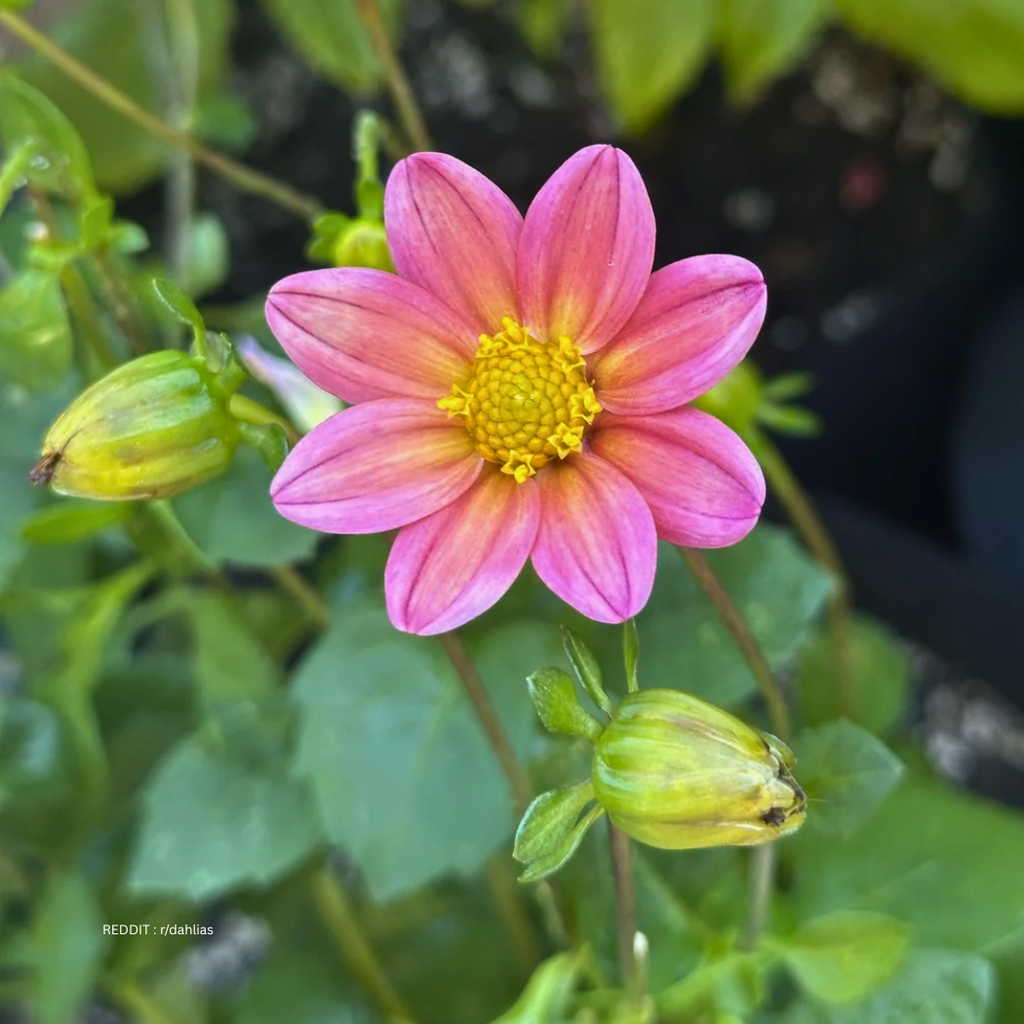
These dahlias bring softer shapes, visible centers, and easier access for insects. I grow them where I want movement, color, and a less formal look.
Waterlily Dahlias for Soft, Layered Blooms
Waterlily dahlias have broad, flat petals arranged in neat layers. Their blooms resemble waterlilies, with a smooth, low profile rather than a round ball shape.
I like waterlily dahlia types for borders and cutting gardens because the flowers sit well in bouquets. Varieties such as Karma Prospero and Caballero add full blooms without looking stiff.
Plant waterlily dahlias in full sun and give them room for airflow. In hot, dry weather, water deeply when the top inch of soil feels dry.
Quick Tip: Cut waterlily dahlias when the blooms are fully open, since tight buds rarely open well in a vase.
Pollinator-Friendly Single and Mignon Dahlias
A single dahlia has one ring of petals around an open yellow center. Bees, butterflies, and other pollinators can easily reach the pollen, which makes single-flowered dahlias useful near vegetable beds and wildlife gardens.
I often choose Bishop of Llandaff for its dark leaves and red flowers. Mignon single dahlias offer the same open center on shorter plants, usually reaching about 12 to 24 inches tall.
Mignon dahlias fit pots, front borders, and small gardens. They can flower for months if I remove faded blooms, though growth may slow during very hot or rainy spells.
Quick Tip: Leave a few fading flowers in place for a day or two if bees still visit them. Then deadhead once the center turns brown.
Anemone, Collarette, Peony, and Orchid Types
An anemone dahlia has a raised cushion of small petals in the center, surrounded by larger outer petals. Pooh is a well-known anemone type with red outer petals and a warm yellow center.
Collarette dahlias, including Night Butterfly, have one outer ring of petals and a shorter inner collar. Their open centers attract pollinators, while the collar gives each bloom a crisp, two-tone look.
Peony dahlias carry several loose rows of petals around the center, creating a relaxed, airy flower. Orchid dahlias have narrow petals that curl or twist, while stellar dahlias form star-like blooms with pointed, rolled petals.
Quick Tip: Stake taller anemone, peony, orchid, and stellar dahlias early. Wind and heavy rain can bend their stems.
More Garden-Worthy Varieties to Complete Your Collection
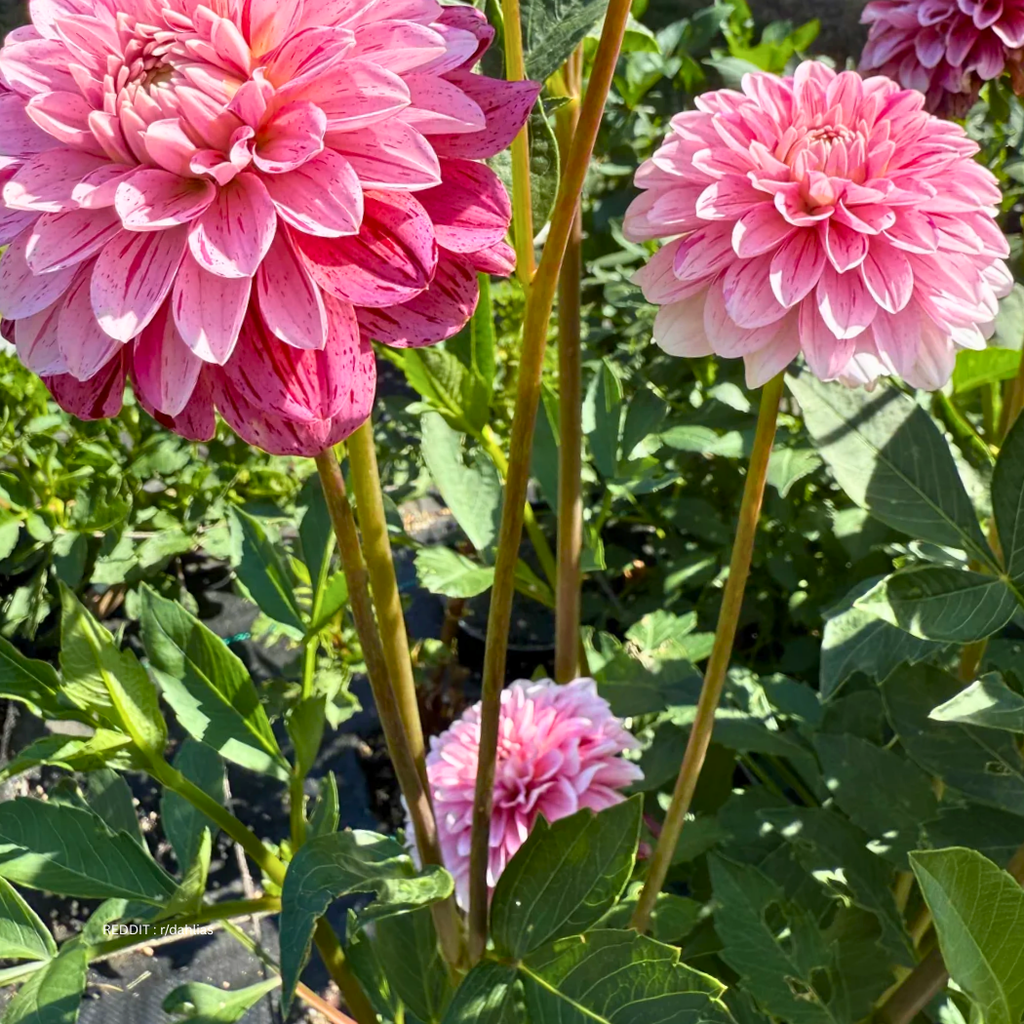
I like to add dahlias with different colors and flower shapes, not just the biggest blooms. These choices bring deep shades, gentle blends, and unusual petals to beds and cutting gardens.
Bold and Moody Colors
Rip City is a favorite for dark, velvety color. Its deep burgundy-red dahlia blooms can look almost black in shade, then show more red in bright sun. Plant it near pale flowers, such as white cosmos or soft pink zinnias, so the color doesn’t disappear into the border.
Pulp Fiction dahlia also suits gardeners who want a richer, darker look. Its bold coloring gives bouquets dramatic contrast without needing many stems.
Quick Tip: Cut dark blooms early in the morning, when stems feel firm and petals are cool. In very hot areas, give plants afternoon shade if flowers fade quickly.
Soft Pastels and Bicolors
Lilac Time dahlia brings soft lavender-pink tones to the garden. Its full blooms work well with silver foliage, white flowers, and pale blue containers. I use it when I want a calm color mix that still has enough presence for a vase.
Strawberry Ice dahlia offers a fresh blend of creamy white, blush pink, and deeper pink markings. No two blooms always look exactly alike, which is part of the fun. Its light colors can brighten a border that feels too heavy with reds and oranges.
Quick Tip: Keep pastel dahlias away from strong red varieties if you want cleaner-looking bouquets. Rain can mark pale petals, especially in cool or humid zones, so pick open blooms before a wet spell.
Unusual Forms and Conversation Starters
Boogie Woogie dahlia earns attention with bright yellow petals brushed or tipped with red. The color pattern feels lively, but it still fits a mixed cutting garden. I’d place it where you can see the flower faces up close, near a path or patio.
Look beyond color when choosing miscellaneous dahlias. Cactus types have narrow, rolled petals; ball dahlias form neat round heads; and waterlily types carry broad, flat petals. Mixing these forms makes a planting more interesting, even when several plants share the same color.
Quick Tip: Stake tall or heavy-flowering varieties at planting time. A simple stake now saves you from trying to prop up bent stems after wind or rain.
Planting and Caring for Dahlias
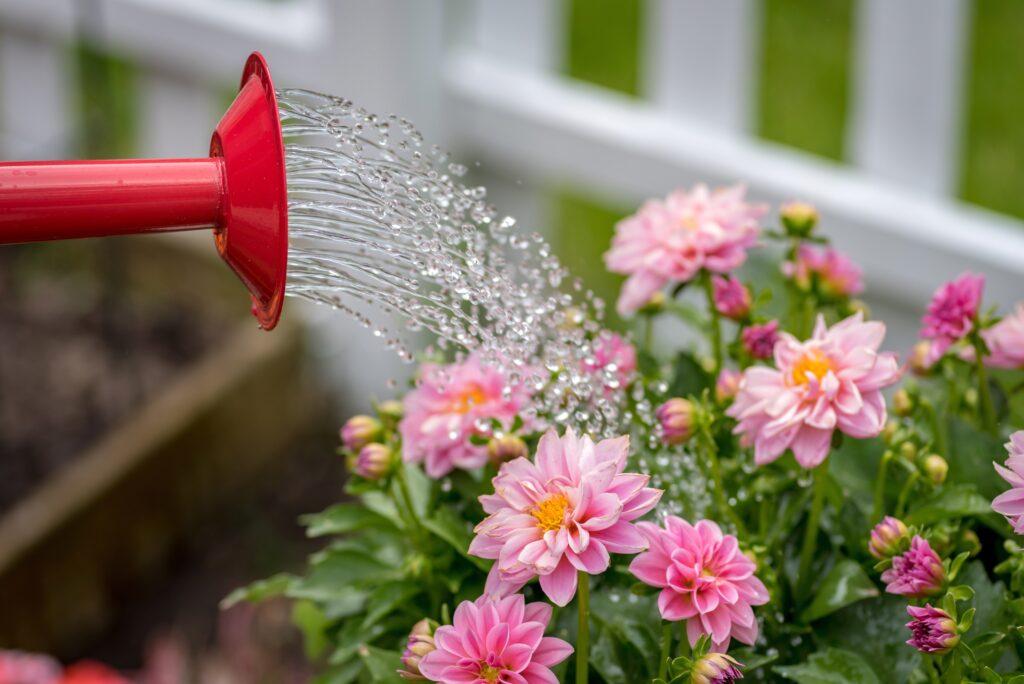
I plant dahlia tubers after the risk of frost has passed, then keep the soil moist without making it soggy. Sun, steady care, and winter storage help these flowers return year after year.
Plant Tubers in Sun and Well-Draining Soil
I choose a spot with full sun, at least six hours daily, for strong stems and plenty of blooms. In very hot areas, my dahlias can use light afternoon shade to prevent scorched petals.
I loosen the soil about 12 inches deep and make sure it drains well. Dahlia tubers rot in cold, wet ground, so I mix compost into heavy soil and plant in raised beds when drainage is poor. I avoid adding too much peat moss because it can hold extra moisture.
I lay each tuber on its side, with the growing eye facing up, and cover it with 4 to 6 inches of soil. I space large varieties 2 to 3 feet apart.
Quick Tip: I wait to water deeply until green shoots break through the soil. Wet, empty soil can rot a tuber.
Support, Water, and Feed for More Blooms
I place a stake beside each tuber at planting time, before the roots spread. Tall dahlias need support early, since summer wind can snap their heavy stems.
As the plants grow, I water at the base when the top inch of soil feels dry. I aim for a slow, deep soak once or twice a week, adjusting for rain and heat. Leaves that stay wet for hours can develop fungal problems.
I use a low-nitrogen fertilizer every three to four weeks after growth begins. Too much nitrogen creates big, leafy plants with fewer flowers.
I also pinch the center shoot above the third or fourth set of leaves to encourage bushier growth.
Quick Tip: I cut faded blooms often. That keeps the plant making flowers instead of setting seed.
Manage Aphids and Slugs and Store Tubers
I check new shoots and flower buds for aphids, especially in warm, dry weather. I spray small groups away with water or use insecticidal soap in the early morning.
I avoid spraying open flowers while pollinators are active. Slugs chew ragged holes in tender leaves, usually at night.
I hand-pick slugs after dark, clear away damp hiding spots, and use iron phosphate bait if the damage continues.
In cold-winter areas, I lift dahlia tubers after the first frost blackens the foliage. I cut the stems to a few inches and let the tubers dry for a day.
Then I store them in barely damp peat moss or vermiculite at 40–50°F. When winter weather is uncertain, I follow local guidance from the American Dahlia Society.
Quick Tip: I check stored tubers once a month and remove any that feel soft or show mold.
Frequently Asked Questions
I look for flower form, bloom timing, and plant strength when choosing dahlias. Frost dates matter too, since dahlias grow best after the soil warms and stop when frost arrives.
What are the prettiest dahlia varieties for a home garden?
I love Café au Lait for its large, soft blush blooms and Labyrinth for its peach, coral, and cream petals. Thomas Edison brings deep purple flowers, while Bishop of Llandaff adds rich red blooms above dark leaves.
For smaller spaces, I would grow a compact Gallery dahlia such as Gallery Art Deco. Its warm orange flowers look bright without taking over the bed.
Quick Tip: I plant tall varieties near a fence or sturdy stake so wind doesn’t bend their heavy stems.
Which dahlia varieties are best for beginners to grow?
I would start with Bishop of Llandaff, David Howard, or Cornel. These varieties have strong stems, dependable flowers, and a manageable size for most home gardens.
I also like the compact Gallery series for pots and small beds. They usually need less staking than tall dinnerplate dahlias, which can be a little fussy in windy spots.
Quick Tip: I wait until all frost danger has passed before planting tubers, because cold, wet soil can cause rot.
What are the most popular dahlia varieties?
I often see Café au Lait, Labyrinth, Kelgai Ann, Thomas Edison, and Bishop of Llandaff in home gardens and flower arrangements. Their colors photograph well, but they also bring real charm to the garden.
Café au Lait is famous for huge pale blooms, while Kelgai Ann has white petals brushed with lavender. Popular varieties can sell out early in spring, so I order tubers before planting season.
Quick Tip: I choose popular varieties for their looks, but I also check their mature height before giving them a spot.
Which dahlias bloom early in the season?
I choose single-flowered and compact bedding dahlias when I want earlier blooms. Bishop of Llandaff, Bishop of York, and many Gallery dahlias often start flowering before large dinnerplate types.
Weather still sets the pace. In cool northern areas, blooms may arrive later than they do in warm regions, even with the same variety.
Quick Tip: I remove spent flowers often. This helps the plant put energy into new buds instead of seed heads.
What are the most prolific dahlia varieties for lots of flowers?
I grow Cornel, Ivanetti, Jowey Winnie, and Linda’s Baby when I want many cut flowers. Their blooms are smaller than dinnerplate dahlias, but they usually produce more stems over the season.
Ball and pompon types often keep blooming well when I cut flowers regularly. A few blooms in a vase can make room for several more outside. Not a bad trade.
Quick Tip: I cut stems in the cool morning or evening, when the flowers feel firm and fresh.
What is the rarest dahlia color?
I have never seen a truly blue dahlia because these flowers don’t naturally produce a clear blue color. Some varieties look lavender, lilac, or smoky purple, but they aren’t true blue.
Near-black dahlias, such as Arabian Night, can look deep red or purple in certain light. Green flowers are unusual too, although many blooms have green centers or buds.
Quick Tip: I check photos from several growers before buying a “blue” dahlia. Light and editing can easily make purple flowers look blue.